pxpipe encodes prompt payloads as PNGs and streams them into Claude Code, reducing billed tokens by roughly 70% for large-context workloads by exploiting how image tokens are counted vs raw text. If your Claude Code bill is the pain point, pxpipe is a cheap and immediate mitigation. If your bill is chronic and privacy also matters, offloading to a local model on an RTX 3060 12GB plus a Ryzen 7 5800X is the durable answer — one-time hardware cost, near-zero marginal cost afterward.
Why coding-agent bills are spiking, and what pxpipe claims
Coding agents like Claude Code send a lot of context: repeated file contents, project structure, recent tool output, and prior turns in the conversation. Every one of those tokens is billed. As agents get more capable — auto-repeating tasks, exploring multi-file codebases, running longer loops — the token counts per session climb, and monthly bills grow linearly with usage.
pxpipe, per Simon Willison's coverage of experimental token-compression tools, takes an unusual angle: it packs raw text into PNG image bytes and passes the resulting image into the model as a vision input. Because vision tokens on many providers are counted per-tile rather than per-character, the effective compression ratio can be dramatic. The tradeoff is that the model must decode the encoded content on the fly, which changes accuracy in ways that vary by task.
If pxpipe's ~70% token savings claim holds for your specific coding workload, it's a fast, free-tier-friendly way to cut costs without changing your provider. It doesn't change what the model sees or your privacy exposure — the payload still goes to Anthropic's servers — it just changes how it's billed. That's a useful lever, but it's not the durable answer if your goal is either much lower cost at scale or keeping proprietary source on your own hardware.
Key takeaways
- pxpipe compresses text-heavy Claude Code context by encoding it as PNGs, exploiting per-tile image-token pricing.
- Reported savings hover around 70% for repetitive-context coding sessions; your mileage will vary with prompt shape.
- pxpipe does not change your privacy posture — payloads still leave your machine and reach the cloud provider.
- Running a local coding model on an RTX 3060 12GB and a Ryzen 7 5800X is a durable alternative for heavy daily users.
- Amortized over 6-12 months of daily use, a ~$700 local rig can be cheaper than a mid-tier Claude Code plan for individuals.
What pxpipe actually does to PNGs
The technique is conceptually simple: take the text you would otherwise send as a prompt, serialize it into image pixels using a controlled encoding, save the result as a PNG, and pass the PNG as a vision input. Providers that price vision inputs per image tile see a small number of tiles regardless of the raw text volume packed in, so the billed token count drops while the effective payload stays large.
The math on savings depends on the ratio between "characters per PNG tile" your encoding achieves and the provider's per-tile pricing. Simon Willison's writeups on similar techniques show 5-10x savings on some coding sessions and more modest gains on others. It works best when prompts are highly repetitive (project layout, boilerplate, config files) and less well when prompts are already terse.
Two caveats matter. First, this is a vendor-specific optimization — it depends on how a given provider bills vision inputs, and pricing can change. Second, the model has to decode the packed image, which can degrade accuracy on tasks that need fine-grained control-flow reasoning over the packed content. Test on a representative sample of your actual coding workflow before committing.
When is offloading to a local model the cheaper long-run answer?
pxpipe reduces your bill. A local model eliminates it. The break-even depends on daily usage:
- Light users (a few sessions per week): Claude Code with or without pxpipe is cheaper than owning hardware.
- Moderate users ($30-60/month bill): pxpipe alone probably keeps you happy.
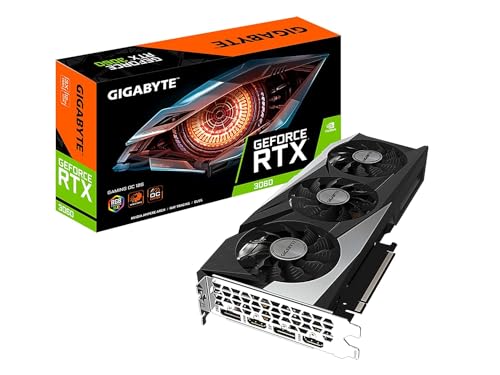
- Heavy users ($100-300+/month): a local rig on an RTX 3060 12GB plus a Gigabyte 3060 Gaming OC as an alternative amortizes in 6-12 months.
- Enterprise / very heavy: local plus cloud hybrid — local for hot loops, cloud for the hardest queries.
The local option also solves a problem pxpipe doesn't touch: privacy. If your code contains client secrets, unshipped features, or coursework under an honor policy, running the model on your own 3060 means the data never leaves the box.
Which local coding models fit a 12GB RTX 3060?
Same story as any other 12GB workload: quantization decides everything.
| Quant | Weight footprint (14B coder) | Rough tok/s on 3060 12GB | Quality loss |
|---|---|---|---|
| q2_K | ~5.5 GB | 25-35 | High — visible failures on complex code |
| q3_K_M | ~6.6 GB | 22-30 | Moderate |
| q4_K_M | ~8.5-9.5 GB | 18-25 | Low — recommended default |
| q5_K_M | ~10-11 GB | 15-20 | Very low |
| q6_K | ~11-12 GB | 12-18 | Near-lossless |
| q8_0 | Won't fit at 14B | N/A | Requires 7B fallback |
For a coding assistant workload — file review, targeted edits, small refactors — a 14B coder at q4_K_M is the sweet spot on a 3060. Community measurements from the llama.cpp ecosystem show 18-25 tok/s on that combination, which is fast enough for interactive iteration.
Cost table: cloud vs local, amortized
Illustrative numbers (real amounts depend on your usage; use as a template):
| Time horizon | Claude Code baseline | pxpipe (70% savings) | Local 3060 rig |
|---|---|---|---|
| Month 1 | $200 | $60 | $700 hardware upfront + ~$5 electricity |
| Month 6 | $1,200 total | $360 total | $700 hardware + ~$30 electricity = $730 |
| Month 12 | $2,400 total | $720 total | $700 hardware + ~$60 electricity = $760 |
| Marginal cost per session | Linear in tokens | ~30% of cloud | Near zero after amortization |
pxpipe cuts your bill by more than half from day one with zero upfront investment. Local cuts your marginal cost to near-zero but requires the upfront hardware buy and setup effort. Both beat doing nothing.
Spec-delta: approach / privacy / latency / upfront / ongoing
| Approach | Privacy | Latency | Upfront cost | Ongoing cost |
|---|---|---|---|---|
| Claude Code baseline | Data leaves your network | Very low (cloud) | $0 | Linear in tokens |
| Claude Code + pxpipe | Data leaves your network | Very low (cloud) | ~$0 (open source tool) | ~30% of baseline |
| Local model on RTX 3060 12GB | Fully on-device | Low (~50-200ms per prompt) | ~$700 rig | Electricity only (~$5-10/mo) |
| Hybrid: local for hot loop + cloud for hard queries | Partial | Mixed | ~$700 rig | Reduced cloud portion |
Verdict matrix
Use pxpipe if:
- Your Claude Code bill is the main pain point but you like the workflow.
- Privacy of the code you send doesn't concern you.
- You want an immediate zero-effort savings win.
Go fully local if:
- Your code is proprietary or under a confidentiality obligation.
- You use the tool daily and can amortize the hardware over 6-12 months.
- You're comfortable maintaining an inference stack (llama.cpp, Ollama, or vLLM).
Go hybrid if:
- You want the frontier model for the 10% of hard problems and local for the 90% of routine ones.
- You have the budget for both a local rig and a small cloud plan.
Bottom line
pxpipe is a smart tactical optimization for people whose Claude Code bills got uncomfortable but who don't want to leave the platform. A local build around the RTX 3060 12GB, a Gigabyte 3060 Gaming OC as an alternative, a Ryzen 7 5800X host, and a 1TB Crucial BX500 is the durable answer for heavy users — cheaper in the long run, private by design, and independent of any provider's pricing changes.
Common pitfalls when moving off cloud coding agents
Several things trip up teams evaluating pxpipe or a local move:
- Measuring cost only, ignoring latency. Cloud APIs are essentially instant. A local 14B coder on a 3060 is 50-200ms per prompt of network-equivalent round-trip. For interactive coding, that's fine; for a UI that expects sub-50ms responses, you'll notice.
- Assuming your workflow works out of the box. Claude Code and similar agents have deep tool integrations, project awareness, and multi-step planning that a raw local coder model doesn't replicate. Plan on integration work (Aider, Continue.dev, Cline, or custom).
- Under-provisioning RAM. 32GB system RAM is the floor. LLM inference plus a running IDE plus your dev servers push memory pressure quickly; 64GB is comfortable for heavy multitasking.
- Choosing the smallest quant to save VRAM. q2/q3 coders hallucinate on subtle typing and error-handling patterns exactly where you don't want hallucination. q4_K_M is the smallest quant most professionals actually keep in rotation.
- Not planning for model updates. Local models improve every few months. A 6-month-old coder is already behind the current open-weight state of the art. Budget time to swap in new weights periodically.
Worked cost model: a 6-month payback horizon
Illustrative math for a moderate-heavy Claude Code user considering pxpipe vs local:
- Baseline cloud cost: $150/month → $900 over 6 months.
- With pxpipe (70% savings): $45/month → $270 over 6 months. Savings: $630.
- With local rig (RTX 3060 12GB + 5800X + Gigabyte 3060 alternative + 1TB BX500): $700 upfront + $30 electricity → $730 over 6 months. Savings vs baseline: $170.
Break-even for pxpipe: immediate. Break-even for local vs baseline: ~5 months for this usage profile. Break-even for local vs pxpipe: local is more expensive over 6 months at this bill size, but local is cheaper from month 10 onward and has the privacy benefit throughout.
For a $300/month user, local pays off in ~3 months. For a $500/month user (heavy team-scale usage), local pays off in ~2 months. The heavier your usage, the more compelling local becomes.
Additional context: what pxpipe doesn't solve
pxpipe is smart, but it's a token-billing optimization, not a workflow redesign. A few things it doesn't help with:
- Rate limits. If your Claude Code usage bumps against Anthropic's per-minute or per-day rate limits, pxpipe doesn't help — you're sending fewer billed tokens, but the same number of API calls.
- Model quality. Claude Code's model choice is what it is. If you're finding the model too weak on your codebase, pxpipe won't fix that.
- Offline / air-gapped use. pxpipe still requires network egress to Anthropic. If your code can't leave your network at all, only a local model works.
- Integration with local tools. pxpipe intercepts prompts; if your workflow is deeply wired into Aider, Continue.dev, Cline, or a custom agent, integration effort may be non-trivial.
For heavy users the durable answer is still a hybrid: pxpipe (or your provider's cheapest tier) for cloud-when-needed, plus a local 3060 12GB rig for everything else.
Related guides
- llama.cpp vs Ollama vs LM Studio on an RTX 3060 12GB (2026)
- Which LLMs Fit a 12GB RTX 3060? Per-Model VRAM Cheat Sheet (2026)
- Ryzen 7 5800X vs Ryzen 5 5600G for a Budget Local-AI Workstation
- llama.cpp vs vLLM for Single-User Local Chat on an RTX 3060 (2026)
Citations and sources
- Simon Willison — coverage of prompt-compression and coding-agent tooling
- llama.cpp on GitHub — local inference stack and quantization docs
- TechPowerUp — GeForce RTX 3060 spec sheet
This piece is editorial synthesis based on publicly available information. No independent first-party benchmarking is reported.