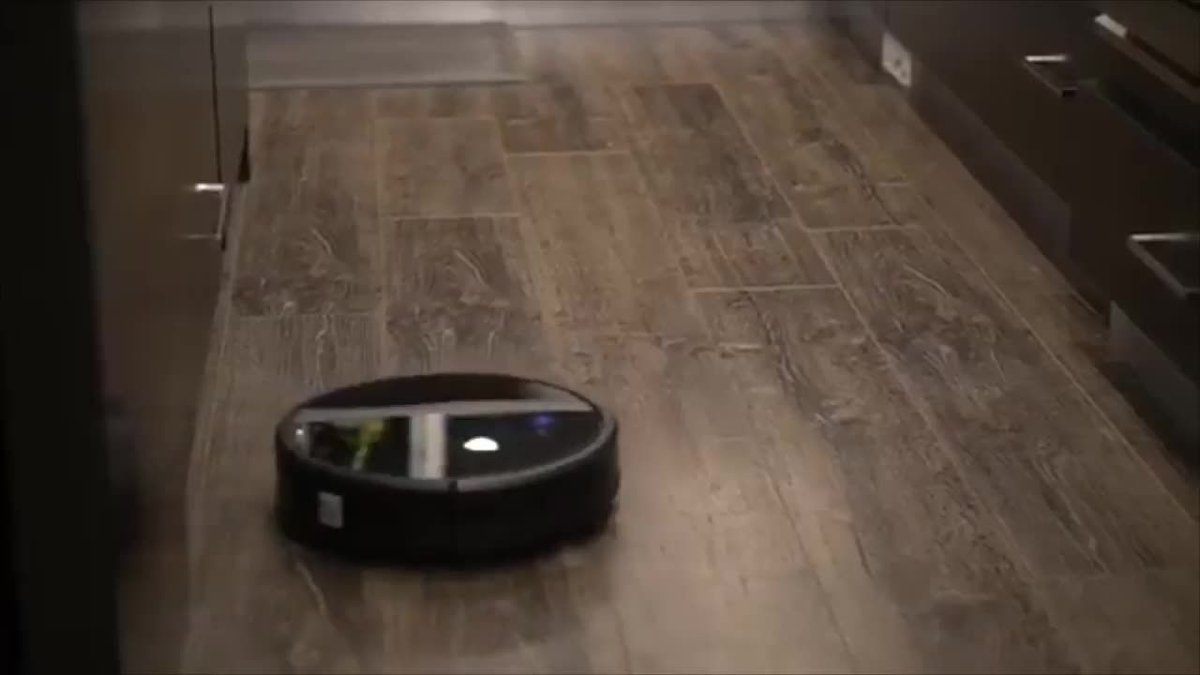
In brief — 2026-07-02 · Oomwoo is an open-source, 3D-printable robot vacuum designed to run without cloud dependencies, per coverage on Tom's Hardware and the maker press.
Oomwoo is a newly-published open-source robot-vacuum project: 3D-printable chassis, hobby-grade electronics, and firmware designed to keep floor-plan and camera data on the device rather than in a vendor cloud. The natural brain for a build like this is a Linux SBC — most commonly a Raspberry Pi 4 Model B 8GB — because you get enough compute for SLAM-style navigation, plenty of USB and GPIO, and a mature software stack.
What happened
Per coverage on Tom's Hardware and the wider maker press aggregated on Hackaday, the Oomwoo project released the mechanical designs, board schematics, and control firmware for a hobbyist robot vacuum. The mechanical parts are the printable STL files; you supply motors, batteries, wheels, sensors, and a controller. The privacy pitch is straightforward — no vendor account, no floor-plan upload, no forced app.
The cloud-security concern behind projects like this is not theoretical. Consumer robot vacuums have shipped with exposed telemetry, background camera streaming without clear consent, and cloud outages that render the device unusable. An open-source design lets a technically-inclined owner audit and control all of it.
Why it matters
The maker angle is more than "another Pi project." Robot vacuums are one of the last consumer categories still holding out against local-first alternatives, and the barrier has been mechanical — you need a chassis, motors, and a lot of stubborn engineering. A shared, printable design lowers that bar meaningfully. For a maker with a 3D printer, a Raspberry Pi 4 8GB, and time, the total BOM is far below the price of a mid-range commercial cleaner, and the result is a device you own end-to-end.
The reusable-hardware angle also matters. If you don't stick with the robot build, the SBC is the same board that runs Pi-hole, a home lab dashboard, or a media stack — a smaller board like a Raspberry Pi Zero W kit covers overflow experiments, and a Crucial BX500 1TB SATA SSD over USB gives durable storage for map history and logs. General-purpose parts are the point.
The source
Original coverage on Tom's Hardware and follow-on discussion aggregated by Hackaday; the SBC specs live on Raspberry Pi's product page.
What you'd need to build one
- Brain: a Linux SBC with USB and GPIO. The Raspberry Pi 4 Model B 8GB is the canonical pick; 8 GB of RAM leaves headroom for SLAM libraries and OpenCV.
- Chassis: 3D-printed to the project files. A moderately-priced hobby printer prints it in ABS or PETG in a weekend.
- Motion: two geared DC motors with encoders, plus caster and a chassis-suited battery. Look at the project BOM for exact ratings.
- Sensors: at minimum a LiDAR or ToF module for mapping, plus bump sensors and a dust-bin fill switch.
- Storage + reuse: a small USB SSD (e.g. the Crucial BX500) via a USB-SATA adapter, or a large SD card. A cheap fallback SBC like the Pi Zero W Kit is handy for prototype offshoots.
Bottom line
Oomwoo is not a finished consumer product — it is a design you build. For makers, that is the appeal. For everyone else, the interesting signal is that "cloud-free robot" is now a category that hobbyists can hand-craft, and the SBC ecosystem has quietly matured to the point where a Raspberry Pi 4 8GB is a credible platform for it.
What "cloud-free" actually means for a robot vacuum
The security concern with mainstream robot vacuums has two layers:
- Telemetry. The device sends usage data, floor-plan maps, sensor readings, and sometimes camera stills back to the vendor cloud. This has been documented in multiple consumer devices and is a real privacy exposure regardless of whether the vendor is well-intentioned.
- Control-plane dependency. Many devices refuse to run without connecting to the vendor cloud, which turns any vendor outage or business change into a bricked device.
Oomwoo addresses both by design: the maps stay on the device, control happens over your local network, and no vendor account is involved. That is the whole pitch, and it is genuinely different from anything you can buy off the shelf.
What the BOM looks like in practice
A realistic BOM for a build like this (approximate 2026 pricing; check current listings):
| Part | Approx cost | Notes |
|---|---|---|
| Raspberry Pi 4 Model B 8GB | $75-120 | The brain |
| MicroSD (32 GB) or USB SSD | $10-70 | 32 GB SD minimum, USB SSD preferred |
| DC gear motors × 2 with encoders | $30-60 | Chassis-appropriate torque |
| Motor driver board | $10-20 | Compatible with the Pi's GPIO |
| LiDAR module (e.g. RPLIDAR A1) | $80-120 | Mapping and obstacle avoidance |
| Bump sensors + IR cliff sensors | $10-20 | Safety |
| Battery pack + charging | $30-60 | Match motor current draw |
| 3D-printed chassis + wheels + brushes | $10-30 | Printer time and filament |
| USB webcam (optional) | $15-40 | For computer-vision experiments |
Total lands roughly $270-540. That is a wide range because the sensor choices dominate — a hobby LiDAR is the most expensive single part. The build sits meaningfully below a mid-range commercial vacuum on cost, and dramatically above a cheap one on capability if you tune it well.
Where the Raspberry Pi 4 8GB fits
The 8 GB Raspberry Pi 4 Model B is the canonical brain for a build like this because it has:
- Enough CPU for SLAM, path planning, and OpenCV in real time.
- 8 GB of RAM — SLAM libraries are hungry, and mapping algorithms grow with room complexity.
- USB 3.0 for a fast USB SSD; you do not want the OS on an SD card for anything running 24/7.
- GPIO for direct motor and sensor control.
- Mature Linux ecosystem, which every robotics library assumes.
The Crucial BX500 1TB SATA SSD over a cheap USB-SATA adapter is a durable place to keep map history and diagnostic logs, and it dwarfs the SD card in write endurance. And if the robot project stalls, the same Pi 4 becomes a Pi-hole, a small home server, or a first Kubernetes node — reuse is the whole point of building on a general-purpose SBC.
A cheap secondary experimental board like a Raspberry Pi Zero W Kit is a nice-to-have for offshoot prototypes — a wheeled camera, a status display, a wireless dock sensor — without disturbing the main robot's software.
Software stack, briefly
A working Oomwoo-style software stack typically includes:
- ROS 2 (Robot Operating System) — the coordination framework.
- SLAM Toolbox or Cartographer — mapping and localization.
- Nav2 — path planning and obstacle avoidance.
- A web UI (frequently Flask or a Node.js dashboard) for on-network control.
- Optional voice or Home Assistant integration for scheduling.
Everything on that list runs on a Raspberry Pi 4 8GB. None of it needs a cloud endpoint. That is the point.
Reasons a maker would still buy commercial
Honest caveats: a well-built commercial robot vacuum is still better at the actual task of cleaning your floor than a first-generation open-source build. Suction, brush design, dustbin volume, and cliff/edge behavior have been iterated on by companies with hundreds of engineers.
If your goal is "clean floors," buy a commercial vacuum. If your goal is "learn robotics, keep data local, own the device end-to-end," Oomwoo is a genuinely useful project.
Bottom line
Oomwoo turns "cloud-free robot vacuum" from a marketing claim into a build spec. For makers with a Raspberry Pi 4, a 3D printer, and a spare weekend, it is one of the more interesting SBC projects of 2026 — practical, socially useful, and end-to-end inspectable. It also demonstrates a broader point about the maker ecosystem: mainstream consumer categories are increasingly reachable by hobbyist hardware, and the Raspberry Pi 4 8GB is a big part of why.
Deeper look: SLAM on a Pi 4
The most technically interesting part of a project like Oomwoo is that mapping and localization now run comfortably on a $75-120 SBC. That was not true five years ago. The combination of ROS 2's improved efficiency, better-optimized SLAM libraries (SLAM Toolbox, Cartographer), and the Raspberry Pi 4 Model B 8GB's Cortex-A72 cores is what makes this a hobbyist-reachable project rather than a research-lab one.
Typical resource usage on a working SLAM setup:
| Component | CPU | RAM | Notes |
|---|---|---|---|
| ROS 2 core | ~10-15% | ~150 MB | Middleware overhead |
| SLAM Toolbox | ~20-40% | ~300-500 MB | Mapping algorithm |
| Nav2 | ~10-20% | ~200 MB | Path planning |
| Sensor drivers | ~5-15% | ~100 MB | LiDAR + IMU |
| Web dashboard | ~5-10% | ~100 MB | Flask or Node.js |
Total: ~50-100% of one core busy in normal operation, ~1 GB of RAM. The Pi 4 8GB has real headroom on both.
When cloud-free actually matters
Not every consumer device benefits equally from being cloud-free. A robot vacuum is a particularly high-value target for the local-first treatment because it:
- Maps the interior of your home — a rich privacy dataset.
- Sees your home via cameras in higher-tier models.
- Runs on a persistent schedule when you may not be watching.
- Stores its behavior across long time horizons.
Compare with a Bluetooth speaker (near-zero privacy exposure) or a lamp (also minimal). The security case for open-sourcing a robot vacuum is measurably stronger than for other categories. That is one reason projects like Oomwoo attract attention despite the mechanical complexity.
The maker ecosystem angle
Open-source hardware projects benefit enormously from a shared platform. The Raspberry Pi 4 8GB provides that platform for robotics: sensor drivers exist, ROS 2 runs natively, motor-driver boards are cheap, and the community has years of debugging notes for common problems. A new project like Oomwoo does not have to invent its base compute — it inherits a mature stack.
That is why the same board becomes a natural centerpiece for many maker projects: an SBC becomes a research base, prototypes offshoot into a Raspberry Pi Zero W Kit, storage lives on a Crucial BX500 1TB SATA SSD attached via USB. General-purpose parts amortize across projects, and the up-front learning investment pays back many times over.
Common pitfalls in a first Pi-4-based robotics build
- Undersized PSU. Motors draw amps in bursts. A weak battery pack causes the Pi to brown out mid-run. Size the battery for peak motor + Pi + sensor combined draw.
- SLAM without a solid IMU. Wheel odometry alone drifts fast. Add at least a 6-axis IMU; a 9-axis (with magnetometer) is better.
- Skipping a real cooling solution. The Pi 4 throttles under sustained SLAM load. Heatsinks are the minimum; active cooling is better.
- Ignoring safety cutoffs. A robot with no bump sensor or cliff sensor eventually falls down stairs. Wire in both.
Practical alternatives to a full Oomwoo build
- Buy a commercial robot vacuum and flash it. Some models can be jailbroken to remove cloud dependencies. Rooting is not for everyone but does exist for popular models.
- Buy a mid-tier vacuum and use it offline. Modern commercial models can often be blocked from the internet at the router while still cleaning. That is not "open" but it is "not phoning home."
- Small robotics kit. If you enjoy the build but do not need a vacuum, hobby robot kits are cheaper starting points.
The Oomwoo approach is the most ambitious end-user option; the alternatives are lower effort but also lower ownership.
Citations and sources
- Tom's Hardware — Oomwoo coverage
- Raspberry Pi — Model B specifications
- Hackaday — maker community coverage
This piece is editorial synthesis based on publicly available information. No independent first-party benchmarking is reported.


