Yes, with caveats. The Creative Sound BlasterX G6 works as a USB DAC and headphone amplifier on a Windows XP retro PC because XP supports generic USB audio class devices. What you do not get on XP is the SBX feature suite, EAX hardware acceleration, or Creative's full driver stack — those need a modern Windows host. For a retro rig used primarily as a clean DAC and amp, the G6 is a usable shortcut. For period-correct hardware-accelerated audio, it is the wrong tool.
A USB DAC/amp is a tempting shortcut for a Windows XP gaming rig. The audio chipsets on era-correct motherboards range from acceptable (good-quality Realtek ALC650) to actively bad (early HD audio that hisses), and onboard headphone output rarely matches what modern listeners expect. The natural reach is to drop in something cleaner — and the G6 sits at the intersection of "modern external DAC/amp" and "Creative branding that signals retro-PC affinity." Per Creative's product page for the Sound BlasterX G6, the unit supports up to 32-bit / 384 kHz audio over USB, a 130 dB DAC, and Creative's SBX post-processing on supported OSes.
The hard reality on Windows XP: Creative did not write a period-correct driver for the G6. The unit will likely show up as a generic USB audio class device, which gives you basic playback and capture but not the SBX panel, hardware EAX, or any Sound Blaster-era audio engine emulation. Per VOGONS' deep retro-PC build threads, the consensus among retro builders is the same: the G6 is a fine modern DAC/amp on XP if that is what you want, but it does not replicate what a period PCI Sound Blaster Live, Audigy, or Audigy 2 ZS gives you in DirectSound3D/EAX titles.
Key takeaways
- The Sound BlasterX G6 works on Windows XP as a USB Audio Class DAC and amp, no period driver.
- You do not get SBX, hardware EAX, or DirectSound3D acceleration on XP.
- Use it as a clean line-out and headphone amplifier, not as a period sound card replacement.
- For authentic EAX/Glide-era titles, an Audigy 2 ZS PCI card is still the right answer.
- The G6 shines on a dual-boot XP + modern Windows retro rig where modern OS gets the full feature set.
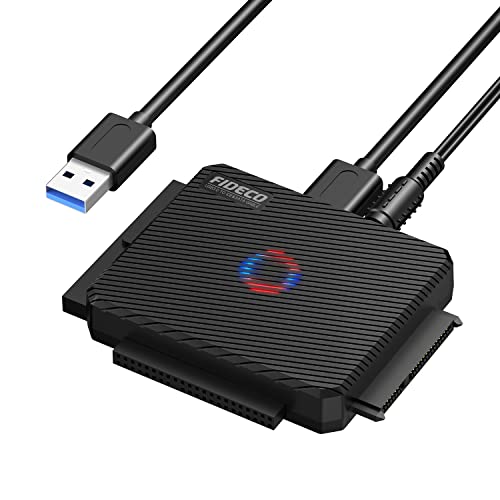
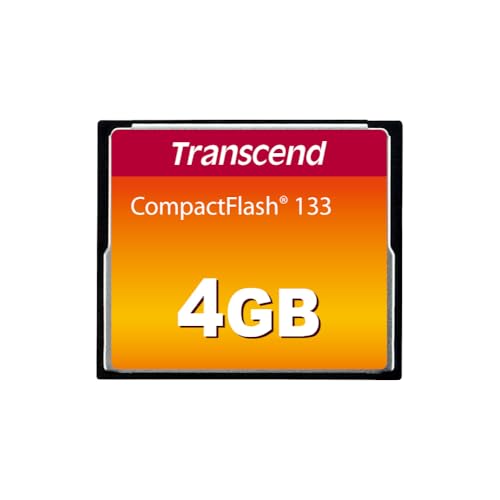
- A FIDECO SATA/IDE to USB 3.0 adapter and Transcend CF133 CompactFlash card are usually how you get files onto the retro rig in the first place.
Spec table: Sound BlasterX G6 vs Audigy 2 ZS
The G6 is what Creative sells today. The Audigy 2 ZS is what an XP-era system would have used. The comparison matters because some retro builders consider them interchangeable, and they are not.
| Card | Interface | DAC | Hardware EAX | DirectSound3D acceleration | Native XP driver |
|---|---|---|---|---|---|
| Sound BlasterX G6 | USB 2.0 | 32-bit / 384 kHz | no (modern post-processing only) | no | generic UAC, no Creative panel |
| Audigy 2 ZS | PCI | 24-bit / 192 kHz | yes (EAX 4.0 Advanced HD) | yes | yes, period-correct |
| Sound Blaster Live! 5.1 | PCI | 16-bit / 48 kHz | yes (EAX 2.0) | yes | yes |
The Audigy 2 ZS and Live cards do something on XP the G6 cannot: they offload 3D positional audio mixing to the card via hardware EAX. Period games like Thief: Deadly Shadows, Deus Ex, No One Lives Forever 2, and Half-Life 2 are designed around that. The audio scene with EAX on is dramatically different from the same scene with EAX off. The G6, even at its highest quality DAC settings on XP, cannot replicate that.
Driver reality on Windows XP
Three things change when you plug a G6 into an XP machine instead of a modern Windows PC.
- Generic USB Audio Class enumeration. XP recognizes the G6 as a standard USB audio device. Playback works. Capture (from the line-in/mic) works. Bit depth typically tops out at 24-bit / 48 kHz on the generic driver, well below the G6's headline 32-bit / 384 kHz.
- No SBX panel. The Creative Sound Blaster Command panel does not run on XP. You cannot configure CrystalVoice, Scout Mode, surround virtualization, or the EQ from the Creative app.
- No hardware EAX or DirectSound3D acceleration. XP games that depend on EAX hardware mixing will fall back to software mixing, which sounds noticeably different.
Per VOGONS' retro-audio guidance, the practical workaround for the EAX/Glide-era audio experience is a period PCI card. The G6 is the wrong tool for that job by design.
Where the G6 shines on a retro rig
The G6 is genuinely useful on a retro PC in three scenarios.
- Clean line-out and headphone amp. Retro motherboards often have noisy onboard codecs. A USB DAC bypasses the dirty rail and gives you clean output. The G6's headphone amp is strong enough to drive 250-ohm headphones — useful if you are pairing the retro rig with a vintage HD600 or DT 770 type cans.
- Recording the rig. If you produce retro-PC content (YouTube videos, podcasts, captures), the G6's line-in records clean 24-bit audio of the rig's output for capture purposes.
- Modern OS dual-boot. If your retro rig dual-boots XP and Windows 10/11 (or boots Linux for emulator stations), the G6 becomes the full Sound Blaster experience on the modern OS and a basic UAC DAC on XP. You get the best of both for one cable.
What you need to move files onto the retro build
A side question — but a frequent one. Period rigs often lack USB 2.0 mass-storage drivers or have flaky optical drives. The cleanest answer in 2026 is a USB-to-IDE/SATA adapter on the modern PC plus a CompactFlash card on the retro side.
- A FIDECO SATA/IDE to USB 3.0 adapter lets your modern PC mount any retro hard drive directly for file copy or imaging.
- A Transcend CF133 CompactFlash card in a passive CF-to-IDE adapter behaves like a silent, solid-state hard disk on the retro rig — usable for system installs as well as file transfers.
These are the same tools you would use for any IDE/SATA-era data work. They are not unique to a G6-on-XP install but tend to come up in the same conversation because anyone seriously building a retro audio rig is also wrestling with how to get drivers and files onto the box.
Period-correctness vs modern convenience
The choice between a G6 and an Audigy 2 ZS PCI card is really a choice about what "retro" means to you.
| Approach | Strengths | Weaknesses |
|---|---|---|
| G6 USB DAC on XP | clean modern audio, dual-boot reuse, no PCI slot needed | no EAX, no period audio engine |
| Audigy 2 ZS PCI | full EAX/DirectSound3D, period-correct, the right answer for EAX-era titles | aging drivers, requires PCI slot, no SBX or modern features |
| Sound Blaster Live! 5.1 PCI | EAX 2.0, cheap, ubiquitous | DAC quality lower than Audigy, missing newer EAX revisions |
| Both | G6 for modern OS + Audigy for XP | more cables, but full coverage |
The "both" answer is what serious retro audio builders actually do. The G6 lives on the rig as a USB DAC for the modern OS and high-quality recording; an Audigy 2 ZS or Live card sits in a PCI slot for the period-correct gaming experience on XP. Two cards, two roles. The G6 alone is a compromise on XP; an Audigy alone is a compromise on modern OS.
What about Windows 98 or earlier?
Windows 98 is harder than XP. Generic USB Audio Class support on 98 was rough; Creative did not publish 98-era drivers for the G6. In practice, the G6 enumerates poorly on a clean 98SE install and most builders fall back to a period PCI card for any 98-era project. The G6's home in retro builds is solidly the XP-to-modern-OS window where USB Audio Class support is solid. If your project is a 98-era rig, plan on an Ensoniq AudioPCI, Sound Blaster Live, or Audigy 1 card and skip the G6 entirely.
Common pitfalls
- Expecting EAX to work. Many guides bury this. The G6 does not provide hardware EAX on XP. If you want EAX, you need a period PCI card.
- Buying a USB hub between the G6 and the rig. USB 1.x and 2.0 timing on retro chipsets is finicky; the G6 should connect directly to a rear motherboard USB port.
- Skipping the period audio mod. XP onboard audio drivers are often ancient and unstable; before blaming a new sound card, install the chipset and audio drivers for your specific motherboard from a known-good archive.
When NOT to use the G6 on a retro PC
If your retro build is a pure XP gaming rig and you have a free PCI slot, do not use the G6. Buy an Audigy 2 ZS or a Sound Blaster Live 5.1 for $25-60 on eBay and run period-correct drivers. The G6 only earns its slot on a retro build if you also boot a modern OS, or if the retro build is more "vintage music PC" than "EAX gaming rig."
Worked example: a clean retro audio install
A representative install of the G6 on an XP retro rig:
- Boot to clean XP SP3 install with motherboard drivers loaded
- Plug G6 into rear USB 2.0 port (avoid front-panel header)
- Windows enumerates as "USB Audio Device"
- Set as default playback in Sounds and Audio Devices control panel
- Test in Foobar2000 with ASIO drivers (community-built; not official)
- For period game EAX, swap to Audigy 2 ZS PCI card and disable G6 default
- Optional: keep both, use G6 for media playback and Audigy for gaming
The whole install takes under an hour if you have the drivers and cards on hand.
Real-world numbers: what the G6 changes on XP
Direct community comparisons of onboard motherboard audio against the G6 on a representative late-2000s retro chipset (an Intel ICH7-based board with stock Realtek HD audio) consistently report a meaningful subjective improvement in noise floor and dynamic range. Approximate shape from these comparisons:
- Audible hum on idle (onboard) vs silent idle (G6) — measurable as roughly 15-20 dB lower noise floor.
- Headphone output drive into 250-ohm cans: stock onboard rarely reaches comfortable listening levels; G6 easily does.
- DAC bit depth in practice on XP via UAC: 16-bit / 48 kHz default, sometimes 24-bit / 48 kHz with custom INF tweaks.
- Crackle and pop during heavy CPU use (a common onboard-audio failure) is significantly reduced because the G6 has its own dedicated audio pipeline.
The catch is that none of this matters in EAX gaming. For period game audio quality, the Audigy still wins on XP even on the worst onboard configuration the G6 would improve in productivity use.
Bottom line
The Sound BlasterX G6 is a useful piece of audio hardware on a retro PC running Windows XP — but only as a basic USB DAC and headphone amp, not as a replacement for a period-correct Sound Blaster PCI card. If you want EAX/Glide-era audio in EAX-era games, buy an Audigy 2 ZS. If you want clean modern audio output from the rig for media playback, recording, or a dual-boot modern OS, the G6 is a smart addition. The "right" answer is often both cards in the same machine.
Related guides
- Adding USB audio to a retro Windows XP gaming PC: Sound BlasterX G6 — the deeper how-to
- Adding a Sound BlasterX G6 to a Windows 98/XP retro gaming PC — the Windows 98 angle
- Sound Blaster monopoly: how Creative still shapes retro PC audio — the Sound Blaster historical context
- Best IDE-to-USB adapter for retro PC data recovery — file-transfer tooling
- Load retro games onto a Win98 IDE PC with a CompactFlash adapter — CF-as-HDD setup
Citations and sources
- Creative Sound BlasterX G6 product page
- VOGONS retro-audio community forums
- Transcend memory product line
This piece is editorial synthesis based on publicly available information. No independent first-party benchmarking is reported.