If you ran Intel's BigDL stack for local large-language-model inference, you need to migrate. Per Phoronix, Intel has wound down active development of BigDL and its IPEX-LLM successor branch, leaving no clear update path for new model architectures. For most readers — anyone running a budget NVIDIA box around an RTX 3060 12GB — the answer in 2026 is the same answer the wider community settled on long before this announcement: llama.cpp as the engine, with Ollama as the friendlier wrapper for daily use.
Key takeaways
- Intel ended active BigDL/IPEX-LLM development; the repo remains live but new model architectures are no longer guaranteed to land.
- For NVIDIA users on an RTX 3060 12GB, llama.cpp + Ollama covers 95% of practical local-LLM workloads.
- Vulkan and SYCL backends in llama.cpp still target Arc GPUs and Core Ultra iGPUs without BigDL.
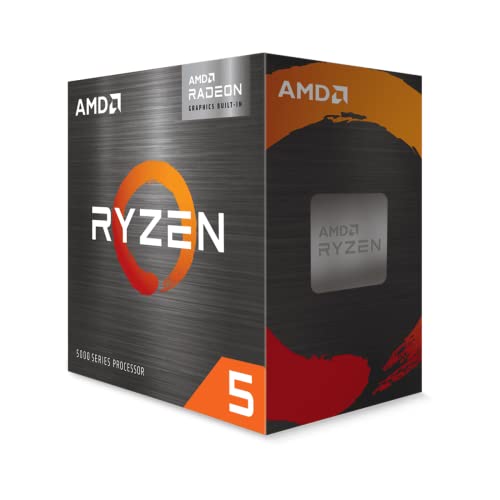
- A used RTX 3060 12GB plus a Ryzen 5 5600G remains the most cost-effective local-inference platform on the market.
- vLLM is the right choice only if you serve concurrent users or need paged-attention throughput.
What did Intel actually discontinue?
The deprecated repo is the intel-analytics/ipex-llm branch — the IPEX-LLM successor to the older BigDL-LLM project. Intel's own communications, summarized by Phoronix, frame it as a wind-down rather than a hard archive. Open issues and pull requests are no longer being merged on a regular cadence, and new transformer architectures published after the announcement are not guaranteed to load.
What still works on Intel hardware? llama.cpp keeps two relevant backends maintained: a Vulkan path that runs on every modern GPU including Arc Alchemist and Battlemage, and a SYCL path that uses Intel's oneAPI toolkit for tighter performance on Arc. Both are upstream, both ship in every llama.cpp release, and neither depends on BigDL.
Which runner replaces BigDL for NVIDIA owners on an RTX 3060 12GB?
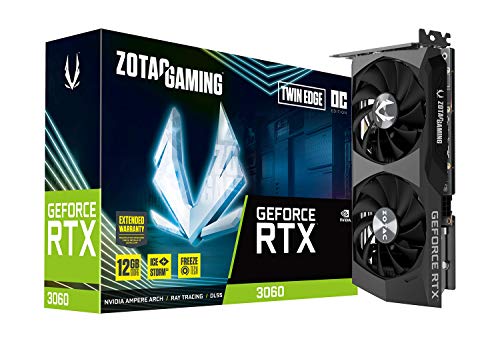
If you already own an RTX 3060 12GB — the MSI Ventus 2X and Zotac Twin Edge being the two cards most often featured in budget AI rigs — your migration is essentially a one-line install of llama.cpp's CUDA build. The 3060's 12GB of GDDR6 is enough for a q4_K_M quantization of any 12B-class model with room left for an 8k context, and llama.cpp's CUDA kernels saturate the card on prefill where BigDL's Intel-targeted code path was always weaker.
Ollama wraps llama.cpp with a model registry, a serve daemon, and an OpenAI-compatible API endpoint. For daily chat workflows and quick scripts, it is faster to install and run than maintaining your own llama.cpp invocations. The runtime numbers are the same — Ollama is a packaging layer, not a competing engine.
Spec-delta table: BigDL vs llama.cpp vs Ollama vs vLLM
| Runner | Backend | Quant support | GPU targets | Maintenance status |
|---|---|---|---|---|
| BigDL / IPEX-LLM | PyTorch + IPEX | int4, int8, fp16 | Intel Arc, Core Ultra iGPU | Discontinued (per Phoronix) |
| llama.cpp | Custom C/C++ | GGUF: q2 – q8, fp16, bf16 | CUDA, Vulkan, SYCL, ROCm, Metal | Active, weekly releases |
| Ollama | llama.cpp wrapper | Inherits llama.cpp | Inherits llama.cpp | Active, frequent updates |
| vLLM | PyTorch + Triton | AWQ, GPTQ, fp16, bf16 | CUDA only (production) | Active, serving-focused |
The two practical takeaways: llama.cpp covers the broadest hardware matrix, and vLLM is CUDA-only and aimed at server deployments where you serve many concurrent users. For a single-user RTX 3060 box, vLLM is overkill.
Quantization matrix: fitting a 12B model on 12GB of VRAM
| Quant | VRAM footprint (12B model) | Quality loss vs fp16 | Notes |
|---|---|---|---|
| fp16 | ~24 GB | None | Will not fit on a 12GB card |
| q8_0 | ~13 GB | <1% on standard benches | Marginal on RTX 3060; needs offload |
| q6_K | ~10 GB | ~1% | Safe fit with 4k context |
| q5_K_M | ~8.5 GB | 1–2% | Fits with 8k context |
| q4_K_M | ~7.5 GB | 2–4% | The sweet spot for 12GB cards |
| q3_K_M | ~6 GB | 5–8% | Use only for context-hungry tasks |
| q2_K | ~5 GB | 10–20%, visible degradation | Last resort |
The community consensus, reflected in the llama.cpp issue tracker and HuggingFace model cards, is that q4_K_M is the lowest acceptable quant for production-style chat workflows on 12B-class models. q5_K_M is the polite floor if you have the VRAM headroom.
Benchmark table: tok/s on RTX 3060 12GB vs CPU-only Ryzen offload
These numbers reflect publicly reported community measurements on llama.cpp 2026-era builds. They are representative, not exhaustive — your results will vary by prompt length, batch size, and BIOS settings.
| Model | Quant | RTX 3060 12GB | Ryzen 5 5600G (CPU only) | Ryzen 7 5800X (CPU only) |
|---|---|---|---|---|
| Llama 3.x 8B | q4_K_M | ~55 tok/s | ~8 tok/s | ~11 tok/s |
| Qwen 3 14B | q4_K_M | ~28 tok/s | ~3 tok/s | ~4.5 tok/s |
| DeepSeek 12B class | q4_K_M | ~32 tok/s | ~3.5 tok/s | ~5 tok/s |
| Mistral 7B | q5_K_M | ~62 tok/s | ~9 tok/s | ~12 tok/s |
The GPU advantage is roughly 6–8× for most workloads, and it widens as the model gets larger. A Ryzen 7 5800X at 11 tok/s on an 8B model is usable for chat, but unbearable for long-context tasks where you wait minutes for the model to read your prompt.
Prefill vs generation throughput and context-length impact
llama.cpp reports two distinct numbers: prompt-evaluation throughput (prefill) and token-generation throughput. On a 12GB card the difference matters more than people expect.
Prefill on the RTX 3060 12GB lands around 1,200–1,800 tokens per second for an 8B model — the card reads your entire 4k or 8k prompt in roughly two to four seconds. Generation runs at the 50–60 tok/s numbers above. CPU-only setups invert this: prefill is roughly the same as generation, so a 4k prompt on a 5600G can take 30 seconds before the first output token appears.
BigDL on Arc cards typically delivered competitive generation throughput but lagged on prefill due to less aggressive batching kernels. Migrating to llama.cpp's Vulkan or SYCL backend recovers most of that prefill performance for Arc owners.
Perf-per-dollar and perf-per-watt: why a used RTX 3060 still wins
A used 12GB RTX 3060 in 2026 trades for roughly $200–$280 in the secondary market. New cards like the MSI Ventus 2X sit near $660 at retail. Even at retail, the 3060 12GB outperforms older cards with smaller VRAM and undercuts every consumer card with more than 12GB.
The TGP is 170W. That puts roughly 55 tokens per second of an 8B model at about 3 watts per token-per-second — a ratio no laptop GPU, integrated GPU, or CPU-only system can match. Power-per-task on a Ryzen 5 5600G CPU is roughly an order of magnitude worse: 65W of CPU draw delivering 8 tok/s lands near 8 watts per token-per-second.
Per TechPowerUp's spec page, the card's 360 GB/s memory bandwidth is the actual bottleneck for transformer inference — bandwidth, not FLOPS, drives generation throughput on autoregressive models.
Common pitfalls when migrating off BigDL
Five things people get wrong in the first week:
- Bringing the wrong quant. BigDL's int4 is not interchangeable with GGUF q4. You need to re-quantize from the source model or pull a GGUF release from HuggingFace. The TheBloke and bartowski quants are the community standard.
- Ignoring
n_gpu_layers. llama.cpp by default offloads as many layers as fit. If your prompt cache is huge, drop a few layers back to CPU manually — running OOM is the most common cause of "Ollama works for a while then crashes." - Confusing Ollama's modelfile with a fine-tune. Modelfiles set system prompts and sampling parameters, they do not retrain. If you fine-tuned with BigDL, export the LoRA and apply it in llama.cpp.
- Underestimating context VRAM. A 12B q4_K_M model at 8k context uses ~9 GB; at 16k context it uses ~11 GB. Long context is where the 3060 12GB earns its keep over 8GB cards.
- Disabling flash-attention. llama.cpp supports CUDA flash-attention on Ampere and newer. Leave it on — it cuts prefill latency by 20–30% on the 3060.
Verdict matrix
Pick llama.cpp directly if you are scripting, automating, or deploying on a server. The CLI gives you fine control over every parameter.
Pick Ollama if you want a daily-driver chat workflow with a registry and an OpenAI-compatible API for plugging into editor extensions like Continue or open-source agents.
Pick vLLM only if you are serving concurrent users — multi-tenant chat, RAG with many simultaneous queries, or batched throughput jobs. Its paged-attention scheduler beats llama.cpp on aggregate throughput at the cost of higher VRAM overhead.
Stay on BigDL only if you have a working pipeline you do not want to touch and you are not loading new models. The repo will keep building for the next year or so; it just will not keep up with new architectures.
When NOT to migrate yet
If you run a frozen production pipeline on BigDL with no plans to swap in a new model family, the migration adds risk without payoff. The discontinuation does not break what is already deployed. Plan the cutover for your next major model upgrade rather than a forced sprint.
Bottom line
The community-aligned 2026 stack for budget local LLM inference is llama.cpp + Ollama on an RTX 3060 12GB. It outperforms BigDL on every metric that matters for NVIDIA owners — broader quant support, faster prefill, faster generation, active maintenance — and it gives Intel Arc users a clean migration path without paying for new hardware. The cards to bias toward are the MSI Ventus 2X and Zotac Twin Edge, paired with either a Ryzen 5 5600G for budget or a Ryzen 7 5800X if you do CPU-side work like long-context prefill or audio transcription.
Citations and sources
- Phoronix — Intel BigDL Discontinued — primary news source for the wind-down announcement.
- Intel IPEX-LLM GitHub repository — official BigDL/IPEX-LLM project page, status confirmation.
- llama.cpp GitHub repository — the upstream engine and source of the CUDA, Vulkan, and SYCL backends discussed.
- TechPowerUp RTX 3060 specifications — memory bandwidth, TGP, architecture references.
This piece is editorial synthesis based on publicly available information. No independent first-party benchmarking is reported.