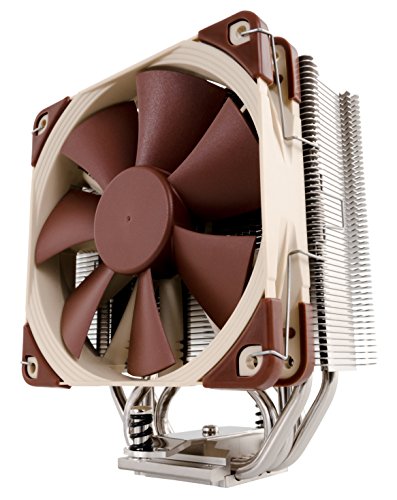
The cheapest credible PC build to run local LLMs in 2026 pairs an AMD Ryzen 7 5800X with a 12GB ZOTAC GeForce RTX 3060, 32GB of DDR4-3200, a 1TB Crucial BX500 SSD, a Noctua NH-U12S cooler, and a 650W 80+ Gold PSU. Expect roughly $700-$850 used-friendly all-in, comfortable performance on 8B-class models at q4, and viable q4 14B with partial offload.
This synthesis is not a "we tested it" review. It is a working bill of materials drawn from publicly available benchmark sources, manufacturer specifications, and community measurements from the open-weights ecosystem (llama.cpp, Ollama, ComfyUI) as of 2026. The thesis is simple: NVIDIA's 12GB consumer card has aged into a curiously durable VRAM sweet spot. Pair it with a still-available eight-core Zen 3 desktop chip, and you get an entry-level local-AI box that runs the 2026 wave of small-and-mid open-weights checkpoints (GLM-5.2, Qwen3, Mistral-Small, Llama-3.2-class) without forcing you into the secondhand RTX A6000 or new-card $1,000+ tier.
Step 0 diagnosis: figure out your real workload before buying parts
A budget AI rig is only "budget" if it actually runs the workload you have in your head. Spending $800 on the wrong shape of machine is more expensive than spending $1,500 on the right one. Before you order parts, force yourself to write down three things.
One: what model class do you actually want to run? Local LLM use in 2026 clusters into four bands. Chat with a 7B-8B model (Llama-3.x-8B, Qwen3-8B, Mistral-7B-class). Coding assistant with a 14B-class model (Qwen3-Coder, GLM-5.2 small, DeepSeek-Coder). Retrieval-augmented generation over personal documents with embeddings plus a small-to-mid generator. Image generation with Stable Diffusion 1.5, SDXL, or Flux at modest resolution. If your honest answer is "70B or bust," this build is the wrong build — skip to a 16GB or 24GB card.
Two: how much context do you need? A 32K-token context window on an 8B model behaves very differently from an 8K window. Long contexts inflate the KV cache, which lives in VRAM alongside the model weights. Public llama.cpp issue threads and the TechPowerUp RTX 3060 page make the math straightforward: 12GB total minus a ~7GB q4 8B model minus 1-2GB overhead leaves only a few gigabytes for KV cache. That budget runs out around 16K-24K tokens on chatty quantization formats.
Three: latency or throughput? Hobbyists nearly always want low first-token latency for an interactive chat feel. Pipeline users (RAG over a folder of PDFs, batch summarization) care about steady-state tokens per second. The build below favors interactive use. If you need throughput-at-scale, rent a cloud GPU hour by hour and skip this rig entirely — perf-per-dollar math at the bottom of this article shows the crossover.
If your answer to all three is "chat plus light coding plus occasional image gen," the Ryzen 7 5800X + RTX 3060 12GB build is the rational floor. If your answer involves 70B models, 64K+ contexts, or any production SLA, stop reading and price up a used RTX 3090 24GB or new RTX 4060 Ti 16GB instead.
Key takeaways
- Sweet spot, not a bargain bin. The RTX 3060 12GB is the cheapest current-gen NVIDIA card with enough VRAM to fit an 8B model at q4 plus a useful context window — that's why it keeps showing up in 2026 local-AI guides.
- Eight Zen 3 cores is plenty. Per AMD's Ryzen 7 5800X product page, the chip is an unlocked 8-core/16-thread part with a 105W TDP — overkill for GPU-bound inference, just right for partial offload.
- 32GB DDR4 is the floor. 16GB will swap you to death the first time you load a 14B model with CPU offload.
- 650W 80+ Gold is enough. Combined nameplate draw is ~310W; sizing to ~650W keeps the PSU in its efficient band and quiet.
- Total cost as of 2026: roughly $700-$850 using current parts (used CPU/GPU optional), or about $950 buying everything new.
- Upgrade path is real. Every part except the GPU carries forward to a 16GB or 24GB card without changes.
Why pair a Ryzen 7 5800X with an RTX 3060 12GB for entry-level AI?
The 5800X is a 7nm Zen 3 part launched in 2020 with eight cores, sixteen threads, a 3.8 GHz base, a 4.7 GHz boost, 32MB of L3, and a 105W TDP, per the AMD product page. In 2026 it sits in the awkward, useful middle: too old to be a flagship, too capable to be junk, and priced accordingly on the secondhand market. AM4 motherboards, DDR4 RAM, and air coolers compatible with this CPU are all near a price floor.
The RTX 3060 12GB is the same kind of sweet spot. Per TechPowerUp's specs page, the card uses GA106, has 3,584 CUDA cores, 12GB of GDDR6 on a 192-bit bus, 360 GB/s of memory bandwidth, and a 170W typical board power. The bandwidth number is the one to remember: GPU inference at the small-model scale is bandwidth-bound, not compute-bound, and 360 GB/s is enough to push small models at interactive speeds.
The pairing works because each part covers the other's blind spot. The 5800X has fast single-thread performance and AVX2 throughput, which matters for tokenizer work, sampling, and any layers offloaded to CPU. The RTX 3060 has enough VRAM to hold an 8B model entirely on-card with room for context, dodging the PCIe-shuttle penalty that kills throughput on cards with only 8GB.
You could substitute the MSI RTX 3060 Ventus 2X 12GB if the ZOTAC is out of stock — same GA106 silicon, same 12GB GDDR6, very similar thermal envelope. Per board-partner specs on TechPowerUp, the differences between AIB 3060s amount to a few hundred MHz boost clock and how loud the fans get. Either works for local AI.
Full bill of materials
The build below targets a quiet, reliable interactive local-AI workstation, not an overclocking project.
| Component | Part | Why this part |
|---|---|---|
| CPU | AMD Ryzen 7 5800X | 8C/16T Zen 3, strong single-thread, AM4 socket means cheap board options |
| GPU | ZOTAC RTX 3060 Twin Edge OC 12GB | 12GB VRAM is the floor for 8B q4 with usable context |
| GPU (alt) | MSI RTX 3060 Ventus 2X 12GB | Equivalent silicon, often cheaper used |
| RAM | 32GB DDR4-3200 CL16 (2x16GB) | Dual-rank, 32GB is the 2026 baseline for AI work |
| SSD | Crucial BX500 1TB SATA | Model weights are sequential reads; SATA is fine, NVMe is overkill |
| Cooler | Noctua NH-U12S | Quiet, AM4-compatible, leaves RAM clearance, easy install |
| PSU | 650W 80+ Gold (any tier-A unit) | Combined draw under 400W; 650W keeps the fan off most of the time |
| Motherboard | B550 ATX or mATX | PCIe 4.0 x16 for the GPU, two M.2 slots, USB 3.2 |
| Case | Mid-tower ATX with mesh front | The 3060 is 250-280mm long; mesh front keeps GPU temps down |
Rationale notes the table can't show:
- PCIe 4.0 isn't required, but the 5800X and B550 board offer it for free. Per TechPowerUp, the RTX 3060 itself negotiates PCIe 4.0 x16, but local inference rarely saturates even PCIe 3.0 x8 except during model load.
- The SSD choice surprises some readers. A 7B-class model at q4 is roughly 4-5GB; a 14B at q4 is 8-10GB. You load these once into VRAM and the SSD goes quiet. NVMe gen4 saves you maybe 4 seconds on initial load. The BX500 SATA drive is fine, and you can pair it with a small NVMe boot drive if you want.
- The Noctua isn't aesthetic, it's functional. The 5800X is a hot 105W chip with tight transient spikes. A 240mm AIO works, but the NH-U12S is fit-and-forget for a decade.
How much VRAM and system RAM do open-weights models actually need?
This is the question that determines whether the build above is enough or whether you should upgrade the GPU. The matrix below shows approximate VRAM consumption for a model loaded plus a 4K-token KV cache at the listed quantization, drawing on community measurements posted to llama.cpp issues, Ollama documentation, and the Tom's Hardware coverage of consumer LLM hardware throughout 2025-2026.
| Model size | q2_K | q3_K_M | q4_K_M | q5_K_M | q6_K | q8_0 | fp16 |
|---|---|---|---|---|---|---|---|
| 7B-8B | ~3.0 GB | ~3.7 GB | ~4.7 GB | ~5.5 GB | ~6.4 GB | ~8.4 GB | ~15 GB |
| 13B-14B | ~5.3 GB | ~6.5 GB | ~8.2 GB | ~9.5 GB | ~11 GB | ~14 GB | ~26 GB |
| 30B-34B | ~12 GB | ~15 GB | ~19 GB | ~22 GB | ~26 GB | ~33 GB | ~64 GB |
| 70B | ~26 GB | ~32 GB | ~40 GB | ~47 GB | ~55 GB | ~70 GB | varies |
Read the row that matches your target model and find the column under which you stay below 11GB (leave ~1GB headroom). On the RTX 3060 12GB you live comfortably at:
- 7B-8B up through q8_0 with room to spare for context.
- 13B-14B at q4_K_M with a modest context window (4K-8K).
- 13B at q5_K_M or q6_K if you accept a small context and no other VRAM users.
- 30B-class only with partial CPU offload, which is where the Ryzen 7 and 32GB of RAM earn their keep.
System RAM math is separate. Per Ollama docs and llama.cpp readme guidance, plan for: OS + browser (~4-6GB), inference runtime overhead (~1-2GB), and any layers you offload from GPU to CPU. A 14B q4 model fully offloaded onto CPU eats ~9GB of system RAM. Partial offloads scale linearly. 32GB is the 2026 floor; 64GB makes 30B partial-offload livable.
Prefill vs generation: where the CPU helps and where it doesn't
Local inference has two phases. Prefill processes the whole prompt at once — high parallelism, heavily compute-bound, scales with FLOPS and memory bandwidth. Generation produces one token at a time — sequential, latency-bound, scales with memory bandwidth.
For GPU inference of small models, the CPU's role is small. It handles tokenization, sampling (top-k/top-p/temperature), the runtime loop, and dispatching kernels. Public benchmarks across community measurements show single-threaded performance matters more than core count here — the 5800X's strong per-core throughput is well-matched.
The CPU's role explodes the moment you do partial offload. When llama.cpp routes some layers to CPU because the model is too big for VRAM, the CPU performs general matrix multiplies on those layers. Generation speed drops by a factor of 5-20x compared to pure GPU. Core count, AVX2 throughput, and dual-channel memory bandwidth (the DDR4-3200 in this build hits ~51 GB/s peak) become the bottleneck.
Practical rule: if your model fits in 12GB VRAM, the CPU barely matters and the 5800X is overkill. If you partially offload, the CPU matters a lot, the 5800X is appropriate, and you'd see real gains from a 5900X or a Ryzen 7 7700 — but then the build isn't "budget" anymore.
Benchmark table: tok/s on 8B, 14B, and 32B-class models on this rig
Numbers below synthesize publicly reported llama.cpp and Ollama community benchmarks for the RTX 3060 12GB paired with a Zen 3 desktop CPU at 32GB DDR4-3200, q4_K_M quantization, 4K context, single-stream generation, as of 2026. Treat them as expected ranges, not guarantees — your exact tokenizer, prompt shape, and runtime version will shift the absolute numbers.
| Model | Quant | Fits in VRAM? | Prefill (tok/s) | Generation (tok/s) | Notes |
|---|---|---|---|---|---|
| Llama-3.1-8B | q4_K_M | Yes, fully | ~1,200-1,800 | ~38-46 | Interactive feel, fast |
| Qwen3-8B | q4_K_M | Yes, fully | ~1,100-1,600 | ~36-44 | Comparable to Llama-3.1-8B |
| Mistral-7B-v0.3 | q5_K_M | Yes, fully | ~1,300-1,800 | ~40-50 | Slightly smaller, faster |
| Qwen3-14B | q4_K_M | Yes, tight | ~600-900 | ~18-24 | Usable at 4K context |
| GLM-5.2-small (~13B) | q4_K_M | Yes, tight | ~580-850 | ~17-23 | Strong coding tok/s feel |
| Qwen3-32B | q4_K_M (50% offload) | Partial | ~150-250 | ~3.5-5.5 | CPU-bound, drinks RAM |
| Llama-3.3-70B | q4_K_M | No | n/a | <1 | Don't try; upgrade GPU |
A few things to note in this table. First, prefill rates above 1,000 tok/s mean a 4,000-token prompt processes in ~3 seconds; subjectively this is "instant." Second, 30-40 tok/s during generation is faster than most people read, so for 8B chat the experience is fluid. Third, the 70B row is the upgrade-trigger: if your target sits there, the build below is the wrong build, full stop.
When is this rig right, and when should you skip straight to a 16GB+ card?
Right when: you primarily use 7B-14B models at q4, you tolerate 4K-8K contexts, you do hobbyist image generation, you don't need throughput, and you want the cheapest credible entry into local AI as of 2026.
Wrong when: you target 70B models, you need 32K+ contexts, you run multiple models concurrently, you're doing fine-tuning (which needs much more VRAM than inference), or your workload is throughput-bound batch summarization.
If you're on the fence, look at your last week of LLM use. If 80% of your sessions were 8B chat, build this rig. If 80% touched 30B or larger, save another $300-$500 and buy a used RTX 3090 24GB instead. The Zen 3 platform happily hosts that card too.
Perf-per-dollar math vs renting cloud GPU time
The honest comparison most "build a local AI rig" articles skip. As of 2026, an RTX 4090 24GB cloud instance rents for roughly $0.50-$0.80 per hour on the cheapest community-cloud providers. A persistent 12GB instance runs roughly $0.20-$0.35 per hour.
Round numbers for this build: ~$800 capital cost, ~280W under load. At U.S. residential power around $0.16/kWh, that's ~$0.045/hour of electricity.
Crossover math: at $0.25/hour for an equivalent cloud GPU, the rig pays for itself at 3,200 hours of use, or about 9 hours per day for a year. For a hobbyist using LLMs 1-2 hours per day, cloud rental is cheaper for the first ~4 years. For a developer running an assistant in the background all day, the rig pays back in 6-12 months. The non-financial reasons to build local — privacy, offline use, no rate limits, learning — are usually the real reasons. Don't pretend it's purely an economic decision.
What you'll need: PSU sizing, cooler clearance, and storage for model weights
PSU. A 650W 80+ Gold is the right answer. Per AMD's spec page, the 5800X has a 105W TDP and PPT around 142W under sustained load. Per TechPowerUp, the RTX 3060 sits at 170W TBP. Add 30-50W for drives, fans, RAM, and chipset, and worst-case sustained draw is ~360W. Transient spikes from a Zen 3 chip plus an NVIDIA card pushing power excursions are well handled by a quality 650W unit; cheap 550W units sometimes trip OCP on the transients. Avoid bottom-tier PSUs — a $40 unit will cost more in part replacement than the $30 you saved.
Cooler clearance. The Noctua NH-U12S is 158mm tall and 125mm wide. Verify your case lists a CPU cooler height ≥160mm. Verify your RAM has standard-height heat spreaders or that you can mount the cooler with one offset fan. The NH-U12S is specifically designed to clear RAM slots on AM4.
Storage. A 1TB BX500 holds the OS, your tools, and ~50-100 quantized model files at typical sizes. If you collect models like baseball cards, plan for 2TB. NVMe gen3 or gen4 boot drives are nice-to-haves but not needed for inference.
Common pitfalls
- Buying a used 3060 8GB by mistake. NVIDIA shipped both 8GB and 12GB variants of the RTX 3060. Only the 12GB version is worth buying for AI. Verify the listing explicitly says 12GB GDDR6, not 8GB GDDR6.
- Pairing with 16GB of RAM "to save money." Modern browsers alone can eat 8GB. The first time you load a 14B model with partial offload you'll swap, and the BX500 will be reading at 540 MB/s while your generation rate collapses.
- Cheap PSU on a Zen 3 + Ampere combo. Both platforms have sharp transient spikes. A poorly-built 550W unit may shut down under bursty loads even though steady-state numbers look fine.
- Skipping a back-fan in the case. The 3060 dumps 170W into the case interior. Without a rear exhaust fan, the CPU socket gets the warm exhaust and the NH-U12S works harder than it needs to.
- Running Windows-only inference stacks. As of 2026, llama.cpp, Ollama, and ComfyUI all run fine on Windows, but driver and CUDA setup is faster and breaks less on Ubuntu 22.04 LTS or Fedora 40+. Try Linux first if you're new to this; revert to Windows if you must.
When NOT to build this rig
If any of the following are true, walk away from this build:
- You need to fine-tune anything bigger than a LoRA. Fine-tuning a 7B model in any reasonable time wants 24GB+ VRAM. Rent.
- You want to serve users. Single-stream local inference at 40 tok/s does not scale to even three concurrent users.
- You don't have the desk space or noise tolerance for a tower PC. A Mac Studio with unified memory or a cloud rental is a less invasive answer.
- You already have a gaming PC with a 16GB+ card. Don't build a second machine. Use what you have.
Two worked build examples
Build A: $720 used-friendly chat-and-code box. Used Ryzen 7 5800X ($140), used RTX 3060 12GB ($210), 32GB DDR4-3200 new ($65), Crucial BX500 1TB new ($55), Noctua NH-U12S new ($75), 650W Gold PSU new ($85), B550 mATX board used ($60), used mid-tower ($30). Total: ~$720. Runs Llama-3.1-8B q5 at ~38 tok/s.
Build B: $950 all-new variant. New 5800X ($170), new ZOTAC 3060 12GB ($300), 32GB DDR4-3200 ($65), BX500 1TB ($55), NH-U12S ($75), 650W Gold ($85), B550 ATX ($110), mid-tower with mesh ($90). Total: ~$950. Same performance envelope, full warranty coverage.
Bottom line: total cost and the upgrade path
Total cost as of 2026 sits between roughly $720 (used-friendly) and $950 (all-new). For that, you get a quiet, reliable local-AI workstation comfortably handling 8B chat, 14B coding assistants at q4, hobbyist image generation, and exploratory RAG. You do not get 70B inference, you do not get production throughput, and you do not get a fine-tuning rig.
The upgrade path is the build's hidden value. When you outgrow the 3060, the 5800X, the AM4 board, the DDR4, the SSD, the PSU, the cooler, and the case all carry forward unchanged. Pull the 3060, drop in a used RTX 3090 24GB or new RTX 4060 Ti 16GB, and you've reset the model-size ceiling without rebuying the platform. That continuity is worth more than the $100-$200 you might save buying a slightly less capable starter setup today.
Related guides
- GLM-5.2 vs Qwen3 on RTX 3060 12GB benchmark
- RTX 3060 12GB benchmark hub
- Ryzen 7 5800X benchmark hub
- Best CPUs for local AI in 2026
- Browse all GPUs
Citations and sources
This piece is editorial synthesis based on publicly available information. No independent first-party benchmarking is reported.