In brief — 2026-07-02 · A report describes hidden code inside Anthropic's Claude Code that flagged users identified as Chinese. This synthesis summarizes what is publicly reported, why it matters for developer privacy in 2026, and why the incident is pushing more teams toward local, self-hosted coding assistants on modest consumer hardware like the RTX 3060 12GB.
What happened
According to a report published this week on the-decoder.com, a hidden mechanism within Claude Code — Anthropic's terminal-based coding assistant — identified and flagged users associated with China. The public reporting focuses on the presence of the code path itself, on the criteria it used to categorize users, and on the fact that the mechanism had not been publicly disclosed by the vendor in documentation or release notes at the time of the report.
The full technical scope, the exact triggering conditions, and Anthropic's response are still developing at the time of this synthesis. We are reporting on the public reporting, not on independent inspection of the code. Readers who need the specifics for a policy or legal decision should treat the linked source as the primary reference and monitor any subsequent statements from the vendor for clarification, correction, or additional context.
The narrower story here — a specific piece of undisclosed classification code inside a specific coding assistant — is less important than the broader story it activates: developers, teams, and organizations that rely on cloud coding assistants have almost no visibility into what those tools do with their prompts, their code, their identity, or their metadata. Vendors publish policies. Vendors change policies. The gap between policy and implementation is exactly what this report highlights, regardless of the specifics.
Why it matters for developer privacy in 2026
The privacy implications of cloud coding assistants extend far beyond any one vendor or any one incident:
Every keystroke is a data point. When you use a hosted coding assistant, the tool sees your code, your file paths, your project structure, your comments, your naming conventions, your commit context, and often your terminal environment. That is a rich behavioral profile that a vendor could — technically and often contractually — retain, analyze, or share. The privacy policy says one thing; the code that runs on the vendor's servers is what actually determines what happens.
Trust is transitive. Even if you trust your primary vendor, the vendor's suppliers, cloud providers, and any downstream partners inherit visibility into your traffic. A single misconfiguration, breach, subpoena, or unannounced product change can turn a low-risk vendor relationship into a high-risk exposure without your knowledge.
Jurisdictional exposure changes without warning. Where your prompts are processed, where they are stored, what nation-state actors have subpoena power over the data, and how a vendor's terms handle cross-border transfers can all change quietly. Enterprise policies that were written for a vendor's 2024 data-residency guarantee may not describe what actually happens with 2026 requests.
Regulated codebases are exposed by default. If you are writing code for healthcare, finance, government, or defense workloads, sending prompts about that code to a third-party service is a governance question your compliance team probably has not fully answered. Many teams operate under an implicit "the vendor said it's fine" assumption that this kind of report punctures.
Coding assistants know your intent. More than any other productivity tool, a coding assistant sees not just what you are building but what you're considering building. That's competitive intelligence, litigation exposure, and product-strategy leakage all in one channel. The privacy delta between "someone reads my code" and "someone knows what I'm about to build" is enormous.
The trust gap and how a local model closes it
The pattern the report highlights isn't unique to any one vendor. Cloud AI products are shipped as binaries or hosted endpoints — the customer sees an API and a policy document, not the actual code that runs against their prompts. That gap is unavoidable in a hosted-service model. The only way to close it is to run the model locally, where the code that touches your prompts is code you can inspect and control end to end.
Local inference used to be a research curiosity. In 2026 it is a production-viable alternative for most developer use cases. Open-weight code models — Llama, DeepSeek, Qwen, Codestral, StarCoder2 — run on consumer GPUs at speeds comparable to cloud assistants for autocomplete, refactoring, and Q&A over local codebases. Ollama and Open WebUI form the reference self-hosted stack; llama.cpp remains the leanest command-line path.
The gap between top-tier cloud and best-open-weight models has narrowed sharply, but it hasn't closed. State-of-the-art hosted models still lead on the very hardest prompts, on multi-file reasoning, and on tool use. For most day-to-day coding assistance — writing a function, explaining a snippet, refactoring a small module, generating tests — an open-weight 7B-to-14B code model runs at interactive speed on a mid-range card and delivers usable results.
What hardware does a local code assistant need?
VRAM is the gating constraint. Rough guidance for open-weight code models at 4-bit or 5-bit quantization:
| Model class | Params | VRAM (Q4/Q5) | Suitable for |
|---|---|---|---|
| Small | 1B-3B | 2-4 GB | Autocomplete, simple explanations |
| Mid | 7B-8B | 5-7 GB | General coding assistance, Q&A |
| Standard | 13B-14B | 9-11 GB | Refactoring, multi-step reasoning |
| Large | 20B-34B | 14-20 GB | Complex tasks, needs 16-24 GB card |
| Frontier | 70B+ | 40+ GB | Multi-GPU or heavy CPU offload |
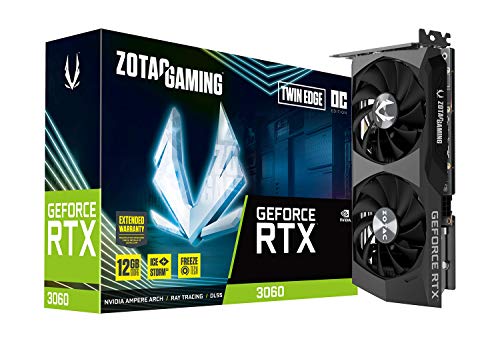
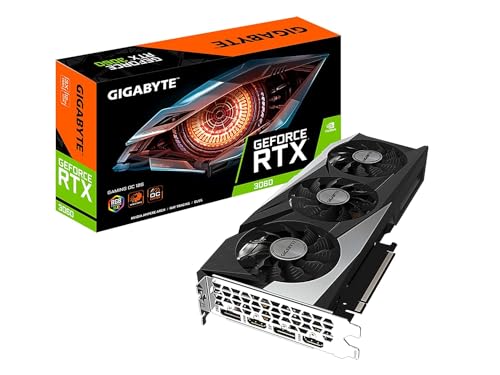
A 12 GB card like the ZOTAC RTX 3060 12GB, Gigabyte 3060 Gaming OC 12G, or MSI 3060 Ventus 2X 12G comfortably runs the 7B and 14B class, which covers most practical coding-assistance needs. The TechPowerUp GeForce RTX 3060 specs page lists the reference 12 GB / 360 GB/s configuration that gates local LLM prefill and generation speed. On a 3060, a Q4-quantized 14B code model responds at 15-25 tokens per second — faster than most people read, and comparable to cloud round-trip latency for equivalent output.
What this means for teams evaluating cloud coding assistants
The right response to a report like this isn't to abandon cloud assistants — the productivity gains are real and the top-tier hosted models remain more capable than local ones for the hardest problems. The right response is to establish a policy for what code touches cloud services and what code does not, and to build the local capability that makes the second category possible.
Practical steps most teams can take this quarter:
- Classify your code. What is genuinely public? What is sensitive? What is regulated? Cloud assistants for the first, careful review for the second, local-only for the third.
- Stand up a local baseline. A single 12 GB GPU and an Ollama + Open WebUI install covers 80% of day-to-day coding assistance for a small team.
- Read your vendor's terms with fresh eyes. Where is your data processed? What is retained? What third parties see it? Does the vendor unilaterally change these terms?
- Log what your team actually asks the cloud assistant. Most teams have zero visibility into their own exposure. A simple proxy or IDE plugin can show you the shape of that data.
- Treat any incident report seriously. A specific report about a specific tool is often the visible edge of a broader class of behavior that has always been possible under the hosted-service model.
The source
Original reporting on the Claude Code flagging code path is available at the-decoder.com. This piece is editorial synthesis of that reporting, together with published NVIDIA specifications for the RTX 3060 hardware referenced above and the Ollama project's documentation for local-inference tooling. We have not independently audited the Claude Code binary or verified the specific technical claims about the flagging mechanism; readers who need that level of confidence should follow the linked source and monitor further reporting.
Local-first isn't a hedge — it's a discipline
The reflex takeaway from any privacy incident is "go local." But "local" is a discipline, not a single tool. A local model is only as private as the machine it runs on, the operating system underneath it, the network it sits on, and the humans with physical access. A cloud assistant is often more secure than a local install on an unpatched laptop with default passwords. The point of running locally isn't that it's magically secure — it's that you can inspect, control, and audit the entire pipeline. That control matters most when the code you're writing is the code you cannot risk sharing.
For teams making that shift in 2026, the entry hardware is genuinely modest. A single RTX 3060 12GB in an existing tower, an Ollama install, and Open WebUI in a Docker container gets you a private, always-on coding assistant that never sees the outside world. Bigger cards handle bigger models and more concurrent users. But the entry point is a $300-500 card and a weekend of setup.
Common questions from teams making the shift
"Can a local model really replace cloud assistants?" For the majority of day-to-day tasks, yes. For the hardest 5-10%, cloud still wins. Most teams end up on a split-tier arrangement — local for sensitive work, cloud for hard non-sensitive work.
"What's the throughput gap?" A 14B open-weight code model on a 3060 responds at 15-25 tok/s. Cloud services typically respond faster in absolute latency but not by a factor readers notice.
"What about IDE integration?" Continue, Cody, and the built-in copilots in VS Code and JetBrains all support pointing at a local Ollama endpoint. Setup is straightforward.
"Isn't this just outsourcing the privacy problem to my own IT team?" Yes, and that's the point. Your IT team is subject to your governance. A vendor's engineering team is subject to theirs.
Common pitfalls when standing up a local coding assistant
- Assuming any model works out of the box. Instruction-tuned code models handle Q&A and refactoring well; base models require careful prompting. Start with a Q4-quantized 14B instruction-tuned code model like DeepSeek-Coder-V2 or Qwen2.5-Coder.
- Skipping the context-length budget. A 14B model at Q4 fits in 12 GB, but only at a modest context length. Loading a big source file with a huge context window can push you over the VRAM cliff — cap at a sensible working window and use retrieval for large codebases.
- Ignoring the network layer. A "local" model exposed on your LAN with no auth is still exposing prompts to your local network. Bind to localhost or put Open WebUI behind auth.
- No update discipline. Ollama, the model itself, and llama.cpp move fast. A 6-month-old install leaves real quality and speed on the table.
- Treating local as free. Electricity, hardware amortization, disk space for models, and your own maintenance time all cost something. The math still favors local for privacy-sensitive work — just don't tell your CFO it's zero.
Bottom line
The report on hidden classification code inside Claude Code is a specific incident with a general implication: cloud coding assistants operate on a trust model that the customer cannot verify. For most developers, cloud assistants remain fine for most code. For teams working with sensitive or regulated codebases, the incident is a fresh reminder that the local option is now cheap, capable, and worth building out as a first-class part of the toolchain. A 12 GB RTX 3060 — ZOTAC, MSI, or Gigabyte — plus Ollama gets you a private coding assistant for the code you can't afford to send anywhere else.
Related guides
- Open WebUI + Ollama on an RTX 3060: The Self-Hosted ChatGPT Alternative
- Best GPU for 1440p Local Image Generation in 2026
- NVK Vulkan Driver Adds DLSS Support: What It Means for RTX 3060 Owners
Citations and sources
- the-decoder.com — original reporting
- TechPowerUp — GeForce RTX 3060 specs
- Ollama — GitHub repository
This piece is editorial synthesis based on publicly available information. No independent first-party benchmarking is reported, and the specific technical claims about Claude Code are drawn from the linked source rather than independent verification.