For a retro PC gaming build in 2026, the right sound card depends on which era you are recreating. For authentic DOS gaming with FM synthesis and General MIDI, a period ISA card like a Creative AWE32 or AWE64 remains the gold standard, because real-mode Sound Blaster 16 emulation requires hardware-level compatibility. For a Windows 98 or XP-era build, a PCI Sound Blaster Live! or Audigy 2 ZS hits the sweet spot for EAX environmental audio. If your modern retro chassis lacks ISA or PCI slots, the Creative Sound BlasterX G6 external DAC/amp is the cleanest USB bridge from a current motherboard back to the Sound Blaster lineage.
Why audio is the most-skipped part of a retro build
Most retro PC builders pour months into period-correct cases, beige keyboards, CRTs scrounged from estate sales, and the exact 3dfx Voodoo card they had as a teenager. Then they plug in whatever onboard audio the modern motherboard ships with, fire up "Descent" or "Quake," and wonder why the soundtrack feels off. Audio is the single most-skipped layer of a retro build, and it is also the layer with the largest delta between "almost right" and "exactly how you remember it."
The reason is technical, not nostalgic. DOS games did not talk to a generic audio driver; they wrote directly to specific I/O ports and IRQ lines that Creative's Sound Blaster cards exposed. The OPL2 and OPL3 FM synthesis chips, the Emu8000 wavetable synth on the AWE32 and AWE64, and the EMU10K1 DSP on the Live! and Audigy each have a distinct sonic fingerprint. Composers wrote MIDI banks specifically for the patches those chips played, and many DOS-era titles assume Adlib-compatible FM hardware sits at port 388h. Software emulation on a modern OS gets close in pitch and timing, but the harmonics and the way the chips bend their envelopes are not pixel-perfect. For a player who remembers the original sound, "close" reads as wrong.
The retro audio market is also more accessible than it looks. ISA AWE32 and AWE64 cards still surface regularly on eBay, PCI Live! and Audigy cards trade for modest sums, and Creative kept the Sound Blaster brand alive into the USB external era with the Sound BlasterX G6. The community at Vogons maintains driver archives, compatibility lists, and step-by-step guides that take most of the guesswork out of installation. A retro build does not need to chase audiophile components; it needs the right card for the era it targets, and a clean signal chain into a modern headphone or speaker setup.
This piece walks the Sound Blaster family tree from the AWE32 forward, lays out which card belongs in which build, and explains when an external DAC like the G6 is actually the right answer instead of a vintage card.
Key takeaways
- For DOS and pure real-mode gaming, an ISA card (AWE32, AWE64) is the only way to get authentic FM and General MIDI without emulation seams.
- For Windows 98 and XP gaming with EAX environmental audio, a PCI Live! or Audigy 2 ZS is the era-correct choice.
- For modern retro builds on motherboards without ISA or PCI, the Creative Sound BlasterX G6 preserves the Sound Blaster brand and ships a clean USB signal chain.
- EAX environmental audio breaks under Windows Vista and later without wrapper layers like ALchemy.
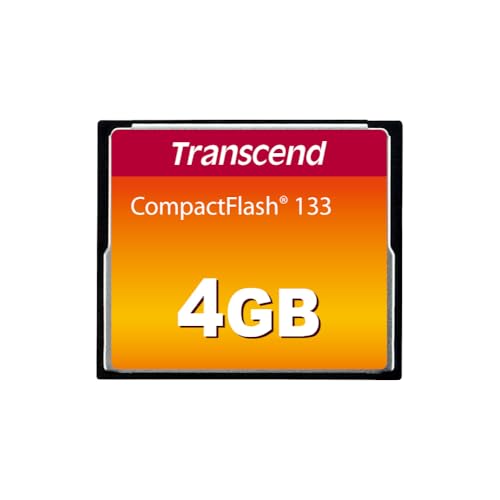
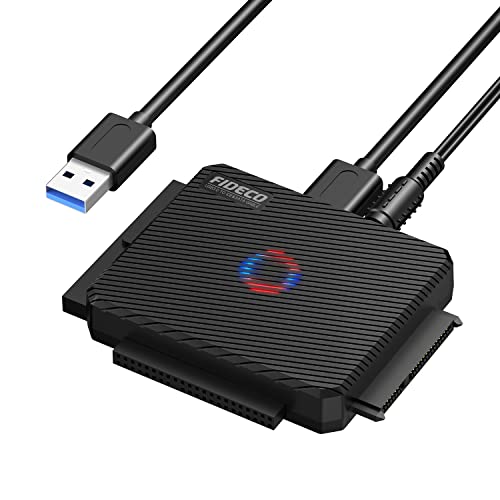
- Pair any retro audio build with a quiet boot drive such as a Transcend CF133 CompactFlash and an imaging tool like the FIDECO SATA/IDE to USB 3.0 adapter to make driver loading painless.
Step 0 — diagnose your era: ISA AWE32/AWE64, PCI Live!/Audigy, or USB external?
Before you buy anything, write down which era your build targets. "Retro PC" covers about fifteen years of dramatically different hardware, and the correct sound card flips between three classes depending on where on that timeline you land.
If your build runs DOS 6.22, Windows 3.1, or Windows 95 on a Pentium or earlier CPU with an ISA slot, you want an ISA Sound Blaster. The AWE32 (1994) and AWE64 (1996) are the most flexible because they pair classic Sound Blaster 16 FM with the Emu8000 wavetable synthesis chip. That single board handles Adlib FM games, General MIDI titles, and the early wavetable boom without external modules. If you are chasing a specific late-80s or early-90s rig, the original Sound Blaster, Sound Blaster Pro, and Sound Blaster 16 cards also remain plentiful on the used market.
If your build runs Windows 98 SE, Windows ME, or Windows XP on a Pentium III, Athlon, or Pentium 4 motherboard with PCI slots, you want a PCI Sound Blaster Live! or Audigy. The Live! (1998) introduced the EMU10K1 DSP and the first Creative implementation of EAX environmental audio. The Audigy 2 ZS (2003) is the late-era favorite because it supports EAX 4 Advanced HD, DVD-Audio playback, and a higher signal-to-noise ratio than the Live!.
If your build targets Windows 7 or later, or if your "retro" motherboard simply has no legacy expansion slots, an external USB DAC is the practical answer. The Sound BlasterX G6 is the lineage-faithful pick: it carries the Sound Blaster brand, ships with Creative's processing suite, and includes a 130 dB DAC plus a discrete headphone amp at the price of a mid-range internal card.
Why does period-correct audio matter for DOS and Win9x games (FM, MIDI, EAX)?
DOS-era audio was authored against three specific hardware capabilities: Adlib-compatible OPL FM synthesis, General MIDI through wavetable or external module, and digital sample playback at fixed sample rates over DMA. Each of those layers has a sonic signature that emulation gets approximately right and hardware gets exactly right.
OPL2 and OPL3 FM synthesis is the most identifiable. The "id Software" startup chord in "Doom," the synth lead in "Commander Keen 4," and the operatic FM brass in "Tyrian" all assume specific OPL3 operator math. Software cores like DOSBox's Nuked OPL3 are very close, but on real Yamaha silicon the high-frequency operators bend a touch warmer. A real ISA AWE32 or AWE64 ships the OPL3 chip alongside its wavetable hardware, so a single card covers both modes.
General MIDI is where the gap widens. Late DOS and early Windows games drove MIDI through either a Roland MT-32, a Roland Sound Canvas, or a Sound Blaster wavetable. The Emu8000 wavetable on the AWE32 and AWE64 has its own SoundFont bank, and games composed for that bank sound right only when played through the AWE chip or a SoundFont-aware modern player. The Audigy's improved sample memory and SoundFont 2.x support is the late-era refinement of the same lineage.
EAX matters for the Windows 98 and XP era specifically. EAX 1.0 launched with the Live! and added environment reverbs, occlusion, and obstruction filtering. EAX 2, 3, 4, and 5 piled on more environment slots, more accurate reflections, and more concurrent voices. Games like "Thief II," "Deus Ex," "Unreal Tournament 2004," "Battlefield 2," and "F.E.A.R." all use EAX for spatial cues. Microsoft's removal of DirectSound3D hardware acceleration in Windows Vista broke EAX outright on later OSes; Creative's ALchemy wrapper restores it on PCI Audigy and X-Fi cards but only on supported OSes.
Spec-delta table: AWE32 vs AWE64 vs Live! vs Audigy 2 ZS vs BlasterX G6
The table below highlights why each card belongs in a different era. Buses, MIDI engines, EAX support, and signal-to-noise ratios are the four axes that drive the decision; specs vary by board revision and trim.
| Card | Year | Bus | MIDI / synth | EAX | Rated SNR |
|---|---|---|---|---|---|
| Sound Blaster AWE32 | 1994 | ISA 16-bit | Emu8000 wavetable + OPL3 | none | ~80 dB (era-typical) |
| Sound Blaster AWE64 | 1996 | ISA 16-bit | Emu8000 wavetable + WaveSynth/WG software voices | none | ~85 dB |
| Sound Blaster Live! | 1998 | PCI | EMU10K1 SoundFont 2.0 | EAX 1.0 / 2.0 | ~96 dB |
| Sound Blaster Audigy 2 ZS | 2003 | PCI | EMU10K2.5 SoundFont 2.x | EAX 4 Advanced HD | ~108 dB |
| Sound BlasterX G6 | 2018 | USB 2.0 external | Software synth (host CPU) | none (host-mixed effects) | 130 dB DAC per Creative |
A few things jump off that table. The two ISA cards trail every later card on signal-to-noise ratio because consumer ISA audio simply did not push high SNR; the analog ground plane on most ISA boards was noisy and the analog circuitry was modest. The Live! and Audigy 2 ZS made huge leaps because PCI gave them clean clocks and DSP headroom. The G6's 130 dB DAC reading from Creative is a modern audiophile-class spec that no internal Sound Blaster card from the lineage approaches.
That does not mean the G6 is "better" for a DOS rig. A DOS game running on the G6 needs DOSBox or a similar emulator to mediate, because the G6 cannot present a real ISA Sound Blaster at port 220h. The G6 is the right call when the host OS and software stack are modern and the card is being asked to deliver clean output and a headphone amp, not real-mode hardware compatibility.
When a modern external DAC like the BlasterX G6 is the right call for a retro rig
There are three concrete cases where the BlasterX G6 earns the slot over a vintage internal card.
First, your "retro" motherboard has no ISA and no PCI. Many late-era retro builders run early Core 2 Quad, Sandy Bridge, or Ivy Bridge boards that have PCI Express but no legacy PCI. An Audigy 2 ZS will not fit those boards. The G6 plugs into any USB 2.0 port and bypasses the slot question entirely.
Second, you are playing DOS games inside DOSBox-X, PCem, or 86Box on a modern Windows 11 or Linux host. The emulator presents virtual Sound Blaster hardware to the guest and writes the final mix to the host audio stack. In that pipeline, the G6 is the cleanest output device the host can hand to the speakers or headphones, and the analog headphone amp matters more than which card the emulator pretends to be.
Third, you want a clean signal chain into modern headphones. Vintage Sound Blaster cards drive line-level outputs with limited headroom. The G6's discrete headphone amp pushes high-impedance headphones (250 to 600 ohm Beyerdynamic and Sennheiser models in particular) to listenable volumes, which the AWE32's line out cannot reliably do. For a retro rig used as a daily driver, the G6 makes the headphone experience match the rest of the build.
The G6 is not the right call when authentic real-mode DOS hardware compatibility matters more than signal quality. There is no software trick that turns a USB device into a port-220h Sound Blaster.
Compatibility notes: Windows 98/XP drivers and the gotchas
Driver installation on Windows 98 SE and XP is where most retro audio builds stall. The classic gotcha is the order of operations: running an InstallShield installer before Windows Plug and Play detects the card often leaves a ghost device in Device Manager that intercepts IRQ resources and refuses to release them. The community archive at Vogons maintains the canonical install sequence for each card family.
For ISA AWE32 and AWE64 cards under Windows 98 SE, the right pattern is: power the system down, install the card in a free 16-bit ISA slot, boot to Windows, let Plug and Play detect "PCI Multimedia Device" or the AWE-specific descriptor, cancel the wizard, then run the AWEINST or SBSET installer from Creative's official archive. The installer registers the wavetable synth, FM device, and SB16-emulation MPU-401 ports in the correct order.
For Windows 95 OSR2 and earlier, the install sequence usually starts from DOS. The DOS install writes CTSYN.SYS, SET BLASTER environment variables, and an autoexec.bat block that configures the FM, wavetable, and DMA settings before Windows boots. Skipping the DOS install leaves Windows 95 without the SET BLASTER variables that many games still query when launched from a Windows 95 DOS box.
For PCI Live! and Audigy cards under Windows XP, the install order is reversed: install the Creative driver pack first, then plug in the card or reboot. The Live! and Audigy installers expect to set DirectSound, MIDI, and EAX subsystems before the card binds, and inserting the card first often leaves EAX disabled even though the rest of the card works. The community kX Project driver is the leading third-party alternative on Live! and Audigy hardware, but EAX support is partial under kX.
For modern OSes, the G6 mostly works as a class-compliant USB audio device, but Creative's Sound Blaster Command software is needed to enable the headphone amp gain modes, the "Scout Mode" gameplay processing, and the equalizer profiles. Without Command installed, the G6 behaves as a clean stereo USB DAC, which is fine for music but bypasses the gaming features.
Perf-and-value: what each tier costs on the used market vs new external
Used market pricing on Sound Blaster cards has stabilized since the 2022–2024 retro boom but remains highly variable by condition, accessories, and trim. The ranges below are typical 2026 secondary-market observations and exclude shipping; values vary by source.
| Tier | Card | Typical 2026 used range | Notes |
|---|---|---|---|
| ISA wavetable | AWE32 / AWE64 | varies by condition and trim | AWE64 Gold premium is the highest-priced retail trim |
| Late PCI | Live! 5.1 | modest used pricing | Best entry point for Win98/XP EAX builds |
| Late PCI | Audigy 2 ZS | mid-range used pricing | EAX 4 Advanced HD ceiling |
| USB external | Sound BlasterX G6 | new MSRP from Creative | Warranty, current driver support |
The accidental insight in that table is that the G6 is often cheaper new than a clean-condition AWE64 Gold is used. For a builder optimizing pure cost, an entry-level Live! 5.1 paired with a G6 on the modern OS daily-driver side covers both the Win98/XP era authentically and the modern OS use case cleanly for less than the AWE64 Gold premium.
Verdict matrix: Go vintage ISA if… / Go external G6 if…
Go vintage ISA (AWE32 or AWE64) if your build is DOS-first, your motherboard has a 16-bit ISA slot, you play Adlib, MT-32, and General MIDI games, and you care more about FM authenticity than signal-to-noise ratio. The AWE32 is the historically iconic choice; the AWE64 is the more compact and slightly more refined sibling.
Go PCI Live! 5.1 if your build is Win98 or Win XP-first, your motherboard has free PCI slots, you play EAX-supporting titles like "Thief II," "Deus Ex," and "Unreal Tournament," and you want a low-cost entry into hardware-accelerated environmental audio.
Go PCI Audigy 2 ZS if your build is XP-era enthusiast, you want EAX 4 Advanced HD, you care about late-era titles like "Battlefield 2" and "F.E.A.R.," and you want the late-lineage refinements: higher SNR, DVD-Audio, and IEEE 1394 on some trims.
Go external BlasterX G6 if your build runs DOSBox-X, PCem, or 86Box on a modern OS, your motherboard has no PCI, you want a clean headphone amp for high-impedance cans, and you want current driver support and a warranty. The G6 also pairs well with a Transcend CF133 CompactFlash boot drive in a hybrid build, and using a FIDECO SATA/IDE to USB 3.0 adapter to image old game disks onto the CF card makes the driver-install dance dramatically less painful.
Common pitfalls and how to avoid them
A handful of failure modes show up repeatedly in retro audio builds, and they are nearly always preventable.
The first pitfall is wrong-bus pairing. A modern late-era retro build with a Sandy Bridge motherboard and a Voodoo 5 by-proxy might still have one PCI slot, but slotting an AWE32 in that PCI slot through a passive adapter does not work — ISA and PCI are electrically incompatible. Buy the card that matches the slot the board actually has.
The second pitfall is ignoring DMA conflicts on ISA. The AWE32 and AWE64 use a 16-bit DMA channel and an 8-bit DMA channel by default. If a network card, scanner, or other ISA peripheral also claims DMA 5, the system will hang or play noise. The Vogons community guides cover the SET BLASTER variable adjustments that fix this on a per-board basis.
The third pitfall is EAX silently failing on Vista or later. EAX uses DirectSound3D hardware acceleration that Microsoft removed in Vista. If you build a "retro" Windows 7 rig and load a Live! card, EAX appears to install but does nothing in-game. Creative's ALchemy wrapper restores EAX on supported cards, but ALchemy is only meaningful on Live!, Audigy, and X-Fi hardware. On the G6, EAX is not implemented at all; the G6's "Scout Mode" and equalizer are not EAX.
The fourth pitfall is leaving the Sound Blaster Command software uninstalled on the G6. Out of the box the G6 behaves like a basic class-compliant DAC. The headphone amp gain modes, the dual amp circuitry, and the 7.1 virtual surround all require Command installed and the firmware updated, per Creative.
The fifth pitfall is overpaying for AWE64 Gold trim. The Gold variant carries cachet but the core audio capabilities are very close to the standard AWE64. Unless you specifically want gold-plated RCA jacks, the standard AWE64 delivers the same Emu8000 experience for less.
When NOT to use a vintage Sound Blaster
Skip the vintage card entirely if you are running modern Windows 10 or 11 as your daily OS and the retro build is a virtual machine. Inside DOSBox-X, PCem, 86Box, or 95Multi, the emulator already presents a software Sound Blaster to the guest OS; bolting on a real Audigy 2 ZS adds no compatibility. Spend the budget on the G6 or a clean general-purpose DAC.
Skip the vintage card if your priority is music production. Vintage Sound Blaster cards were designed for games, not for low-latency monitoring, and their ADC quality, jitter, and headroom are not competitive with modern audio interfaces. The G6 is also not a studio interface — for music production, look at dedicated USB audio interfaces from Focusrite, MOTU, or RME.
Skip the vintage card if you only play DOS titles through DOSBox on modern hardware. DOSBox's emulated Sound Blaster, OPL3, and General MIDI through a SoundFont give a result that is so close to the original that the marginal authenticity gain from real hardware is not worth the slot, the driver work, or the price premium.
Worked example 1 — a $400 DOS rig
A Pentium 233 MMX build with an ASUS TX97 motherboard, 64 MB EDO RAM, a 3dfx Voodoo2, and a CompactFlash IDE boot drive lands at roughly $400 in mid-2026 used pricing. Slot a clean-condition AWE32 with all daughterboard pins intact. Run Creative's DOS installer first, set SET BLASTER=A220 I5 D1 H5 P330 E620 T6 in autoexec.bat, and boot to Windows 95 OSR2. Test "Tyrian," "Descent," and "Wing Commander III" in DOS mode. The AWE32's OPL3 handles the Tyrian FM soundtrack with the harmonic character the composer intended, and the Emu8000 SoundFont covers the Wing Commander III General MIDI cues. A Transcend CF133 CompactFlash on an IDE adapter is silent, eliminates the dying-drive risk, and makes the SoundFont swap workflow painless.
Worked example 2 — a Windows XP EAX rig
A Pentium 4 3.0 GHz build with an Intel 865PE motherboard, 1 GB DDR400, a GeForce 6800 GT, and a 120 GB IDE drive lands at very modest used pricing. Slot an Audigy 2 ZS in PCI 1. Install Creative's Audigy 2 ZS driver pack from the legacy archive, then patch with the kX Project driver only if you need DirectSound multi-streaming. Test "Thief II" with EAX enabled, "Battlefield 2," and "F.E.A.R." — all three use EAX 3 or EAX 4 environments. The Audigy 2 ZS handles environmental reverb, occlusion, and obstruction in hardware, which is exactly what those games were tuned for.
Worked example 3 — a modern-host DOSBox-X rig
A Ryzen 7 desktop running Windows 11 with DOSBox-X handling DOS titles and 86Box handling Win98 titles is the practical "retro" build for most players in 2026. There is no ISA slot, no PCI slot, and no useful place to put an AWE32. The Sound BlasterX G6 plugs into USB, presents a clean 130 dB DAC per Creative to whichever guest OS the emulator runs, and drives high-impedance headphones cleanly. Pair it with a FIDECO SATA/IDE to USB 3.0 adapter to pull game data off old drives without opening another case.
Bottom line
The right Sound Blaster for a retro PC build is the one matched to the bus your motherboard exposes and the era your software targets. ISA AWE32 and AWE64 own the DOS era because real-mode hardware compatibility requires real hardware. PCI Live! 5.1 and Audigy 2 ZS own the Windows 98 and XP era because EAX environmental audio was a hardware feature on those chips. The Sound BlasterX G6 owns the modern-host case because it carries the Sound Blaster brand into a USB external form factor without compromising signal quality. Pick by era, not by nostalgia, and the build will sound like the era it was meant to.
Related guides
- The retro PC building hub on SpecPicks covers chassis, PSU, and storage choices that pair with these audio decisions.
- Hardware benchmark pages for vintage CPUs and chipsets show which boards still have working ISA and PCI slots.
- Modern AI rig builds and current GPU comparisons sit on the opposite end of the SpecPicks catalog if your build is more 2026 than 1996.
Citations and sources
- Creative Sound BlasterX G6 product page
- Vogons community forums and driver archive
- Phoronix for Linux audio stack reference and ongoing ALSA/PipeWire coverage relevant to modern hosts running retro emulators
This piece is editorial synthesis based on publicly available information. No independent first-party benchmarking is reported.