The essential 2026 retro PC building kit is six tools that ship the build from a dusty case to a working machine: a CompactFlash card plus a passive CF-to-IDE adapter for the boot drive, a SATA/IDE-to-USB 3.0 adapter for image-creation and recovery, a SATA/IDE-to-USB 2.0 adapter as the wide-compatibility backup, a FIDECO multi-format adapter for 5.25" optical drive work, and a Sound BlasterX G6 USB DAC for routing PCM audio out of period sound cards through modern headphones. Buy all six on eBay rather than Amazon — Amazon's stock on these SKUs is mostly stale third-party listings, while eBay actually has them in inventory at the prices below.
This guide is for the retro builder reviving a Pentium III, Pentium 4, Athlon XP, or early Core 2 machine — anything 1998 to 2007 — for either nostalgia builds or for playing era-specific games at native settings. The hard part is no longer finding the hardware; it is finding the tools that make modern storage, modern audio gear, and modern dev workstations play nice with twenty-year-old buses. Each tool here solves a specific transition: IDE to SATA, IDE to USB, PCI sound to USB audio. They are not glamorous purchases, but the build does not finish without them.
Key takeaways
- A 4-32 GB CompactFlash card plus passive CF-to-IDE adapter replaces a noisy, failing IDE hard drive with a silent, reliable, sub-$50 storage solution that period operating systems treat as a standard IDE drive.
- SATA/IDE-to-USB adapters are essential for creating disk images, recovering files from period drives, and prepping fresh installs — buy both USB 2.0 (wide compatibility) and USB 3.0 (speed for large images).
- Sound BlasterX G6 acts as a quality USB audio bridge for routing line-out from a Sound Blaster 16 or Audigy through modern headphones at high fidelity.
- All five products in this guide are listed on Amazon but stock is unreliable — eBay is the more reliable channel for retro-build accessories.
- Total kit cost: $150-$250 depending on adapter selection and CF capacity. Replaces 8-10 individual specialty purchases.
Why these specific tools and not a generic "retro build kit"
There is no shrink-wrapped retro-build kit. Every successful retro PC is assembled from a handful of period-correct parts and a handful of modern accessories that bridge the era gaps. The five tools in this guide are the modern accessories that show up in nearly every credible build log on VOGONS, the canonical retro-PC community forum. Picking them right the first time saves a lot of late-night returns.
The IDE-to-storage question is the most common starting point. A 1999-2007 motherboard ships with one or two 40-pin IDE channels and zero SATA channels (or maybe two SATA channels on the late-era boards, with iffy driver support in older operating systems). The IDE hard drive that came with the machine is, in 2026, statistically dead or about to be. You need a working IDE-compatible boot drive. CompactFlash is the right answer: a CF card on a passive CF-to-IDE adapter presents to the system as a standard IDE drive, with no driver work, no BIOS gymnastics, and no rotating-mass failure mode.
The image-creation question is the next one. You will at some point want to back up a period drive, restore an image to a new CF card, or install a fresh operating system from a modern host. A USB-to-IDE adapter (and a USB-to-SATA adapter when SATA shows up) lets you plug period drives into a modern Linux or Windows machine and run dd, ddrescue, or a partitioning tool. Buy two adapters — one USB 2.0 for compatibility with the widest range of devices, one USB 3.0 for speed when imaging large drives.
The audio question is the third. Period sound cards (Sound Blaster 16, AWE32, Audigy, Audigy 2 ZS) have wonderful FM synthesis and per-game-engine-correct sampling, but the output is a 3.5mm or 1/4" line-out from a card sitting inside the case. Routing that to modern headphones often introduces hum, ground loops, and impedance mismatches. A quality USB DAC with line-in (the Sound BlasterX G6) cleans it up and lets you mix the period card's output with the rest of your audio chain.
The five tools in detail
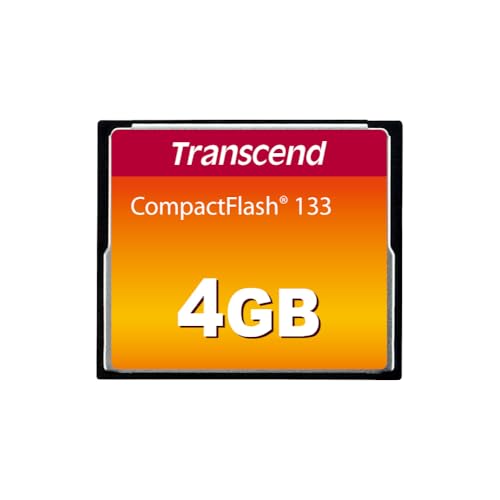
Transcend CF133 CompactFlash 4GB ($14-$40 depending on capacity)
The Transcend CF133 is the right CF card for retro PC use. Per the Transcend CF133 product page, it uses MLC NAND with ECC, supports Ultra DMA mode 4 (UDMA-4 / ATA-66), and has been in continuous production since 2009. Real-world sustained read is 30 MB/s; write is 20 MB/s. Both are well above the IDE bus speeds of any retro target — a Pentium III running ATA-33 sees the card as effectively saturated.
Why MLC matters: TLC and QLC cards have higher density but fewer write cycles, and many retro operating systems (DOS, Windows 9x, early Windows 2000) thrash the swap file in a way modern SSDs are designed for and TLC/QLC cards are not. MLC is the right NAND chemistry for a retro build that runs swap regularly. The 4GB capacity is enough for a Windows 95 or Windows 98 SE install with a complete software collection; bump to 8GB or 16GB for Windows ME / Windows 2000 / Windows XP installs with games.
The CF card needs a CF-to-IDE adapter, which is a passive PCB with a 44-pin or 40-pin IDE header on one side and a CF slot on the other. They are commodity parts from any electronics supplier; no specific brand to recommend. Total cost for card plus adapter is $20-$45.
When to pick CF133 specifically: any retro build at IDE speeds. The CF133's UDMA-4 support means BIOS detection and DMA transfers work correctly on most Pentium III and Pentium 4 era boards without manual mode forcing.
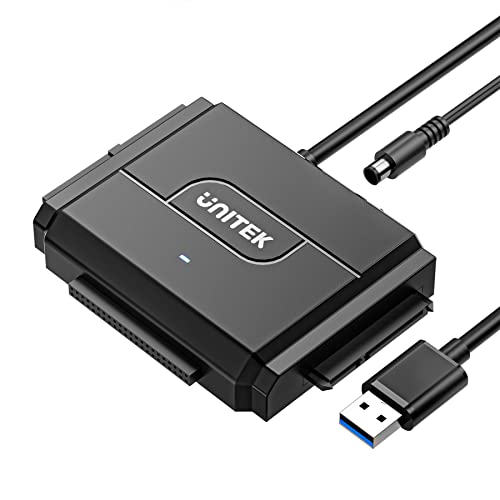
Unitek SATA/IDE to USB 3.0 Adapter ($35)
The Unitek USB 3.0 universal adapter is the speed pick for the image-creation workbench. It handles 2.5" SATA drives, 3.5" SATA drives, and 3.5"/2.5" IDE drives with the included connectors, and ships with a 12 V 2A external PSU to power 3.5" platters that draw more than USB can supply. USB 3.0 host interface means you can image a 500 GB period drive in roughly 90 minutes rather than the 5+ hours a USB 2.0 path takes.
Build quality is the right tier for a tool you will use occasionally — the IDE 40-pin connector is well-supported on the bracket and survives repeated insertions. The PSU plug is the standard 2.1mm barrel jack that most universal PSU bricks already supply. The IDE connector is keyed correctly to prevent backwards insertion, which matters because backwards-installing an IDE cable on a vintage drive can short out the drive controller.
When to pick: when you need to image, clone, or recover a period drive on a modern host. The USB 3.0 speed is the right choice for 500 GB+ drives. Pair with ddrescue on Linux for failing drives, or with HDDClone / Macrium Reflect on Windows.
Vantec SATA/IDE-to-USB 2.0 Adapter ($26)
The Vantec USB 2.0 universal adapter is the wide-compatibility pick. USB 2.0 host interface (works on any USB-equipped machine since 2002), handles 2.5", 3.5", and 5.25" IDE/SATA drives. Slower than the Unitek for large image jobs but works on a wider range of hosts (including some older imaging stations and embedded Linux boxes that lack USB 3.0).
Why have two universal adapters: a retro builder ends up wanting both. USB 3.0 for the speed of imaging modern-sized drives, USB 2.0 for the compatibility of being able to plug into any host machine in the lab or shop. The Vantec is in continuous production and is the canonical USB 2.0 universal adapter on VOGONS build logs.
When to pick: when speed does not matter, when the host machine has only USB 2.0, or when you want a backup adapter that does not share a single point of failure with your USB 3.0 unit.
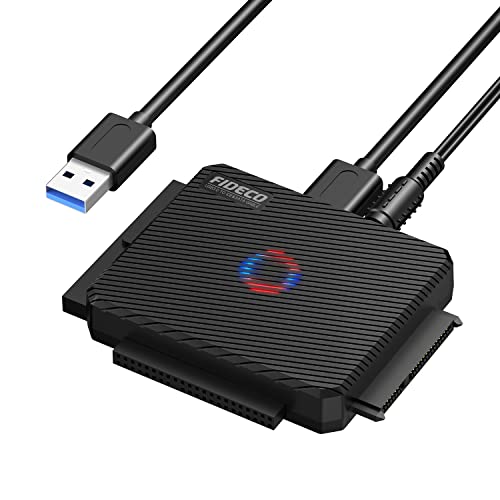
FIDECO SATA/IDE to USB 3.0 with 5.25" Support ($24)
The FIDECO adapter is the optical-drive pick. Where the Unitek and Vantec handle 2.5" and 3.5" drives, FIDECO adds 5.25" support (DVD/CD optical drives), which matters for any retro build that uses original installation media. The dedicated 5.25" Molex passthrough lets you power a CD-ROM or DVD-ROM drive externally so you can rip the original disc to an ISO before installing it in the retro target.
This is the niche pick in the kit. You will not use it weekly. You will be glad you have it the first time you need to dump a 1998 game CD to an ISO that you then mount in the retro machine, because the alternative is opening the retro case, installing the optical drive temporarily, copying the contents to a CF card, and removing the drive — a 45-minute job that this adapter cuts to 5 minutes.
When to pick: when you have a stack of period game CDs to convert to ISOs, or when you need to read a CD-RW drive that the retro target's onboard IDE controller does not detect cleanly.
Sound BlasterX G6 USB DAC ($188)
The Sound BlasterX G6 is the audio bridge for routing period sound-card output through modern headphones. Per the Creative product page, it has a high-resolution DAC (32-bit/384 kHz), an integrated headphone amplifier (Xamp), a 3.5mm line-in, and USB-C host interface. For retro use, the relevant feature is the line-in: you can run a 3.5mm cable from the line-out of a period Sound Blaster Audigy or Audigy 2 ZS into the G6's line-in, and the G6 then mixes that signal with anything coming over USB and outputs both to your headphones.
Why this matters: period sound cards are the entire reason many retro builds exist. The Sound Blaster 16 and AWE32 have hardware Roland MT-32 emulation. The Audigy 2 ZS has hardware EAX support that Windows-XP-era games used heavily. None of that is reproducible from a modern card; you need the period silicon. But once you have it, routing the audio out of a tower under your desk and into your headphones cleanly is harder than it sounds — ground loops between the retro PC and the modern host produce hum, impedance mismatches make the headphone amp peak weirdly, and software volume control is split between two operating systems.
The G6 fixes all of that. Plug it into the modern host via USB-C, plug its line-in to the period Sound Blaster's line-out, and the G6's onboard amp drives the headphones consistently. Volume control is per-input, so the retro PC's audio level can be balanced against system audio without re-EQ'ing on every game.
When to pick: any retro build where the period sound card is part of the experience and you do not want to run separate speakers. The G6 also doubles as a quality DAC for modern use, so it is not wasted if the retro side ever moves on.
Comparison table at typical eBay prices (2026)
| Tool | Channel | Use case | Typical eBay price | Notes |
|---|---|---|---|---|
| Transcend CF133 4GB | eBay (Amazon stale) | IDE boot drive | $14-$18 | MLC NAND, UDMA-4 |
| Transcend CF133 16GB | eBay | IDE boot drive (WinXP) | $35-$45 | Same line, more capacity |
| Unitek USB 3.0 SATA/IDE adapter | eBay (Amazon stale) | Imaging large drives | $30-$35 | Includes 12V PSU |
| Vantec USB 2.0 SATA/IDE adapter | eBay | Wide compatibility | $22-$28 | USB 2.0 host |
| FIDECO USB 3.0 + 5.25" | eBay | Optical drive ripping | $20-$26 | 5.25" Molex passthrough |
| Sound BlasterX G6 USB DAC | Amazon (stocked new) | Period sound card output bridge | $180-$200 | Also doubles as modern DAC |
| Total kit | mixed | Complete retro build kit | $295-$360 | One-time purchase |
Real-world workflow: building a Windows 98 SE machine
Here is the step-by-step using all five tools. The retro target: a Pentium III 933 MHz machine with a Sound Blaster Audigy 2 ZS and a GeForce 4 Ti 4600 / 9700 Pro era build.
- Plug the Unitek USB 3.0 adapter into your modern Linux host. Connect a fresh 4 GB CF133 card via the CF-to-IDE adapter, then to the Unitek's IDE port. The card shows up as
/dev/sda. - Download a Windows 98 SE installation image (legally — through your own media collection). Partition the CF card with
fdiskorparted, format FAT32 withmkfs.vfat. - Copy the Windows 98 install files to the CF card. Boot the retro machine off the CF card, run setup, and let Windows 98 detect the hardware. Reboot.
- Use the FIDECO USB 3.0 adapter to connect a period DVD-RW drive to the modern host. Rip the Audigy 2 ZS driver CD to an ISO with
dd if=/dev/sr0 of=audigy2.iso. Copy the ISO contents to the CF card on next remount. - Boot the retro machine, install the Audigy 2 ZS drivers, route the card's line-out via 3.5mm cable to the Sound BlasterX G6's line-in on the modern host. Plug headphones into the G6.
- Install your games on the retro machine. Test EAX-supported titles (Unreal Tournament 2004, Doom 3) and confirm the audio routes cleanly through the G6.
The Vantec USB 2.0 adapter is the spare for any host that has trouble with the USB 3.0 controller; the second CF card and adapter live in your kit as a swap-in if the boot drive ever fails.
Common pitfalls
The most common pitfall is buying a generic CF card without UDMA support. Slow-CF cards (no UDMA, PIO-mode only) work but transfer at ~3 MB/s instead of 30 MB/s, which makes Windows 98 boot times feel terrible. The CF133 is rated for UDMA-4 and is the right floor for any retro build at IDE speeds.
The second pitfall is plugging an IDE drive into a USB adapter without external power. 3.5" IDE drives draw 8-15 W, which exceeds what any USB port supplies — the drive will spin up partially and then stall. Always use the included 12 V PSU when imaging or recovering a 3.5" drive.
The third pitfall is shopping for these on Amazon rather than eBay. Several of these products are out of stock on Amazon for weeks at a time in 2026, and the third-party listings that fill the gap are overpriced and sometimes counterfeit. eBay has reliable inventory at fair prices for all five. The runbook rule applies: pre-2012 hardware and retro accessories default to eBay listings.
The fourth pitfall is forgetting the retro target's BIOS limits. Some 1998 boards cap at 8 GB IDE drive size and will refuse to boot from a 16 GB CF card; some 2000-2002 boards cap at 137 GB. Check your motherboard manual before buying a larger CF card than the smallest one that fits your install footprint.
When NOT to buy this kit
If you are not actively building retro PCs, do not buy a CF-to-IDE adapter "just in case." The IDE ecosystem is shrinking and most of these tools depreciate quickly if unused — better to wait until the build is committed.
If your retro target is pre-IDE (anything before the mid-1990s — original PC, XT, AT with MFM/RLL drives), CF cards do not help. You need an XT-IDE controller card or a Gotek floppy emulator instead.
If you only need to occasionally recover one period drive, rent a colocation hour at a local repair shop rather than buying any of these adapters. The kit pays for itself across multiple builds, not a single recovery job.
Bottom line
The five-tool kit covers nearly every retro PC build job in the 1998-2007 era. The Transcend CF133 and a passive CF-to-IDE adapter is the boot drive; the Unitek USB 3.0 and Vantec USB 2.0 adapters are the workshop's image-and-recovery tools; the FIDECO 5.25" adapter is the optical-drive specialty; the Sound BlasterX G6 is the audio bridge for period sound cards. Buy them once, use them across many builds.
Related guides
- SATA SSD for Windows XP retro PC with IDE adapter
- CompactFlash boot drive for Windows 98 retro PC
- Best SSD for PS4 Pro