In brief — 2026-05-27. Tom's Hardware pitted Intel's Core Ultra 5 250K Plus against AMD's Ryzen 5 7600X3D for the mid-range gaming crown. The short version: the X3D chip's stacked cache tends to win frames in CPU-bound games, while Intel's Arrow Lake part answers with stronger multi-threaded and productivity work. For cost-sensitive builders, the older AM4 Ryzen 7 5700X remains the value floor that frees budget for a better GPU.
The mid-range CPU fight is where most gaming builds are actually won or lost, and the latest faceoff between Intel's Core Ultra 5 250K Plus and AMD's Ryzen 5 7600X3D is a clean illustration of the two philosophies on offer in 2026. One bets on stacked 3D cache for gaming; the other bets on broad multi-threaded throughput. Neither is universally "better" — the right pick depends on what you do with the machine and what the platform around the chip costs. Here is what the comparison found, what it means for a 2026 build, and why our featured AM4 value chips still belong in the conversation.
What happened: the faceoff result
The headline from the comparison is familiar to anyone who has followed AMD's X3D line: in CPU-bound gaming scenarios — high frame rates at 1080p, simulation titles, and games that lean on the CPU rather than the GPU — the Ryzen 5 7600X3D's stacked 3D V-Cache gives it an edge. That large slug of extra L3 cache keeps more game data close to the cores, reducing trips to main memory and lifting both average frame rates and, importantly, the 1% lows that determine how smooth a game feels.
Intel's Core Ultra 5 250K Plus, built on the Arrow Lake architecture, answers in a different lane. It tends to lead in multi-threaded and productivity workloads — encoding, rendering, compiling, and the kind of mixed creator-plus-gamer use that loads many threads at once. The faceoff's spec deltas come down to cache strategy (AMD's 3D cache vs Intel's conventional hierarchy), clock and core configuration, and the platform each rides on. The net is a split decision: gaming-first buyers lean AMD, productivity-and-gaming buyers find more to like in Intel.
The spec and platform breakdown
| Factor | Core Ultra 5 250K Plus | Ryzen 5 7600X3D |
|---|---|---|
| Architecture | Intel Arrow Lake | AMD Zen 4 + 3D V-Cache |
| Gaming strength | Strong, conventional cache | Leading in CPU-bound titles |
| Productivity strength | Leading multi-thread | Strong, six-core |
| Socket / platform | LGA 1851 | AM5 |
| Memory | DDR5 | DDR5 |
| Cooling demand | Standard | Conservative power, runs cool |
The two are not cross-compatible — Intel uses the LGA 1851 platform and AMD uses AM5 — so the motherboard and memory cost is part of the decision, not a footnote. Both use DDR5. A real comparison weighs the full platform price, including the board, not just the CPU sticker. That is where the older AMD value chips re-enter the picture.
Gaming vs productivity: pick your lane
If your machine is overwhelmingly for gaming, the 7600X3D's cache advantage is the kind of thing that shows up as steadier frame times in exactly the demanding, CPU-bound situations where smoothness matters most. X3D parts have built a reputation as gaming specialists for this reason, and the 7600X3D extends that into the mid-range.
If your machine is a mixed workload — you game, but you also stream, edit, compile, or run background tasks — the Core Ultra 5 250K Plus's multi-threaded strength makes it the more balanced all-rounder. The honest guidance is to be specific about your own use: a pure gamer and a creator-who-games will rationally reach different conclusions from the same benchmark chart. AMD's broader desktop lineup details are on its Ryzen processor page.
Why the AM4 Ryzen 7 5700X remains the value floor
Here is the part the launch coverage tends to skip: not everyone should buy a current-platform mid-range chip at all. The AM4 Ryzen 7 5700X sits a tier below in raw performance, but the platform around it is dramatically cheaper — AM4 boards and DDR4 memory are inexpensive and widely available in 2026, where both the 7600X3D and the 250K Plus demand a newer board and DDR5. For a budget 1080p build, that platform saving is real money that is often better spent on a stronger graphics card, which moves gaming performance far more than a CPU tier bump at this level.
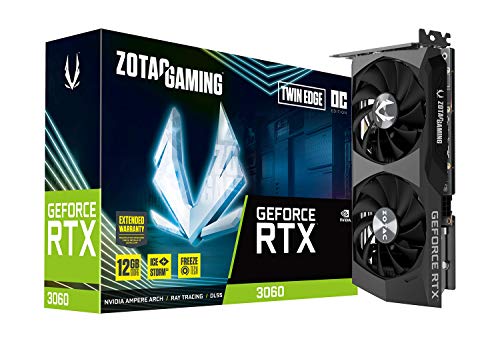
The Ryzen 7 5800X is the step-up within the same cheap platform for buyers who want more sustained multi-threaded headroom without paying the new-socket tax. Paired with a mid-range GPU like the MSI RTX 3060 12GB, an AM4 build delivers a genuinely good 1080p gaming experience for meaningfully less than a new-platform 7600X3D or 250K Plus system once the board and memory are counted. Cost-sensitive builders who do not need the latest platform frequently get more total performance per dollar this way — which is exactly why these chips remain featured value picks rather than relics.
What it means for your 2026 build
Three clear takeaways for anyone shopping the mid-range right now:
- Gaming-first on a current platform → 7600X3D. The 3D cache earns its keep in CPU-bound games and smoother 1% lows. Pair it with a capable GPU and a B650-class board.
- Mixed creator-plus-gamer on a current platform → Core Ultra 5 250K Plus. Its multi-threaded throughput makes it the better all-rounder when your workload is not purely games.
- Tight budget, gaming-focused → AM4 Ryzen 7 5700X (or 5800X). Spend the platform savings on the GPU. For most 1080p builders watching their wallet, this is the highest-performance-per-dollar route, full stop.
The mid-range faceoff is genuinely close at the top, but the most important decision for a value buyer is not Intel-vs-AMD-this-generation — it is whether to pay the new-platform premium at all.
The mid-range CPU landscape in 2026
Step back and the mid-range looks more crowded and more interesting than it has in years. AMD's X3D strategy has effectively created a "gaming CPU" sub-category, where a chip with modest core counts punches well above its weight in games purely because of cache. Intel's Arrow Lake answer leans on architectural efficiency and multi-threaded throughput rather than chasing AMD's cache game directly. The result is that, for the first time in a while, the "best mid-range CPU" question has no single answer — it genuinely forks on workload.
For a buyer, that is good news disguised as complexity. It means you are not paying for performance you will not use: a pure gamer can buy the cache-heavy part and skip the multi-threaded premium, while a creator can buy the throughput part and not overpay for gaming cache that idles during a render. The trap is buying on headline benchmark averages that blend gaming and productivity into one number that describes nobody's actual use. Read the per-workload results, find the chart that matches what you do, and ignore the rest.
How to read these benchmarks for your own build
Three habits keep you from being misled by launch-day charts. First, look at 1% lows, not just average frame rates — averages can hide stutter, and the 1% lows are where the 7600X3D's cache advantage shows up as a smoother feel. Second, check the GPU used in the test: a CPU comparison run on a top-tier GPU at 1080p exaggerates CPU differences that vanish at 1440p or 4K with a mid-range card, which is what most readers actually own. If you game at higher resolutions on a mid-range GPU, the CPU gap between these chips shrinks dramatically. Third, separate productivity benchmarks from gaming ones entirely and weight them by how you really split your time.
Applied to this faceoff, those habits lead most 1080p-with-a-mid-range-GPU buyers to a humbling conclusion: the CPU choice matters less than the launch coverage implies, and the GPU budget matters more. That is the single most useful thing to internalize before spending.
Cooling and platform pairing
Neither chip is a thermal monster, but the pairing differs. The 7600X3D runs at conservative power limits to protect its stacked cache, so it is cool and easy — a solid air cooler is plenty, and you do not need a high-end AIO. The Core Ultra 5 250K Plus is similarly manageable for a mid-range part, though as always you should match the cooler to your case and acoustic preferences. For either current-platform chip, confirm your cooler ships with the correct socket bracket (AM5 for AMD, LGA 1851 for Intel) before buying. Our Intel cooler guide covers the higher-TDP Intel parts, and the principles scale down to the mid-range.
The AM4 value path is, if anything, the easiest to cool of all: the Ryzen 7 5700X and 5800X are well-understood 65W and 105W parts with abundant, cheap cooler options, which is one more way the older platform keeps total build cost down.
Should you wait for prices to settle?
Mid-range CPUs typically see street prices drift down in the first few months after launch as supply stabilizes, and seasonal sales add further discounts. If you do not need the upgrade immediately, watching for a price dip on either the 250K Plus or the 7600X3D is reasonable. If you are building now, both are competitive enough that paying current pricing for the one that fits your workload is justified — and if budget is the binding constraint, the AM4 value path sidesteps the wait entirely because those chips and boards are already cheap and plentiful.
Memory and board: the hidden cost
One more factor that rarely makes the headline: the board and memory you pair with each chip materially change the total. Both the 250K Plus and the 7600X3D require DDR5 and a current-generation motherboard, and entry-level boards for either platform can bottleneck a chip's potential or skimp on VRM quality, while premium boards add cost a mid-range build does not need. Budget for a solid mid-tier board with decent power delivery and a sensible DDR5 kit, and recognize that this spend is part of the chip decision — a 7600X3D on a bargain-bin board with slow memory gives up some of the very advantage you paid for. The AM4 alternative sidesteps this entirely with cheap, mature boards and DDR4 that has nowhere left to fall in price.
The source
Read the full comparison at Tom's Hardware's PC components / CPUs hub, which tracks mid-range CPU launches and head-to-head testing.
Bottom line
The Core Ultra 5 250K Plus and Ryzen 5 7600X3D split the mid-range crown along predictable lines: AMD's stacked cache wins CPU-bound gaming, Intel's Arrow Lake wins mixed multi-threaded work, and the right pick is the one that matches your actual workload and platform budget. But the quietly important verdict for value builders is that the AM4 Ryzen 7 5700X still undercuts both on total system cost and frees money for the GPU that drives 1080p performance more than any of these CPUs. Match the chip to the job, count the whole platform, and spend where the frames actually come from.
Related guides
- Best AM4 Gaming CPU in 2026
- Ryzen 7 5800X vs 5700X for a Budget Gaming Build
- Ryzen 5 5600G vs Ryzen 7 5700X for a Budget 1080p Build
- Best CPU Cooler for Intel Core i7/i9 in 2026