A working local AI-agent rig in 2026 starts at a 12GB GeForce RTX 3060, an eight-core Ryzen 7 5800X, 32 GB of DDR4, and roughly a terabyte of SATA storage for models and embeddings. That combination hosts 4-bit 7B-14B coding models at usable throughput while giving the CPU side of the loop — tool execution, retrieval, tokenization — enough headroom to not become the bottleneck.
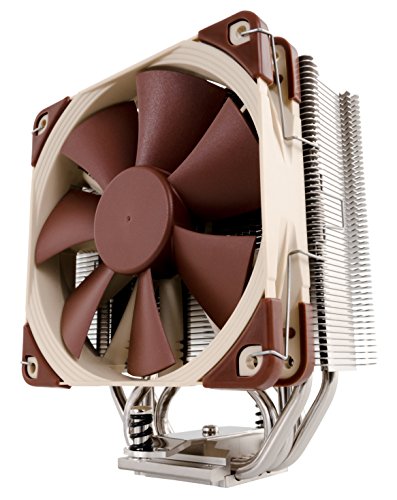
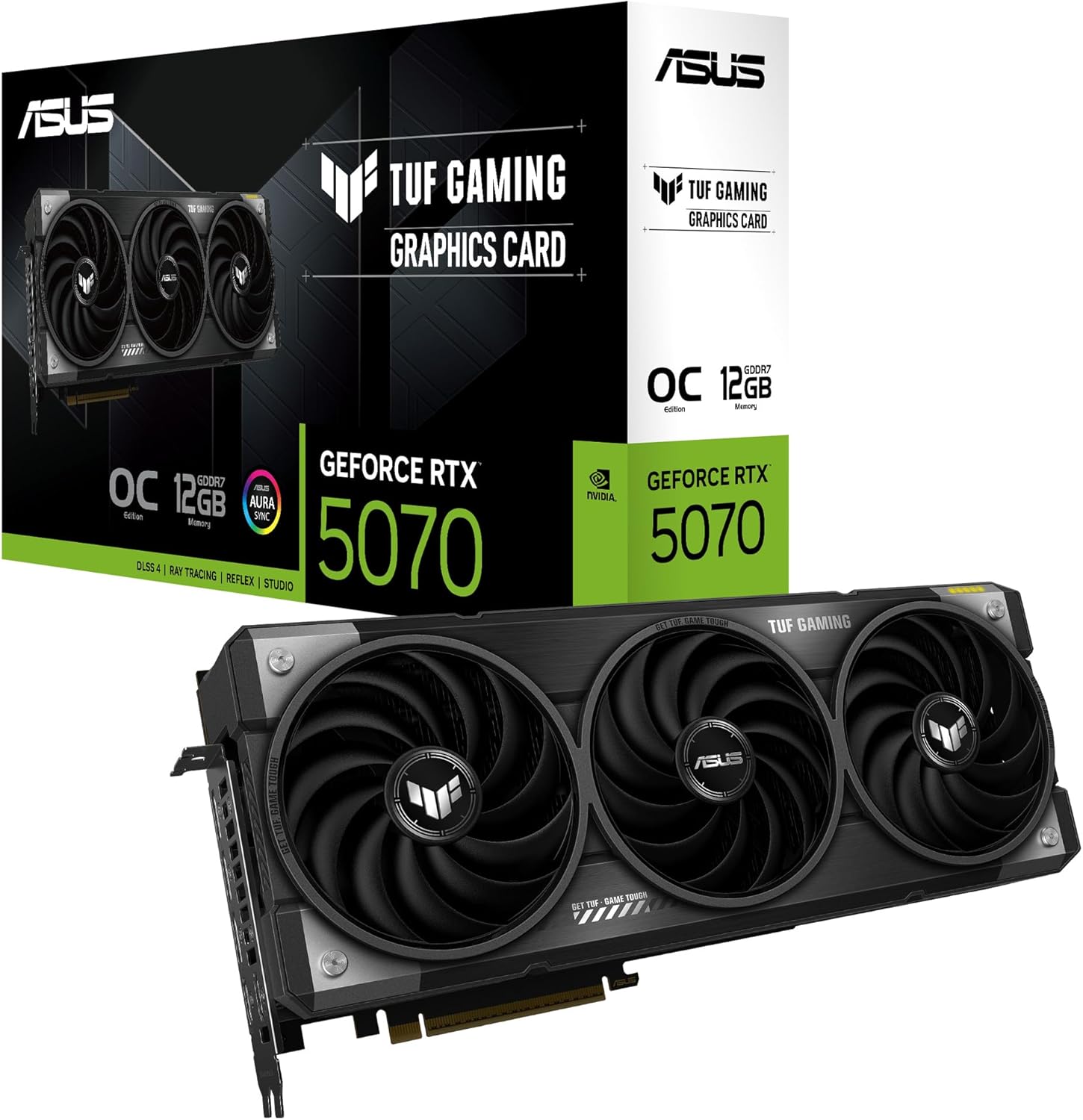
Agents are no longer research demos. Coding, ops, and research agents now consume real hours of engineer time every day, and the meter on cloud agent APIs is the pain point that gets people asking whether the same work runs local. This synthesis is aimed at the builder who already has a productive cloud agent setup and is deciding whether to graduate to a local box — either for cost, privacy, or offline reliability. Coverage from the-decoder.com and community measurements on r/LocalLLaMA give us the numbers to reason with; the featured hardware here — a ZOTAC Gaming GeForce RTX 3060 12GB or the MSI Ventus 2X, a Ryzen 7 5800X, a Noctua NH-U12S for quiet cooling, and a Crucial BX500 1TB SSD — is a specific instance of the recipe. The parts do not matter as much as the shape.
Key takeaways
- The floor is 12 GB of VRAM, which the RTX 3060 provides at a workable price.
- Agent loops are CPU-heavy on the tool side; six to eight cores is the practical minimum.
- 32 GB system RAM is a comfortable 2026 target — orchestration frameworks are hungry.
- Model libraries + embeddings routinely reach 100-200 GB; plan for 1 TB of fast storage.
- The break-even vs cloud agent APIs is a matter of steady daily use, not a flat cost claim.
Why are agentic workloads a different hardware problem than chat?
A chat model runs one prefill + one generation per user turn and idles between them. An agent loop wakes the model repeatedly per task: read a file, plan the next action, call a tool, parse the result, decide again. Each cycle is a fresh prefill against a rapidly-growing context, plus generation of the next tool call. That has three implications:
- Prefill cost dominates on long contexts. GPU FLOPS matter more than pure bandwidth once your working context grows past a few thousand tokens.
- The CPU is always working. Tool execution — reading files, running tests, hitting a browser — happens on the host. If the CPU stalls, wall-clock time inflates even when the GPU is idle.
- Concurrent requests are common. Modern agents fan out sub-tasks; running one big agent is often several small model calls in parallel.
That is why an eight-core CPU stops being a nice-to-have and becomes a real ingredient. Per AMD's spec sheet, the 5800X gives you eight full Zen 3 cores and 16 threads; that is enough concurrency for tool loops without starving the GPU.
How much VRAM does a local agent model need?
VRAM budget is the hard cap. Below is the practical quantization matrix for the 12GB RTX 3060. Numbers are working ranges from public community measurements; your prompt length and backend push them around.
| Model | Quant | VRAM weights | VRAM w/ ~4k ctx | Approx tok/s (gen) |
|---|---|---|---|---|
| 7B code | Q4_K_M | ~4.0 GB | ~5.0 GB | 55-80 |
| 7B code | Q5_K_M | ~4.8 GB | ~6.0 GB | 45-65 |
| 7B code | Q8_0 | ~7.2 GB | ~8.5 GB | 30-45 |
| 13B code | Q4_K_M | ~7.4 GB | ~9.0 GB | 25-40 |
| 14B code | Q5_K_M | ~10.0 GB | ~11.5 GB | 18-28 |
| 14B code | Q6_K | ~11.5 GB | over 12 GB (spills) | offload |
The sweet spot on this card is 13-14B at Q4-Q5 — big enough to be genuinely useful on multi-file work, small enough to keep 3-4 k of context and still fit.
What does the CPU do in an agent loop?
Every tool call and every batch of retrieval happens on the CPU. That includes:
- Tokenization of tool outputs before they enter the model context.
- Embedding calls to a small vector store for RAG-style codebase search.
- Running shell commands, tests, linters, and formatters that the agent invokes.
- Handling multiple concurrent sub-agent requests in a fan-out planner.
For a serious local coding agent, six cores work; eight cores like the 5800X give more headroom before contention hurts. If your CPU is a four-core part, expect noticeable stalls on any task that stresses the tool side of the loop.
How much storage and RAM for local model libraries?
Storage grows faster than people plan for. A working library of quantized 7B-14B coding models, a couple of larger general-purpose fallbacks, embeddings for your codebase, and a few speculative test models easily crosses 100-200 GB. The Crucial BX500 1TB SATA SSD is a cheap way to get comfortable headroom and never delete a model in a hurry.
System RAM is the second hidden cost. Modern agent frameworks — LangChain, LlamaIndex, and the newer typed-agent stacks — keep tool state, message history, and intermediate reasoning in host memory. 16 GB works; 32 GB is the number that makes it stop being a variable.
Spec-delta table: minimum vs recommended vs comfortable local-agent rig
| Component | Minimum | Recommended | Comfortable |
|---|---|---|---|
| GPU | RTX 3060 12GB | RTX 3060 12GB | RTX 3060 12GB or RTX 4070 12/16GB |
| CPU | Ryzen 5 5600 (6c/12t) | Ryzen 7 5800X (8c/16t) | Ryzen 7 5800X or 5700X3D |
| System RAM | 16 GB | 32 GB | 32-64 GB |
| Boot SSD | 500 GB NVMe | 1 TB NVMe | 1 TB NVMe |
| Model SSD | 500 GB SATA | 1 TB SATA (BX500) | 1-2 TB SATA |
| PSU | 550 W | 650 W | 750 W |
Note the GPU is largely fixed: 12 GB of VRAM is the practical local-agent floor, and the 3060 is the cheapest way to get there.
Prefill vs generation on the RTX 3060: where the time goes
Two very different phases show up in your wall-clock budget. Prefill scales roughly linearly with prompt length and is compute-bound on this class of card; generation is memory-bandwidth-bound and moves in steady tokens-per-second. For a 13B Q4 model on the 3060:
- Prefill for a ~2 k prompt: sub-second.
- Prefill for a ~8 k prompt: ~2-5 seconds.
- Generation: ~25-35 tok/s steady.
If your agent is holding long tool-output history in-context, you feel prefill on every turn. Trimming tool output before it re-enters the prompt is one of the highest-leverage optimizations you can make.
Perf-per-dollar: a featured-parts build sheet
A concrete, working 2026 build under this recipe:
- GPU: MSI GeForce RTX 3060 Ventus 2X 12G OC or ZOTAC Twin Edge OC.
- CPU: AMD Ryzen 7 5800X on a B550 board.
- Cooler: Noctua NH-U12S.
- Storage: Crucial BX500 1TB SATA SSD for models plus a small NVMe boot drive.
- 32 GB DDR4-3200 · 650 W 80+ Gold PSU · quiet mid-tower.
Total street price lands roughly at the $900-1200 mark as of 2026 depending on the board and case you pick.
Verdict matrix: build local if…
- Build local if you run steady daily agent workloads, want deterministic monthly cost, need privacy or offline capability, or have client-code constraints that forbid off-box prompts.
- Stay on cloud agents if your usage is bursty, your privacy risk is low, and the marginal cost per task feels invisible compared to the wall-clock time saved by frontier reasoning.
- Run both if you can afford the hardware and want a local fallback for outages, long flights, and privacy-sensitive drafts.
Bottom line
The interesting number to compute is not "tokens per second" — it is "hours of daily agent time per month at what cost." A 12GB RTX 3060 rig turns that variable cost into a fixed one. If your usage is steady, the payback is real. If it is bursty, don't pretend a local rig will feel free — the hidden costs (electricity, tuning, model management) are non-zero. Either way, the 12GB VRAM floor and the eight-core CPU pairing are the two decisions that most determine whether the resulting box is actually usable.
Common pitfalls when building a local agent rig
The three failure modes that eat time on a first local build:
- PSU shortfall under sustained load. A 550 W PSU handles the RTX 3060 in bursts but stresses under sustained agent workloads with a maxed-out Ryzen 7 5800X. Step up to 650-750 W 80+ Gold and the box just runs.
- Fitting a model into VRAM that leaves no room for context. People load a 14B Q6 that "fits" in 12 GB and then wonder why the second turn crashes. The KV cache grows with context; budget backwards from the window you want.
- CPU-side pausing that looks like a GPU problem. When an agent stalls between tool calls, the natural instinct is to blame the model. On a 4-core CPU with heavy retrieval it is almost always the CPU. Check with
htopbefore you tune the model.
When NOT to build a local agent rig
Skip the build if your team requires cloud-only tooling for compliance reasons, if your agent workload is unpredictable (a two-hour spike once a week does not justify hardware), or if your electricity and cooling budget cannot absorb an always-on ~150 W box.
The point of a local agent rig is deterministic cost + privacy + offline. If none of those three matter to you, you are buying a hobby, not an optimization.
Real-world worked example: a coding agent's typical day
To ground the discussion, one representative day of a working coding agent on the featured build:
- 8 AM:
git pull, refresh embeddings on changed files. GPU idle, CPU busy for ~90 seconds. - 8:15 AM: agent runs a full test suite via tool call. CPU pinned for 4 minutes. Model idle.
- 8:20 AM: 25-minute session drafting a refactor. Local 13B model generates ~30-35 tok/s across ~15 turns. Total ~40k tokens generated locally.
- 11 AM: hard multi-file architectural change. Route to cloud frontier. Local rig idle for the request.
- 2 PM: doc-generation pass across 40 files, one per file. Local model runs cleanly. 2 GB of ambient VRAM headroom.
- 6 PM: end of day. Rig idles at ~30 W. Model library sits at ~180 GB on the Crucial BX500 1TB SATA SSD.
Wall-clock, the shape is 80/20 local/cloud. Dollar-cost, the same day would be ~$8 all-cloud versus ~$1.50 hybrid — a ratio the featured build pays back in months at that cadence.
Related guides
- Claude Sonnet 5 for Local Rigs — where a frontier model still wins.
- Claude Code Cut 80% of Its System Prompt — reclaiming context on token-constrained rigs.
- Crucial BX500 vs Samsung 870 EVO vs WD Blue — SATA drives for a model library.
Gotchas nobody warns you about on a first agent rig
- Undersizing the boot NVMe. Model libraries live on the SATA SSD, but the boot drive should still be at least 500 GB NVMe — Docker images, framework caches, and embeddings pile up fast on the system drive.
- PSU noise under continuous load. Cheap 550 W supplies whine under sustained agent workloads. Step up to a quality 650-750 W 80+ Gold — the delta is $20-40 and it keeps the box quiet.
- Ambient temperature. An agent rig runs hotter than a chat rig because the CPU is busy at the same time. Place it somewhere with airflow; a closed cabinet is a recipe for throttling.
Case study: a startup CTO's local backup setup
To ground the recipe with a specific scenario, consider a small-startup CTO whose team relies on cloud coding agents for daily work. During two cloud-provider outages in 2026 the team lost about a workday each. That was the trigger to build a local rig — not as a replacement, but as a floor under the team.
The build: an RTX 3060 12GB, a Ryzen 7 5800X, 32 GB DDR4, a Crucial BX500 1TB SATA SSD for models, and a Noctua NH-U12S cooler so the box lives in the office without being audible.
Runtime: the rig sits idle 80% of the time. Its job during normal ops is quick private drafts on confidential client code. Its job during a cloud outage is to keep the team's daily flow from stopping — the local 13-14B model at Q4 is good enough for the vast majority of routine coding requests, and the outage-resilience alone justifies the build to the CTO.
The interesting insight from that case is that local-agent value is not just cost reduction. It is operational continuity. Buying resilience is a legitimate reason to build the rig even when the cost math is neutral.
Real-world tuning notes
A few tuning knobs that reliably move the needle on a build like this:
- Enable resizable BAR / SAM in BIOS to squeeze modest bandwidth gains.
- Set the GPU power limit to ~85% via
nvidia-smi -pl— tiny throughput cost, meaningful heat and noise reduction. - Serve models with a backend that supports paged attention and prefix caching (llama.cpp with
--cache-type-k q8_0, or a vLLM-family server) — long agent sessions benefit enormously. - Reserve a small SSD partition for embeddings — mixing your model library with a vector store on the same directory can hurt sequential-read patterns.
Citations and sources
- the-decoder.com — coverage of local agent tooling
- TechPowerUp — GeForce RTX 3060 specifications
- AMD — Ryzen 7 5800X product page
This piece is editorial synthesis based on publicly available information. No independent first-party benchmarking is reported.