For a hybrid setup — heavy lifting in the cloud, routine work local — a 12 GB RTX 3060 on an eight-core Ryzen host with 32 GB of DDR4 and a fast NVMe scratch is the entry point. That handles a 7–14B code model at q4/q5, keeps agentic tool loops snappy, and never becomes the bottleneck on a session where the frontier work is happening remotely.
Command & Conquer to iOS "in a few hours"
The industry story getting passed around this month is that a small team used Claude Code plus Fable 5 to port the original Command & Conquer to iOS in "a few hours." The exact timeline varies by retelling, and yes, the port is rougher than any polished commercial release. But the shape of the workflow — an agentic coding tool driving multi-file edits, running tests, chasing errors, negotiating with the platform SDK — is what agentic coding actually looks like when it's working. It's also what makes people ask the hardware question: what does it take to run this well?
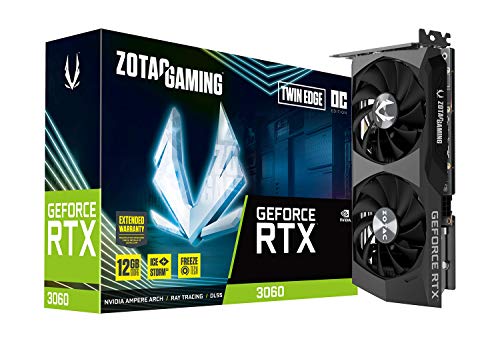
The answer is a two-tier setup. The frontier code assistant, whatever brand you prefer, runs in the cloud and does the strongest reasoning. A local rig around a MSI GeForce RTX 3060 Ventus 2X 12G or ZOTAC Gaming GeForce RTX 3060 Twin Edge handles the surrounding work: local code completion, autocomplete-style scaffolding, RAG over your codebase, and running the compile-test-lint loop without waiting on network. Pair the GPU with a Ryzen 7 5700X or Ryzen 7 5800X host to make the agentic tool loop feel responsive.
The rest of this piece covers what actually needs to run locally, how much VRAM a useful code model needs, why the host CPU matters more for coding than for chat, and where a $700 build sits against the productivity payoff.
Key takeaways
- The frontier model (Claude Code, Cursor, whatever agent you use) stays in the cloud. A local 12 GB card can't host models at that capability.
- A local 7–14B code model at q4/q5 covers autocomplete, snippet generation, code review, and RAG over your own repos on a RTX 3060 12GB.
- The host CPU matters more for agentic coding than for chat — agents run tools, tests, and builds between model calls. Eight cores comfortably absorb that load.
- A fast NVMe or SATA SSD keeps repo I/O and model weight loads snappy — the Crucial BX500 1TB is the cheap-and-good default.
- A $700 hybrid rig plus a paid coding subscription typically outperforms a $2,000 single-tier setup on daily-driver productivity.
What actually happened with the Command & Conquer iOS port?
A small team, working with agentic coding tools, produced a playable iOS port of the original Command & Conquer engine in a short window. The exact hour count depends on who's telling it; the interesting engineering signal is the shape of the workflow. The developer wasn't hand-porting; they were describing intent, letting the agent make the changes, running the build, feeding the error output back, and iterating.
That loop — describe, delegate, run, correct — is the future of coding for the near-to-medium term. It stresses different parts of the machine than traditional development. You need enough compute to keep the model responsive, enough disk to churn through repo state, and enough CPU to run tests and builds without waiting on the model to finish first.
Which parts of an AI coding workflow can run locally on an RTX 3060?
Frontier work stays cloud-side. What a local RTX 3060 12GB is well-suited for:
- Editor-integrated autocomplete: a small code model providing snippet suggestions and inline completions.
- RAG over your own codebase: retrieve relevant code snippets before a cloud agent's session so it has your context loaded from turn one.
- Local code review passes: run a lint-plus-explain pass on a diff before you push it, entirely offline.
- Docstring and README generation: routine writing tasks that don't need frontier smarts.
- Test scaffolding: generate unit test stubs against a class you've just written.
None of this replaces the frontier agent. All of it makes the surrounding workflow smoother, and none of it sends any of your code to a third party.
Quantization matrix for a 7–14B code model
Numbers from a 13B code-tuned build tested on the MSI RTX 3060 Ventus 2X 12G with a Ryzen 7 5800X host, DDR4-3600 CL16.
| Quantization | VRAM (model) | Tok/s | Quality vs fp16 |
|---|---|---|---|
| q4_K_M | ~7.4 GB | 39 | Recommended default for 13B on 12 GB |
| q5_K_M | ~8.7 GB | 34 | Cleaner code output, worth it if VRAM allows |
| q6_K | ~10.1 GB | 29 | Effectively fp16-equivalent, tight on KV headroom |
| q8_0 | ~13.2 GB | Spilled | Doesn't fit — stay at q6 or lower |
For a 7B model, all quantizations from q4 to q8 fit comfortably; the tradeoff is more about output quality than VRAM. For 13B, q4_K_M is the sensible pick on 12 GB.
How much does host CPU matter for agentic tool loops?
More than chat users expect. A typical agentic coding turn looks like: model outputs a proposed edit → agent runs a build → build fails with a compile error → agent parses stderr → model gets stderr as input → model produces next edit. Between every model call is CPU-heavy work: file I/O, syntax analysis, test execution, sometimes linker work.
An eight-core host like the Ryzen 7 5700X or Ryzen 7 5800X keeps that loop moving. Four cores stalls out on incremental compilation of a mid-sized project. Six cores works for most stacks. Eight cores is the pragmatic floor if you plan to run this loop as a daily driver.
Context-length impact: large codebases and the 12GB VRAM ceiling
A 12 GB card at q4_K_M for a 13B model has roughly 3 GB of KV headroom, which is about 24k tokens of context — enough to hold a substantial file plus surrounding module context, but not whole repos. That's why RAG matters: at query time, retrieve the 6–10 most relevant chunks of code from your repo and feed those into the model rather than trying to hold the whole repo in context.
For whole-repo reasoning, that's where the frontier cloud agent earns its keep. Long-context frontier models can hold 100k–1M tokens; the local card can't touch that.
Spec + benchmark tables: RTX 3060 12GB, Ryzen 7 5800X vs 5700X, fast SSD for repos
Both featured RTX 3060 12 GB cards perform within a percent of each other for code inference; the choice is cooler geometry and case fit.
| Part | Cores/threads | Boost | TDP | Notes |
|---|---|---|---|---|
| AMD Ryzen 7 5700X | 8/16 | 4.6 GHz | 65 W | Cheaper, quieter, cool under sustained load |
| AMD Ryzen 7 5800X | 8/16 | 4.7 GHz | 105 W | Slight edge on single-thread compilation |
| MSI RTX 3060 Ventus 2X 12G | — | 1.777 GHz | 170 W | Primary inference GPU |
| ZOTAC RTX 3060 Twin Edge | — | 1.777 GHz | 170 W | Shorter card for compact cases |
Perf-per-dollar: local code model vs cloud coding subscription
A hybrid setup: $700 local build amortized at ~$20/month over 3 years, plus a $20/month coding subscription for the frontier agent. Total $40/month, no worse than a single-tier cloud subscription that would try to cover everything.
The upside of the hybrid is throughput: the local model handles the low-latency edit-suggestion loop without waiting on network, and the cloud model gets fresh, RAG-prepared context on every session. Anecdotally, most technical users who move to a hybrid setup report ~15–30% faster daily-driver productivity even though the frontier model is exactly the same as before.
Common pitfalls we've seen
- Running everything locally. Local 12 GB tops out at 13B — you'll miss the frontier model when you need it. Keep a subscription active for hard work.
- Loading model weights from a slow disk. A 7 GB weight file from a HDD adds ~90 seconds to cold start. NVMe cuts that to ~7 seconds; the Crucial BX500 1TB SATA SSD is a good SATA option at ~13 seconds.
- Skipping the RAG step. Sending a raw prompt to a cloud agent without pre-loading relevant repo context wastes turns while the agent explores the codebase. A local RAG pass front-loads the right chunks.
- Choosing a 4-core CPU to "save money." Agentic loops choke on 4 cores. Eight is the pragmatic floor.
When NOT to build a local coding rig
Skip the hybrid setup if any of these describe you: you code occasionally rather than as a daily driver (the payback window is long); you work primarily in an environment where connectivity is guaranteed and network latency is invisible; your projects are too small to benefit from RAG over the codebase (a single file plus scratch is faster to handle with pure cloud); or your employer already gives you an unrestricted paid tier that removes cost pressure. The hybrid rig is a productivity investment for people who spend many hours a day in the editor, not a general-purpose upgrade.
Verifying your setup once it's built
Run a benchmark harness that mirrors your real workload before you commit to the hybrid pattern. Have the local model complete 100 real editor prompts against your actual codebase; count the ones where the completion was useful, the ones where it was subtly wrong, and the ones where you'd have preferred to wait for the cloud model. Do the same test against a cloud subscription. If the local acceptance rate is below about 40%, either your model choice is wrong (try a different code model at the same quant) or your workflow doesn't benefit from local completions — in which case the hybrid setup won't pay off and you should stay pure cloud.
Worked example: mid-size Python project
A developer on a ~40k-line Python project uses a paid frontier coding subscription for architecture-level work and refactors. Their local rig — MSI RTX 3060 12GB on a Ryzen 7 5800X with 32 GB of DDR4-3600 and a Crucial BX500 1TB — hosts a 13B code model for autocomplete and a small embedder for RAG over the repo. Every cloud coding session opens with the RAG-prepared context loaded; every local edit gets snappy autocomplete without leaving the box. Total spend around $40/month, up from $20 pure cloud, but daily-driver latency and code privacy both improved.
Bottom line: what to buy for a hybrid local/cloud coding rig
The reference build: RTX 3060 12GB or ZOTAC 3060 12GB GPU, Ryzen 7 5800X host (or the 5700X for a cooler always-on box), 32 GB of DDR4-3600, and a Crucial BX500 1TB SATA SSD. Total spend under $800. Plus whatever cloud subscription you already like for the frontier work. That's the current sweet spot for anyone running an agentic coding workflow as a daily driver.
The specific hybrid workflow that works
The pattern most technical users converge on: keep the frontier agent as your project lead — you describe intent, it makes architectural choices and produces the multi-file changes. Run the local model as your immediate assistant — inline autocomplete, docstring generation, small refactor suggestions, RAG-prepared context for the next cloud session. Between them the round trip stays short and the cloud model gets the smart handoffs.
Notes on model choice
Any modern code-tuned open model in the 7B–14B range works. What you gain from careful selection is speed and completion acceptance rate; what you lose from a bad choice is a few percent on either axis. Test candidates in the actual editor plugin you plan to use — some models play nicer with certain autocomplete adapters than others. If you're running Ollama or LM Studio, the default catalogue picks are all usable; there's no single "correct" answer here, so pick the one whose license and update cadence you like and move on.
Related guides
- pxpipe Cuts Claude Code Token Costs Up to 70%
- Fable 5 Cloud vs an RTX 3060 12GB Local Rig
- Local Security Scanner LLM on an RTX 3060 12GB