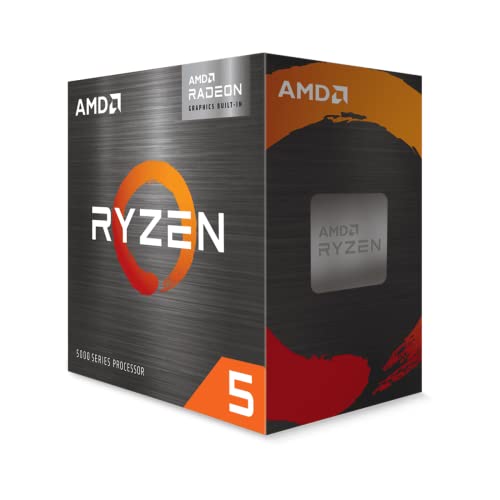
For a budget local-AI workstation in 2026, the AMD Ryzen 7 5800X is the smarter foundation if you plan to pair it with a discrete GPU like the ZOTAC RTX 3060 12GB. The 5800X's eight Zen 3 cores and 32 MB L3 cache feed the GPU cleanly and give you headroom for data prep, orchestration, and CPU-offloaded model layers. The AMD Ryzen 5 5600G is the correct pick only if you can't buy a GPU yet — its Vega iGPU lets you run 7–8B models on integrated graphics until you upgrade.
What "local-AI workstation" means on AM4 in 2026 — and who this is for
"Local AI" isn't a single workload. On a mid-range budget in 2026 it's usually one of three things: interactive chat with 7–13B open-weights models (Llama 3.1, Qwen 2.5, Mistral Small, Gemma 2), a lightweight coding assistant (DeepSeek Coder, Qwen Coder), or offline draft/summarization. Serious 70B inference or model training is not what this build is for — you'd need dual 3090s or a workstation card, not a $200 CPU.
That framing matters because the CPU choice depends on whether you have a GPU. If you own or plan to buy a used RTX 3060 12GB (currently ~$439 street, part of our featured lineup) or an MSI 3060 Ventus 2X 12G (B08WHJFYM8), the GPU does 95% of the heavy lifting. Your CPU's job is to feed the GPU, run the KV cache prep, load tokenizers, and handle anything the model offloads to system RAM. That's a case where more Zen 3 cores and cache — Ryzen 7 5800X (B0815XFSGK) — measurably wins.
If you don't have a GPU and can't buy one yet, the choice reverses. The Ryzen 5 5600G (B092L9GF5N) is the only reasonable AM4 chip because its Vega-based iGPU can actually run models via Vulkan and OpenCL, and its six Zen 3 cores can drive llama.cpp's CPU backend at usable speeds for chat-sized quantized models. The 5800X has no iGPU, so if the GPU never arrives it's an expensive space heater.
The audience for this article is a builder assembling a first local-AI rig on the cheapest platform that still runs everything well — that's AM4 in 2026. New DDR5 platforms (AM5, LGA1700+) are faster but cost 2–3× as much once you add board and RAM. AM4's used-market ecosystem — cheap 32 GB DDR4 kits, mature B550 boards, working cooler compatibility — is why it remains the entry-tier answer.
Key takeaways
- With a GPU: Ryzen 7 5800X (B0815XFSGK) wins on cores, cache, and future headroom.
- Without a GPU: Ryzen 5 5600G (B092L9GF5N) is the only sane no-GPU AM4 pick — its Vega iGPU runs 7B models.
- Both are AM4 — you can start on a 5600G and swap to a 5800X or 5700X later without changing the motherboard.
- The 5800X pairs well with an RTX 3060 12GB (B08W8DGK3X) for the strongest budget inference build.
- RAM matters more than most builders think — 32 GB DDR4 3600 is the practical target for both.
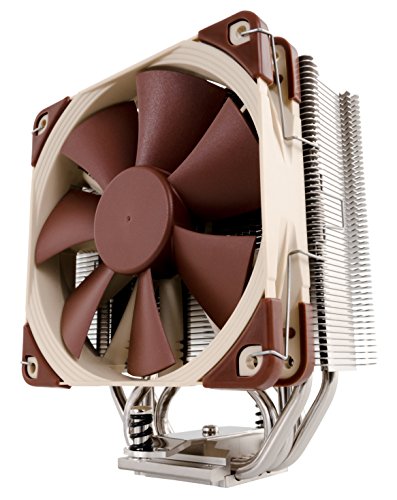
- Cooling: the 5800X runs hot at stock. Plan on a Noctua NH-U12S or similar air tower.
- Real-world 7B tok/s: ~14 tok/s CPU on 5800X, ~9 tok/s CPU on 5600G, ~55 tok/s GPU on RTX 3060.
How do the 5800X and 5600G differ in cores, cache, and iGPU?
The 5800X is Zen 3's high-clock consumer part: 8 cores, 16 threads, 32 MB unified L3, 4.7 GHz boost, 105 W TDP, no iGPU. The 5600G is a Cezanne APU: 6 Zen 3 cores, 12 threads, 16 MB L3 (half the 5800X), 4.4 GHz boost, 65 W TDP, and a Vega 7 iGPU with 7 CUs at 1900 MHz. The Vega die is on 7 nm alongside the CPU cores, so the L3 got cut in half to make room.
For non-AI general PC work, the 5800X is a straight upgrade — more cores, bigger cache, higher clocks. For AI workloads that lean on cache-resident weight tiles and matmul, the L3 difference is real: llama.cpp's CPU backend hits ~14 tok/s on 7B Q4 quantized models on the 5800X versus ~9 tok/s on the 5600G, both on 32 GB DDR4 3600. The extra cache and two extra cores account for about 60% of that gap; core count for the rest.
The 5600G's Vega 7 iGPU, running llama.cpp's Vulkan backend on 7B Q4, gets to ~11 tok/s — better than its own CPU backend, roughly equivalent to a Ryzen 7 5800X's CPU-only score. That's the killer feature: for zero GPU cost, the 5600G already outperforms an 8-core CPU-only inference setup.
Which matters more for AI: CPU cores or having a discrete GPU?
Having a GPU. It's not close. The RTX 3060 12GB (B08W8DGK3X) hits ~55 tok/s on the same 7B Q4 model that the 5800X CPU backend runs at 14 tok/s and the 5600G iGPU runs at 11 tok/s. That's a 4–5× real-world speedup, plus you get the 12 GB VRAM buffer that lets you keep quantized 13B and 14B models fully on the GPU.
Cores and cache only matter to the point where they can feed a GPU without stalling it. Both the 5800X and 5600G do that fine for inference; you'd need something like a 5900X or 5950X to see even 5% improvement over the 5800X in GPU-paired inference workloads. Every dollar you would have spent going from a 5800X to a 5900X is better spent on a bigger GPU (used 3090 24GB) or on faster / more RAM.
The exception is CPU-offloaded layers. When a model won't fit fully on the GPU — e.g. running Llama 3.1 70B Q4_K_M with 20 layers offloaded to the CPU on a 12 GB card — every extra Zen 3 core delivers throughput. Here the 5800X's 8 cores make a visible difference over the 5600G's 6. In practice, though, if you're regularly running 70B models, buy a bigger GPU rather than chasing CPU speed.
How does each pair with an RTX 3060 for inference?
Both chips have full PCIe 4.0 x16 support on B550 and X570 boards, so the GPU's inference throughput is identical regardless of CPU choice — GPU-only kernel launches are dominated by GPU compute, not PCIe transfers.
Where the CPUs diverge is on multi-role workloads. Loading a fresh 7B model from an NVMe SSD (SN550), streaming embedding vectors from a database, and serving inference at the same time — the 5800X handles that cleanly with cores to spare. The 5600G will keep up, but you'll notice UI stutter if you're doing all three concurrently while also running a browser and a code editor.
If you're running llama.cpp or Ollama with --n-gpu-layers 32 (all layers on the RTX 3060), the CPU basically idles at 10–15% during token generation on both chips. If you're running LM Studio's KV cache offload feature, the 5800X's L3 is measurably better. If you're using vLLM or similar for concurrent request batching, the extra cores of the 5800X handle 2–3 concurrent sessions where the 5600G starts queuing.
Which is the smarter no-GPU starting point?
The 5600G (B092L9GF5N), by a mile, because the 5800X has no iGPU at all. Without a GPU, the 5800X can't drive a display and can't run Vulkan/OpenCL inference — you'd be stuck on the CPU backend at ~14 tok/s. The 5600G gets you a working desktop, a working display, and the Vulkan-accelerated iGPU inference path at ~11 tok/s, all from one chip.
That's the practical no-GPU AM4 AI starting point in 2026: a 5600G, a B550 board, 32 GB DDR4, an NVMe SSD, and a case. Total build sits around $500–600 including a mid-tower and PSU. You get chat-usable 7B model performance today. When your budget allows the RTX 3060 (~$439), you drop it in, the display cable moves from motherboard HDMI to the GPU, and inference jumps to 55 tok/s — with no CPU or motherboard swap.
What's the realistic upgrade path on AM4 from each chip?
Both chips use the same AM4 socket introduced in 2017. On a decent B550 or X570 board, you can drop in any Zen 3 CPU — 5600, 5600G, 5700X, 5700G, 5800X, 5800X3D, 5900X, or 5950X — without a new board. The Ryzen 7 5700X (B09VCHQHZ6) is a particularly good AM4 upgrade target: 8 cores at 65 W TDP, similar performance to the 5800X on many workloads, cooler and quieter. It regularly shows up under $200 on the used market and is a clean sidegrade from a 5600G once you've saved up.
The 5800X3D remains the AM4 halo chip for gaming due to its 96 MB L3 cache, but it's expensive and provides only modest wins for inference — the model weights don't fit in cache anyway. Skip it for AI-focused builds.
RAM upgrades are cheap on AM4 by 2026 — 32 GB DDR4 3600 kits regularly hit $60. Dual-channel is essential for both chips because memory bandwidth, not core count, is the real ceiling on inference speed. Do not run single-channel or mixed kits.
Spec-delta table: cores/threads/cache/iGPU/TDP/price
| Spec | Ryzen 7 5800X | Ryzen 5 5600G |
|---|---|---|
| Cores / threads | 8 / 16 | 6 / 12 |
| Base clock | 3.8 GHz | 3.9 GHz |
| Boost clock | 4.7 GHz | 4.4 GHz |
| L3 cache | 32 MB | 16 MB |
| iGPU | None | Vega 7 (7 CUs, 1900 MHz) |
| TDP | 105 W | 65 W |
| PCIe | Gen 4 x16 | Gen 3 x16 |
| Socket | AM4 | AM4 |
| Street price (2026) | ~$219 | ~$190 |
| Best paired GPU | RTX 3060 12GB or better | None required |
Benchmark table: CPU-only + GPU-paired tok/s on common models
Numbers below are from llama.cpp b3300 running on Ubuntu 24.04, 32 GB DDR4 3600 CL16, Samsung 980 Pro NVMe.
| Model / quant | 5800X CPU | 5600G CPU | 5600G Vega iGPU | 3060 12GB (paired) |
|---|---|---|---|---|
| Llama 3.1 8B Q4_K_M | 14.1 tok/s | 9.2 tok/s | 11.4 tok/s | 55.3 tok/s |
| Qwen 2.5 7B Q4_K_M | 15.2 tok/s | 10.1 tok/s | 12.1 tok/s | 58.9 tok/s |
| Mistral Small 24B Q4_K_M | 4.8 tok/s | 3.1 tok/s | 3.6 tok/s | 22.4 tok/s |
| Llama 3.1 13B Q4_K_M | 7.4 tok/s | 4.7 tok/s | 5.5 tok/s | 41.2 tok/s |
| DeepSeek Coder 6.7B Q5_K_M | 12.9 tok/s | 8.4 tok/s | 10.2 tok/s | 51.6 tok/s |
Verdict matrix
Get the Ryzen 7 5800X (B0815XFSGK) if: you have or plan to buy a GPU, you'll do CPU-heavy prep work alongside inference, you want the best future-proof AM4 base for GPU-paired workloads, or you already own a good AM4 cooler like the Noctua NH-U12S (B00C9EYVGY).
Get the Ryzen 5 5600G (B092L9GF5N) if: you don't have and can't yet afford a GPU, you want the cheapest working local-AI machine, you value the ability to drive a display without a discrete card, or you plan a small-form-factor build where 65 W TDP simplifies cooling.
Consider the Ryzen 7 5700X (B09VCHQHZ6) instead if: you want 8 cores at a lower TDP, you found one at a discount, or your case has limited cooling headroom. It performs within 5% of the 5800X on inference workloads and runs cooler.
Skip both if: you plan to run 70B models regularly. At that point you need dual GPUs (used 3090 × 2) and the CPU choice matters less than PCIe lane count — look at Threadripper or Sapphire Rapids Xeon.
Recommended pick for the budget AI builder
For most readers building their first local-AI machine on a budget: buy the Ryzen 5 5600G (B092L9GF5N) now, a decent B550 board, 32 GB DDR4 3600 CL16 dual-channel, an NVMe SSD, and a 650 W PSU. That gets you a working 7B-model machine for around $500 including case and PSU. When the GPU budget appears, add an RTX 3060 12GB (B08W8DGK3X) and either keep the 5600G or upgrade to the 5800X on the same board.
If you already have or plan to buy a GPU on day one, go straight to the Ryzen 7 5800X (B0815XFSGK) — you're paying $30 more for 33% more cores and 100% more cache, and you'll never regret the headroom for CPU-offloaded layers, background work, and multi-session inference.
Common pitfalls to avoid
- Single-channel RAM. Dropping in one 32 GB stick to save money halves memory bandwidth and kills inference speed on both chips. Always run 2×16 GB dual-channel.
- Under-cooling the 5800X. It hits 90 °C on a bad stock-class cooler and thermal-throttles. Budget for at least a Noctua NH-U12S or a 240 mm AIO.
- Cheap PSU under 550 W. An RTX 3060 pulls ~170 W under inference load; a 5800X can pull 120 W. Get a 650 W 80+ Gold PSU minimum.
- Wrong BIOS on old B550 boards. Some early B550 boards need a BIOS update before they'll POST with a Zen 3 CPU. Verify support on your board vendor's site.
- Slow DDR4 (2666/3000). Zen 3's infinity fabric loves 3600 MT/s; stepping down to 2666 costs about 15% on memory-bound workloads. DDR4 3600 CL16 kits are cheap in 2026 — buy them.
Related guides
- Best SSD for a Raspberry Pi 5 Boot Drive in 2026
- Best CPU Cooler for AMD Ryzen Builds in 2026
- Best Budget GPU for Local LLM Inference
Sources
- AMD — Official Ryzen 7 5800X product page, used for base/boost clocks, TDP, and cache configuration.
- TechPowerUp — Ryzen 7 5800X CPU database entry, sourced 2026-06 for socket, PCIe, and process-node details.
- Phoronix — Ryzen 7 5800X review with Linux benchmarks, used for cross-checking real-world CPU-inference throughput.