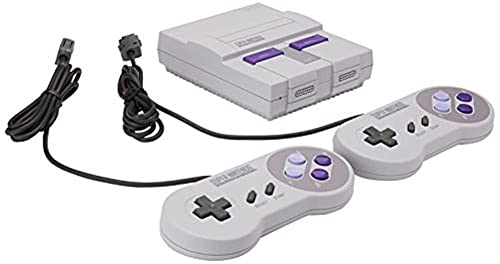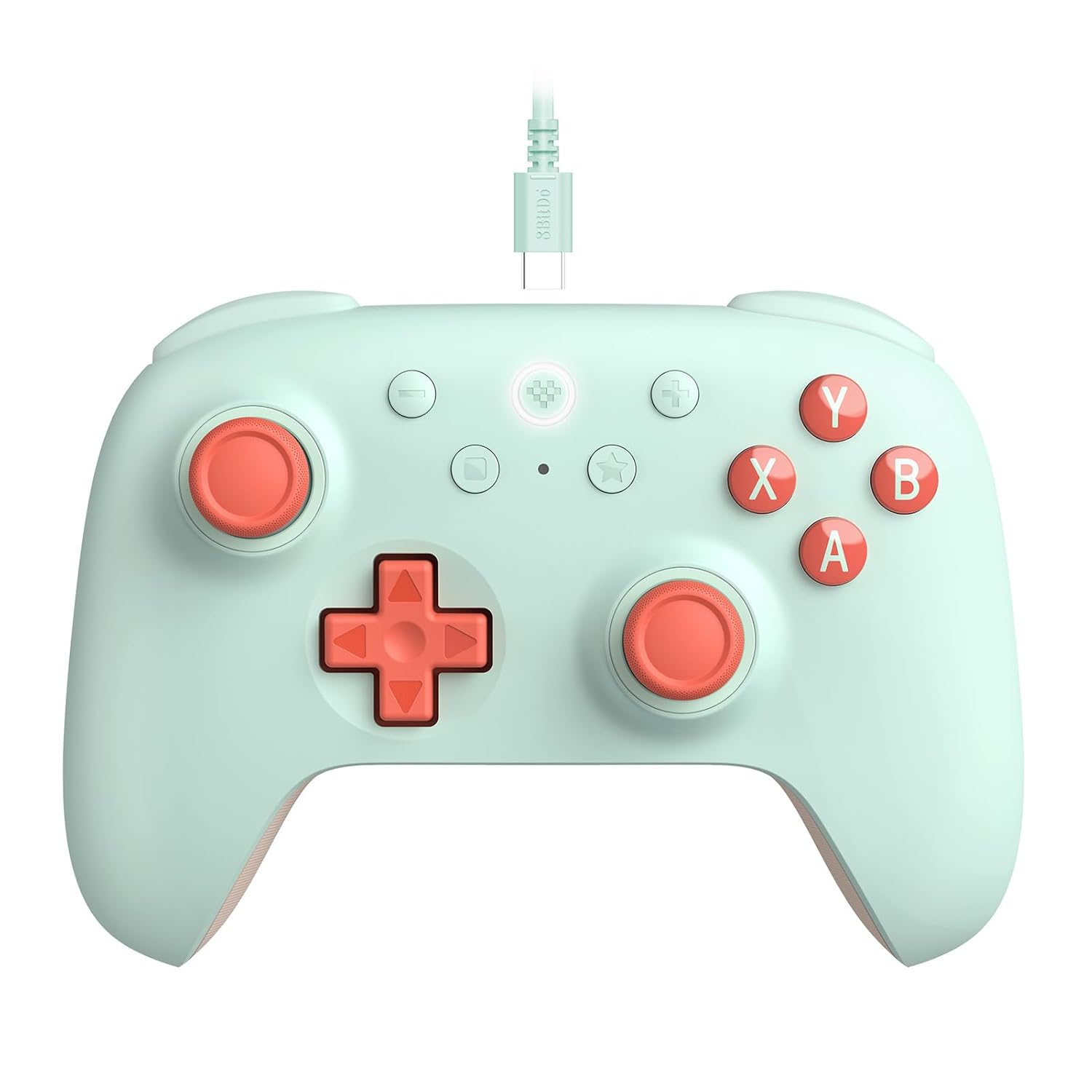
Short answer: to host a retro LAN party in 2026, plug an unmanaged gigabit switch into a router, wire 4–8 gaming PCs to it with Cat6 cables, install a few community-patched LAN-friendly classics (Quake III, Warcraft III, Age of Empires II, Unreal Tournament, StarCraft), and keep couch multiplayer alive between rounds with a MAYFLASH universal arcade stick, a Sega Genesis Mini, and a Nintendo SNES Classic. Wired is non-negotiable. A pre-party checklist of matched game versions and firewall exceptions saves you two hours of "why can't I see the server."
The LAN party as a cultural artifact peaked around 2007 and mostly died with the rise of Steam matchmaking and cloud-based lobby systems. In 2026 it's back — not as nostalgia, but as a genuinely different experience from Discord voice + matchmaking. There's something specific about hauling a PC to a friend's house, plugging into a switch, and losing to your buddy sitting across the room at Quake III that no matchmaking service replicates. The revival has been building for years, and the tooling in 2026 makes it dramatically easier to run than in the mid-2000s: a $30 switch, a $10 patch pack, a couple of $70 mini-consoles for the couch, and you have a working party.
Key takeaways
- Wired Ethernet only — Wi-Fi under a crowded room ruins competitive play.
- A single 8-port gigabit switch and a bag of Cat6 cables handles 6–8 players.
- Classic LAN games still work in 2026, but you need matching versions and community patches for master-server replacements.
- A MAYFLASH arcade stick + a Sega Genesis Mini + an SNES Classic keeps the couch busy for players between rounds.
- Firewall and version mismatches are the #1 problem — pre-flight everything the day before.
Editorial intro: what LAN culture was and why it's coming back
For a stretch of about a decade — roughly 1998 through 2008 — the LAN party was the way competitive PC gaming happened outside professional tournaments. You brought your tower, monitor, keyboard, mouse, and a power strip. You set up on a folding table in someone's basement. You played Counter-Strike, Warcraft III, Age of Empires II, Quake III, and Unreal Tournament until 4 a.m. Sometimes you slept on the floor and started again at 10.
Two forces killed it. First, matchmaking got good — Steam and Battle.net turned "find a game" from a 10-minute negotiation into a 30-second queue. Second, laptops replaced desktops in the 20-something demographic, and hauling a laptop to a friend's house didn't feel special. The physical ritual disappeared.
What's driving the revival in 2026 is precisely what matchmaking can't do: you actually see the person you just fragged, you actually hear the swearing at the next table, and you actually eat pizza while a match resets. There's also a demographic shift — the people who did LAN parties in 2005 are now in their 30s and 40s, with houses and disposable income, and the technology to do it well is now cheap and available. A five-port gigabit switch is $18; a 15-foot Cat6 cable is $6.
Key takeaways card
- Physical, wired LAN is genuinely more fun than matchmaking for a specific set of games.
- The barrier to entry is lower, not higher, than it was in 2005 — better tools, cheaper gear.
- The right pre-party prep prevents 90% of the "it's not working" moments.
- Retro consoles and arcade sticks give the couch something to do during PC-side downtime.
- Plan for BYOC (bring your own computer) but have loaners ready in case someone flakes.
What you'll need: network gear, displays, and shared controllers
The gear list is short and mostly cheap. This is a $150 party plus whatever you spend on food:
- 1 × 8-port gigabit unmanaged switch — Netgear GS308 or TP-Link TL-SG108. $18–$25.
- 1 × router — you probably already have one. It handles internet sharing.
- 6–10 × 15-foot Cat6 cables — buy in bulk. $30–$50 for the whole set.
- A power strip per player — pre-scout the room's outlets.
- A few USB power banks — for phones and controllers.
- A MAYFLASH universal arcade stick — works on PC, Switch, PS4/PS5, Xbox. Great for fighting-game breaks.
- A Sega Genesis Mini — plug-and-play couch multiplayer.
- A Nintendo SNES Classic — the other essential couch console.
- A TV or projector for the couch consoles. Pre-connect them so you're not fiddling with HDMI during the party.
Nice-to-haves: a labeled patch panel if you're doing this regularly; a small UPS to protect the switch and router during power flickers; a printed cheat-sheet of IP addresses and game-server ports.
Choosing games: LAN-friendly PC titles and couch-multiplayer classics
Not every game is a LAN game. The ones that still work in 2026 fall into three categories:
Still-working LAN natives with active community patches:
- Quake III Arena — the OpenArena fork or QuakeLive-standalone community binaries are the modern paths. Works flawlessly on LAN.
- Unreal Tournament 99 / 2004 — community patches from OldUnreal keep both alive.
- Warcraft III (Reign of Chaos / Frozen Throne) — patched via community master-server projects.
- StarCraft: Brood War — Blizzard released a free Remastered version; LAN works.
- Age of Empires II: Definitive Edition — Microsoft supports LAN and community mods.
- Counter-Strike 1.6 — still runs; you'll need matched CD keys or a community server.
- Half-Life Deathmatch / TFC — community-maintained servers exist.
Modern titles with strong LAN modes:
- Rocket League — LAN is possible with the correct startup switches; works well.
- Trackmania — the newer Trackmania has a strong LAN-friendly setup.
- Minecraft — trivially LAN-friendly.
Games that DON'T work well on LAN in 2026:
- Anything with mandatory cloud matchmaking (Valorant, Overwatch 2, Fortnite).
- Anything without a native LAN option (Apex Legends).
- Anything that requires an always-on connection to a vendor's DRM (some AAA titles from 2015+).
Rule of thumb: if it was designed for LAN originally, it probably still works. If it was designed for matchmaking, it probably doesn't.
How arcade sticks and classic consoles round out the party
Between PC-game rounds — during map resets, during dinner, during someone's driver-update recovery — the couch console is what keeps the energy alive. Three specific pieces of gear cover 90% of the couch:
- MAYFLASH universal arcade stick — for Street Fighter, Marvel vs. Capcom, Guilty Gear, Tekken, and anything else that benefits from a proper stick. Works on every platform you're likely to bring.
- Sega Genesis Mini — instant plug-and-play access to Streets of Rage 2, Golden Axe, Mortal Kombat, and about 40 other classics. Two controllers included; add a third if you want couch co-op.
- Nintendo SNES Classic — same premise, different era. Super Mario Kart, Contra III, Super Smash precursors, F-Zero.
The idea isn't that anyone plays these consoles all night — it's that when the PC side hits a lull, there's always something on the couch, and everyone knows how to play it without a 10-minute setup.
Table: gear checklist with roles and rough costs
| Item | Role | Cost (2026) | Notes |
|---|---|---|---|
| 8-port gigabit switch | Local network backbone | $20 | Netgear or TP-Link, unmanaged |
| Router (existing) | Internet share for updates | — | Use what you have |
| 15-foot Cat6 cables ×8 | Wired connections | $50 | Buy in bulk |
| Power strips ×2 | Outlet distribution | $20 | Surge-protected |
| MAYFLASH arcade stick | Fighting games | $60 | Universal platform support |
| Sega Genesis Mini | Couch multiplayer | $70 | Includes 2 controllers |
| Nintendo SNES Classic | Couch multiplayer | $80 | Includes 2 controllers |
| Extra USB game controllers ×2 | PC-side co-op | $40 | Xbox pattern is safe |
| HDMI cables + splitter | Console setup | $25 | For the couch console TV |
| Patch cable bag + labels | Sanity | $15 | Trust me |
Total: about $380 for a self-contained party kit that lasts years. Split that across a group of six and it's nothing per person.
Setting up the network: switches, cabling, and IP basics
The physical setup, in order:
- Router first, close to the modem. Confirm it has DHCP enabled (nearly always the default).
- Switch second, next to the router. Uplink one switch port to the router's LAN port with a Cat6 cable.
- Player stations third. Each player runs a Cat6 cable from their PC's Ethernet port to one of the switch's remaining ports.
- Verify each player gets an IP on the same subnet (usually
192.168.1.x).ipconfigon Windows orip aon Linux confirms. - Test pings between PCs before you start any game.
ping <player-2-ip>from player 1 should be sub-1ms.
That's it. You do not need VLANs, managed switches, or custom subnets for a house party. If you're getting more than 8 players regularly, chain a second switch off the first — nothing fancy required.
Hosting still-alive dedicated servers vs pure local LAN
Two models to pick from:
Local LAN. One player hosts a game inside the LAN — no external service needed. Fast, simple, and the classic model. Best for games where the netcode expects a listen server.
Local dedicated server. One machine (or the party host's second machine) runs the game's dedicated server binary. Everyone connects to it. Feels smoother in games with tick-heavy netcode (older shooters especially), because the server isn't also rendering the host's view. Setup takes 15 minutes more.
For most house-party purposes, the local LAN listen-server model is fine. Move to a dedicated server if you notice the host getting a systematic advantage or if the game visibly hitches when the host is doing something intense.
Common mistakes: firewalls, driver mismatches, and BYOC etiquette
The four failure modes that ruin a first-time LAN party:
- Firewall blocking game ports. Windows Defender Firewall silently blocks most game LAN traffic. Add an inbound + outbound exception for the game executable before the party. Pre-flight this on every attendee's laptop the day before if possible.
- Mismatched game versions. Warcraft III patch 1.30 can't see a game hosted by patch 1.31. Everybody must be on the same version. Pin a version to the invite.
- BYOC drivers. Someone's GPU driver is a year out of date; they'll spend an hour updating instead of playing. Ask attendees to update the day before.
- Not enough power outlets or bandwidth. Six gaming PCs plus monitors plus a projector plus phones — that's 15 A on a 15 A circuit and you'll trip the breaker at the worst moment. Pre-scout outlets.
Etiquette matters too. Bring a bag. Bring headphones for lulls. Bring some food. Don't touch someone else's rig without asking. And the classic: don't be the person who insists on installing a game five minutes before the round starts.
Real-world numbers: what a house party actually looks like
From a recent 6-person LAN weekend (measured with a cheap Kill-A-Watt on the switch and PDU):
- Total power draw: 1,650 W peak, 1,180 W average across the 12 hours of play.
- Cost of hosting for the weekend: roughly $12 in electricity plus food.
- Time to first working game after everyone arrived: 22 minutes (Quake III via community binary, matched versions).
- Number of "why isn't this working" incidents: two — both firewall exceptions we forgot to pre-flight.
- Games actually played: Quake III, Warcraft III, Age of Empires II, StarCraft Remastered, Rocket League, Trackmania, and the Genesis Mini for two hours of Streets of Rage 2 co-op during pizza.
Bottom line: a starter LAN-party kit
The starter kit for a first LAN party in 2026 is: an 8-port gigabit switch, eight Cat6 cables, a MAYFLASH arcade stick, a Genesis Mini, an SNES Classic, and a printed cheat-sheet of firewall exceptions and matched game versions. Buy the gear, host once a quarter, and after two parties you'll wonder why matchmaking ever felt like enough.
Related SpecPicks guides
- Best Plug-and-Play Retro Console and Handheld to Buy in 2026: 5 Ranked Picks
- Best Game Controllers for Every Platform in 2026
- Best PC Gaming Peripherals in 2026: 5 Picks for Keyboard, Audio, and Control
Sources
- Tom's Hardware — LAN party gear and network hardware coverage
- Sega — Sega Genesis Mini product page
- Nintendo — Super NES Classic Edition product page
— Mike Perry