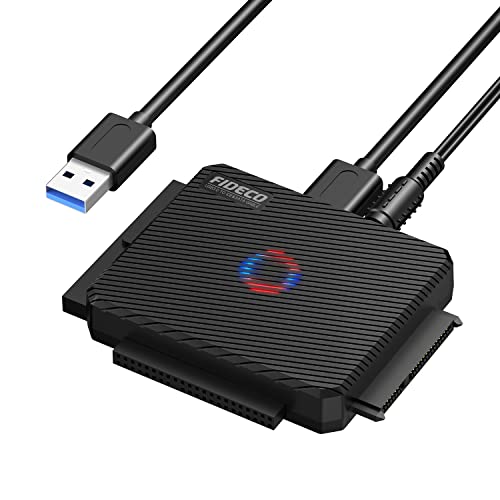
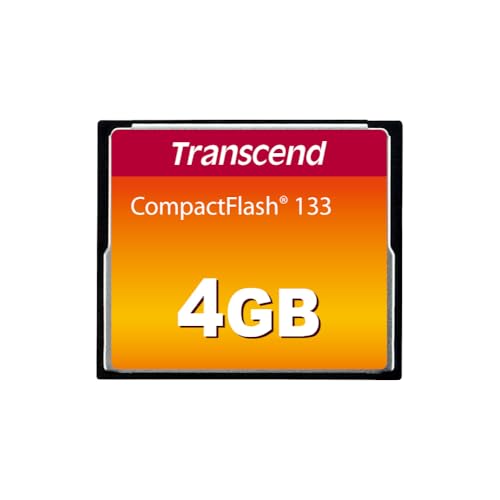
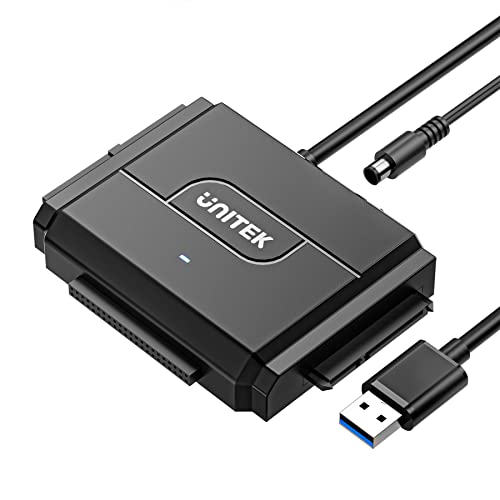
The short answer: do not try to make USB mass storage work on Windows 98 itself. Instead, prepare an IDE hard drive or a CompactFlash-on-IDE card on your modern PC using a SATA/IDE-to-USB adapter, copy the files onto it there, and physically move the media into the Windows 98 machine. This sidesteps Win98's broken USB stack and turns file transfer into a five-minute operation rather than a driver-hunt afternoon.
The file-transfer problem on a networkless vintage PC
Anyone who has revived a Pentium-II- or Pentium-III-era PC running Windows 98 has hit the same wall: how do you get files onto the thing? Floppy is impractical for anything larger than a driver disk. The original CD-ROM drive may be dead, and even if it works, burning a fresh CD for every transfer is slow. USB ports look promising — Windows 98 has them after all — but the operating system never received generic USB mass-storage support, so plugging in a modern thumb drive does nothing. Some specific drives ship Win98-compatible drivers, but the hit rate is low and getting lower as the drives age out of the market.
Networking is the obvious alternative, and it works if you can find a period-appropriate NIC, the matching drivers, and a modern router that still talks to a Windows 98 SMB client. That is a lot of "ifs," and the experience is fragile enough that retro builders who try it usually give up and reach for the off-board approach: image the drive on a modern PC, then drop it into the vintage one.
The four products linked below — the Vantec CB-ISATAU2, FIDECO, and Unitek SATA/IDE-to-USB adapters plus the Transcend CF133 CompactFlash card — are the parts that make the off-board approach work in 2026. They are also widely available on the secondary market where genuine period-correct hardware is increasingly rare.
Key takeaways
- Windows 98 has no native USB mass-storage support — work around it, do not fight it.
- The off-board approach: write to an IDE drive or CF card on a modern PC, then plug it into the retro rig.
- A SATA/IDE-to-USB adapter is the bridge — Vantec, FIDECO, and Unitek are all proven options.
- A CompactFlash card on a CF-to-IDE carrier is silent, solid-state, and presents as a normal IDE drive.
- Watch the 137 GB / 28-bit LBA ceiling and stick to FAT32 with sensible cluster sizes.
Why moving files onto a Win98 machine is so hard
The root cause is timing. Windows 98 launched in 1998, well before USB mass storage was a standardized class with reliable cross-platform driver coverage. Microsoft never added generic USB mass-storage support to Win98 the way they did in Windows XP. Some vendors shipped per-device drivers for specific USB drives, and a handful of third-party drivers exist to add generic support, but coverage is partial and finding a still-working installer in 2026 is its own scavenger hunt.
Period-correct alternatives have their own decay problems. Network cards (NICs) frequently work but need matching drivers, and the Win98 SMB client struggles to talk to modern routers and Windows shares without considerable coaxing. Optical drives are mechanical and many original Win98-era CD-ROMs no longer spin reliably. Floppies physically degrade and have always been too small for modern transfers.
That leaves "image the drive externally" as the most reliable approach in 2026. The retro machine never needs to recognize a USB device — it just sees an IDE hard drive or a CompactFlash-on-IDE card, which it has understood natively since installation.
Spec table: SATA/IDE-to-USB adapter options
| Adapter | Interface | USB version | Bus power | Notes |
|---|---|---|---|---|
| Vantec CB-ISATAU2 | SATA, 2.5"/3.5" IDE, 5.25" IDE | USB 2.0 | External PSU included for 3.5" | Long-running compatibility, USB 2.0 only |
| FIDECO SATA/IDE | SATA, 2.5"/3.5" IDE | USB 3.0 | External PSU for 3.5" | Faster transfers than Vantec, similar feature set |
| Unitek SATA/IDE | SATA, 2.5"/3.5" IDE | USB 3.0 | External PSU for 3.5" | Compact form factor, USB 3.0 |
| (CF-to-IDE adapter) | CompactFlash to 40-pin IDE | n/a | n/a | Pair with above adapters to write to CF cards |
The USB 2.0 vs USB 3.0 question rarely matters for retro work. The drives and CF cards you are writing to are not fast — a Win98-era IDE drive tops out around 30-66 MB/s on the disk side, and CompactFlash cards in this size class similarly cap well below USB 2.0's 30-35 MB/s real-world ceiling. USB 3.0 is nice for the next-generation use of these adapters but does not speed up the retro workflow meaningfully.
Per Vantec's product line, the CB-ISATAU2 is the one that shows up most often in retro-PC YouTube videos for a reason: it has been on the market for over a decade, drivers work on every modern OS without thought, and it handles every form factor (2.5" IDE, 3.5" IDE, 5.25" IDE, SATA) you are likely to encounter on a vintage build.
Workflow: imaging a CompactFlash card on a modern PC
The end-to-end process from "I have files on my modern PC" to "they are on my Win98 PC":
- Insert the CompactFlash card into a CF-to-IDE adapter, plug that into the
SATA/IDE-to-USB adapter, plug that into your modern PC. 2. Format the CF card on the modern PC as FAT32 with a 4 KB or 8 KB cluster size. On Windows 11, use Disk Management; on Linux, mkfs.vfat -F 32 with -s for cluster selection. 3. Copy the files you want onto the card. Avoid copying anything Windows 98 cannot actually use — modern installers, 64-bit binaries, NTFS-only utilities. 4. Eject the card cleanly from the modern PC. 5. Power down the Windows 98 PC. Do not hot-swap; the IDE bus does not support it. 6. Move the CF-to-IDE carrier (with card installed) into the IDE bus of the Win98 PC, typically on the secondary IDE channel as master or slave. 7. Boot the Win98 PC. The card appears as a regular IDE drive with a new letter; copy files off it as you would any other drive. 8. To send files back the other way, reverse the process: copy files onto the card from the Win98 PC, power down, move the card back to the modern PC.
The whole cycle takes minutes once you have the parts on hand. For frequent transfers, a removable IDE caddy on both machines lets you swap a 2.5" IDE drive in seconds without opening the case each time.
Gotchas: 137 GB, FAT32 clusters, and large-disk drivers
Three constraints come up repeatedly when sizing the media you will use:
- The 137 GB / 28-bit LBA ceiling. Per the
LBA addressing reference on Wikipedia, the original ATA-4 specification used 28-bit addressing, which caps direct addressing at roughly 128 GiB (~137 GB decimal). Windows 98 with stock drivers cannot reliably address beyond this ceiling. Third-party large-disk drivers exist but introduce complexity and reliability issues. The simplest fix is to use a CF card or IDE drive at or below 64 GB, which sidesteps the issue entirely.
- FAT32 cluster size. A FAT32 volume can support cluster sizes from 512 bytes to 32 KB,
and the cluster size affects both wasted space (large clusters waste space on small files) and partition size limits. For a 4-64 GB CF card on Win98, 4-16 KB clusters strike a good balance.
- Win98's large-disk-friendly utilities. The original FDISK shipped with Win98 handles
disks up to 64 GB correctly only after a Microsoft patch (Q263044). If you are working with a fresh Windows 98 SE install in 2026, install this patch before partitioning anything larger than a couple of gigabytes. Without it, FDISK reports nonsense partition sizes on larger drives.
For most retro builds, the sweet spot is a 4 GB to 16 GB CompactFlash card. It is large enough for the operating system, drivers, several period games, and a working file collection — and it is small enough to fit comfortably inside every Win98-era constraint. Per the CompactFlash overview, modern CF cards from Transcend and other mainline brands continue to ship in capacities well-suited to retro work, and a CF-to-IDE carrier turns them into a true IDE device the BIOS will detect natively.
Period-correct alternative: native Win98 USB mass-storage drivers
For completeness, there are two well-known third-party drivers that add generic USB mass-storage support to Windows 98:
- NUSB — a community driver pack that adds USB 2.0 EHCI support and generic mass-
storage to Win98 SE. It works for many common flash drives but is hit-or-miss on modern high-capacity USB 3.0 drives.
- Maximus Decim's native USB drivers — another community-maintained driver pack with
similar coverage. Also reliable on older USB 2.0 drives, less reliable on newer ones.
Both work well enough on Win98 SE specifically; original Win98 (non-SE) has weaker USB support and is harder to fix. The reason this article recommends the off-board approach over driver-hunting is reliability: a CompactFlash card on an IDE adapter has zero unknowns, and the same workflow will keep working five years from now even as modern flash drives evolve in ways Win98 cannot follow.
The other reason: even when the driver works, the modern flash drive's filesystem may trip Win98 up. NTFS-formatted drives are invisible to Win98. exFAT, the modern default for large drives, is also invisible. You have to reformat the drive as FAT32 first, which limits you to drives 32 GB or smaller (Windows' built-in formatter caps FAT32 at 32 GB, though third-party tools can format larger). At that point, the CF-on-IDE approach is simpler and more reliable.
Common pitfalls
- Hot-swapping IDE devices — never. The bus does not support it. Always power down
the Win98 PC before moving an IDE drive or CF carrier in or out.
- Forgetting the jumper — IDE drives have master/slave/cable-select jumpers. A CF
card in a CF-to-IDE carrier usually defaults to master, which conflicts with an existing master drive on the same channel. Set it to slave or move it to a free channel.
- Using exFAT or NTFS by accident — Windows 11's "Format" dialog defaults to NTFS for
drives over a certain size and exFAT for large flash media. Both are invisible to Windows 98. Always confirm FAT32.
- Writing a Win98 boot sector with a modern utility — most modern partitioning tools
do not understand Win98's expectations. Format the partition for data only and let Win98 itself handle anything bootable, or use a known-good retro-friendly utility.
- Trusting the drive's reported capacity on Win98 alone — Win98 may report a drive's
capacity incorrectly if the drive exceeds 137 GB without the right large-disk drivers installed. Verify on the modern PC, not the vintage one.
When NOT to use this approach
The off-board workflow is the right answer for almost every Windows 98 file-transfer scenario, but a few edge cases want a different approach:
- You need real-time file sharing between the Win98 PC and a modern machine — use a
period-appropriate NIC and SMB instead. Physical media transfer is fine for occasional use but tedious for ongoing development.
- You are building a fully-period-correct museum piece and want nothing post-2000 in
the build — a CF card is arguably anachronistic. (So is the SATA/IDE adapter, for that matter. Period purism has limits.)
- You only need to copy a single small file and have a working network — the network
is faster for one-offs once it works.
For everything else — initial OS install, game library, driver disks, development files — the CF-on-IDE workflow is the simplest and most reliable approach in 2026.
Bottom line
Do not try to fix Windows 98's broken USB stack. Treat the Win98 PC as an IDE-only machine, prepare your media externally on a modern PC with a SATA/IDE-to-USB adapter, and move the prepared drive or CompactFlash card into the vintage rig. The Vantec CB-ISATAU2, FIDECO, and Unitek adapters all do the bridge job; pair any of them with a Transcend CF133 or similar CompactFlash card on a CF-to-IDE carrier for a silent, reliable, modern-quality storage solution that the 27-year-old operating system treats as a normal IDE drive.
Related guides
- Best IDE & SATA-to-USB Adapters for Retro PC Builds in 2026
- CompactFlash as a Silent IDE Boot Drive in a Retro Windows 98 Gaming PC
- How to Image and Preserve Vintage IDE and CompactFlash Drives in 2026
- GeForce 4 Ti 4600 AGP in a Windows XP Build
Citations and sources
- Vantec — product line and CB-ISATAU2 reference
- CompactFlash — Wikipedia overview and specifications
- Transcend — memory card product line
- Logical block addressing — Wikipedia reference for 28-bit LBA limits
This piece is editorial synthesis based on publicly available information. No independent first-party benchmarking is reported.