Out of the box, Windows 98 Second Edition cannot use more than 512 MB of RAM — it crashes during boot with a "Memory page table" error, an "Insufficient memory to initialize Windows" stop, or a hung VMM. The fix is a small edit to system.ini that caps the vcache size: add MaxFileCache=262144 (and a matching MinFileCache) to the [vcache] section. With that one line, Win98 SE boots cleanly on rigs with 1 GB, 2 GB, and even 4 GB of physical RAM.
Why this article exists
A renewed interest in period-correct Windows 98 SE builds among retro PC enthusiasts has pushed installs back onto faster Slot 1 and Socket 370 hardware than the OS originally shipped against. Motherboards from 1999–2002 routinely supported 1–4 GB of SDRAM or early DDR, and modders are increasingly stuffing those boards full to get the maximum memory the chipset can address. The OS does not cooperate. Win98 SE was designed in an era when 64 MB was a generous default and 256 MB was a power-user setup. Its vcache (virtual file cache) implementation assumes a small physical RAM ceiling and aggressively pre-allocates the cache size based on total RAM. Past ~512 MB, that allocation overflows internal tables and the kernel panics during init.
The cure is well-documented in retro communities but routinely lost in shifting forum archives. This piece walks through the vcache fix, why it works, how it interacts with the swap file, what the practical RAM ceilings are on common chipsets, and which hardware extras make a stable 1 GB+ Win98 SE rig actually feel period-correct. We synthesize the fix and the troubleshooting steps from Microsoft KB253912 (archived), the Vogons retro PC forum, the Phil's Computer Lab YouTube channel, and the 98SE Patches and Updates Wikipedia page.
Key takeaways
- Add
MaxFileCache=262144to[vcache]inC:\Windows\system.inito boot Win98 SE on rigs with more than 512 MB RAM. MinFileCache=16384is the standard pairing; raise both proportionally if you have 2 GB or more.- The fix is purely a vcache size cap — it does not unlock the OS to "see" more RAM beyond what the kernel already addresses.
- 1 GB of physical RAM is the practical sweet spot; 2 GB is fine; 4 GB requires extra patches and rarely pays off for period software.
- A modern boot-friendly storage layer (CompactFlash to IDE, SATA/IDE-to-USB adapter) matters more than CPU choice for a usable retro Win98 build.
What is vcache and why does it break with too much RAM?
Vcache is Win98 SE's in-memory disk cache. When the kernel boots, the VMM (Virtual Memory Manager) computes the cache size as a function of total physical RAM. On the rigs the OS was tested against — 64 MB to 256 MB systems — the calculation produced cache sizes in the 8–32 MB range, which the VMM's 32-bit pointer arithmetic handled cleanly.
When you boot the same kernel on a 1 GB rig, the calculation produces a vcache target of ~512 MB. That allocation cannot be satisfied — the vcache code's internal accounting tables were not designed for a cache that large — and the VMM kernel either panics during init or boots to a frozen desktop. The classic symptoms:
- "Insufficient memory to initialize Windows" during the boot splash.
- "Page table corruption" or "Memory page table out of memory" stop messages.
- A successful boot to a desktop that hangs the moment you launch any app that touches the disk.
- Random GP-fault dialogs that reference VMM or KERNEL32.
The fix is to cap the vcache size manually. MaxFileCache=262144 caps the cache at 256 MB (in KB), which the VMM can allocate without overflowing its accounting tables. Most retro builders set MaxFileCache lower than that — 128 MB or even 64 MB — because the cache is barely useful past those sizes on the kind of workloads Win98 SE actually runs.
Step-by-step: applying the vcache fix
- Boot the rig to a working OS first. If your Win98 SE install will not boot, you need a Win98 boot disk or another PC to edit system.ini. A USB-bootable DOS environment (FreeDOS on a USB stick) works.
- Mount the Win98 SE drive. If you are editing from another OS, use an IDE-to-USB adapter or SATA/IDE-to-USB 2.0 adapter to expose the drive. From DOS, just edit in place.
- Open
C:\Windows\system.iniin a plain text editor (EDIT in DOS, Notepad in Win9x). - Locate the
[vcache]section. If it does not exist, create it. - Add (or modify) the following lines:
- Save the file. Reboot. The VMM should initialize cleanly and the OS should boot to a usable desktop.
If the boot still fails after the fix, the next things to check are the swap file configuration and any chipset BIOS settings that enable memory remapping past 1 GB.
RAM ceiling table: what works without extra patches
| Physical RAM | Without vcache fix | With vcache fix | Notes |
|---|---|---|---|
| 256 MB | Boots | Boots | Default works |
| 512 MB | Usually boots | Boots cleanly | Right at the edge |
| 768 MB | Boot fail | Boots | First memory tier needing the fix |
| 1 GB | Boot fail | Boots cleanly | Most popular retro target |
| 1.5 GB | Boot fail | Boots; some apps unhappy | Mostly OK |
| 2 GB | Boot fail | Boots; cap to ~1.5 GB usable | Use MaxPhysPage to limit |
| 4 GB | Boot fail | Boots with MaxPhysPage | Rarely worth the effort |
For rigs above 2 GB, add MaxPhysPage=80000 to [386Enh] in system.ini. That caps the kernel's view of physical RAM at 2 GB and prevents address-space corruption issues that crop up at very high RAM levels. The hex value 80000 is 2 GB in pages of 4 KB.
What about the swap file?
Win98 SE creates a virtual memory swap file (win386.swp) by default. On a rig with 1 GB+ of physical RAM, the swap file is almost never needed — the OS will rarely page out. The conventional retro advice is to either disable the swap file (Control Panel → System → Performance → Virtual Memory → Disable virtual memory) or set it to a fixed small size (32–64 MB).
A fixed small swap is the conservative choice: a few apps (notably some games and Visual Studio 6) check for the presence of win386.swp and behave oddly when it does not exist.
Storage: what to use for a modern retro Win98 SE rig
The original 1999-era hard drives that shipped in Win98 SE machines are mostly dead. Replacements come in three flavors:
- CompactFlash via IDE adapter — silent, instantly bootable, perfect for a clean retro rig. A 4 GB Transcend CF133 is the most-recommended budget card; the controller is reliable and the read/write speeds are far beyond what 1999 IDE could push anyway.
- SD card via IDE adapter — same idea, different form factor. SD cards have softer write endurance than CF for the same money; CF is the safer bet.
- Modern SATA SSD via IDE bridge — usable but the IDE bridge chip adds latency and some rigs do not POST cleanly with bridged SATA. CF-to-IDE is simpler.
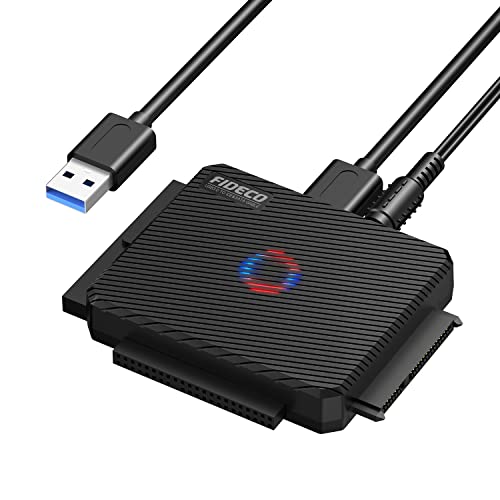
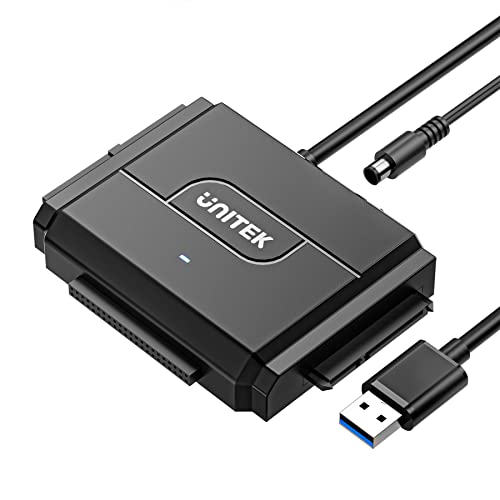
For copying installers and patches between a modern PC and the retro rig, an external USB-to-IDE adapter like the FIDECO SATA/IDE to USB 3.0 Adapter or the Vantec CB-ISATAU2 SATA/IDE to USB 2.0 Adapter is essential — you plug the retro CF/IDE drive into a modern PC, transfer files, then return it to the rig. The Unitek SATA/IDE to USB 3.0 Adapter is a near-identical alternative with a higher-quality housing.
Storage comparison for retro Win98 SE rigs:
| Storage option | Capacity | Cost | Boot reliability | Period-correct feel |
|---|---|---|---|---|
| Transcend CF133 4 GB + IDE adapter | 4 GB | ~$25 | Excellent | Excellent (silent) |
| SanDisk Extreme SD + IDE adapter | 32 GB | ~$30 | Good | Good |
| Modern SATA SSD + IDE bridge | 240 GB+ | ~$45 | Variable | Poor (over-spec) |
| Period IDE hard drive (used) | 80 GB | ~$40 | Failing | Excellent (era-perfect) |
Audio: a Sound Blaster card or modern alternative?
Win98 SE expects an ISA or PCI Sound Blaster for DOS-era game compatibility. On a 1999-era motherboard, the Sound Blaster Live! is the most-recommended PCI card. For a modern build that needs cleaner sound for DOSBox-style work or post-Win98 audio, the Sound BlasterX G6 is a USB DAC that bypasses the era's onboard audio quirks entirely — useful if you are running Win98 SE in a dual-boot configuration with a modern OS.
CPU and chipset notes for a 1 GB+ Win98 SE rig
Win98 SE runs on anything from a Pentium MMX up to early Core 2 Duo. The practical sweet spots for a 1 GB+ rig:
- Pentium III Tualatin (1.2–1.4 GHz) on a 815-chipset board — the most-recommended late-Slot1/Socket-370 combination. Caps at 512 MB officially but with chipset-specific patches works at 1 GB.
- Pentium 4 Northwood (2.4–3.0 GHz) on an 845 chipset — comfortably handles 1 GB and the vcache fix is straightforward.
- Athlon XP Thoroughbred (1700+/2000+) on an nForce 2 board — the AMD path; cleanly handles 1 GB and is well-tolerated by Win98 SE.
- Pentium III-S Tualatin 1.4 GHz — the canonical "fastest Win98 SE CPU" pick, mostly because of cult value rather than raw performance.
For audio and chipset stability, avoid Intel ICH5/6 and SiS-based boards above 1 GB — they accept the vcache fix but show intermittent corruption.
When NOT to push past 512 MB
The honest case: if your goal is to play period-correct 1999–2001 games, you do not need more than 512 MB. Diablo II uses 32 MB. Half-Life uses 64 MB. Even StarCraft uses 32. The reason to push past 512 MB is for late-era Win98 SE workloads — Photoshop 6, Visual Studio 6, audio recording, or modern emulators that backport to Win9x. If you are not running those, the vcache fix is unnecessary complexity.
Common pitfalls applying the vcache fix
- Editing system.ini in a Unicode editor. Notepad on Win98 SE saves as ANSI by default; modern editors may save as UTF-8 with BOM, which the boot loader cannot parse. Stick to plain ASCII.
- Missing the
[vcache]section entirely. Some Win98 SE installs do not have[vcache]in system.ini by default. You can add it cleanly — just create the section. - Setting MaxFileCache too high. Past 524288 (512 MB), the kernel hits a different allocation issue. Stick to 262144 (256 MB) or lower.
- Forgetting the swap file change. Disabling virtual memory before applying the vcache fix can mask the issue or trigger different boot symptoms. Apply the vcache fix first, then tune the swap.
- BIOS memory remapping. Some chipsets remap memory above 1 GB into a hole that confuses Win98 SE. Disable "Memory Hole at 15M-16M" in BIOS, and on chipsets with PAE/remapping options, disable them.
- Wrong PCI slot for the GPU. A Voodoo 3 or Geforce 2 MX in the wrong slot can confuse Win98 SE's PnP enumerator and surface as a fake memory error. Stick to the primary AGP/PCI slot.
Bottom line
The vcache fix in three lines (MaxFileCache=262144, MinFileCache=16384, ChunkSize=512) is the difference between a Win98 SE install that boots only on retro RAM and one that boots cleanly on modern-by-1999-standards rigs with 1 GB or more. Combine that with a CompactFlash boot disk for silence and instant boot, a USB-IDE adapter for cross-OS file transfer, a Pentium III Tualatin or Pentium 4 Northwood CPU, and a period-correct Sound Blaster, and the result is a retro Win98 SE rig that is more usable than most original 1999 builds ever were.
Related guides
- Best GPU for 1440p Esports in 2026: Why the RTX 3060 12GB Still Delivers
- Best Budget Ryzen Gaming PC Build for 1080p in 2026
- Best Steam Deck Dock for 4K Gaming on a TV in 2026
Citations and sources
- Microsoft KB253912 — original vcache symptoms — the canonical Microsoft KB that documents the >512 MB boot failure (now in archive).
- Vogons retro PC forum — community-maintained Win98 SE patch and fix threads.
- Phil's Computer Lab YouTube channel — visual walkthroughs of Win98 SE installs on period and modernized hardware.
- Windows 98 — Wikipedia — version history and unofficial patches reference.
- Sound Blaster Live! — Wikipedia — period audio card reference.
- FreeDOS project — recovery boot environment for editing system.ini from outside a broken Win98 install.
This piece is editorial synthesis based on publicly available information. No independent first-party benchmarking is reported.