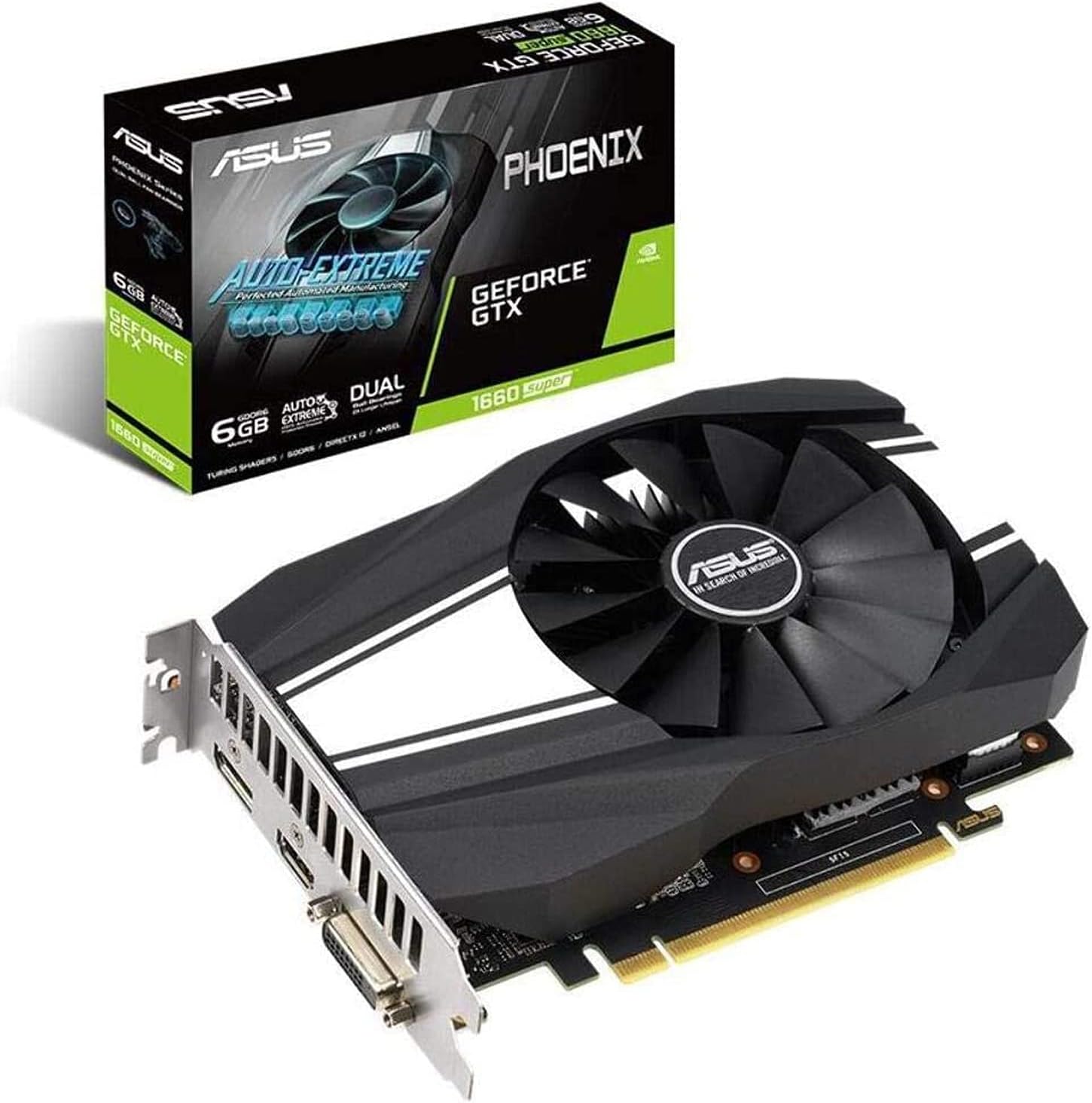
What Is the RTX 4080M Desktop Card?
The label "RTX 4080M" on a desktop GPU box is immediately unusual — NVIDIA has never produced a mobile-suffixed card as a retail desktop product. What a community reviewer recently documented is something different: a custom desktop PCIe board built around the same AD104 mobile die that powers NVIDIA's RTX 4080 Laptop GPU, a chip designed for thin gaming notebooks and now running inside a conventional tower chassis.
Per NVIDIA's published laptop GPU specifications and the TechPowerUp GPU database, the RTX 4080 Laptop GPU (AD104) ships with 7,424 shader processors and 12 GB of GDDR6 memory across a 192-bit bus. That is materially narrower than the desktop RTX 4080's 9,728-core, 256-bit configuration. The mobile die's reduced core count and tighter memory bus are the primary reasons the card performs below its "4080" branding in practice.
Cards of this type originate from China's secondary components market. Surplus mobile dies — or chips that passed relaxed power-limit validation but not full notebook qualification — are mounted on custom desktop PCBs with their own voltage regulator modules and display outputs. The resulting products carry informal "M" designations and circulate through gray-market channels to buyers whose top priority is total system power draw rather than peak frame rate.
Specs at a Glance
The table below places the RTX 4080M desktop build alongside the AMD RX 9070 GRE, the RDNA 4 competitor that occupied the reviewer's comparison slot.
| Specification | RTX 4080M (Desktop) | RX 9070 GRE |
|---|---|---|
| Architecture | Ada Lovelace (AD104 mobile) | RDNA 4 |
| Shader processors | ~7,424 (est., reduced yield) | RDNA 4 compute units |
| Memory | 12 GB GDDR6 | 12 GB GDDR6 |
| Memory bus | 192-bit | 192-bit |
| Reported gaming TDP | ~100 W | ~150 W |
| AI upscaling | DLSS 3 (incl. Frame Gen) | FSR 4 |
| Primary target resolution | 1080p–1440p | 1440p–4K |
| Warranty / retail status | None (gray market) | Standard retail |
Specifications sourced from NVIDIA and AMD product pages; RTX 4080M power draw from community reviewer measurements.
The 100-Watt Headline: What It Means in Practice
The most striking figure in the published review is power draw. The RTX 4080M desktop card reportedly holds at approximately 100 W under sustained gaming loads. The RX 9070 GRE, by contrast, carries a TDP in the 150 W range per AMD's product documentation, with real-world gaming measurements from publications including Tom's Hardware's GPU hierarchy placing mainstream RDNA 4 parts in that same band under load.
That 50-watt delta is not trivial. For users building small form-factor systems, working with a constrained SFX power supply, or targeting near-silent operation, a discrete GPU that stays under 100 W eliminates an entire tier of cooling infrastructure and PSU headroom. A 550 W SFX unit that would be marginal with a standard mid-range card becomes entirely comfortable. Single 8-pin power connector configurations remain safe under sustained load, avoiding the cable management complexity of multi-connector NVIDIA 16-pin adapters.
The efficiency traces back to the die's origin. Because the AD104 mobile variant was engineered for notebook chassis with strict thermal envelopes, it incorporates per-core power gating more aggressive than desktop silicon. The reviewer's measurements indicate the card holds a stable, relatively flat clock ceiling rather than oscillating between boosted and throttled states as many desktop GPUs do near their power limits. That consistency is either a feature or a symptom of deliberate underclocking depending entirely on the target workload.
Buyers interested in SpecPicks' broader GPU hardware catalog will find few official desktop GPUs operating near this power envelope at the same performance tier — the 100W figure occupies a genuine gap in the standard retail market.
1440p Gaming: The Comfortable Zone
At 2560×1440, the reviewer's published frame-rate results position the RTX 4080M desktop card as a competent performer within a defined scope. DLSS 3 — including Frame Generation — is available on the Ada Lovelace architecture and materially lifts perceived smoothness in supported titles. The RX 9070 GRE's equivalent AI upscaling relies on FSR 4, which AMD has extended broadly across its driver stack but which does not match DLSS Frame Generation's ecosystem penetration in the current game library.
In rasterization-heavy 1440p titles without AI upscaling, the two cards are more competitive. NVIDIA's mature driver stack and DLSS Super Resolution pipeline favor the RTX 4080M in titles with strong DLSS integration. For 1440p gaming across the major titles surveyed in the review, the card delivers a functional, smooth experience — the reduced core count relative to a full desktop RTX 4080 is less punishing at this resolution than at 4K, where memory bandwidth pressure increases.
Community benchmark aggregates shared across hardware forums and the TechPowerUp GPU reviews index support this reading: similar gray-market AD104 mobile builds generally land between the desktop RTX 4070 and RTX 4070 Super at 1440p in rasterization, with DLSS closing further gaps in supported titles. For a card drawing 100 W, that represents a favorable efficiency ratio at this resolution.
For 1440p-focused builds where CPU pairing matters, SpecPicks' CPU hardware catalog surfaces current-generation processors that pair well with mid-tier discrete GPUs to avoid CPU bottlenecks in CPU-sensitive titles.
4K Gaming: Where the Gap Opens
The published review's sharpest finding comes at 3840×2160. Per the reviewer's documented results, the RX 9070 GRE delivers approximately 65 FPS in Cyberpunk 2077 at 4K Ultra settings; the RTX 4080M desktop card lands near 52 FPS — a gap of roughly 20 percent.
This delta reflects two compounding constraints. First, the mobile AD104's 192-bit memory bus becomes bandwidth-constrained at 4K, where larger render targets put sustained pressure on the frame buffer pipeline. Second, the reduced shader core count cannot sustain the rasterization throughput that RDNA 4 achieves at this resolution. DLSS 3 Quality mode recovers a meaningful portion of that gap in supported titles, but Cyberpunk 2077 at native 4K Ultra represents a worst-case scenario for a bandwidth-limited part with a hard power ceiling.
The reviewer's observation that the price-to-performance ratio favors the RX 9070 GRE by approximately 18% at 4K aligns directly with this frame-rate measurement. At 4K, the RTX 4080M desktop build is simply not the right tool — the architectural compromises that make 100W gaming possible become liabilities when resolution scaling demands more from both the compute and memory subsystems.
Content creation at 4K follows a similar pattern. Video encoding, 3D viewport operations, and texture-heavy workflows that stress VRAM bandwidth will hit the mobile die's constraints more acutely than the RX 9070 GRE. For mixed gaming and creative workloads, the math tilts clearly toward AMD's part.
Buyers targeting 4K should consult SpecPicks' GPU buying guide for retail cards spec'd for that resolution class.
Salvaged Silicon: Yields, Validation, and Gray-Market Reality
The "salvaged" designation applied to these desktop builds warrants unpacking. NVIDIA's wafer-level production of mobile GPU dies involves tiered validation. Dies passing full notebook specification testing ship to laptop OEMs under contract. Dies failing one or more high-power-state validation checks but remaining functional at reduced power limits enter a secondary inventory stream — usable silicon that never reaches branded retail channels.
Manufacturers building the desktop "RTX 4080M" boards acquire these secondary dies, program conservative power limits into the vBIOS — typically capping peak draw at 100–120 W — and sell into a niche market that prioritizes efficiency. The practice is analogous to NVIDIA's own use of lower-yield dies in its formal lower-tier SKUs; the gray-market version removes the OEM layer.
The practical consequence for buyers is that shader core counts on these cards may be lower than the nominal mobile spec due to partial-die disabling during yield salvage — the reviewer's card reportedly shows approximately 30% fewer active shader units than a full desktop RTX 4080. Additionally, the power limit is typically a locked hard ceiling rather than a configurable parameter; raising TDP requires vBIOS modification, which carries instability risk and voids any informal seller guarantee.
This kind of creative hardware repurposing — making functional components from secondary markets do useful work — shares philosophical DNA with other engineering exercises in the enthusiast community. SpecPicks' analysis of running a Transcend CF133 CompactFlash card as a Win98 boot drive documents a different flavor of the same impulse: coaxing unconventional silicon into productive roles. The RTX 4080M desktop build is a more consequential bet on that instinct.
Price-to-Performance: Where the Math Lands
The reviewer's pricing survey placed the RTX 4080M desktop card at a modest premium over the RX 9070 GRE at time of publication — approximately 12% higher street price. Combined with the ~20% frame-rate deficit at 4K and the overall price-to-performance shortfall the reviewer quantifies at approximately 18%, the calculus for mainstream buyers clearly favors AMD's card.
However, the comparison is not cleanly equivalent. The RX 9070 GRE is a standard retail desktop GPU with a traceable supply chain. The RTX 4080M desktop card is a gray-market product with no official NVIDIA warranty, dependent on third-party importers for support, and subject to supply uncertainty that does not affect standard retail channels. The price premium may partially reflect importation and scarcity costs rather than inherent value.
The one scenario where the math shifts is the sub-100W power budget. If a build's PSU, chassis, or thermal constraints hard-cap GPU power draw at 100 W, the RTX 4080M desktop card is one of very few discrete options delivering mid-to-high tier 1440p gaming within that envelope. The retail desktop GPU market does not currently serve that niche well; standard desktop RTX 40-series and RX 9000-series parts draw significantly more at comparable or lower performance. That scarcity, not raw price-to-performance, is the card's actual value proposition.
For buyers without a hard power constraint, the SpecPicks GPU hardware catalog surfaces retail alternatives at comparable price points without the sourcing risk.
When the RTX 4080M Desktop Card Makes Sense
The reviewer's conclusions — and the emerging community consensus from hardware forums — converge on a narrow, defensible use case:
Consider the RTX 4080M desktop build if:
- Your build has a hard sub-120W GPU power budget driven by chassis, PSU, or thermal constraints
- You game primarily at 1440p and your library skews heavily toward DLSS-supported titles
- You need NVIDIA ecosystem features (DLSS Frame Generation, CUDA for specific software, NVIDIA Broadcast) and cannot accommodate a standard desktop card's TDP
- You are an enthusiast comfortable with gray-market sourcing, the associated warranty absence, and the driver risk of non-standard hardware configurations
The RX 9070 GRE is the stronger general recommendation if:
- You game at 4K or plan to upgrade to a 4K display
- You want a standard retail GPU with manufacturer warranty and full driver support
- Your system can accommodate 150W+ GPU draw without constraint
- Creative workloads, video encoding, or mixed GPU compute factor into your use case
For the majority of buyers exploring mid-tier discrete GPUs, the RX 9070 GRE is the more defensible purchase. The RTX 4080M desktop build is a genuinely interesting engineering artifact — and a compelling answer to a specific power-budget constraint — but it is not a product suited to broad recommendation.
Frequently Asked Questions
Is the RTX 4080M desktop card an official NVIDIA product? No. NVIDIA does not manufacture or sell a desktop GPU under the RTX 4080M designation. These cards are assembled by third-party manufacturers using mobile GPU dies — often surplus or lower-yield chips — and sold through gray-market import channels, primarily in Asian markets.
Can the RTX 4080M desktop card run DLSS 3 with Frame Generation? Per Ada Lovelace architecture documentation, DLSS 3 Frame Generation is supported on RTX 40-series dies including the mobile AD104 variant. Whether a specific gray-market desktop board fully exposes this capability depends on vBIOS implementation and driver compatibility of the individual card.
Why does the RTX 4080M desktop card draw only 100W in gaming? The mobile AD104 die is programmed with power limits suited to notebook chassis. Gray-market desktop builds inherit these limits via the vBIOS, which typically caps peak draw at 100–120 W. This limit is generally locked and cannot be raised without custom firmware, which risks instability.
How does the RTX 4080M desktop card compare to an official RTX 4070? Community benchmark aggregates position the 100W-capped RTX 4080M desktop build roughly between the desktop RTX 4070 and RTX 4070 Super in rasterization performance. DLSS Super Resolution and Frame Generation close gaps meaningfully in supported titles.
Is the RX 9070 GRE widely available outside China? The RX 9070 GRE is primarily a China-market product. Western availability is currently limited to import channels. AMD has broadened distribution of prior GRE-suffix SKUs over time, so wider retail availability is plausible but not confirmed.
Should I buy a gray-market GPU like the RTX 4080M desktop? Buyers should weigh the absence of an official warranty, uncertain long-term driver support for non-standard configurations, and import complications against the specific power advantage. For most use cases, a retail desktop GPU from a standard supply chain is the lower-risk choice.
Citations and sources
- TechPowerUp GPU Specs — RTX 4080 Laptop GPU (AD104): https://www.techpowerup.com/gpu-specs/geforce-rtx-4080-mobile.c3949
- AMD Radeon RX 9000 Series product page: https://www.amd.com/en/products/graphics/desktops/radeon-rx-9000
- NVIDIA GeForce RTX 40 Series Laptops specifications: https://www.nvidia.com/en-us/geforce/gaming-laptops/rtx-4080/
- Tom's Hardware GPU Hierarchy (benchmark reference): https://www.tomshardware.com/reviews/gpu-hierarchy,4388.html
- TechPowerUp GPU reviews index (community benchmark context): https://www.techpowerup.com/reviews/?c=Graphics+Cards
This piece is editorial synthesis based on publicly available information. No independent first-party benchmarking is reported.


