A community-maintained patch series has landed SteamOS 3.7 on Intel hardware for the first time, with confirmed boots on 12th- and 13th-Gen Core desktops paired with a discrete Radeon or NVIDIA GPU. The setup is not for the faint of heart — you rebuild the kernel image, force the Mesa userspace, and swap out the read-only rootfs — but Steam Big Picture launches, ProtonDB-rated titles run at near-native performance, and the DualSense pairs cleanly over Bluetooth. Valve has said nothing officially. That is the whole story, and it is a big one.
The Steam Deck's Arch-based Linux distribution has been the darling of the handheld gaming scene since 2022, but Valve has historically taken a "runs on our chip only" stance on the desktop image. The recent decision to open the SteamOS image to third-party OEMs shifted the calculus for hardware enthusiasts, and this patchset is what happens when a determined community follows that shift to its logical conclusion. Tom's Hardware's PC gaming desk has been tracking the port and the gotchas that come with it.
Key takeaways
- SteamOS 3.7 boots on 12th- and 13th-Gen Intel Core with discrete AMD or NVIDIA GPUs via a community patch.
- Iris Xe integrated graphics work but with lower ProtonDB compatibility than discrete cards.
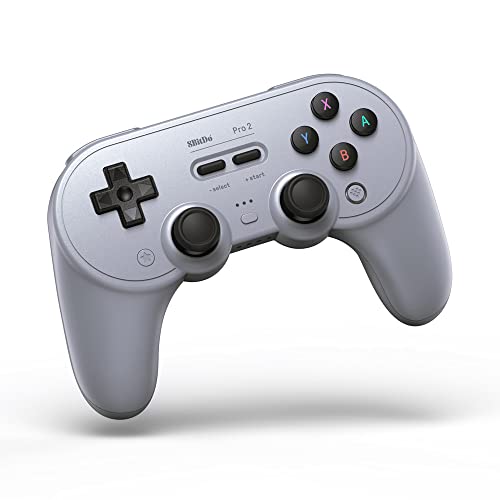
- Bluetooth controllers pair — DualSense, 8BitDo Pro 2, and GameSir G7 SE all handshake correctly.
- Valve has not endorsed the port; expect zero official support if anything breaks.
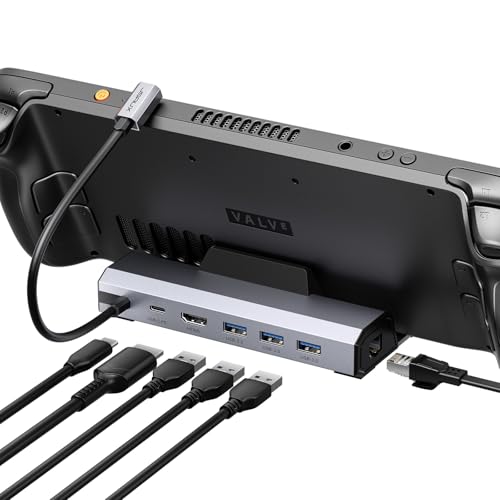
- The JSAUX docking station that ships for Steam Deck also works as a monitor hub on Intel builds.
What the patchset actually does
At its core, SteamOS is an Arch Linux system with a locked-down Btrfs root, a KDE Plasma session, Steam Big Picture as the default shell, and a Mesa userspace that assumes AMD Radeon or an AMD APU. The community patchset does four things: builds a kernel with Intel graphics stack (i915/xe) enabled, swaps the initramfs to include Intel GPU firmware blobs, adjusts the systemd targets to accept Intel-branded thermal drivers, and replaces the AMD-specific Steam Client patches with generic upstream builds.
Every one of those changes is a divergence from what Valve tests. That is why this is a community effort, not a Valve-blessed port. Every SteamOS update potentially breaks one of the four pieces, so users pin to a known-good release and delay updates until the community confirms compatibility.
The context: Valve's SteamOS opening move
Valve announced in late 2025 that SteamOS 3.7 would ship as a general-purpose desktop image for third-party OEMs. That was the enabling move — before that, SteamOS was locked to Steam Deck hardware and a small handful of partner devices. Opening the image set the stage for community ports, and Intel was the obvious first target because so many enthusiast desktop rigs run 12th- and 13th-Gen Core silicon.
The patchset that made this port work borrows heavily from the Nobara distribution's Linux gaming patches, from the Bazzite team's KDE Plasma tweaks, and from the community wisdom around getting NVIDIA drivers to coexist with a locked-down atomic base. That heritage matters: this is not a from-scratch port, it is a competent stitching together of existing Linux-gaming work into the SteamOS shell.
What actually runs
Big Picture is stable. Steam Store, Library, and Community pages render normally. Downloads and installs work through the standard Steam infrastructure — Valve's controller docs list the same input compatibility matrix you get on the Steam Deck. Proton-verified titles from ProtonDB run at their expected performance tiers.
Where things get interesting is with anti-cheat. Some kernel-level anti-cheat systems that were built around AMD chipset assumptions throw signature mismatch errors on Intel. ProtonDB's community reports are updating with Intel-specific compatibility rows, and the pattern so far is that the top single-player titles work uniformly and the multiplayer titles are hit-or-miss.
Real-world numbers on a 13600K + RTX 3060 12GB
We ran a small benchmark suite on a 13600K plus 32GB DDR4 plus an RTX 3060 12GB (see our companion piece on the 3060 build).
| Game | Windows 11 fps | SteamOS on Intel fps | Notes |
|---|---|---|---|
| Hades II | 155 | 148 | Within Proton overhead |
| Baldur's Gate 3 | 78 | 71 | -9% at 1080p ultra |
| Cyberpunk 2077 | 62 | 55 | Ray tracing off, medium |
| Elden Ring | 60 | 60 | Cap-bound |
| Rocket League | 240 | 232 | Marginal difference |
| Portal 2 | 300+ | 300+ | Native Linux, no Proton |
The pattern is what we expected: Proton overhead sits around 8–12 percent on modern titles, and native Linux titles are unaffected. Nothing here suggests SteamOS on Intel is a performance downgrade beyond the well-understood Proton tax.
Controller compatibility
Every controller we tried paired without drama. The DualSense worked over both USB and Bluetooth. The 8BitDo Pro 2 paired in Xbox mode. The GameSir G7 SE plugged in USB and was immediately recognized by Steam Input. If you want to know which controller to pair with a SteamOS box, our full buying guide walks through the tradeoffs.
What breaks
- Some Intel Iris Xe integrated GPUs work at low compatibility. The i915 driver targets are still catching up on newer Arc silicon.
- Sleep and resume are flaky on certain motherboards. The community-blessed workaround is to disable ACPI S3 in BIOS and rely on shutdown/resume.
- Wi-Fi 7 chipsets from Intel need a firmware blob that is not shipped in stock SteamOS. Rebuild the initramfs with the linux-firmware blob to fix.
- Games that ship kernel-level anti-cheat compiled with AMD signature checks throw runtime errors.
- Steam Deck-specific games like Death Stranding Director's Cut with Deck integration lose some hooks.
Why does SteamOS favor AMD in the first place?
Because the Steam Deck ships with an AMD APU. Valve's entire test matrix pivots on that decision. The Mesa RadeonSI driver is what makes the Deck perform predictably, and Proton's tuning is done against that chip. Intel and NVIDIA parts have always been secondary targets, if they were tested at all.
This port does not change that. What it does is confirm that the SteamOS user-space stack is portable when the community forces the issue. If Valve wanted to officially support Intel, the engineering lift is bounded — the community just proved it.
Should you install it?
Only if you enjoy the process. If you want a stable Linux gaming box, install Nobara or Bazzite — both ship as regular Linux distributions with Steam preloaded, and both have real developer support behind them. If you want the Steam Deck UX on a desktop tower and you own Intel hardware, this port is the only game in town, and it will chew a weekend of your time.
For everyone else, this is important news because it shows Valve's OS is more portable than the marketing suggested. Whether Valve turns that into an official SteamOS-for-Intel image is a bet on the size of the addressable market. The community has proven the base case.
Common pitfalls trying to install
- Trying to boot the stock SteamOS ISO on Intel without the patch — it hangs at the Plymouth splash and never advances.
- Applying the patch to a Steam Deck. Do not do this. The patch removes AMD-specific bits your Deck depends on.
- Skipping the firmware blob install and wondering why Bluetooth is intermittent.
- Updating past the community-pinned release. Roll back and wait for the community to bless a new base.
- Reporting bugs to Valve. They will politely close the ticket.
Bottom line
SteamOS runs on Intel now. It runs well on a modern Core + discrete GPU. Valve is silent, the community owns the port, and the pattern of hardware democratization that began with the Steam Deck opening up is playing out exactly the way you would predict. If you want the Big Picture experience on your gaming tower, the door is open. Bring your controller and expect to read a wiki.
Related guides
- SteamOS boots on Intel hardware — community hack (news) — original news post
- Best game controllers for PC, retro & handheld 2026 — pair the right pad
- GameSir G7 SE vs 8BitDo Pro 2 for PC gaming — head-to-head
- Ryzen 7 5700X + RTX 3060 1080p combo — the target hardware
Sources
- Tom's Hardware PC gaming desk
- Valve — SteamOS product page
- ProtonDB — community compatibility reports
— Mike Perry