NVIDIA is doubling down on venture investments to lock startups into its CUDA-first hardware stack. Per The Decoder's mid-2026 coverage of the semiconductor investment beat, the company's venture arm has aggressively funded AI-startup rounds that come with implicit or explicit compute commitments — a pattern reporters are calling a "chip grip" strategy that keeps AMD and custom silicon (AWS Trainium, Google TPU, Groq, Cerebras) out of the training and inference stacks of the startups most likely to define the next AI generation.
Why local-rig builders should care
The takeaway for a home builder is less about the industry chessboard and more about what stays cheap. NVIDIA's consumer stack — the RTX 30, 40, and 50-series cards — inherits the software work bankrolled by the datacenter side. Every time NVIDIA funds a startup that ships its models with CUDA-first quantization kernels, the local-LLM ecosystem gets another day-one llama.cpp / TensorRT-LLM path that "just works" on your desk. AMD's ROCm side has closed a lot of ground per 2025-2026 progress reports, but the frontier open-weight releases still land on CUDA first.
The RTX 3060 12GB angle
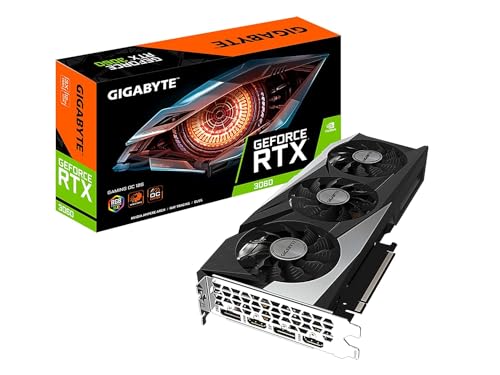
For readers running local inference on the RTX 3060 12GB — ZOTAC, MSI Ventus, or GIGABYTE Gaming OC — the immediate practical effect is that model releases from NVIDIA-funded labs (a growing share) tend to ship with CUDA-optimized GGUF variants on release day. The 3060's Ampere generation still gets first-class support in llama.cpp, Ollama, and TensorRT-LLM.
The medium-term concern is silicon diversity. A chip grip that keeps AMD out of frontier training runs also slows down the ROCm software optimization that ripples down to consumer Radeon cards. If you care about ecosystem diversity — and, honestly, about not paying NVIDIA's inevitable end-user price hikes — the AMD side of the stack deserves your dollar too.
Related coverage
Citations and sources
- The Decoder — NVIDIA venture arm and AI startup funding coverage
- TechPowerUp — GeForce RTX 3060 specifications
- NVIDIA — Corporate venture investment portfolio disclosures
This piece is editorial synthesis based on publicly available information. No independent first-party benchmarking is reported.