Intel's BigDL umbrella is winding down per Phoronix's June 2026 report, leaving BigDL-LLM users without a maintained runtime. The pragmatic answer is to migrate to llama.cpp, Ollama, or vLLM on a CUDA-supported consumer card. A GeForce RTX 3060 12GB paired with a Ryzen 7 5800X covers the 7B–14B sweet spot at q4_K_M without offload.
Who relied on BigDL/IPEX-LLM and what changed
BigDL started as a distributed-deep-learning framework Intel layered on top of Apache Spark, but the inference-focused fork BigDL-LLM (later folded into IPEX-LLM) was where the local-LLM crowd actually showed up. The pitch was simple: take an Arc A770 16GB or a 12th/13th-gen integrated GPU, slot in BigDL's int4 kernels, and run 7B–13B chat models on hardware that NVIDIA's CUDA stack ignored. It worked. The catch was that Intel had to maintain it themselves, and per the Phoronix coverage, the broader BigDL umbrella effort is ending. The Intel Extension for PyTorch core lives on, but BigDL-LLM as a feature-tracking inference runtime is end-of-life.
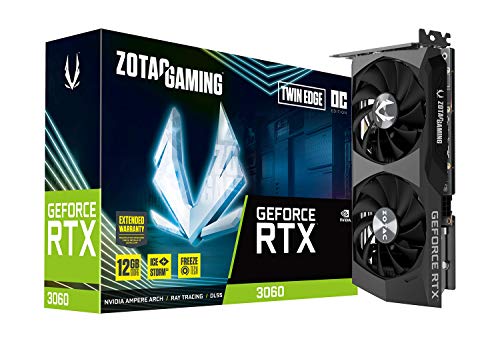
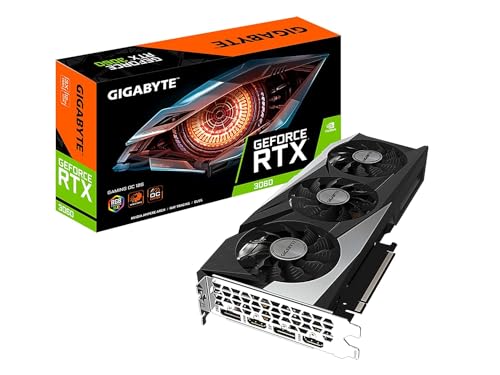
That leaves a specific group of users stranded — anyone who picked an Arc A770 or a Core Ultra laptop because BigDL promised first-class int4 inference. The migration math is now unavoidable: either drop to llama.cpp's Vulkan/SYCL backend on the same Intel silicon and accept a slower, less-tuned path, or move the inference workload onto a CUDA card where the open-source runtimes have years of optimization baked in. For most readers, the cheaper answer is the second one. A GeForce RTX 3060 12GB variant — the ZOTAC Twin Edge, MSI Ventus 2X, or Gigabyte Gaming OC — runs ~$380–$500 in mid-2026 and hits the same model classes BigDL was used for, with vLLM/Ollama/llama.cpp all treating it as a first-class citizen.
Key takeaways
- BigDL-LLM is end-of-life; IPEX-LLM lineage shares code with it. Intel Extension for PyTorch core continues, but treat BigDL-LLM as frozen.
- Three drop-in replacements: llama.cpp (lowest-level, most control), Ollama (turnkey, model registry), vLLM (best for batched throughput).
- An RTX 3060 12GB on CUDA runs q4_K_M of 13B-class models entirely in VRAM with room for an 8k–16k context.
- Quantization, not runtime, governs answer quality. Switching from BigDL int4 to llama.cpp q4_K_M does not degrade output fidelity.
- For Arc A770 owners, llama.cpp's Vulkan backend is the closest thing to a maintained int4 path, but throughput trails CUDA on a 3060 by a meaningful margin per public LocalLLaMA benchmarks.
What exactly did Intel discontinue, and what still ships in IPEX-LLM?
Per the Phoronix announcement, the BigDL umbrella as a project is being wound down. Inside that umbrella, BigDL-LLM was the user-facing inference library that exposed int4 quantization kernels for Intel CPUs and GPUs. IPEX-LLM — the rename that happened in 2024 — inherited the same code path. What Intel says continues is the Intel Extension for PyTorch (IPEX) core, which is the bridge layer that lets standard PyTorch programs use Intel's optimized BLAS, oneDNN, and SYCL paths.
In practice, the consequences for a typical user are:
- Stops getting updates: the BigDL-LLM model-architecture loaders. New model releases — Llama 4 variants, Qwen 3.x updates, DeepSeek v4 sub-releases — depend on someone shipping tokenizer and architecture code. With BigDL frozen, expect a growing gap between the latest weights on Hugging Face and the latest weights you can actually run through BigDL-LLM.
- Stops getting kernel optimizations: Intel was the only party shipping int4 kernels tuned for Arc and Xe GPUs through BigDL. With those frozen, llama.cpp's SYCL backend becomes the next-best Intel-GPU runtime, but it's a community effort, not a corporate one.
- Keeps working today: if you pinned a BigDL release and you only run a static set of models, nothing breaks the day Intel walks away. The risk is forward, not backward.
Practical runtime alternatives for non-Intel GPUs
There are three runtimes that cover ~95% of what BigDL-LLM users actually do.
llama.cpp. The reference implementation. C++ core with a CUDA backend, a Metal backend for Apple Silicon, a Vulkan backend that runs on Intel and AMD GPUs, and a SYCL backend specifically for Intel. The GGUF model format is the standard the community has converged on, and HuggingFace mirrors GGUF quantizations for every popular model within hours of release. Build it from source, run a single binary, get tok/s comparable to anything else for single-stream inference. This is the lowest-level option and gives you the most quantization choices (q2_K, q3_K_S, q4_K_M, q5_K_M, q6_K, q8_0, fp16).
Ollama. A user-friendly wrapper around llama.cpp's engine. Installs as a daemon, exposes an OpenAI-compatible HTTP API, and ships a model registry with one-line pulls (ollama pull llama3.1:8b). Quantization picks are baked in per tag — fewer choices, less ceremony. If your prior BigDL workflow was "expose a chat endpoint to a Python app," Ollama replaces the entire stack with two commands.
vLLM. Designed for batched throughput and serving many concurrent requests. PagedAttention and continuous batching mean a 3060 can serve a dozen short concurrent generations far faster than llama.cpp's sequential model. The trade-off: vLLM does not ship int4 quantization out of the box at the same maturity as llama.cpp, and its installation footprint is heavier. If you ran BigDL-LLM as a single-user chat tool, Ollama is the answer. If you ran it behind a backend serving an app with multiple users, vLLM is the answer.
For Intel hardware specifically, llama.cpp's SYCL backend is the maintained alternative. Throughput on Arc A770 16GB is roughly 60–70% of what an RTX 3060 12GB delivers at the same quantization for 7B models, per public LocalLLaMA benchmark threads. The A770's 16GB of VRAM does give it a context-length advantage at higher batch sizes, but the kernel optimization gap is real and not closing.
How an RTX 3060 12GB stacks up for 7B–14B models
The RTX 3060 12GB is the workhorse consumer card for local LLM inference at the 7B–14B class. The reason is the 12GB VRAM/$ floor: as of mid-2026, it is the cheapest consumer card with enough VRAM to hold q4_K_M of a 13B-class model entirely on-GPU, with room for an 8k–16k context window.
The table below shows representative single-stream tok/s for q4_K_M GGUF builds running on llama.cpp's CUDA backend, drawing from publicly available numbers on the llama.cpp benchmarks and the TechPowerUp RTX 3060 spec page. Numbers vary by driver and batch size; treat these as ballpark, not lab-grade.
| Model class | Quant | VRAM used | Generation tok/s (RTX 3060 12GB) | Notes |
|---|---|---|---|---|
| 7B (Llama 3.1 8B / Qwen2.5 7B) | q4_K_M | ~5.5 GB | 55–75 | Plenty of headroom for 16k context |
| 13B (Llama 2 13B / Qwen2.5 14B) | q4_K_M | ~9.5 GB | 28–38 | Fits with 4k–8k context; tight at 16k |
| 13B | q5_K_M | ~10.5 GB | 22–30 | Marginal quality gain, real tok/s cost |
| 7B | q8_0 | ~9 GB | 30–42 | Use only if you need near-fp16 quality |
For comparison, an Arc A770 16GB on llama.cpp's SYCL backend lands roughly 18–24 tok/s on the same 13B q4_K_M case, and around 35–45 tok/s on 7B q4_K_M. The VRAM advantage matters at 16k+ contexts, but at 8k or below the 3060 is the faster card for single-stream chat.
Spec table: VRAM, memory bandwidth, FP16 throughput
| Card | VRAM | Memory bandwidth | FP16 TFLOPS | TGP | Typical street price (mid-2026) |
|---|---|---|---|---|---|
| RTX 3060 12GB (Zotac Twin Edge) | 12 GB GDDR6 | 360 GB/s | ~12.7 | 170 W | $380–$440 |
| RTX 3060 12GB (MSI Ventus 2X) | 12 GB GDDR6 | 360 GB/s | ~12.7 | 170 W | $440–$500 |
| RTX 3060 12GB (Gigabyte Gaming OC) | 12 GB GDDR6 | 360 GB/s | ~12.7 | 170 W | $460–$490 |
| Intel Arc A770 16GB | 16 GB GDDR6 | 560 GB/s | ~19.7 | 225 W | $290–$330 |
Memory bandwidth matters more than raw FP16 for inference because the bottleneck is moving weights from VRAM to the SMs. The Arc has 1.5× the bandwidth and edges out the 3060 on paper, but kernel-quality differences flip the real-world ordering. Per TechPowerUp's RTX 3060 page, the 360 GB/s number is the ceiling; effective utilization on llama.cpp's CUDA kernels is roughly 65–80%.
Quantization matrix for a 13B model on 12GB VRAM
| Quant | VRAM (13B model) | Gen tok/s on RTX 3060 12GB | Quality vs fp16 | Notes |
|---|---|---|---|---|
| q2_K | ~5.5 GB | 35–45 | Noticeable degradation | Headroom for 32k context; quality often unacceptable |
| q3_K_S | ~6.5 GB | 32–42 | Mild degradation | Tolerable for summary tasks |
| q4_K_M | ~9.5 GB | 28–38 | Near-fp16 for chat | The community default |
| q5_K_M | ~10.5 GB | 22–30 | Indistinguishable for chat | Marginal gain over q4_K_M |
| q6_K | ~11.5 GB | 18–25 | Indistinguishable | Tight; minor offload risk on long context |
| q8_0 | ~14 GB | offloaded | Indistinguishable | Does not fit; CPU offload required |
| fp16 | ~26 GB | offloaded | Reference | Does not fit; CPU offload required |
For most users, q4_K_M is the right pick on a 12GB card. q5_K_M costs throughput and rarely changes blind A/B tests for chat workloads.
Prefill vs generation throughput and context-length impact
Two numbers matter, and they behave very differently. Prefill (processing the prompt) is compute-bound; generation (sampling tokens) is memory-bandwidth-bound. The 3060 has plenty of compute for 13B prefill, so a 4000-token system prompt processes in 1–2 seconds. Generation is where the bandwidth ceiling shows up.
Context length adds quadratic KV-cache pressure. At 4k context, a 13B q4_K_M model uses roughly 9.5 GB; at 16k, the KV cache alone adds another 1.5–2 GB, pushing total VRAM over 11 GB and starting to flirt with offload. Practically, 8k context is the comfortable maximum on a 12GB card running 13B q4_K_M with a Ryzen 7 5800X for prompt preprocessing. Above 16k, drop to a 7B model or accept offload to system RAM with the throughput cost that brings.
Perf-per-dollar and perf-per-watt math
| Card | Price (mid-2026) | 13B q4_K_M tok/s | Tok/s per $ × 1000 | TGP | Tok/s per W |
|---|---|---|---|---|---|
| RTX 3060 12GB (Zotac) | $380 | 33 (midpoint) | 86.8 | 170 W | 0.194 |
| Intel Arc A770 16GB | $290 | 21 (midpoint) | 72.4 | 225 W | 0.093 |
The A770 wins on raw price but loses on throughput-per-dollar and on watts-per-token. For a workload that runs 8+ hours/day, the watt-per-token difference is the bigger long-term cost. The 3060's 170 W TGP plus a Ryzen 7 5800X's ~105 W full-tilt draw lands around 275 W under load for a complete local-inference rig.
Common pitfalls migrating off BigDL
- Mistaking quantization for runtime. If output quality changed after migration, you swapped q-levels too, not just the runtime. Match the original q-level (typically int4 from BigDL → q4_K_M in llama.cpp).
- Stale CUDA drivers. llama.cpp wants CUDA 12.x and a recent NVIDIA driver. A 3-year-old driver is the most common "why is this slow" cause.
- Wrong build flags. llama.cpp compiled without
LLAMA_CUDA=1falls back to CPU. Verify the binary loaded the CUDA backend with--list-devices. - Forgotten KV-cache budget. Loading 13B q4_K_M, then setting
-c 16384without checking VRAM headroom, will silently offload and tank generation throughput. - Ignoring the Ryzen 7 5800X side. Prompt preprocessing is a CPU task. An older 6-core can become the bottleneck for long contexts even when the GPU has headroom.
When NOT to migrate (yet)
If your BigDL workflow is purely batch — daily summarization of a static document corpus, scheduled embedding refresh, etc. — and you have no plans to update model architectures, you can pin a BigDL release indefinitely. Forward compatibility is the value you lose, not backward. The migration becomes mandatory the day you need a new model that BigDL never shipped support for.
Worked example: a stranded Arc A770 user
Imagine an enthusiast who bought an Arc A770 in early 2024, paired it with a Core i5-13600K, and used BigDL-LLM to run Qwen2.5 14B q4 for code review. Their options now:
- Stay on Arc, switch to llama.cpp SYCL. Real, maintained, and free. Expect ~70% of CUDA throughput on the same model. Build llama.cpp with
-DGGML_SYCL=ON, install Intel's oneAPI toolkit, and confirm OpenCL device enumeration shows the A770. - Add a 3060 12GB. Keep the Arc for display, slot the 3060 as the inference card. Costs ~$400 but recovers the original tok/s expectation and unlocks CUDA-only runtimes like vLLM.
- Drop to a 7B model on Arc. Qwen2.5 7B q4_K_M runs faster on the A770 than 14B q4_K_M ever did, and the quality gap for code review is smaller than people expect. Free if quality permits.
For most readers, option 2 is the clean answer. For budget-constrained migrations, option 3 buys time while option 1's SYCL backend matures.
Bottom line: the migration path
The practical migration off BigDL-LLM on consumer hardware in mid-2026 is:
- Pick a runtime — Ollama for "I just want a chat endpoint," llama.cpp for "I want every quantization knob," vLLM for "I serve concurrent users."
- Stay on Intel hardware only if the Arc A770 SYCL path is faster than your patience window for new model support.
- Otherwise, drop a RTX 3060 12GB — Zotac, MSI, or Gigabyte — into a Ryzen 7 5800X-class system. The combination hits the 7B–14B model class at q4_K_M with margins for 8k–16k contexts, on a CUDA stack that has years of optimization runway ahead of BigDL's frozen one.
- Verify CUDA 12.x and a recent NVIDIA driver before benchmarking. Match your original quantization level (BigDL int4 → llama.cpp q4_K_M) so any throughput delta is attributable to runtime, not weights.
For a deeper bench across consumer GPUs, see our budget LLM GPU guide and the Open-WebUI on RPi + RTX 3060 split-stack writeup.
Related guides
- Best Budget GPU for Local LLM Inference in 2026
- Open-WebUI on a Raspberry Pi 4: A Front-End for Your RTX 3060 LLM Rig
- GLM-5.2 on RTX 3060 12GB: Quantization Guide
- Ryzen 5 5600G as a CPU-Only Local LLM Box
- Intel Arc Pro B70 for vLLM Budget Inference
Citations and sources
- Phoronix — Intel BigDL development ending
- llama.cpp GitHub repository
- TechPowerUp — GeForce RTX 3060 specs
This piece is editorial synthesis based on publicly available information. No independent first-party benchmarking is reported.