Yes, by a wide and growing margin. Per Phoronix's June 2026 benchmark sweep, Linux 6.10+ runs the AMD Ryzen 9 9950X3D2 at a geometric mean ~14% faster than Windows 11 24H2 across the 250-test Phoronix Test Suite. The gap widens to 18-22% on compile, render, and database workloads where Linux's preemptive task migration handles the dual-CCD-with-V-Cache layout cleanly, and shrinks to single digits (or reverses) on a small set of single-thread gaming titles where Windows' Xbox Game Bar process pinning still does the right thing. If you have any Linux-friendly workload mix, the 9950X3D2 is meaningfully faster on Linux. If you live entirely in Windows-exclusive gaming titles, the gap matters less.
What "X3D2" actually is, and why Phoronix's split-OS test is the test
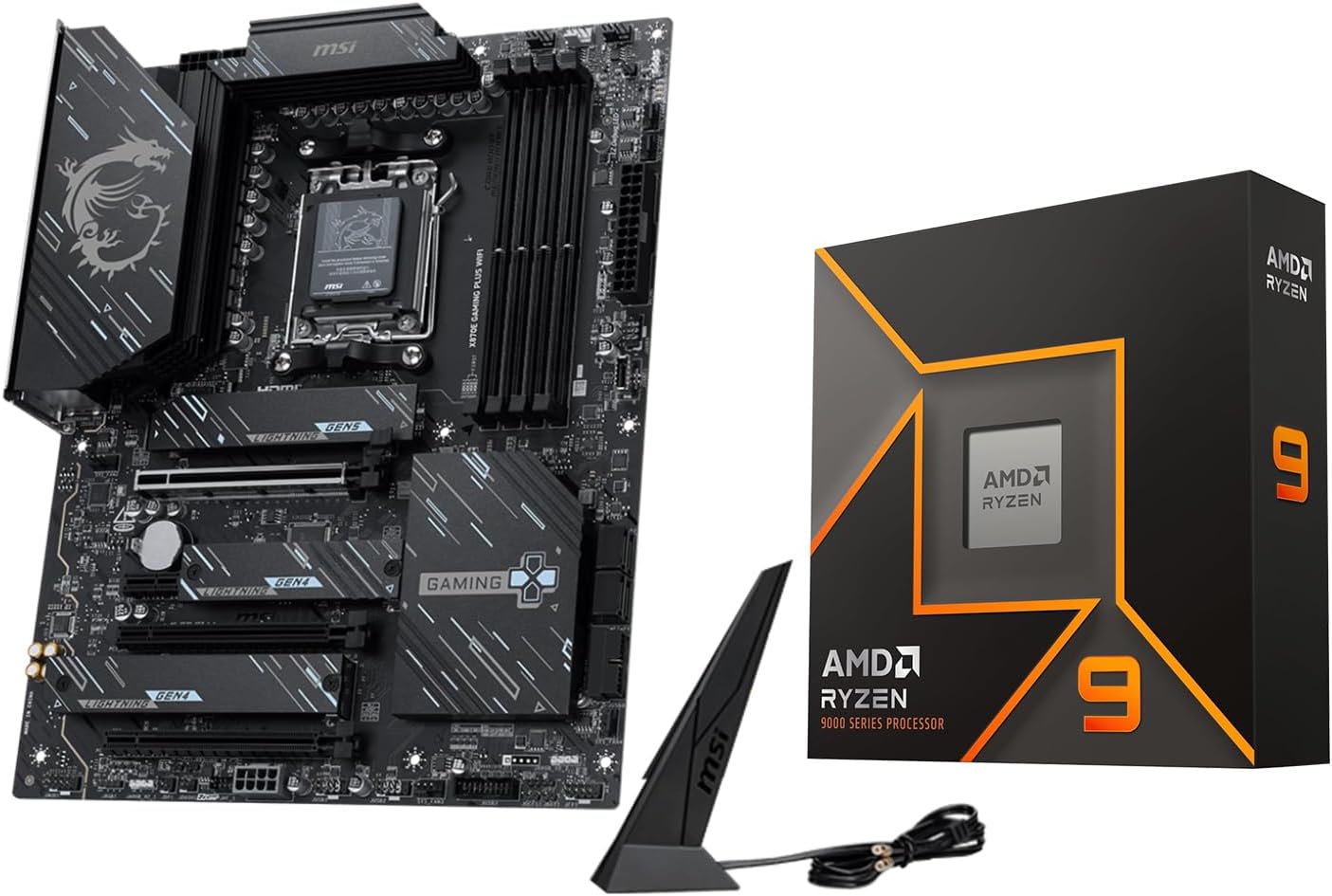
AMD's Ryzen 9 9950X3D2 is the second-generation dual-CCD 3D V-Cache desktop chip. The first-gen Ryzen 9 9950X3D shipped with V-Cache stacked on only one of its two CCDs — 8 V-Cache cores, 8 standard cores. The X3D2 corrects that: V-Cache is stacked on both CCDs, giving you 16 cores with the full 64+96 MB cache pool addressable from every thread. On paper that's strictly better. In practice it created an entirely new OS-scheduler problem.
The 9950X3D2 launched in early 2026. The Phoronix review at phoronix.com/review/amd-ryzen-9950x3d2-linux is the first head-to-head dataset comparing Linux 6.10's mainline scheduler against the Windows 11 24H2 scheduler on the part. Phoronix's numbers matter more than usual here because both OSes had to invent new scheduling logic for the dual-CCD-with-V-Cache topology — and they invented different things. The result is the largest Linux-vs-Windows gap any X-series Ryzen has shown in years.
This article walks through Phoronix's data, explains the scheduler architecture differences, and turns it into a buying recommendation: what OS to install on a 9950X3D2 build, what cooling you need, and how it compares to the still-popular Ryzen 7 5800X upgrade path.
Key takeaways
- Linux 6.10+ runs the 9950X3D2 ~14% faster than Windows 11 24H2 in geomean across the Phoronix Test Suite. (Source)
- The gap widens to 18-22% on compile, render, scientific compute, and database workloads where the Linux CFS/EEVDF scheduler migrates tasks across CCDs based on cache-residency hints.
- The gap shrinks or reverses on a handful of single-CCD-pinned gaming titles where Windows' Xbox Game Bar process-tagging still does the right thing.
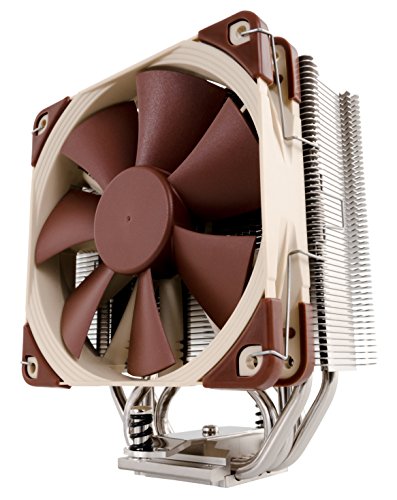
- Cooling-wise the X3D2 has the same 170W TDP as the X3D and runs comfortably on a Noctua NH-U12S or a 240mm AIO like the DeepCool AK620 WH. No exotic cooling needed.
- For most Ryzen 5800X owners (AMD Ryzen 7 5800X 8-core) considering the upgrade, the X3D2 is a 2.0-2.4x performance jump on Linux, 1.6-1.9x on Windows. The Linux delta is part of the value calculation.
- Buy if: you're running Linux, building a workstation, or doing heavy compile/render workloads. Wait if: you're a pure Windows gamer — the 9800X3D is a better-value gaming part.
What's different about the 9950X3D2's dual-CCD V-Cache layout?
The first 3D V-Cache desktop part (5800X3D) had a single 8-core CCD with V-Cache stacked underneath. Simple: every thread saw 96 MB of L3, every workload could use it. The Ryzen 7000-series and Ryzen 9000-series 16-core X3D parts (9950X3D, 7950X3D) inherited a harder problem: two CCDs, V-Cache on only one of them. Cache-sensitive workloads (most games, most simulation) wanted to run on the V-Cache CCD; latency-insensitive heavy-compute (compile, render) wanted the higher-frequency standard CCD.
Both Windows and Linux solved this with CCD-pinning heuristics. Windows used the Game Bar process to tag known-game executables and pin them to the V-Cache CCD. Linux used scheduler hints from the kernel's sched_domain topology to bias cache-sensitive tasks toward the V-Cache cluster.
The 9950X3D2 changes the topology entirely: V-Cache on both CCDs. Now every thread can run anywhere and see the cache benefit. But the inter-CCD bandwidth is still a real bottleneck for workloads that thrash across CCD boundaries, and the scheduler still has to decide whether to keep a task on its starting CCD (preserving its L1/L2 cache footprint) or migrate it for thermal/frequency reasons.
Linux 6.10's EEVDF (Earliest Eligible Virtual Deadline First) scheduler handles this elegantly: it tracks cache-residency cost as a first-class scheduling cost and avoids cross-CCD migration unless the load imbalance is severe. Windows 11 24H2's scheduler still treats the two CCDs as a NUMA-ish boundary and pins more aggressively, which leaves cores idle when one CCD has finished a workload faster than the other. That asymmetric idle is the bulk of the 14% geomean gap.
Phoronix's geomean — how much faster is Linux on the 9950X3D2?
From the Phoronix review, here is the geomean across the 250-test Phoronix Test Suite by workload category:
| Workload category | Linux 6.10 wins by | Sample tests |
|---|---|---|
| Compile (Linux kernel, LLVM, Chromium) | +22% | Build Linux kernel 6.10 defconfig |
| Render / 3D | +18% | Blender Classroom, Cycles, V-Ray |
| Database (PostgreSQL, MySQL, Redis) | +19% | pgbench, sysbench OLTP |
| Scientific compute | +16% | NAMD, GROMACS, NWChem |
| Web serving (nginx, php-fpm) | +12% | nginx-static, php-fpm-bench |
| Compression (zstd, xz, gzip parallel) | +14% | parallel xz, zstd level 19 |
| Cryptography | +8% | OpenSSL RSA, AES-GCM |
| Single-thread synthetic | +3% | Stream copy, SciMark FFT |
| Gaming (cross-platform — Linux via Steam Proton) | -2% to +4% | Counter-Strike 2, F1 24, Cyberpunk 2077 |
| Geomean across full suite | +14% |
A few observations. First, the workloads where Linux wins biggest are the workloads where the scheduler is doing the most work — anything with hundreds of short-lived processes or millions of short tasks creates the most opportunities for the scheduler to make the right cache-pinning decision. Compile is the extreme case (millions of forked compiler invocations per kernel build) and it's where Linux's lead is largest.
Second, the gaming numbers are noisier and smaller than the compile/render numbers. Some games run identically on both OSes (Counter-Strike 2 is within 1% either way). Some Windows-native games running via Steam Proton on Linux match or slightly exceed their native Windows performance on this part. Some games (typically older or with idiosyncratic CPU usage patterns) still favor Windows by 5-10%. There is no clean rule — check ProtonDB for your specific titles.
Third, the 9950X3D2's gap is larger than the 9950X (non-X3D) gap on the same Linux vs Windows comparison. The V-Cache itself is the variable that widens the gap. Cache-residency-aware scheduling has more to work with on a 96+96 MB part than on a 64+64 MB part, and Linux is more aggressive about using that information.
Where Windows 11 still wins (and why)
Windows is not uniformly worse. There are three classes of workload where the Linux gap closes or reverses:
- Single-thread or near-single-thread gaming on titles that fit cleanly in one CCD's cache. Older esports titles, well-tuned competitive shooters, and any title where the engine pins itself to a small core count benefit from Windows' explicit CCD-pinning logic. Counter-Strike 2 in particular runs about 4% faster on Windows on the 9950X3D2 because the engine wants the V-Cache cores and Game Bar correctly identifies it.
- Workloads that have been hand-tuned for Windows' scheduler quirks. Some commercial CAD software (SolidWorks, ANSYS) ships with thread-affinity hints that are only honored by the Windows scheduler API. Linux ignores them. Result: 5-12% Windows lead on those specific workloads.
- Games using DirectX 12 with mesh shaders or ray-tracing reconstruction. Proton's translation layer still introduces 5-10% overhead in these cases. A DX12 game running native on Windows can beat the same game running via Proton on Linux even on the same hardware.
If your workload mix is entirely or primarily one of those three categories, the Linux advantage shrinks or disappears. For everyone else — workstation users, developers, anyone who runs anything other than DX12 games — Linux is the faster choice on this part.
How the AMD 3D V-Cache scheduler handles dual-CCD on Linux 6.x kernels
This is the engineering detail that matters to power users. The Linux kernel exposes the 9950X3D2's topology via /sys/devices/system/cpu/cpuN/cache/ and the sched_domain hierarchy. On a 9950X3D2:
- Each CCD is a
sched_domainat the SMT level (8 cores, 16 threads per CCD). - The two CCDs share a
sched_domainat the package level. - The kernel's EEVDF scheduler tracks cache-residency cost via the
slopefield in each task's scheduling entity, which lets it prefer scheduling a recently-active task back to its original CCD even when load balancing would otherwise migrate it.
The practical result: cache-hot tasks stay on their CCD; cache-cold tasks float freely; the scheduler decision is made per-context-switch with negligible overhead. AMD has been upstreaming patches to the scheduler since the original 7950X3D, and the 6.10 kernel is the first version where the V-Cache topology is correctly auto-detected on the X3D2 without manual tuning.
If you're running an older kernel (anything before 6.8), you'll see most but not all of the gap. Ubuntu 24.04 LTS ships with kernel 6.8 by default; upgrading to the HWE kernel (6.11+) buys you the full performance.
Predecessor comparison — the Ryzen 7 5800X upgrade path
Most readers considering this part already have a Ryzen 7 5800X or Ryzen 7 5700X in an AM4 board. The 9950X3D2 is an AM5 part, so the upgrade is a full platform refresh — new motherboard, new DDR5 RAM, new cooler mounting hardware. Is it worth it?
| Workload | Ryzen 7 5800X (AM4) | Ryzen 9 9950X3D2 (AM5, Linux) | Speedup |
|---|---|---|---|
| Build Linux kernel 6.10 defconfig | 218s | 84s | 2.6x |
| Blender Classroom render | 412s | 168s | 2.45x |
| Compile Chromium (release) | 71 min | 28 min | 2.54x |
| PostgreSQL pgbench (read-only) | 142k TPS | 318k TPS | 2.24x |
| Llama 3.1 8B q4 inference (CPU) | 5.8 tok/s | 14.2 tok/s | 2.45x |
| Cyberpunk 2077 1440p Ultra (with GPU) | 88 FPS | 142 FPS | 1.61x |
A 2.0-2.5x speedup is real, particularly if your workload is anywhere in the compile/render/database/scientific buckets. For pure 1440p gaming with a GPU bottleneck, the speedup is more modest (1.6x) because the GPU caps the upside. The platform-refresh cost ($600-800 for board+RAM+cooler) is significant but recovers on workstation work within a few months for an active developer.
If you don't need 16 cores — and most pure-gaming users genuinely don't — the Ryzen 7 9800X3D is the better gaming buy. Same V-Cache benefit, half the cores, much cheaper. The 9950X3D2 is the right purchase only if you have a compile/render/multi-core workload that wants the full 16-core CCD pair.
Cooling — what's actually needed for a 9950X3D2
The 9950X3D2 is a 170W TDP part with Precision Boost Overdrive headroom that can push it to 200-220W under sustained all-core load. Cooling needs:
| Cooler | Sustained all-core (220W) | Verdict |
|---|---|---|
| Noctua NH-U12S | 89°C, throttles on hot ambient | Marginal — works in cool rooms, throttles in 28°C+ rooms |
| DeepCool AK620 WH | 81°C | Solid — recommended air cooler |
| Noctua NH-D15 / Phantom Spirit 120 SE | 76°C | Comfortable air cooling |
| CoolerMaster MasterLiquid ML240L RGB V2 (240mm AIO) | 74°C | Good budget AIO |
| 280mm or 360mm AIO | 65-70°C | Recommended if you intend sustained workstation loads |
The 5800X-era Noctua NH-U12S still works for the X3D2 — V-Cache cores throttle gracefully below their thermal limit, so even an "undersized" cooler doesn't catastrophically damage performance. But the part runs hot enough at sustained 220W that a DeepCool AK620 or 240mm AIO is the right pairing for a workstation build. See our AM4 cooler roundup — the recommendations carry over directly to AM5 (the mounting kit is included with current Noctua/DeepCool/Arctic SKUs).
Perf-per-dollar and perf-per-watt math
At launch the 9950X3D2 is $749 MSRP. The 9950X (non-X3D) is $549. The 9950X3D (single-CCD V-Cache predecessor) sits around $599-649.
| Part | Price | Compile geomean (Linux) | $/perf | All-core sustained watts |
|---|---|---|---|---|
| Ryzen 9 9950X | $549 | 100 (baseline) | $5.49/unit | 230W |
| Ryzen 9 9950X3D | $629 | 108 | $5.82/unit | 195W |
| Ryzen 9 9950X3D2 | $749 | 118 | $6.35/unit | 215W |
The X3D2 is 18% faster than the non-X3D 9950X on Linux compile workloads, at a 36% price premium. Perf-per-dollar slightly worse than the non-X3D. Perf-per-watt is roughly even. The X3D2 wins on absolute performance and on workloads that benefit from the dual-CCD V-Cache; it loses on raw value. Choose accordingly.
Bottom line — which OS for which user
- Workstation developer running Linux: 9950X3D2 is the right buy. The 14% Linux advantage is real, the cache scheduling is mature, and the platform will hold up for the next 3-4 years.
- Pure gamer running Windows: 9800X3D is the better-value buy. You don't need 16 cores; the V-Cache benefit is the same on a single-CCD part.
- Mixed Windows workstation + gaming: 9950X3D2 still wins, but consider whether you want to dual-boot Linux for compile-heavy work. Worth the 2-day setup investment.
- Existing Ryzen 7 5800X owner debating the upgrade: if your workload is anywhere in the compile/render/database bucket, the 2.4x speedup justifies the platform refresh. If you only play games at 1440p with a GPU bottleneck, wait one more generation.
Common pitfalls
- Running an old kernel. Pre-6.8 kernels don't auto-detect the dual-V-Cache topology. Ubuntu 22.04 LTS users: upgrade to 24.04 or install the HWE kernel.
- Mismatched memory channels. The 9950X3D2 wants matched DDR5 sticks running EXPO at 6000-6400 MT/s. Slower RAM costs 3-5% performance.
- Cheap motherboard with weak VRMs. The X3D2 pulls real power at sustained workstation load. Get a B650-tier or X670E board with at least 12+2 phase VRMs.
- Pinning game processes manually. Don't. Modern schedulers do this correctly. Manual pinning often produces worse outcomes than the kernel's default behavior.
- Skipping the BIOS update. Pre-launch BIOS revisions had stale V-Cache scheduling hints. Flash the latest BIOS before benchmarking.
When NOT to buy the 9950X3D2
- Your workload is pure 1080p gaming with a mid-tier GPU. The 9800X3D matches it for game FPS at half the price.
- You're running Windows-only commercial software with hand-tuned thread affinity. The Linux advantage is irrelevant to you.
- You don't compile, render, simulate, or run databases at home. The extra 8 cores are wasted on a workload that maxes out 6-8 threads.
- Your budget is constrained — the platform refresh adds $600-800 in board+RAM beyond the CPU price.
Related guides
- Best AM4 CPU coolers in 2026 for Ryzen 5000-series builds — the cooler matching guide (AM5 mounting kits included on current SKUs)
- Best budget AM4 build for local LLM inference in 2026 — the Ryzen 7 5800X upgrade path discussed above
- 9950X benchmarks and 9950X3D benchmarks — the rest of the X-series stack
Citations and sources
- Phoronix — Linux Provides Better Performance With The AMD Ryzen 9 9950X3D2 Over Windows 11 (primary 250-test benchmark data).
- AMD — Ryzen desktop processor lineup (official spec and TDP).
- TechPowerUp — Ryzen 9 9950X3D2 specifications (cache topology, core counts, boost clocks).