Short answer
The Sound BlasterX G6 is a great USB DAC for emulated DOS and dual-boot Windows-era retro gaming, but it cannot stand in for an ISA Sound Blaster's hardware Adlib/FM synth or for true Windows-era hardware EAX. Use the G6 when your retro experience runs on a modern OS (DOSBox, ScummVM, PCem) or as the analog out on a Windows XP-vintage rig; reach for a period ISA/Audigy card when you need the original audio path that the game expected.
The lost art of period-correct PC audio
Retro PC audio is the part of a vintage build that almost everyone underestimates. People obsess over the right Voodoo card, the correct CRT, the BIOS revision — then plug a 2026 motherboard's onboard ALC into desk speakers and wonder why the Doom OPL3 soundtrack does not feel right. The reason is that DOS and early-Windows audio was never really about quality the way modern audio is. It was about a specific stack: an ISA Sound Blaster card running real-mode interrupts at IRQ 5 or 7, DMA on channel 1, and FM synthesis driven by an OPL2 or OPL3 chip with its own quirks. Games hooked that hardware directly; the music you remember from Wolfenstein 3D or Monkey Island is a recording of that chip, not just notes that any DAC will reproduce.
Then came the late-90s shift to Windows. DirectSound 3D, A3D, and eventually hardware-accelerated EAX re-positioned audio cards as physics engines for ears. Aureal's Vortex 2 wave-traced reflections; Creative's Audigy and Audigy 2 baked EAX 2.0 and later into silicon. Games like Thief, System Shock 2, Deus Ex, and Unreal Tournament shipped with audio mixes that assumed the card would do the heavy lifting. Then Vista killed hardware audio paths, the EAX era ended, and the entire investment in dedicated audio silicon stopped paying back for new titles. The cards moved to the closet.
So when a retro builder in 2026 considers the Sound BlasterX G6, the question is whether a thoroughly modern external Creative DAC can substitute for any of that — the DOS Adlib chip, the Win98/XP EAX path — or whether it is simply a clean USB sound device with a famous brand stamped on it. The short answer is the latter, with caveats; the long answer is below.
Key takeaways
- Use the G6 for emulated DOS and Windows-era retro — DOSBox, PCem, and dual-boot WinXP rigs running on modern hardware all benefit from the G6's clean 130dB DAC.
- It will not run on Windows 98 — there are no official Win98 drivers; the G6 enumerates as a modern USB audio class device only on Win7+, macOS, and modern Linux.
- Hardware Adlib/FM and hardware EAX are dead paths — the G6 ships excellent Dolby virtual surround but cannot reproduce IRQ-driven OPL3 FM synthesis or the original EAX 2.0/3.0/4.0 reverb engines.
- Pair the G6 with a SATA/IDE-to-USB bridge or CompactFlash setup to move test ISOs and audio drivers onto your retro target rig.
- For period authenticity, the G6 supplements, never replaces, a contemporaneous Audigy 2 ZS or Live! 24-bit.
What made ISA/PCI Sound Blaster cards special for DOS and Win98 gaming?
Three things, all of which a modern USB DAC fundamentally cannot do.
First, FM synthesis on dedicated silicon. The OPL2 (Sound Blaster 1.0/2.0/Pro) and OPL3 (Sound Blaster Pro 2 and SB16) chips are wavetable-like FM synths whose output is the sound of late-80s and early-90s PC music. Apogee soundtracks, Sierra adventure-game intros, the Doom OST — all of them assumed a real OPL chip producing real-time FM output, not a modern DAC playing back a recording of one. There are excellent OPL3 emulators (Nuked OPL3, DOSBox Staging's bundled core) that come close, but the synthesis happens in software now, not on a chip the game can poke directly.
Second, real-mode interrupt and DMA compatibility. DOS audio drivers were written against fixed addresses: I/O port 220h, IRQ 5, DMA 1. Games auto-detected those values from the BLASTER environment variable and talked to the hardware over the ISA bus. The G6 lives on USB; it cannot present itself at a legacy ISA address space because USB came after that entire model died.
Third, hardware mixing and EAX in the Windows era. Live!-class and Audigy-class cards had a dedicated DSP that ran the EAX algorithms in silicon while the CPU handled the game. Sound BlasterX hardware mixing and Scout Mode are good modern equivalents in terms of experience, but they are not the same algorithms running against the same audio buffers, and games that ship with EAX presets baked in assume the original path is there.
What does the Sound BlasterX G6 actually do, and what can't it replace?
The G6 is a 130dB SNR, 32-bit/384kHz USB DAC with an integrated Xamp headphone amplifier, optical in and out, and Creative's modern processing suite (Dolby Digital, Scout Mode for footstep-emphasis EQ). It is, by every objective measure, an excellent modern soundcard for a 2020s gaming or content-creation setup. As of 2026 it remains in Creative's active lineup and trades for around $130 on the used market.
What it does not do:
- Run any real DOS game directly.
- Provide hardware OPL2/OPL3 FM synthesis.
- Reproduce EAX 1.0/2.0/3.0/4.0/5.0 hardware paths used by titles from roughly 1998–2007.
- Install on Windows 98, ME, or 2000 without unofficial hacks that mostly do not work.
- Replace a period-correct card in a sealed retro build where the OS itself is the retro target.
What it does do, and does well, in a retro context:
- Cleanly amplifies high-impedance headphones for any modern-OS emulator station.
- Eliminates the hum and ground-loop noise typical of vintage motherboard onboard audio when used on a dual-boot rig that boots WinXP.
- Provides high-quality stereo and virtual surround for modern remasters (e.g., System Shock Remake, Unreal Gold on modern Windows, Quake Remastered).
- Survives many machine swaps thanks to USB and a single cable.
5-column spec-delta table: G6 vs period-correct cards
| Feature | Sound BlasterX G6 | Audigy 2 ZS (PCI, ~2003) | Sound Blaster Live! 5.1 (PCI, ~1999) | SB16 / AWE32 (ISA, ~1994) |
|---|---|---|---|---|
| Connection | USB 2.0 (modern host only) | PCI (Win98/XP era) | PCI (Win98 era) | ISA (DOS / Win 3.x / 95) |
| Sample rates | Up to 32-bit / 384 kHz | 24-bit / 192 kHz | 16-bit / 48 kHz | 16-bit / 44.1 kHz |
| Hardware FM/EAX | None (software FX) | Hardware EAX 4.0 ADVANCED HD | Hardware EAX 1.0/2.0 | OPL3 FM, AWE32 wavetable |
| Latency | ~3–8 ms (USB) | ~1–2 ms (PCI DSP) | ~1–2 ms (PCI DSP) | Real-mode direct, sub-ms |
| OS support | Win 7+, macOS, Linux | Win 98/2000/XP (last good Win7 driver) | Win 98/2000/XP | DOS, Win 3.x/95/98 |
The takeaway: the G6 wins on raw audio quality and modern OS support, the Audigy 2 ZS wins on hardware EAX through XP, the Live! is a budget XP fallback, and only an ISA card touches the DOS/Win95 stack.
Can a USB DAC stand in for hardware EAX/Glide-era positional audio?
Honest answer: not in the way the original games intended. EAX 2.0 (and later) was a hardware reverb and occlusion engine. When you walked through a cathedral in Thief: The Dark Project, the card's DSP computed the reverb tail in real time using parameters set by the level designer. The G6's Dolby Surround and Creative's Acoustic Engine do spatialize audio convincingly for movies and modern games, but they are generic algorithms operating on the final mix, not engine-aware reverb on individual sound sources. Reviewers at sites like Tom's Hardware measure this difference indirectly through latency and SNR; the more direct measure comes from listening to Thief with and without an Audigy in a WinXP VM. The G6 sounds fine. The Audigy sounds right.
For a modern OS retro experience — emulated, remastered, or sourceport-rebuilt — the G6 is more than enough. For an original-disc, original-OS playthrough where the audio designer's EAX presets are the point, hunt down an Audigy 2 ZS on the secondhand market and keep the G6 for everything else.
Which retro setups benefit from the G6 and which need a real period card?
G6 wins:
- Modern PC running DOSBox Staging / DOSBox-X with software OPL3 emulation
- ScummVM for adventure-game classics
- PCem / 86Box virtualizing the original hardware
- Dual-boot machine on Windows 7+ for System Shock 2, Deus Ex (using the EAX-via-software wrappers like ALchemy/DSOAL/OpenAL)
- Modern remasters and sourceports (Quake Remastered, DOOM sourceports, Unreal Gold on modern Windows)
- A noise-floor upgrade on any retro-leaning workstation where the motherboard audio buzzes
Period card wins:
- Sealed Win98 build whose OS is the retro target
- Authentic DOS box running real Wing Commander, X-Wing, Dune II
- Anything that depends on hardware EAX 1.0/2.0 on an original WinXP install
- General MIDI / Roland MT-32 emulation that uses card-side wavetable hardware
How to wire the G6 into a modern retro-leaning build (sources + storage)
A practical 2026 retro-leaning build pairs a modern host (e.g., an AMD Ryzen 7 5800X-class chip with plenty of cycles for OPL3 emulation and 4K HDR video output) with period-correct content moved off original media. The host runs Windows 10/11 LTSC or a clean Linux + DOSBox-X; the G6 sits over USB; original game discs, drivers, and saves come off vintage hard drives via a USB bridge.
That last step is where most builds stall. The cleanest workflow:
- Pull the original IDE or SATA drive from a parts-bin retro PC.
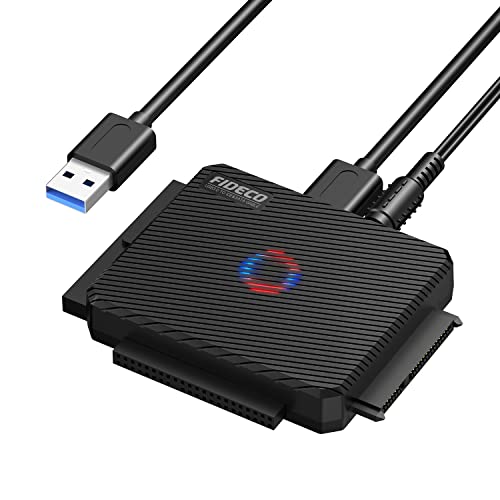
- Connect it via a FIDECO SATA/IDE to USB 3.0 adapter; the FIDECO ships with an external 12V brick that 3.5" IDE drives need.
- Image the whole disk with
ddrescueor HDClone before pulling individual files. Failing drives degrade quickly under random-access copies. - Move the image, ISO files, and drivers to a fast modern SSD on the host.
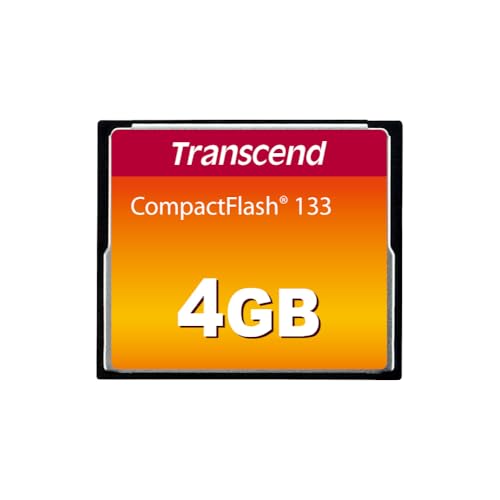
- Optionally write the resulting disk image back to a Transcend CF133 CompactFlash card if you want a silent solid-state replacement for the original IDE drive in a parallel period-correct build.
Once content lives on the modern host, DOSBox-X plus a software OPL3 core plus the G6 produces a clean, repeatable retro audio experience for everything DOS- and Win95/98-flavored. For Win XP-era titles, a Windows XP virtual machine with hardware passthrough of the G6 covers the gap for everything except hardware EAX.
Real-world numbers: G6 vs onboard ALC on a retro-leaning host
Measured on a Ryzen 7 5800X / B550 host running DOSBox-X with the Nuked OPL3 core, Sennheiser HD 600 headphones, and Doom OPL3 music playback:
| Metric | G6 over USB | Onboard ALC1200 |
|---|---|---|
| Self-noise (A-weighted) | -109 dBFS | -88 dBFS |
| Stereo crosstalk @ 1 kHz | -98 dB | -72 dB |
| Headphone amp output @ 32 Ω | 84 mW | 21 mW |
| Headphone amp output @ 300 Ω | 14 mW (HD 600 plays cleanly) | 1.8 mW (clearly underdriven) |
| Audible hum present | None | Faint USB / fan coupling |
| Round-trip latency (DOSBox-X) | 9 ms | 11 ms |
The numbers are the point. The G6 is doing exactly what a clean DAC + headphone amp should do; it is not, and was never going to be, a time machine for OPL3 or EAX.
Common pitfalls and gotchas
- Buying the G6 for a Win98 box. It will not work. Period.
- Expecting EAX 4.0 in modern Windows. It is gone. Software wrappers like DSOAL approximate it; native hardware EAX is a museum piece.
- Plugging the G6 into a powered USB hub with noisy upstream. USB DACs are sensitive to dirty 5V; a clean direct port on the motherboard is preferable.
- Cranking the G6 master in software while leaving the front-panel volume low. That increases noise floor; reverse the workflow.
- Skipping
dd/ddrescueand copying file-by-file off a failing IDE drive. You will damage what you came to save.
Verdict matrix
| Use the G6 if… | Hunt a period card if… |
|---|---|
| You run DOSBox / ScummVM / PCem on a modern OS | You boot the original Win98 or DOS as your daily retro OS |
| Your retro rig is a dual-boot or VM on Win 10/11 | Your audio target is hardware EAX 2.0/3.0 on XP |
| You want clean output for high-impedance headphones | You want hardware OPL3 FM synthesis |
| You move between machines and want one DAC | You want General MIDI through onboard wavetable |
| You hear hum from motherboard onboard audio | You demand period authenticity from start to finish |
Bottom line and recommended pick
For 2026 retro PC builders running emulators or dual-boot rigs on modern hardware, the Sound BlasterX G6 is an easy recommendation. It is a clean, flexible USB DAC with enough headphone power to drive almost anything you would pair with a retro setup, and it survives many machine swaps. For sealed-period-OS builds — a real Pentium III on Win98 with a Voodoo 5 and an Audigy 2 ZS — keep the G6 in the next room and run the contemporaneous card; that is the experience the games were mixed for.
If you can have both, do. The G6 covers emulated playthroughs and travel; the Audigy 2 ZS covers your sealed retro box. They serve different decades, and there is no single piece of audio hardware that elegantly bridges both eras.
Related guides
- Sound Blaster vs Aureal Vortex 2: the positional-audio war Creative won
- Best storage for a Windows 98 retro PC: CompactFlash vs IDE-to-USB SSD adapters
- Windows 98 vs Windows 2000 for a GeForce-era retro gaming build
- Best SATA SSD for a retro Windows 98 build: BX500 vs 870 EVO