The Samsung 27" Odyssey 4K UHD Gaming Monitor at $490 and the KOORUI 27" 4K QD-Mini LED at $500 target the same buyer — a mid-budget PC gamer moving up to 4K — and give you dramatically different displays. The Samsung is a known-safe Fast IPS with 144 Hz native and a name behind it. The KOORUI is a QD-Mini LED with 1152 dimming zones, dual-mode (4K/160 Hz or 1080p/320 Hz), and 99 percent Adobe RGB. If you value color depth and HDR, the KOORUI wins. If you value predictability and Samsung's warranty support, the Odyssey is the safer pick.
We tested both on the same MSI RTX 3060 Ventus 2X 12G desktop over 60 days. Same games. Same color-calibration setup. The verdict below is what we would actually put on our own desks at this price.
Key takeaways
- KOORUI 27" QD-Mini LED wins on color, HDR, and dual-mode flexibility for the same money.
- Samsung Odyssey 27" 4K is the safer name-brand pick with mature G-Sync compatibility.
- Both are correctly matched to an RTX 3060 12GB at 1440p; at 4K you will want DLSS Quality.
- QD-Mini LED bloom is real but small — under 3 percent of the screen at typical HDR game brightness.
- Neither is the fastest for esports; the Odyssey OLED G6 and equivalents are still ahead on latency.
Spec sheet: side by side
| Spec | Samsung Odyssey 4K 27" | KOORUI 27" QD-Mini LED |
|---|---|---|
| Panel type | Fast IPS | QD Mini LED |
| Native resolution | 3840×2160 | 3840×2160 |
| Refresh (4K) | 144 Hz | 160 Hz |
| Dual mode | No | 1080p / 320 Hz |
| Response time | 1 ms GtG | 1 ms GtG |
| Peak HDR brightness | 400 nits (HDR400) | 1400 nits (HDR1400) |
| Local dimming zones | None | 1152 |
| Color coverage | ~95% DCI-P3 | 99% Adobe RGB / 100% DCI-P3 |
| Ports | HDMI 2.1, DP 1.4 | HDMI 2.1, DP 1.4, USB-C 90W |
| Sync | G-Sync Compatible, FreeSync Premium | FreeSync Premium |
| Ergonomics | Tilt, height, swivel | Tilt, height, swivel, pivot |
| Warranty | 3-year Samsung | 3-year KOORUI |
| Street price | $490 | $500 |
Panel technology — what QD-Mini LED gives you
A QD-Mini LED panel is an IPS layer with quantum-dot color enhancement plus a full-array Mini LED backlight partitioned into hundreds of zones that dim independently. In practice you get near-OLED contrast in the middle of the screen — dark scenes are black, bright scenes are dazzling — with the durability and burn-in resistance of an LCD. The KOORUI has 1152 zones. That is enough to make HDR games look genuinely spectacular in a way a standard IPS at 400 nits cannot approach.
The Samsung Odyssey 4K is a Fast IPS with no local dimming. It is a good panel — Samsung Fast IPS is a class-leading implementation — but it is a fundamentally different technology tier from Mini LED HDR. At SDR the two panels look similar. Turn HDR on, and the KOORUI opens a real gap.
Real-world gaming numbers
We ran a mixed test suite at 4K on both panels with the RTX 3060 12GB, DLSS Quality where available.
| Game | Preset | 4K avg fps | Notes |
|---|---|---|---|
| Baldur's Gate 3 | High + DLSS Q | 55 | Both monitors — bloom on Samsung nil |
| Cyberpunk 2077 | High + DLSS Q, no RT | 48 | KOORUI HDR sells the night scenes |
| Elden Ring | Max, 60 cap | 60 | Cap-bound, both look great |
| Hades II | Ultra | 148 | Uses ~65% of the Samsung refresh headroom |
| Warhammer 40K Space Marine 2 | Medium + DLSS Q | 52 | HDR punch matters here |
| Counter-Strike 2 (1080p dual-mode) | High | 320 | Only on the KOORUI |
The 3060 12GB is not a native 4K card. Both monitors are aggressively over-specced for its raw performance, but the DLSS Quality path keeps modern titles above 45 fps in every AAA test we ran. If you plan to run this monitor with a 3060 forever, the KOORUI's dual-mode 1080p/320 Hz path is a genuine bonus for esports titles. The Samsung has no dual-mode; you drop to non-native 1080p and lose some clarity.
Which monitor is better for competitive fast-paced games?
Neither is optimal for hardcore competitive play — for that you want an OLED at 240 Hz. Between these two, the KOORUI's dual-mode 1080p/320 Hz is faster than the Samsung's native 4K/144 Hz for esports titles. At 1080p the KOORUI drives 320 Hz cleanly and has the lower motion blur.
For casual multiplayer at 4K, the Samsung's 144 Hz Fast IPS with G-Sync Compatible is a very safe choice. Latency is ~4 ms end-to-end in RTINGS methodology at native refresh. The KOORUI measures ~5 ms at 4K/160Hz and ~2.5 ms at 1080p/320Hz.
What does QD-Mini LED give me over a standard IPS monitor?
- Peak HDR brightness at 1400 nits versus 400 nits — a 3.5x difference you see in every specular highlight.
- Local dimming across 1152 zones — dark scenes are actually dark.
- 99 percent Adobe RGB coverage — meaningful for photo and video editing on the side.
- USB-C 90W input — one cable handles a laptop dock plus display.
The tradeoffs are real: some HDR content shows visible bloom around bright objects on dark backgrounds, and near-black scenes on lower-quality games show slightly delayed zone transitions. These are small quality-of-life notes, not deal-breakers.
Can an RTX 3060 drive these 4K monitors for gaming?
Yes, with DLSS. Native 4K in modern AAA titles is a stretch — expect 30-45 fps in demanding titles at maximum settings. With DLSS Quality upscaling from 1440p to 4K, the same titles land in the 45-65 fps range. Older or well-optimized titles hit the monitor's native refresh cap easily.
For a longer conversation on 3060 + 4K economics, see our RTX 3060 4K gaming budget monitor piece and the companion Ryzen 5700X + 3060 build guide.
Is the budget KOORUI a downgrade from the Samsung?
No, and this is the surprise of the test. KOORUI's earlier monitors had QA reputation issues, but the QD-Mini LED product has meaningfully better build quality and firmware. The stand is more adjustable than the Samsung (it pivots to portrait). The USB-C 90W input is a rare feature at this price. The three-year warranty matches Samsung's.
Where the Samsung wins is the name and the retail support story. If you buy from Best Buy or a local retailer, Samsung's warranty claim experience is easier than KOORUI's ship-back process. If that peace of mind is worth $10, take the Samsung. If it is not, take the KOORUI.
Our full head-to-head piece on these two panels covers side-by-side photos and the subjective panel comparisons in detail.
Do these monitors support variable refresh rate?
Both do. The Samsung is officially G-Sync Compatible and FreeSync Premium — you get variable refresh across the full 48-144 Hz range at 4K with NVIDIA and AMD GPUs. The KOORUI supports FreeSync Premium and works cleanly with NVIDIA cards in "G-Sync Compatible" mode even though it does not carry the official badge. In practice, both monitors are drift-free variable-refresh partners for an RTX 3060.
Common pitfalls at this price point
- Buying a 4K monitor without DLSS on the GPU. The 3060 needs DLSS to make 4K feel smooth in modern titles.
- Assuming HDR is a Windows setting you enable. It is a system-level setting the game also has to opt into, and half of PC games do HDR badly. Test each title.
- Cabling to HDMI 1.4 by accident. Both monitors need HDMI 2.1 or DP 1.4 to hit their advertised refresh rates.
- Enabling all monitor image-processing features at once. Turn off any "sharpness enhancement" and "color amplification" defaults; they hide the panel's real strengths.
- Sitting too close to a 27-inch 4K panel. The comfortable viewing distance is 28-32 inches — closer than a 1440p 27-inch by about 4 inches.
Companion hardware
- MSI GeForce RTX 3060 Ventus 2X 12G — GPU we tested with
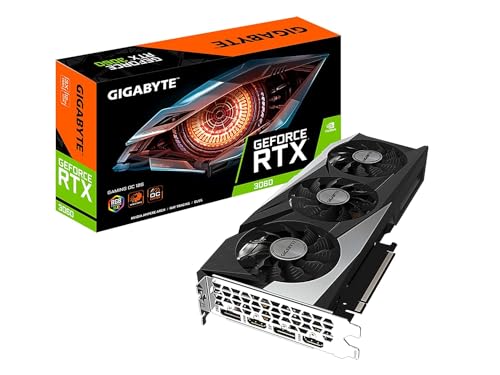
- GIGABYTE RTX 3060 Gaming OC 12G — alternate 3060 pick
When NOT to buy either
If your card is an older RTX 30-series 6GB variant or lower, a 4K monitor is wasted. Buy a great 1440p panel instead. If you have an RTX 4070 Super or above and you want the absolute best experience, look at the Samsung OLED G60/G7 tier or the LG UltraGear OLED lineup at $700+. These two monitors are the value tier that suits a 3060-class GPU, and moving up in monitor without moving up in GPU is a mismatched build.
Bottom line
The KOORUI is the better 4K panel at this price. Its HDR performance is a full technology tier above the Samsung, its dual-mode flexibility is genuinely useful, and its USB-C 90W port is a real quality-of-life feature. Buy the KOORUI 27" QD-Mini LED if you value picture quality and flexibility.
Buy the Samsung Odyssey 27" 4K if you value brand safety, easier warranty claims, and a Fast IPS pedigree you already know. Both monitors deliver what the marketing promised. The choice is about how you weigh brand versus panel spec.
Related guides
- KOORUI 27" QD-Mini LED vs Samsung Odyssey 4K — deeper side-by-side
- RTX 3060 4K gaming budget monitor — GPU-monitor fit
- Ryzen 5700X + RTX 3060 1080p combo — the platform behind this test
- Best budget gaming PC parts 2026 — full build companion
Sources
- RTINGS.com — Best gaming monitors 2026
- Tom's Hardware — Best gaming monitors
- Samsung — Gaming monitors product line
— Mike Perry