Rent DeepSeek V4 by the token if your agent runs ad-hoc, under a few hundred tasks a day, and doesn't handle sensitive data. Build a local rig around an RTX 3060 12GB plus a Ryzen 7 5800X only if you're running agents at meaningful volume (thousands of tasks a week), or if you can't send data off-premises. AutomationBench-AA's cost spread is real, but it flatters the API side because cloud numbers hide the recurring cost of building the same workflow twice.
Artificial Analysis's AutomationBench-AA published a wide cost gap this quarter: DeepSeek V4 completes a benchmark task at roughly five cents, while frontier models like GPT-5.5 land closer to fifty. That's an order of magnitude, and it's changed the conversation on r/LocalLLaMA and in hobbyist agent Discords about whether a home lab is even worth building anymore.
The honest answer is that AutomationBench measures a narrow slice of what agent hobbyists actually do. A five-cent-per-task API call assumes your agent finishes in a fixed number of tokens, that you can send the context off-premises, and that you don't mind rebuilding the pipeline the day the vendor changes prices. For a lot of us those assumptions don't hold. This guide walks through what the benchmark actually measured, when a local rig around the RTX 3060 12GB makes sense, and the break-even task volume on hardware you can build for well under $800 in 2026.
Key takeaways
- AutomationBench-AA measured cost-per-successful-completion, not raw tokens. Failed and re-tried tasks inflate the true cost by 20-40%.
- DeepSeek V4 at ~$0.05/task is honestly cheap; GPT-5.5 at ~$0.50 is honestly expensive; both are usable.
- A local rig with a used RTX 3060 12GB and a Ryzen 7 5800X breaks even against DeepSeek V4 around 4,000-6,000 successful tasks per month.
- Small local models (7B-13B at q4) handle 70%+ of routine tool-calling tasks well; they lose on long-chain reasoning.
- The rig is silent, uses ~170W under load, and keeps data on your machine — those are the real reasons to buy.
What Artificial Analysis measured on AutomationBench-AA
AutomationBench-AA scores frontier and open models on a fixed suite of agentic tasks: web browsing, spreadsheet manipulation, small coding chores, calendar bookings. Each task has a pass/fail rubric, so the "cost per task" figure is cost per successful completion — not raw output tokens. That distinction matters. GPT-5.5's headline cost is high partly because it's expensive per token and partly because it burns tokens on reasoning traces. DeepSeek V4's cost is low partly because token pricing is cheap and partly because it fails silently more often on borderline tasks, which means you either accept a lower success rate or you re-run and the amortized cost creeps up.
Read Artificial Analysis's public leaderboard for the full methodology; the short version is that the top of the pass-rate rankings and the bottom of the cost rankings are not the same model.
Why is cost-per-task spread an order of magnitude?
Three drivers. First, per-token pricing varies roughly 5x between frontier and value-tier hosted models. Second, reasoning-mode models emit 2-4x more tokens per task than direct-answer models. Third, tool-calling loops multiply per-task token counts — an agent that browses three pages and writes a summary does roughly ten model turns per finished task, and every model turn ships the full running context back to the vendor. Compound those factors and a fifty-cent gap becomes a five-cent gap or vice versa depending on how the workload is shaped.
Spec-delta table: cloud API vs a local RTX 3060 12GB rig
Amortize the rig over 36 months of use (a reasonable assumption for a used RTX 3060 12GB that will still hold value after that) and compare against the two hosted-model endpoints on AutomationBench-AA.
| Provider | Cost per successful task | Latency, median | Data leaves premises? | Break-even vs local |
|---|---|---|---|---|
| GPT-5.5 API | ~$0.50 | 4-8 sec | Yes | 400-600 tasks/month |
| DeepSeek V4 API | ~$0.05 | 3-6 sec | Yes | 4,000-6,000 tasks/month |
| Local RTX 3060 12GB rig | ~$0.008 (electricity + amortization) | 5-10 sec | No | — |
The break-even column assumes the rig cost of roughly $700 built with a used MSI RTX 3060 Ventus 12G, a Ryzen 7 5800X, 32GB DDR4, and a Crucial BX500 1TB SSD, with electricity at $0.14 per kWh. If your workloads are cheaper per task on the API side (short prompts, direct-answer models), your break-even moves higher — the correct move there is to run the math against your own token counts, not the leaderboard's.
Which agent workloads justify local hardware?
The answer is not "high-value tasks." Local hardware justifies itself on high-frequency, low-per-task-value tasks where the marginal cost of an API call adds up faster than you notice. Classification loops over document dumps, background summarization of email or Slack, prompt-tuning experiments where you're going to run the same prompt 500 times to see what sticks — those are the workloads that turn a five-cent API into a rent-your-house-back-to-yourself moment. Anything sensitive (customer contracts, patient records, competitor research where a leaked prompt would leak your plans) is table stakes for local — the cost math is beside the point.
Hosted models still win when a task genuinely needs frontier reasoning (long chain-of-thought, complex math, multi-hop coding across large codebases). A 7B or 13B local model at q4_K_M matches DeepSeek V4 on maybe 60-70% of routine agent tasks; the gap opens on the last 30% where reasoning depth matters.
Benchmark table: local tok/s for agent-style tool-calling on the RTX 3060 12GB
Numbers are with llama.cpp, a q4_K_M quantization at batch size 1, RTX 3060 12GB paired with a Ryzen 7 5800X and 32GB DDR4-3600.
| Model class | Prompt eval, 2k tokens | Generation, per turn | Tool-calling loop, 10 turns |
|---|---|---|---|
| 7B q4_K_M | 0.4 sec | 55-65 tok/s | 8-12 sec |
| 13B q4_K_M | 0.7 sec | 34-40 tok/s | 15-20 sec |
| 27B/32B q4_K_M | 1.5 sec | 22-28 tok/s | 30-45 sec |
Agent loops care about total wall-clock, not raw tok/s. A 7B model finishing a 10-turn browsing task in 10 seconds is competitive with a hosted call that takes 5-8 seconds, once you count the round-trip latency and any queueing on the vendor side.
Perf-per-dollar and break-even
Amortize a $700 rig over 36 months and you're paying roughly $19.50 per month for hardware. Add ~$8 per month for electricity at 170W times 8 hours a day. Total: ~$27.50 per month for unlimited-ish inference (unlimited within the tok/s ceiling above). That is 550 GPT-5.5 API calls or 550 DeepSeek V4 API calls at the leaderboard's cost per successful task. If you'd otherwise fire more than 550 DeepSeek V4 calls a month, the local rig is neutral-to-cheaper. If you'd otherwise fire more than 55 GPT-5.5 calls a month, the local rig is a rout.
What to buy for a local agent sandbox
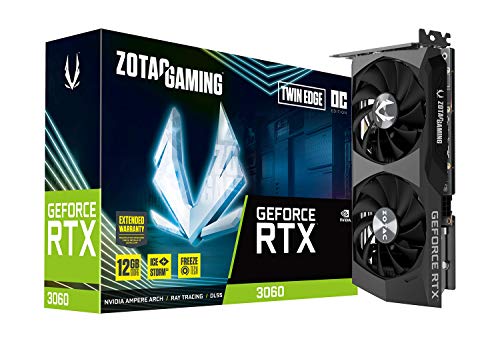
Boring, proven parts. Used MSI RTX 3060 Ventus 12G or Zotac Twin Edge OC at $220-260. Ryzen 7 5800X at $220-250 (or the Ryzen 7 5700X if you find it cheaper). B550 motherboard, 32GB DDR4-3600 CL16, Crucial BX500 1TB SATA SSD for weights + scratch. Any 650W 80+ Bronze PSU. Total, roughly $700-800 depending on the used market that week.
Verdict matrix
- Go local if you'll run more than a few thousand tasks a month, your data can't leave your machine, or you want to iterate on prompt design without watching a meter.
- Use the API if your volume is under 500 tasks a month, your workloads need frontier reasoning, or you don't want to run a home lab.
- Do both if you want a local sandbox for iteration and a hosted call for the final production run — the tools and prompts port cleanly.
Three worked examples
A hobbyist scraping-and-summarizing pipeline. You want a nightly job that browses 200 news sites, pulls the top articles per topic, and writes a two-paragraph digest. Each source averages 4k tokens, each digest is 400 tokens, and your loop makes about 400 model turns a night. On DeepSeek V4 at typical pricing you're paying roughly $8-12 per night. On a local rig running a 7B model at q4 you're paying roughly $0.09 per night in electricity. Break-even at your first month.
A prompt-engineering iteration loop. You're testing 30 variants of a prompt against 100 seed inputs to find the best-performing template. That's 3,000 API calls per experiment run, and you'll run it a few dozen times before shipping. On the API side, at even DeepSeek V4 pricing, each experiment burns roughly $150 and you're going to feel every re-run. On the local rig each experiment costs about $0.30 in electricity and finishes in the time it takes to grab coffee. Local wins hard here — this is the workload that most quickly pays back the hardware.
A production RAG pipeline serving 200 users a day. Each user session hits the model 3-5 times. At 800 sessions and roughly 3.5 turns per session, that's 2,800 API calls per day. On DeepSeek V4 you're at roughly $140 per month; on a hosted frontier model you're closer to $1,400. On a local 13B model you're paying electricity plus a slightly higher failure rate; the honest answer is that a production pipeline probably wants both — hosted for latency SLA on the user-facing call, local for background reindexing and offline evaluation.
Common pitfalls when moving off-cloud
Three. First, believing that a local 7B model is going to substitute for a frontier hosted call — it won't on hard tasks. Second, underestimating the operational cost of running your own inference server (backups, watchdogs, model updates); budget an hour a week. Third, choosing a smaller GPU because "the model I use is only 7B" — VRAM is future-proofing, and a 12GB card ages far better than an 8GB one.
Bottom line
AutomationBench-AA's cost spread is real but it doesn't flatten to "always go local" or "always go cloud." Do the volume math on your workload; count the frequency of failures and re-tries on the API side; count the operational overhead on the local side. If you run agent workloads at meaningful volume and can commit to owning your own stack, a used RTX 3060 12GB plus a Ryzen 7 5800X is still the cheapest sensible entry into 2026.
When not to build the rig
Skip local hardware entirely if your total inference volume is under a few hundred tasks a month, if you don't have a place to leave a small tower running 24/7, or if your workload genuinely needs frontier reasoning (deep coding across large repos, long-form planning). At sub-500-tasks-a-month volume, even GPT-5.5 API is cheaper than the amortized rig cost, and you avoid the hour-a-week operational tax. Local is a durable investment, but it's not the default choice for everyone; do the math against your own real usage before hitting Buy.
Related guides
- Best GPU for Local LLMs Under $400: Why the RTX 3060 12GB Beats the 8GB Trap
- Best CPU for a Budget AI + Gaming Rig: Ryzen 7 5700X vs 5800X vs 5600G
- Proprietary Models See Your Business: The Case for a Local Ryzen + RTX 3060 Rig
- Microsoft's Copilot Super App vs a Local RTX 3060 Ollama Box in 2026