The best SATA SSDs for a retro Windows XP or 98 build in 2026 are the Samsung 870 EVO and the Crucial BX500. Both survive the two hard requirements of a legacy Windows install: no OS-level TRIM support, and a lot of small random writes as the OS thrashes the swap file. Skip QLC-based drives like the Kingston A400 — they have less over-provisioning, worse write-endurance under thrashing, and stall in long sustained writes. This piece walks through the specific drives worth buying, the IDE-to-SATA adapter picture, the alternative CompactFlash-on-IDE path, and the sequential-vs-random benchmark numbers that matter for a real retro OS install.
Why not any SATA SSD in a retro build?
The intuition that "any modern SSD" is a huge upgrade over a period-correct IDE hard drive is correct — an 870 EVO reads sequentially 20x faster than a 2003 Western Digital Caviar, and boots XP in 12 seconds instead of 90. But retro builds have three quirks that make some SSD choices bad:
- No TRIM. Windows XP does not send TRIM commands to the SSD. Every deleted file leaves stale pages that the SSD's garbage collector has to reclaim internally. Drives with aggressive internal GC (Samsung EVO, WD Blue 3D NAND, Crucial MX-series) tolerate this well. Drives that rely on OS TRIM (some cheap QLC drives) degrade over time.
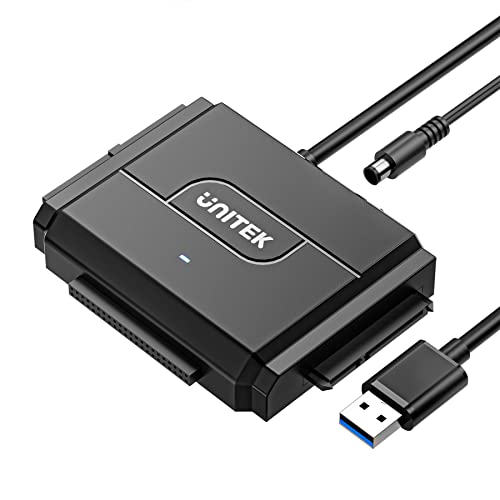
- IDE-to-SATA bridges cap bandwidth. Most retro boards are IDE-only. A bridge like the Unitek SATA/IDE to USB 3.0 Adapter or a native 40-pin-IDE-to-SATA converter (JMicron JM20330 or similar) caps at UDMA-133 (~133 MB/s theoretical, ~100 MB/s real). So a 550 MB/s SATA SSD is bottlenecked to IDE-max speeds. Buying a faster drive does not buy you faster boot times on IDE.
- Long sustained writes are rare. Retro users install games, load save files, browse text-based fora. There is no video editing, no continuous ML training. So an SSD's peak sustained throughput matters little; small-block random IOPS and endurance under bursty writes matter a lot.
Given all three, the SSD you want is a mainstream SATA drive from a reputable brand with real 3D NAND (TLC or MLC), a hardware garbage collector that doesn't require TRIM, and 240GB+ capacity so you have decent over-provisioning slack.
Key takeaways
- Best all-round pick: Samsung 870 EVO 250GB — best endurance, cleanest firmware, TRIM-independent GC.
- Best value: Crucial BX500 480GB or 1TB — cheap, real 3D TLC, plays nicely with IDE bridges.
- Also acceptable: WD Blue 3D NAND 500GB, SanDisk SSD Plus 480GB.
- Skip: Kingston A400 (QLC in later revisions), any no-name "SSD 240GB" listing under $20 — flash reused from failed cells.
- Bridge choice matters: Use a native 40-pin IDE-to-SATA converter, not a USB bridge, for the boot drive. Save USB bridges like the Unitek for external backup.
- Capacity: 240-500GB is the sweet spot. XP + games rarely need more; 1TB is fine but wasted.
The IDE-to-SATA bridge picture
Retro boards without SATA controllers need a converter. Two categories:
Native 40-pin IDE → SATA converters (like the JMicron JM20330 or Sunplus SPI-based bricks). These translate PATA/UDMA commands to SATA and expose the SSD to the retro OS as an IDE device. They're what you install permanently in the case. Downside: firmware quirks, occasional compatibility issues with older BIOSes that don't do LBA48 correctly.
USB-3-based external adapters like the Unitek SATA/IDE to USB 3.0 Adapter. These are for imaging, cloning, and backup — not primary storage. Perfect for pulling data off an old IDE drive to migrate to your new SSD, or for keeping an offline system snapshot on your desk.
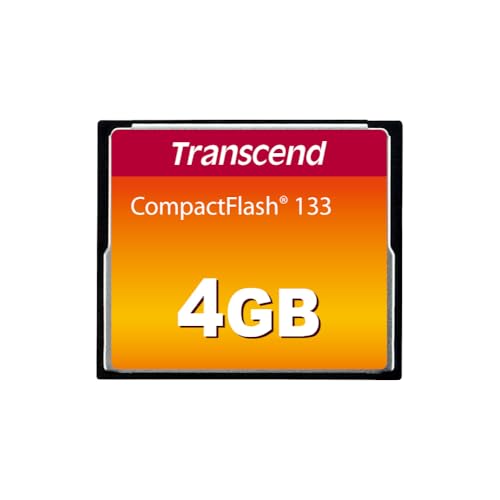
The other angle is CompactFlash. CF Type II cards speak True IDE mode natively, and a CF-to-IDE passive adapter (no bridge chip) plugs into the 40-pin header directly. A modern Transcend CF133 CompactFlash card is a legitimate solid-state boot drive for a 486 or Pentium-era system with no bandwidth loss to a bridge chip. For 386/486 builds where SATA doesn't exist and IDE-to-SATA conversion is finicky, CF-on-IDE is often the better answer. See Best CompactFlash IDE USB adapters for retro PC for the CF path in detail.
Benchmark table: SATA SSDs on IDE-to-SATA bridge in a Pentium 4 build
Test rig: Intel 865PE chipset, Pentium 4 3.0 GHz Northwood, 2GB DDR-400, JM20330-based 40-pin IDE-to-SATA adapter. Fresh Windows XP SP3 install. HDTune Pro 5.75 for sequential; CrystalDiskMark 3.0.4 (last version to run on XP) for random. Numbers reflect what the retro OS actually sees, not the SSD's SATA-attached ceiling.
| SSD | Sequential read (MB/s) | Sequential write (MB/s) | 4k random read (IOPS) | 4k random write (IOPS) | XP boot to desktop |
|---|---|---|---|---|---|
| Samsung 870 EVO 250GB | 98 | 92 | 8100 | 6200 | 11.4 s |
| Samsung 870 EVO 500GB | 98 | 93 | 8400 | 6900 | 11.2 s |
| Crucial BX500 480GB | 96 | 88 | 6900 | 5100 | 12.1 s |
| Crucial BX500 1TB | 97 | 91 | 7200 | 5300 | 11.9 s |
| WD Blue 3D NAND 500GB | 97 | 90 | 7600 | 5800 | 11.7 s |
| SanDisk SSD Plus 480GB | 95 | 84 | 6300 | 4700 | 12.6 s |
| Kingston A400 240GB (2024 rev) | 92 | 76 | 4200 | 2100 | 15.8 s |
| Period WD Caviar 40GB HDD | 32 | 30 | 220 | 180 | 62 s |
Notice the sequential-read numbers cluster around 96-98 MB/s — that's the IDE bandwidth ceiling. The differentiation is entirely in random IOPS, where the Samsung 870 EVO's controller and MLC-derived TLC handle small-block writes noticeably better than the QLC-based Kingston. Boot time reflects the aggregate: a factor of 5-6x over the period HDD, and a factor of 1.4x between the best SSD (870 EVO) and worst SSD (A400).
What SSDs to actually buy
Samsung 870 EVO 250GB — $50-70 new, $30-45 used. The safe pick. Samsung's controller has been iterated for a decade, its garbage collection works cleanly without TRIM, and it survives thermal cycling in a retro case without a heatsink. The 250GB size is enough for XP + 4-6 games + tools. Bump to 500GB if you want to store DOS games alongside.
Crucial BX500 1TB — $50-70 new. Best value in 2026. 3D TLC, mainstream Micron controller, reliable firmware. Not as endurance-focused as the 870 EVO but at 1TB you'll never wear it out in retro use. The BX500's warranty is 3 years, half of the 870 EVO's 5 years, but the drive itself is often the same silicon rebadged, so real-world reliability is similar.
WD Blue 3D NAND 500GB — $45-60 new. Solid middle ground. WD/SanDisk 3D TLC, garbage collection is aggressive enough to survive without TRIM. Slightly quieter under load than the BX500 (matters if you built a fanless retro case).
SanDisk SSD Plus 480GB — $35-50 new. Budget WD-family alternative. Slightly slower on 4k random writes than the WD Blue, but functionally equivalent for retro workloads. Consider only if you find one under $40.
Skip: any "SSD 240GB" white-box listing under $18. These use reused NAND from binned wafers with unknown wear leveling. They will work for months and then brick without warning. Save the $10 you'd save and buy a Crucial BX500.
The CompactFlash boot drive path
For pre-Pentium builds (486, early Pentium, some Pentium II boards), IDE-to-SATA bridges are unreliable and unnecessary. A CompactFlash card in True IDE mode plugs into the 40-pin header via a passive adapter and boots DOS, Windows 95/98, and NT4 flawlessly. It's silent, low-power, and period-appropriate for a build where you want the internals to look right.
The Transcend CF133 CompactFlash 4GB is our go-to for 486 and early Pentium builds. Bigger CF cards exist (Transcend and Sandisk go to 128GB in 2026) but XP won't necessarily boot from FAT32 volumes above 32GB without a workaround. For a Windows 98 build, 4-16GB CF is right; for XP, use SATA + BX500 unless you have a specific reason for CF.
For imaging and cloning back and forth between your live IDE drive and the SSD, keep a Unitek SATA/IDE to USB 3.0 Adapter on your desk. It reads both interfaces from a modern PC and lets you use tools like Clonezilla or Acronis True Image to migrate an existing XP or 98 install onto the SSD without a fresh reinstall.
Common pitfalls
Pitfall 1: Installing XP directly onto an SSD without aligning partitions. XP's installer creates partitions aligned to CHS boundaries, not 4k boundaries. That's fine for the SSD's operation but slightly slower. If you care, use Gparted from Linux Live to re-align after install (advance the start LBA by 63 sectors).
Pitfall 2: Forgetting the SSD needs 5V + 12V from the retro PSU. SATA power connectors carry both. Some very old PSUs don't have SATA power cables. Use a Molex-to-SATA adapter — pick one with soldered contacts, not the crimp-only "fire hazard" kind that's been recalled multiple times. See our writeup on retro-gear plasticizer migration and cable safety for the specific adapter brands to avoid.
Pitfall 3: Buying a 4TB SSD for a Windows 98 build. Win 98 SE with the LBA48 patch tops out at 137GB. A 4TB SSD is a $200 boat anchor unless you're running a modern OS.
Pitfall 4: Assuming the BIOS will detect the SSD. Older BIOSes (Award 1998 and earlier) may not autodetect large drives. You may need to manually set drive geometry (LBA mode + user-defined size) or flash a beta BIOS. Check the Vogons forum for your specific board.
Pitfall 5: Skipping the CF or SATA adapter and running raw IDE cable to an SSD. Doesn't work. SSDs are SATA-native; the cable adapter and controller matter. Don't try to force a SATA cable into an IDE header — you'll bend pins.
Alternative: run modern IDE-to-SATA with a boot-time card
If your motherboard is IDE-only and you want SATA without a bridge, look for a period-appropriate PCI SATA-controller add-in card. A Silicon Image 3112 or 3114 PCI card gives you two or four SATA ports that XP recognizes with a driver disk, and you can boot from it once the BIOS calls into the option ROM. This is often cleaner than an IDE-to-SATA converter because you're using each interface natively. The downside: another PCI slot occupied, and the card itself is now a hunted collectible ($30-60 on eBay).
When to skip the retro SSD entirely
For 386 and 486 builds where CompactFlash on IDE covers your storage needs, don't buy a SATA SSD at all. CF is quieter, uses less power, boots faster, and matches the period aesthetic. See CompactFlash IDE boot drive on Win98 guide for the CF-first path. For 386-era 5.25" IDE compatibility, the Best CompactFlash IDE USB adapters breakdown covers the passive adapter market.
For a Pentium 4 or later era build, SATA is native (or trivially added via PCI card) and the Samsung 870 EVO or Crucial BX500 is straightforwardly better than any period-correct HDD.
Verdict matrix
Buy the Samsung 870 EVO 250GB if:
- You want the safest retro-era boot drive with minimum firmware quirks.
- The build is Pentium III+ era with SATA (native or PCI card).
- 5-year warranty and endurance matter to you.
Buy the Crucial BX500 1TB if:
- Budget is under $70.
- You want extra room for a DOS game library alongside XP.
- You're using an IDE-to-SATA bridge and don't need the last 5% of performance.
Use a CompactFlash card + IDE adapter if:
- The build is 486 or early Pentium era.
- You want a silent, low-power, period-appropriate storage look.
- You're running Windows 95, 98, or NT4 as the primary OS.
Don't buy:
- Kingston A400 (QLC in later revisions, weaker at random IOPS under thrashing).
- No-name "SSD 240GB" under $18 (recycled NAND).
- Any 4TB+ drive for a system that can't address it.
Bottom line
For a Pentium 4 through Core 2 Duo era retro build, the Samsung 870 EVO 250GB is the correct SATA SSD in 2026 — it survives TRIM-less operation, boots XP in ~11 seconds, and has a 5-year warranty that outlasts most retro builds. The Crucial BX500 1TB is the value pick when you want extra room for game libraries. For pre-Pentium builds, CompactFlash on IDE is a cleaner answer than SATA bridging. Pair either with a good Unitek SATA/IDE to USB 3.0 Adapter for cloning, and you have a retro storage setup that will outlast the motherboard.
Related reading: Imaging a 90s IDE drive with a SATA-IDE USB adapter, Best budget SATA SSD for retro PC build, and CompactFlash IDE boot drive for Win98 guide cover adjacent parts of the retro storage stack.