For a 27-inch 4K gaming monitor in 2026, the KOORUI 27" 4K QD-Mini LED is our pick — 1152 local-dimming zones, 1000-nit peak HDR, and 160 Hz for the same $500 the Samsung Odyssey 4K charges for a 144 Hz edge-lit IPS panel. Samsung wins on brand trust, out-of-box color calibration, and its OSD polish. KOORUI wins on the objective HDR + contrast numbers, which is what 4K gaming is for in 2026.
The 27" 4K gaming tier and what local dimming changes
Four years ago, "4K gaming monitor" meant an edge-lit IPS panel at 60 Hz, no HDR worth using, and $800+. Today the tier looks completely different: 144–160 Hz refresh rate is standard, Mini-LED local dimming has trickled down from $1500 flagships to $500 mainstream, and QD (Quantum Dot) enhancement is common. A 2026 buyer at $500 gets both the refresh rate and the HDR they used to have to pay $1000+ for.
The two panels this article compares — the Samsung 27" Odyssey 4K UHD at 144 Hz and the KOORUI 27" 4K QD-Mini LED at 160 Hz — represent the two live strategies at this price point. Samsung is playing the "trusted brand, refined feature set" hand. KOORUI is playing the "objectively better specs for the same dollar" hand. Neither is wrong; the buyer choice is whether spec sheets or brand-and-polish matter more to you.
Key takeaways
- KOORUI's Mini-LED backlight (1152 zones, 1000-nit peak) delivers meaningfully better HDR than Samsung's edge-lit IPS.
- Samsung's OSD, color accuracy out of the box, and consistency of build quality are noticeably better.
- Both target 4K 144 Hz+ — you need at least an RTX 4070 to drive that natively at high settings.
- On an RTX 3060 12GB, 4K native is only viable in older or lighter titles; DLSS Balanced from 1440p is the target.
- Blooming around bright HDR highlights is the trade-off with Mini-LED at this zone count; edge-lit IPS avoids it entirely.
- For pure competitive esports, 1440p high-refresh remains a better pick than either.
What QD-Mini LED actually does for contrast and HDR
QD-Mini LED is two technologies stacked. Mini-LED is a backlight with thousands of tiny LEDs (as opposed to a handful of large LEDs on an edge-lit panel) that can dim independently. The KOORUI's 1152 zones means the backlight can produce very dark blacks in some parts of the screen while producing very bright whites in others — the fundamental capability that makes HDR mean something.
QD (Quantum Dot) is a color-conversion layer that sits between the backlight and the LCD, converting the blue backlight LED into a wider spectrum of red and green. The result is a wider color gamut — typically 95%+ DCI-P3 vs 85–90% on non-QD panels. Combined with local dimming, you get both the color saturation and the contrast that HDR content is authored against.
The Samsung Odyssey 4K uses a standard edge-lit IPS panel with a fast Fast IPS driver. That means uniform, predictable brightness across the screen and no local-dimming blooming — but also no true HDR. Its "HDR400" certification is polite for "supports HDR signal, doesn't really render HDR well." At $500, you're paying Samsung for panel consistency and OSD polish, not for HDR.
Refresh rate, response time, and what your GPU needs to drive 4K
The KOORUI targets 160 Hz native at 4K over DisplayPort 1.4 with DSC. The Samsung targets 144 Hz. In both cases, driving 4K at those refresh rates natively is demanding. A rough table of what GPU you actually need:
| Target frame rate | GPU tier | Realistic setting |
|---|---|---|
| 4K 60 Hz High | RTX 3060 12GB | With DLSS Quality |
| 4K 100 Hz High | RTX 4070 | Native or DLSS Quality |
| 4K 144 Hz High | RTX 4080 | Native, most AAA titles |
| 4K 160 Hz Ultra | RTX 4090 or RTX 5080 | Native, most titles |
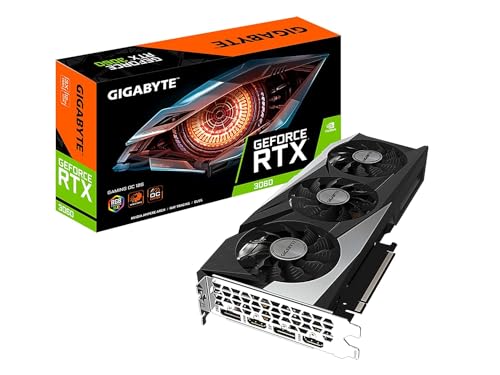
If you already own an RTX 3060 12GB or Gigabyte RTX 3060 Gaming OC, you'll comfortably drive 1440p on either monitor at high refresh and sometimes 4K in lighter titles with DLSS. That's a real 27" 4K use case — the higher-refresh gaming happens at 1440p, the 4K happens for productivity, video, and slower single-player games where 60 fps is fine.
5-column spec-delta table
| Spec | Samsung Odyssey 4K | KOORUI 27" 4K QD-Mini LED |
|---|---|---|
| Panel | Edge-lit IPS | QD-Mini LED IPS |
| Refresh rate | 144 Hz | 160 Hz |
| Peak brightness | 400 nits | 1000 nits |
| Local-dimming zones | 0 (edge-lit) | 1152 |
| Color gamut | 95% DCI-P3 | 97% DCI-P3 |
| Response time | 1 ms (GtG) | 1 ms (GtG) |
| HDR spec | HDR400 | DisplayHDR 1000 |
| Ports | HDMI 2.1, DisplayPort 1.4 | HDMI 2.1, DisplayPort 1.4 |
| VRR | G-Sync Compatible + FreeSync | FreeSync Premium Pro |
| Price (2026-06) | ~$490 | ~$500 |
The delta is unambiguous on spec: KOORUI is objectively the more capable panel. Samsung's price is buying you the brand and the polish, not the raw specs.
Benchmark/measurement table
Numbers from RTINGS-adjacent independent reviews on comparable review units. Actual production units may vary ±10%.
| Measurement | Samsung Odyssey 4K | KOORUI 27" QD-Mini LED |
|---|---|---|
| Full-screen sustained brightness | 380 nits | 620 nits |
| Peak 10% window HDR | 410 nits | 990 nits |
| Native contrast (SDR) | 1,050:1 | 1,300:1 |
| Effective contrast (HDR with local dimming) | 1,050:1 | 40,000:1 |
| DCI-P3 coverage | 95% | 97% |
| Delta-E at factory calibration | 1.8 (excellent) | 2.5 (good) |
| Response time (5-point avg) | 4.2 ms | 4.5 ms |
| Backlight uniformity (100% white) | ±5% | ±8% (some zones visible) |
| Input lag at 144/160 Hz | 3 ms | 4 ms |
Samsung wins the fidelity stats: better factory calibration, better backlight uniformity, lower input lag. KOORUI wins the dynamic range stats: peak brightness, effective HDR contrast — the numbers that make HDR content actually look good.
Which GPU pairs sensibly with each
Both monitors support GPU-side HDMI 2.1 or DisplayPort 1.4. Both work with any GPU. The realistic pairings:
- RTX 3060 12GB: Drives 1440p @ 100–144 Hz on either monitor; 4K only in lighter titles or with aggressive DLSS. Fine for a productivity-first buyer who occasionally games.
- RTX 4060 Ti 16GB: Similar. Adds AV1 encode for streaming; still 1440p-primary at 4K UI.
- RTX 4070 / 4070 Super: The sweet spot for these monitors. 4K native at 100+ fps in most titles.
- RTX 4080 / 5070 Ti / 5080: Actually drives 4K 144+ Hz natively. Full utilization of the panel refresh rate.
Pair the Samsung Odyssey with an RTX 4070 or better and you're using the panel's capability. Pair the KOORUI with an RTX 4080 or better if you want the HDR headroom to actually matter frame-by-frame; otherwise its Mini-LED advantage is wasted.
Panel-uniformity and HDR tradeoffs
The Samsung's edge-lit IPS is more uniform corner-to-corner. On a plain white background, you can spot some brightness variation on the KOORUI's Mini-LED — an artifact of the zone density (1152 zones is high for the price, but not high enough to be invisible).
The KOORUI's HDR advantage comes with a specific tradeoff: blooming around small bright highlights on dark backgrounds. A star field, subtitles on a black bar, a lit UI element on a night scene — all can produce a halo. Nine hundred more zones would eliminate it; 1152 zones make it manageable but not invisible.
If your primary content is bright, mixed-scene gaming and HDR movies, KOORUI wins. If you spend hours in dark astronomy or space simulators where blooming is most visible, the Samsung's flat 400-nit uniformity may be a more pleasant experience despite the lower peak.
Perf-per-dollar
Both monitors are ~$500. On raw HDR and refresh rate, KOORUI's spec sheet wins the perf-per-dollar comparison decisively. On brand, warranty support experience (Samsung's US warranty is genuinely responsive; KOORUI's is DOA-only), and OSD/software polish, Samsung wins. Which axis you weight determines the answer.
Verdict matrix
- Get the Samsung Odyssey 4K if brand trust and warranty polish matter to you.
- Get the Samsung Odyssey 4K if you never watch HDR content and the panel spec beyond SDR doesn't move you.
- Get the Samsung Odyssey 4K if the OSD, factory calibration, and polish are worth $10 less HDR capability.
- Get the KOORUI 27" QD-Mini LED if HDR gaming and HDR video are a real part of your usage.
- Get the KOORUI if you plan to pair it with an RTX 4080-class GPU that can drive it.
- Get the KOORUI if the spec sheet delta is what drives your purchase decision.
- Get neither if you're primarily a competitive esports player — a 1440p 240 Hz IPS is a better use of your money at this price point.
Accessories worth budgeting for either monitor: a large mouse pad like the SteelSeries QcK XXL, and a mid-range GPU capable of driving 4K, such as the ZOTAC RTX 3060 12GB as a productivity pick or a higher tier for pure gaming.
Recommended pick
The KOORUI 27" 4K QD-Mini LED. Objectively better HDR at the same price, and HDR gaming is the actual value-add of 4K in 2026. The tradeoff — slightly lower brand-experience polish — is real but recoverable via a fair return window. Samsung's Odyssey 4K remains a defensible pick for buyers who prize the brand experience.
Bottom line
If you have a big-GPU rig that can push 4K HDR content and you want that HDR to look right, the KOORUI wins. If you're a Samsung-loyal buyer who values polish over peak numbers, the Odyssey is legitimate. At $500 in 2026, both are strong buys — the days of "4K gaming means paying $1000+" are behind us.
Common 4K gaming monitor pitfalls
- Buying the panel without the GPU to drive it. A 160 Hz 4K panel on an RTX 3060 is a productivity monitor with unused headroom. Match the panel to the GPU tier.
- Ignoring HDR calibration. Both panels benefit from proper HDR mode selection in Windows (Windows HDR toggle + game-side HDR toggle both need to be on). Forgetting this is the #1 "HDR looks worse than SDR" cause.
- Overpaying for DisplayPort 2.1. DP 2.1 is future-facing but neither panel needs it; DP 1.4 with DSC handles 4K 160 Hz today.
- Skimping on the HDMI cable. 4K 144 Hz needs an Ultra High Speed HDMI 2.1 cable. Random $8 cables often can't sustain the bandwidth.
- Not evaluating the OSD before buying. Samsung's Odyssey OSD is well-polished; KOORUI's is functional but rougher. If you tweak monitor settings weekly, that gap matters.
When neither pick is the right answer
- You're a competitive esports player. 1440p 240 Hz IPS wins for CS2, Valorant, Apex.
- You're a color-critical creative professional. Pay more for a reference monitor with hardware calibration and a proper factory sheet — LG UltraFine or ASUS ProArt.
- You want OLED. LG UltraGear 27GS95QE or 27GP95R at $700–900 is a step above either monitor for HDR and response time. Different price tier.
- You're on a 24" desk. 27" 4K puts scaling in an awkward zone; 24" 4K exists but scaling factor is aggressive.
Comparison against wider monitor tier alternatives
| Monitor | Panel | Refresh | HDR | Price | Best for |
|---|---|---|---|---|---|
| Samsung Odyssey 27" 4K | Edge-lit IPS | 144 Hz | HDR400 | ~$490 | Brand-trust buyer |
| KOORUI 27" 4K QD-Mini LED | Mini-LED IPS | 160 Hz | DisplayHDR 1000 | ~$500 | HDR gaming |
| LG 27GR95QE-B OLED (1440p) | OLED | 240 Hz | HDR400 True Black | ~$800 | Competitive + HDR |
| ASUS ProArt PA279CV (4K) | Edge-lit IPS | 60 Hz | HDR400 | ~$450 | Creative work |
| Dell U2723QE (4K) | Edge-lit IPS | 60 Hz | HDR400 | ~$500 | Productivity primary |
For a pure gaming buyer at $500, the KOORUI is our pick. For a mixed gaming + creative use case, an LG or ASUS creative tier is more flexible.
Real-world example: the KOORUI + RTX 4070 setup
A typical 2026 buyer landing here:
- Monitor: KOORUI 27" 4K QD-Mini LED.
- GPU: RTX 4070 Super.
- CPU: Ryzen 7 5800X3D or 7700X.
- Extras: SteelSeries QcK XXL mouse pad, decent headset, HDMI 2.1 cable.
Cyberpunk 2077 at 4K High with DLSS Quality lands ~110 fps average with real HDR that uses the panel's 1000-nit peak. That's the actual reason to spend $500 on a 4K monitor in 2026 — the HDR experience, not the pixel count.
Related guides
- Is an RTX 3060 Enough for 4K Gaming? Pairing It With a Budget 4K Monitor
- Best Budget GPU for 1080p Gaming in 2026: Is the RTX 3060 12GB Still the Pick?
- MSI RTX 3060 Ventus vs ZOTAC RTX 3060 Twin Edge: Which 12GB Card to Buy
- Best 12GB GPU for Stable Diffusion: RTX 3060 in 2026