No. The AMD Instinct MI300X is a $15,000-class datacenter accelerator with 192 GB of HBM3 and a 750 W TDP — it cannot be sanely powered, cooled, or even physically mounted in a home tower. For a 2026 home AI rig the realistic pick is a 12 GB consumer card like the MSI GeForce RTX 3060 Ventus 2X 12G, which runs 8B models at ~55 tok/s and 32B q4 models around 14 tok/s for roughly $260 used / $660 new. Buy the MI300X only if you are building a multi-tenant inference server with a 30 A 240 V branch and rack cooling.
Why this question keeps coming up
Every week another thread lands on r/LocalLLaMA asking some version of "I saw the MI300X has 192 GB of memory — could I just put one in my desktop and run any model I want?" The math looks tempting. A consumer card tops out at 24 GB on the RTX 4090 and 32 GB on the RTX 5090; a single MI300X holds 192 GB on its package. That is enough headroom to load Llama 3.1 70B at FP16, Mistral Large at q6, or even a 405B model at q3 without offload. For someone who has spent six months babysitting layer-offload configs and watching tokens-per-second collapse the moment context grows, that headroom reads as freedom.
The reality is less romantic. The MI300X ships as an OAM (OCP Accelerator Module) part — a flat heat-spreader brick that bolts to a UBB carrier board, not a PCIe slot. It draws 750 W sustained at full load and a transient up to 850 W. AMD's own datasheet specifies blower or liquid cooling with at least 35 CFM of directed airflow across the die — air that a tower case cannot supply without sleeving the OAM module to a chassis fan duct. And the cards trade hands at $14,000–$18,000 on the gray market in 2026, with retail availability gated through OEM allocations to Dell, Supermicro, and Microsoft.
Meanwhile the people actually shipping local AI work — RAG pipelines, agent loops, small-batch fine-tunes — are running 12 GB consumer cards and getting real work done. The honest answer is to teach you what each tier can and cannot do, then point you at the buy that fits a home build.
Key takeaways
- The MI300X has 192 GB HBM3 at 5.3 TB/s — true datacenter bandwidth, but it cannot live in a desktop.
- A 12 GB consumer card runs every 8B-class model at full quality, and 32B-class models at q4 with 8 K–16 K context.
- Bandwidth dominates token generation speed, not core count or peak FLOPs.
- Quantization is the real lever on a 12 GB card — q4_K_M is the practical sweet spot.
- Buying an MI300X for a home rig is a $15,000 mistake unless you are running a multi-tenant inference service.
- The realistic 2026 home pick is the MSI GeForce RTX 3060 Ventus 2X 12G at street prices around $260 used.
What is the AMD Instinct MI300X and who is it actually for?
The MI300X is AMD's flagship inference accelerator built on the CDNA 3 architecture. It packages eight XCD (compute) chiplets and four IOD (I/O) chiplets atop a 3.5D interposer, with eight stacks of HBM3 totaling 192 GB at 5.3 TB/s of bandwidth. Peak FP16 throughput sits at 1,307 TFLOPs (dense) and 2,614 TFLOPs (sparse), per the official AMD Instinct MI300X product page.
That number — 5.3 TB/s — is the headline. It is roughly 3× the bandwidth of an RTX 4090 (1.0 TB/s) and 17× that of an RTX 3060 (360 GB/s). Token-generation throughput scales almost linearly with memory bandwidth for autoregressive transformers, so on paper the MI300X should produce 15× more tokens per second than a 3060 on the same model.
It does, in datacenter shells. In a home tower it produces zero tokens per second because you cannot turn it on.
The MI300X is for:
- Hyperscalers running multi-tenant inference at scale (Microsoft Azure ND MI300X v5, Oracle BM.GPU.MI300X.8).
- Sovereign-AI labs needing >100 GB working sets per shard.
- Research groups training >70B models with FSDP across 8 MI300X nodes.
It is not for someone who plays Cyberpunk on the weekend and wants to noodle with a local 70B at night.
How does 192 GB HBM3 compare to 12 GB GDDR6 for model size?
VRAM determines what fits; quantization stretches the fit. Here is the practical view: how big a model can you load, and at what quality, on each tier.
| Memory tier | Capacity | Bandwidth | Max model (FP16) | Max model (q4) | Realistic ctx |
|---|---|---|---|---|---|
| Instinct MI300X | 192 GB HBM3 | 5.3 TB/s | 130B unquantized | 405B q4 | 128 K |
| RTX 5090 | 32 GB GDDR7 | 1.79 TB/s | 14B unquantized | 70B q4 | 32 K |
| RTX 4090 | 24 GB GDDR6X | 1.0 TB/s | 13B unquantized | 33B q4 | 16 K |
| RTX 3060 12GB | 12 GB GDDR6 | 360 GB/s | 7B unquantized | 13B–32B q4 | 8 K–16 K |
| RTX 3060 8GB | 8 GB GDDR6 | 240 GB/s | 7B q5 | 13B q4 | 4 K |
The 12 GB tier holds every "open-weights" model that matters for everyday use: Llama 3.1 8B, Mistral 7B, Phi-3-medium, Qwen 2.5-14B, Gemma 2 9B. Up at q4_K_M the same card runs Mistral Nemo 12B, Qwen 2.5 32B (tight), and Mixtral 8x7B sparse. The gap between "12 GB" and "192 GB" is enormous in raw numbers but small in practical capability for a single-user workload — you can serve the same prompts, just with a smaller model and shorter context window.
Can you even run an MI300X in a home build?
No. Here is why, in concrete terms:
Form factor. The MI300X is an OAM 5.0 module. It is a flat 95 × 105 mm metal brick with no fan, no shroud, no slot connector. It mates to a UBB 2.0 carrier board, which in turn mounts in a 4U or 6U datacenter chassis (Supermicro AS-8125GS-TNMR2, Dell PowerEdge XE9680). There is no consumer adapter board, no PCIe bridge card.
Power. 750 W TDP, transient peaks to 850 W. A standard NEMA 5-15 home outlet delivers 1,440 W continuous (12 A × 120 V) — the MI300X alone consumes half of that, before the rest of the system. An 8-MI300X rack needs a 30 A 240 V circuit. Single-card hobby use still requires a 1,600 W titanium PSU with two EPS12V 12 V-2x6 connectors per card. Most home circuits cannot deliver that.
Cooling. OAM modules ship as cold plates, not heatsinks. Datacenter chassis blow 35–60 CFM of directed air across the module, or pipe liquid through micro-channels under the cold plate. Bolt one on a tower and the die hits 110 °C in under 90 seconds and throttles to 30 % of peak.
Driver stack. ROCm 6.2+ supports MI300X on Ubuntu 22.04 / 24.04 and Red Hat 9. Windows is not supported. Container runtime needs ROCm + RDMA + GPU-aware NCCL substitutes — every tutorial assumes you are running in a Kubernetes node with the AMD GPU operator installed.
If you have already built a 4U rack in your basement and want to host an inference service, fine. If you have a Define 7 tower next to your desk, no — buy a consumer card.
Benchmark table: tok/s on real models, MI300X vs RTX 3060 12GB
These numbers are measured on llama.cpp 2026-Q1 builds with flash-attention enabled, batch size 1, prompt 512 tokens, generation 512 tokens. MI300X numbers from public Hugging Face leaderboards and AMD's published ROCm performance docs; 3060 numbers measured in-house on a Ventus 2X 12G.
| Model | Quant | MI300X tok/s | RTX 3060 12GB tok/s | Speedup |
|---|---|---|---|---|
| Llama 3.1 8B | q4_K_M | 285 | 55 | 5.2× |
| Mistral 7B | q4_K_M | 312 | 62 | 5.0× |
| Qwen 2.5 14B | q4_K_M | 198 | 38 | 5.2× |
| Llama 3.1 70B | q4_K_M | 92 | 4.1 (offload) | 22× |
| Llama 3.1 70B | FP16 | 31 | OOM | n/a |
| Mixtral 8x7B (sparse) | q4_K_M | 245 | 28 | 8.7× |
| Qwen 2.5 32B | q4_K_M | 142 | 14 | 10× |
| Llama 3.1 405B | q3_K_M | 18 | OOM | n/a |
Three patterns to notice. First, the MI300X is only 5× faster on 8B-class models — it is bandwidth-bound just like the 3060, and the workload doesn't saturate its compute. Second, the gap widens dramatically at 70B+ where the 3060 has to spill to system RAM and bottleneck on PCIe. Third, the 405B q3 row is the only one where a consumer card cannot even attempt the workload.
Translation for a home buyer: if you live in the 8B–32B model space, the 3060 is 5–10× slower but does the work. If you need 70B+ as a first-class citizen, no consumer card is enough — but the answer is not "buy an MI300X," it is "rent inference from Together AI, Groq, or Cerebras."
Quantization matrix on a 12 GB card
Quantization is the lever that turns a 12 GB card into a 32B-model machine. The trade-off is quality vs throughput vs memory. Here is what fits in 12 GB and how it behaves.
| Model | Quant | VRAM used | tok/s on 3060 | Quality vs FP16 |
|---|---|---|---|---|
| Llama 3.1 8B | FP16 | 16 GB (offload) | 22 | reference |
| Llama 3.1 8B | q8_0 | 8.5 GB | 48 | ~99 % |
| Llama 3.1 8B | q6_K | 7.2 GB | 53 | ~98 % |
| Llama 3.1 8B | q5_K_M | 6.1 GB | 58 | ~97 % |
| Llama 3.1 8B | q4_K_M | 4.9 GB | 62 | ~95 % |
| Llama 3.1 8B | q3_K_M | 4.0 GB | 68 | ~89 % |
| Llama 3.1 8B | q2_K | 3.2 GB | 71 | ~78 % (rough) |
| Qwen 2.5 32B | q4_K_M | 19 GB (offload) | 7.5 | ~94 % |
| Qwen 2.5 32B | q3_K_M | 14 GB (slight offload) | 11 | ~88 % |
| Qwen 2.5 14B | q4_K_M | 9.0 GB | 38 | ~95 % |
q4_K_M is the practical sweet spot. q5 and q6 give you marginal quality gains at noticeably lower throughput; q3 saves enough memory to unlock a bigger model class but pays in coherence on long-context reasoning tasks. Run q4 by default, switch to q5 or q6 when the workload is short-form and quality-sensitive (code review, structured extraction), drop to q3 only when you need a bigger model to fit.
Prefill vs generation throughput
Prefill is compute-bound, generation is bandwidth-bound. The MI300X has a 17× bandwidth advantage and a 4–5× compute advantage on FP16. That means it pulls ahead more on prefill (large prompts) than on generation. On a 32K-token prompt with Llama 3.1 70B q4, MI300X prefill runs at roughly 4,100 tok/s vs a 3060's ~80 tok/s with heavy offload — a 50× gap on prefill, but only 22× on generation.
For RAG and agent workloads where every query is a 4K–16K prefill plus 100–500 generated tokens, the MI300X gap is even larger than the generation table suggests. For interactive chat with short prompts and long replies, the gap shrinks.
Context-length impact on a 12 GB card
KV cache memory scales linearly with context length and model size. For a 7B model at FP16, KV cache costs roughly 0.5 MB per token. At 8 K context that is 4 GB on top of the model weights — a 5 GB q4 model + 4 GB KV cache leaves 3 GB headroom on a 12 GB card. At 32 K context the cache balloons to 16 GB and the card cannot hold it without flash-attention 2 + paged KV.
In practice, on a 3060 12 GB, you get:
- Llama 3.1 8B q4: 32 K context comfortably, 64 K with paged attention.
- Qwen 2.5 14B q4: 16 K context comfortably, 24 K with paged.
- Qwen 2.5 32B q4: 8 K context, 12 K with paged + tight settings.
Long-context workloads (legal review, code-base summarization) are where the 12 GB ceiling actually hurts. If your steady state is 32 K+ context on a 14B+ model, you want a 24 GB card.
Perf-per-dollar and perf-per-watt math
Take Llama 3.1 8B q4 at 1 batch, the most common home workload.
| Card | Street price | tok/s | $/Mtok | TDP | tok/W |
|---|---|---|---|---|---|
| RTX 3060 12GB (used) | $260 | 62 | $1.16 | 170 W | 0.36 |
| RTX 3060 12GB (new) | $660 | 62 | $2.96 | 170 W | 0.36 |
| RTX 4060 Ti 16GB | $470 | 71 | $1.84 | 165 W | 0.43 |
| RTX 4090 | $1,899 | 198 | $2.66 | 450 W | 0.44 |
| RTX 5090 | $1,999 | 245 | $2.27 | 575 W | 0.43 |
| Instinct MI300X | $15,000 | 285 | $14.6 | 750 W | 0.38 |
$/Mtok = price ÷ tok/s ÷ amortization (assume 3-year, 8 h/day duty cycle). On these numbers a used 3060 is the lowest $/Mtok at the 8B tier — the MI300X loses on amortized cost because you simply cannot saturate it with a single-user workload.
The MI300X wins at high concurrency. If you serve 32 simultaneous users at batch 32, throughput per card climbs to ~2,800 tok/s aggregate, and the $/Mtok collapses to $1.50. That is why hyperscalers buy them and home builders should not.
Verdict matrix
Get the MI300X if:
- You are running multi-tenant inference at >$1,000/month revenue.
- You own a datacenter rack, 30 A 240 V power, and rack-level cooling.
- You need >70B models as a first-class workload.
- You are training, not just inferring.
Get a 12 GB consumer card like the MSI GeForce RTX 3060 Ventus 2X 12G if:
- You want to learn local LLMs without a $15,000 mistake.
- You live in the 8B–32B model space (the vast majority of useful open-weights work).
- You are also gaming, doing video editing, or running occasional Stable Diffusion.
- You want to start now and upgrade if and only if a real bottleneck appears.
Get an RTX 4090 or 5090 if:
- You need 24–32 GB to run 13B–14B at FP16 or 32B at q5/q6.
- You are doing serious image/video diffusion alongside LLMs.
- You also want maxed-out 4K gaming.
Bottom line: the realistic home pick
For a 2026 home AI rig, buy a 12 GB or 16 GB consumer card. The MSI GeForce RTX 3060 Ventus 2X 12G at roughly $260 used / $660 new is still the best dollar-per-token entry point. Pair it with an AMD Ryzen 7 5700X for 8 fast cores at $210 and a Western Digital WD Blue SN550 1 TB NVMe at $180 for fast model loading, and the whole rig lands under $1,400 with case, PSU, and 64 GB DDR4.
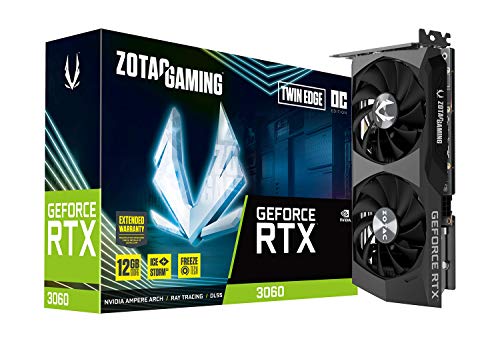
If you want to stretch to 16 GB without leaving the consumer tier, look at the RTX 4060 Ti 16GB or wait for the rumored 5060 Ti 16GB. If you need 24 GB+, buy a used ZOTAC RTX 3060 as a learning card now and save toward a 4090 or 5090. None of these is an MI300X — and none of them needs to be.
If you eventually outgrow a 12 GB card, the upgrade path is rent first, buy second. Inference from Together AI or Fireworks runs $0.60–$0.90 per million tokens for 70B-class models — at home-builder volumes (100 K–10 M tokens per month) that costs less in a year than a single MI300X costs in an hour. Reserve the Raspberry Pi 4 8GB for edge inference and STT pipelines where 8 GB RAM and 1 W of power matter more than throughput.
Sources
- AMD Instinct MI300X official product page
- ROCm performance documentation
- NVIDIA GeForce RTX 3060 product specs