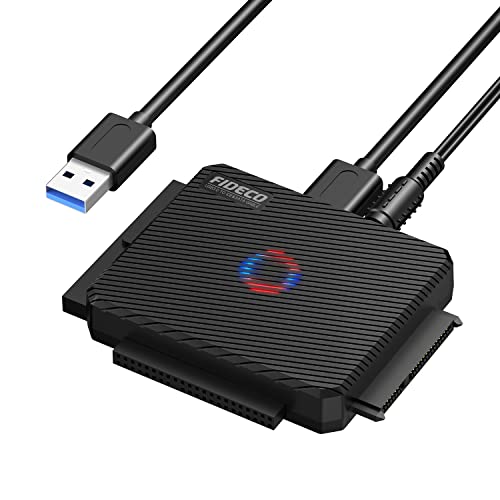
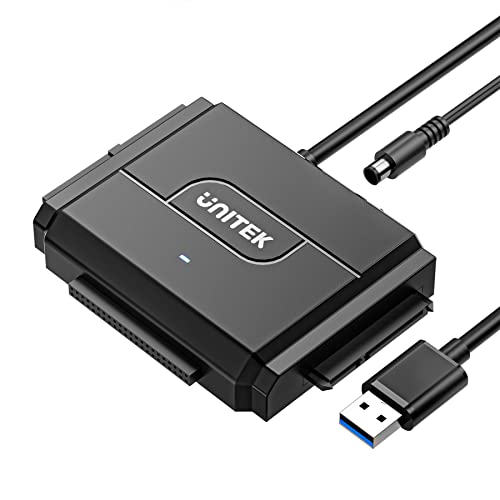
To dump an old PC game CD-ROM in 2026, connect a vintage IDE optical drive to a modern PC with an externally-powered IDE-to-USB adapter (FIDECO, Unitek, or Vantec), spin the disc with a tool that understands mixed-mode CDs (cdrdao, IsoBuster, or CloneCD), and write the result as a .cue/.bin pair rather than a flat .iso. Then verify the dump by re-reading the disc and comparing hashes against the Redump checksum database.
Preserving your legally-owned big-box CD collection
If you have a stack of cardboard big-box PC games on a shelf — Diablo II, Half-Life, MechWarrior 4, Baldur's Gate, the original Quake III install discs — the clock is running. CD-R rot is real (look up "disc rot" or "laser rot"), but pressed CD-ROMs from the late 1990s and early 2000s are not immune either. Aluminum oxidation, scratched lacquer, and warped polycarbonate all eat into your discs every year. The drives that read them are also dying: vintage IDE Plextor and Toshiba CD-ROM units in good working condition show up on eBay for $40-$100, and the supply only goes down.
The job for 2026 is to image the discs you own, store the images on modern storage, and keep at least one period-correct retro PC alive to actually run them. This guide covers the hardware path: getting a vintage IDE optical drive talking to a modern USB-3 host, dumping the disc to a format that survives the trip back to a Win98 or XP machine, and verifying the dump is good. We assume you own the discs. We do not cover circumventing protection schemes on titles you do not own.
The featured adapters here — the FIDECO IDE-to-USB 3.0 adapter, Unitek's IDE-to-USB 3.0 adapter, and the older Vantec CB-ISATAU2 — are the three that consistently show up in archival forums for one reason: each one ships with an external power brick that can spin up a thirsty IDE optical drive, which most generic SATA-only USB docks cannot. This piece complements our vintage IDE hard-drive imaging guide, focusing instead on optical discs and the .cue/.bin workflow.
Key takeaways
- Most generic SATA-only USB docks cannot power a vintage IDE optical drive. You need an adapter that ships with an external power brick — that is what the FIDECO, Unitek, and Vantec units give you.
- Dump audio-rich and mixed-mode game discs to
.cue/.bin, not flat.iso. A bare ISO drops CD audio tracks, which kills the soundtrack on a huge chunk of 1990s titles. - Verify every dump by re-reading and hashing, and cross-check against Redump where a known-good record exists.
- The cleanest path back to a retro PC is a CompactFlash card over IDE: the retro machine sees CF as a regular IDE drive and the modern PC writes to it over USB.
- Use ddrescue for damaged or scratched discs — multiple read passes recover sectors that a single read would lose.
Which adapters can power and read a vintage IDE optical drive?
The first question to ask any IDE-to-USB adapter is "does it ship with an external power supply?" An optical drive's spindle motor draws a lot more current than a 2.5-inch laptop hard drive, and bus-powered USB cannot supply enough on its own. If the spec sheet does not call out an included power brick, walk away.
The three featured adapters all check that box:
- FIDECO SATA/IDE-to-USB 3.0 ships with a 12V/2A external supply. The cable bundle includes a 40-pin IDE ribbon, a 4-pin Molex power lead, and the SATA data + power leads. The 5.25-inch optical drives are explicitly called out in FIDECO's product copy, which is rare in this category.
- Unitek SATA/IDE-to-USB 3.0 is functionally similar — 12V/2A brick, 40-pin IDE ribbon, Molex power lead. The cable feels slightly stiffer than the FIDECO bundle, which matters if your drive is mounted somewhere awkward.
- Vantec CB-ISATAU2 is older and tops out at USB 2.0 instead of USB 3.0. That is irrelevant for an optical drive (a 52x CD-ROM reader peaks below 8 MB/s). What it gives you in return is the longest track record in archival forums — many of the cleanest published Redump dumps were captured on Vantec hardware.
USB 3.0 vs USB 2.0 is a non-issue here because no CD-ROM drive saturates USB 2.0. Pick by what fits your build: the FIDECO if you want the broadest cable kit, the Unitek if you find a deal on it, the Vantec if you already trust the brand from past projects.
Spec-delta table: FIDECO vs Unitek vs Vantec
| Spec | FIDECO | Unitek | Vantec CB-ISATAU2 |
|---|---|---|---|
| Host interface | USB 3.0 (5 Gbps) | USB 3.0 (5 Gbps) | USB 2.0 (480 Mbps) |
| Storage interfaces | 2.5" / 3.5" IDE + SATA, 5.25" DVD/CD | 2.5" / 3.5" IDE + SATA | 2.5" / 3.5" / 5.25" IDE + SATA |
| External power | 12V/2A brick + Molex lead | 12V/2A brick + Molex lead | 12V/2A brick + Molex lead |
| Optical-drive support | Explicit in product copy | Implicit; works in practice | Documented in archival forums |
| Cable kit | IDE ribbon + Molex + SATA data/power | IDE ribbon + Molex + SATA data/power | IDE ribbon + Molex + SATA data/power |
| Approx. street price (mid-2026) | $24 | $35 | $26 |
| Era / channel | Retro tool — eBay-primary | Retro tool — eBay-primary | Retro tool — eBay-primary |
All three are sold primarily through eBay as the active retail channel in 2026; Amazon stock comes and goes for the FIDECO and Unitek units, and the Vantec has been EOL for years. For a $25 tool that you will use once a weekend, do not stress about brand — any of the three plus a working IDE optical drive will let you image your stack.
.cue/.bin vs .iso — when does each matter?
An .iso file is a single, contiguous sector-by-sector image of one data track. It works for pure data discs: Win98 SE install disc, Office 2000, a Linux ISO. It does not work for most 1990s and early-2000s PC games, because those discs almost universally used one of two formats that an ISO cannot represent:
- Mixed-mode CD. Track 1 is a data track (the game files); tracks 2 through N are CD-audio tracks (the soundtrack). A flat ISO grabs track 1 and silently drops the music. This is why so many 1990s game dumps on the open internet sound wrong — the dump format threw away the soundtrack.
- Multi-track data. Some titles spread data across multiple data tracks, sometimes interleaved with audio. Again, an ISO captures one track and misses the rest.
The .cue/.bin pair handles both cases. The .bin is the raw sector data; the .cue is a text CUE sheet describing the track layout, including which tracks are data, which are audio, and where each starts. When you mount or burn the pair, the resulting disc image is byte-identical to the original.
Rule of thumb: always dump to .cue/.bin for game discs. Convert to .iso later if you specifically need a flat image for a virtual machine, and only for confirmed pure-data discs. You will never regret having the .cue/.bin.
Tools that handle mixed-mode and multi-track dumping correctly include cdrdao (free, Linux/Windows), IsoBuster (commercial, Windows), and CloneCD (commercial, Windows). For badly-damaged discs, GNU ddrescue is the right tool because it can re-pass the disc and merge multiple read attempts into one good image.
Handling multi-track, mixed-mode, and early copy protection
Big-box PC games of the late 1990s and early 2000s ran through a parade of copy-protection schemes — SafeDisc, SecuROM, LaserLock, StarForce, weak-sector tricks, oversized data tracks. Most of those schemes embedded deliberately-unreadable sectors that a normal read pass interprets as errors. A naive ISO dump turns those errors into "this disc is broken" and bails out. A good .cue/.bin dump with subchannel data preserves the protection markers so the resulting image actually works on a retro install.
A few practical notes within the scope of preserving discs you legally own:
- Subchannel data matters. Many CUE-sheet tools support reading subchannel data (the
+96raw-sector mode). Enable it for protected discs. - Use the original drive when you can. Some protection schemes are picky about which drive can read them. A Plextor PX-W4012 or a Toshiba SD-R series will produce a usable dump on more discs than a random consumer DVD-RW from 2005.
- Multiple read passes. Even a clean disc benefits from two or three reads — small mismatches reveal scratches you did not notice.
- No DRM circumvention. This guide assumes you are imaging discs you own for personal preservation. Whether circumventing copy protection on those discs is legal depends on your jurisdiction; consult applicable law before doing so. Sharing or downloading copyrighted images you do not own is a separate question we do not cover.
Verifying a good dump: redump-style hashing and re-read passes
A dump is not done when the image file is written. It is done when you can prove two passes of the same disc produced bit-identical output. The recipe:
- First pass. Dump the disc to
.cue/.binwith subchannel data on. Save it. - Second pass. Re-insert the disc and dump again to a new location.
- Hash both. Compare CRC-32 and SHA-1 of the
.binfiles (and a diff of the.cuefiles). - Cross-reference. Check the hash against the Redump database. Redump is a community-maintained archive of known-good optical-disc checksums for thousands of CD and DVD titles; if your hash matches the Redump record, you have a verified-good dump. If it does not match and your two passes agreed, you may have a regional variant or a different revision — both are worth keeping.
For partially-damaged discs, GNU ddrescue is invaluable. It treats the disc as a block device and keeps a log of which sectors it has read successfully, which failed, and which are pending. You can run it across two different drives, merging the logs to recover sectors one drive cannot read but the other can. The Optical media page on the Archive Team wiki has a solid recipe walkthrough.
Common pitfalls
- Dumping with the wrong tool. Windows Explorer's "copy files from disc" will appear to work and produce useless results for any game disc. Use a real imaging tool.
- Skipping the power brick. A SATA-only USB dock with no external power will spin the drive once and then drop the bus when the laser fires. Symptom: dumps that abort 30 seconds in.
- Hot-swapping IDE cables. Do not hot-plug a vintage drive. Power the host PC, power the drive, then plug the USB lead in last.
- Trusting one read pass. Always re-read and hash. A single-pass dump that matches Redump is fine; one that does not has to be re-validated.
- Storing only on spinning rust. Once you have a verified dump, copy it to at least two destinations — one on your retro-build NAS, one on a modern SSD or cloud bucket.
Mounting the image on a Win98 or XP retro PC via CompactFlash transfer
The retro half of the workflow is just as important. You imaged the disc. You verified the hash. Now you need to get the image onto a period-correct PC and actually install it.
The cleanest 2026 path is a CompactFlash card through an IDE-to-CF adapter. The retro PC sees the card as a normal IDE hard drive — boots from it, reads from it, and treats it like a real disk. The modern PC writes to it through a USB CF reader. Pull the card from the modern PC, plug it into the retro machine, mount the .cue/.bin with Daemon Tools 4.x (last Win98-compatible release) or Alcohol 120% on XP, and install.
A 4 GB Transcend CF133 CompactFlash card is more than enough for most single-game transfers, since the largest CD-ROM image is ~700 MB. Buy a slightly bigger card (8 GB or 16 GB) if you plan to keep an Image Library on the card itself.
USB mass-storage on Win98 SE is doable but painful — you need a third-party driver, your USB-2 hub may or may not be detected, and the throughput is limited. The CF path is more reliable and a much cleaner way to move a single image at a time. For a more permanent retro Image Library, build a small Raspberry Pi NAS with OpenMediaVault and serve the dumps over SMB to the retro machine if it has a working NIC.
Verdict matrix: which adapter for you
Use the FIDECO if you want the broadest cable kit and explicit 5.25-inch optical-drive support in the product copy. This is the recommended pick for a first-time CD-archival build.
Use the Unitek if you find it on sale and you already have an IDE ribbon and Molex lead from another project. The cable feel is slightly stiffer; the rest is functionally identical to the FIDECO.
Use the Vantec CB-ISATAU2 if you trust the brand from past archival work, you do not need USB 3.0 (you do not, for optical work), and you can find one in good condition. Vantec hardware has the longest paper trail in the Redump community.
Recommended pick paragraph
For most archivists building a one-time CD-dumping bench in 2026, the FIDECO SATA/IDE-to-USB 3.0 adapter is the cleanest pick: it explicitly lists 5.25-inch DVD/CD support, ships with the external power brick that lets a thirsty IDE optical drive actually spin up, includes the IDE ribbon and Molex lead in the box, and costs about $24. Pair it with a working vintage Plextor or Toshiba IDE CD-ROM drive (eBay, $40-$80), a Transcend CF133 4 GB CompactFlash card for the trip back to a Win98 or XP retro PC, cdrdao or IsoBuster on the modern host, and you have everything you need to image a closet of big-box discs over a weekend. Always dump to .cue/.bin, always hash twice, and always cross-check against Redump.
Related guides
- FIDECO vs Unitek vs Vantec: The Best IDE-to-USB Adapter for Rescuing Retro Drives in 2026
- Imaging and Restoring Vintage IDE Drives in 2026: SATA/IDE-to-USB Adapters Compared
- Best IDE-to-USB Adapter for Dumping Retro Drives
- Best CompactFlash to IDE Adapter for Win98 SE Builds in 2026
- Vision LLMs Driving Period-Correct WinXP and Win98 Installers