Prices and availability may vary.
For a new streamer in 2026, the single best-return upgrade is a competent USB microphone — clean audio does more for viewer retention than any camera spec change. Pair it with even, front-facing lighting, a solid 1080p webcam, and comfortable headphones, and you have a starter kit that looks and sounds far more expensive than it is. The overall standout pick for a new creator is the HyperX QuadCast 2 for its combination of monitoring, gain control, and built-in shock mount at a mid-band price.
This guide is written for the streamer who is starting from a webcam and stock laptop mic and wants to make one careful upgrade round. The picks are ranked by cost-adjusted quality rather than raw specs, sourced against reviews on RTINGS.com, Tom's Guide, and PCMag. The five picks below cover the four axes that matter most: microphone, lighting, camera, and headphones — because no one component alone lifts a stream. Everything here is a plug-and-play upgrade you can install in an afternoon and use on tomorrow's stream.
Comparison at a glance
| Pick | Best for | Key spec | Price range | Verdict |
|---|---|---|---|---|
| HyperX QuadCast 2 | Best overall mic | USB-C, four polar patterns | $130-160 | Broadcast-grade sound at USB simplicity |
| Logitech Blue Yeti | Best value mic | USB, three-capsule condenser | $80-100 | Time-tested workhorse, plug-and-play |
| NEEWER 18-inch Ring Light | Best lighting | 18-inch bi-color LED, phone mount | $80-120 | Instantly professional-looking video |
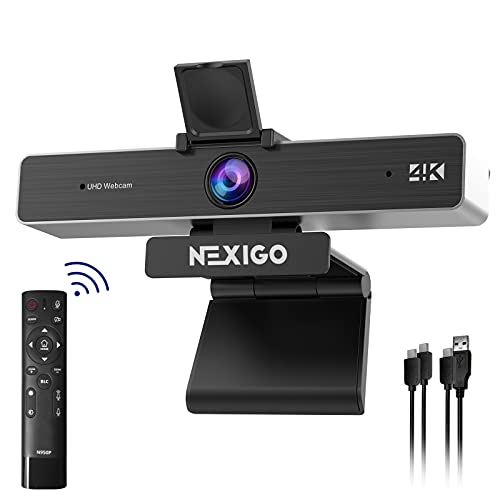
| NexiGo N950P Webcam | Best camera | 4K, Zoom-certified, PTZ | $80-120 | Sharp image and framing options |
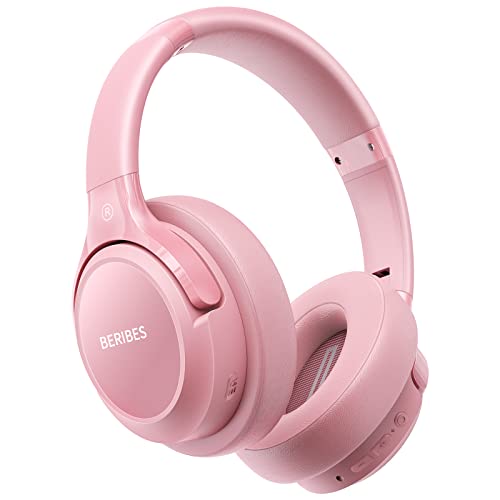
| BERIBES Bluetooth Over-Ear | Best budget headphones | 65-hour battery, wireless | $25-35 | Cheap, comfortable, useful |
🏆 Best Overall: HyperX QuadCast 2 USB Microphone
Why it wins. The HyperX QuadCast 2 is the mic that the largest share of new streamers grow into without needing to replace within a year. It is a condenser mic with four selectable polar patterns (cardioid, omni, stereo, bidirectional), a built-in pop filter and shock mount, tap-to-mute with a status LED, and — critically — a headphone jack for zero-latency monitoring so you actually hear yourself as you speak.
Reviews on Tom's Guide and PCMag consistently place it above cheaper condensers on tonal warmth without the harsh sibilance that plagues bright budget mics. For a streamer whose voice is the product, that difference is worth the modest step up.
Watch-outs. It is still a condenser, so it will pick up keyboard clatter and room noise if your space is untreated. A cardioid pickup pattern helps, but if you type on a loud mechanical keyboard, budget for a boom arm to get the mic close to your mouth and away from the desk.
Bottom line: if you can afford one mic that will last you two to three years of streaming without regrets, this is it.
💰 Best Value: Logitech Blue Yeti USB Microphone
Why it wins. The Logitech Blue Yeti — the mic Blue built its reputation on before Logitech acquired the brand — remains the value benchmark for USB streaming mics. Three condenser capsules deliver the same four pickup patterns as pricier mics; the built-in stand doubles as a monitoring platform; and everything works over a single USB cable with no driver install.
Per long-standing coverage on RTINGS.com, the Yeti's biggest strength is tonal neutrality — voices sound like themselves, not artificially warmed or brightened. That is exactly what a streamer needs, because your audience is calibrating to your voice, not the mic character.
Watch-outs. The tabletop stand transmits every desk thump straight to the capsule. If you slam-type or bounce your knee, get a shock mount aftermarket. And omni mode picks up the whole room; use cardioid unless you specifically need it for multi-person recording.
Bottom line: the mic to buy if the QuadCast 2 is out of budget, or if you want a genuinely serviceable mic under $100 for a first stream.
🎯 Best for Lighting: NEEWER 18-inch Ring Light Kit
Why it wins. The NEEWER 18-inch Ring Light Kit is the cheapest thing on this list that dramatically upgrades how you look on camera. An 18-inch ring at ~5600K color temperature with adjustable brightness gives even, flattering front lighting; the included phone mount is a bonus for streaming from a phone during travel.
Lighting is under-appreciated by new streamers. Webcams struggle in dim rooms — noise creeps in, colors compress, focus hunts. Even lighting fixes all three problems at once for less than the price of a mid-range webcam.
Watch-outs. Position matters. A ring light on a stand too far from your face gives a small "eye ring" reflection and doesn't help much; too close and you look bleached. Aim for roughly arm's length, directly in front of you, slightly above eye line.
Bottom line: the highest-return dollar you can spend on video quality short of a professional key light.
⚡ Best Performance (Webcam): NexiGo N950P Zoom-Certified Webcam
Why it wins. The NexiGo N950P Webcam is a 4K-capable, Zoom-certified webcam with pan-tilt-zoom controls, autofocus, and privacy shutter. For a streamer, the 4K downscales to a very clean 1080p stream, and the PTZ features let you frame a two-person shot without rebuying hardware.
Coverage on Tom's Guide and PCMag has consistently rated the N950P in the top tier for sub-$120 webcams on autofocus performance and low-light behavior — both places where cheaper webcams tend to embarrass themselves.
Watch-outs. No webcam is truly great in low light; the ring light above matters more than the camera model here. Also confirm your streaming software honors the PTZ controls; some platforms treat it as a fixed camera.
Bottom line: if your webcam is currently a laptop's built-in unit, this is the change that stops "you look grainy" from being a chat comment.
🧪 Budget Pick: BERIBES Bluetooth Over-Ear Headphones
Why it wins. The BERIBES Bluetooth Over-Ear Headphones are the least-glamorous pick on the list and the most likely to punch above their price. Over-ear Bluetooth headphones with 65-hour battery and six EQ modes for well under $40 is genuinely useful for monitoring chat, hearing game audio, and background listening on off-stream setup work.
They are not audiophile-grade, and for tight audio production work a wired closed-back headphone remains a better choice for zero-latency monitoring. But for the streamer whose priority is comfortable "long session" listening while they work on scenes and setup between streams, they are a very sensible buy.
Watch-outs. Bluetooth adds latency; do not use these for critical audio sync work. And use them in isolation mode — they do bleed a small amount at high volume.
Bottom line: the "why not?" pickup that rounds out the kit for the price of a few streaming subscriptions.
What to look for in a streaming kit
Microphone first, always
If you have $150 to spend, spend most of it on the mic. Viewers put up with mediocre video and turn away over bad audio. USB is the right call at this budget; XLR gains you upgrade headroom but costs an interface (~$100+) you do not need on day one.
Lighting beats camera specs
A cheap ring light does more for perceived image quality than upgrading a webcam. The reason is signal-to-noise: webcams compress heavily under low light. Give them enough light and even mid-tier optics look sharp.
Aim for 1080p, not 4K, on-air
Twitch caps most streamers below 1080p60. Buying a 4K webcam for its downscale quality is smart; streaming in 4K is bandwidth-wasteful and rarely necessary. 1080p at 60fps looks fine and stays under most viewers' data caps.
Wired vs wireless headphones
Bluetooth headphones are fine for general monitoring. For tight audio production, a wired pair minimizes latency and avoids interference from your other RF gear.
Room treatment beats gear beyond a point
Once you have a decent mic and lighting, more money on hardware returns diminishing gains. A single foam panel behind your workstation, and rugs on the floor, do more for perceived audio quality than a $300 mic upgrade will.
Cable management is a real spec
Streaming setups grow fast. A $10 cable-management kit saves you an hour of frustration every time you rearrange, and audiences do notice when your webcam wobbles.
Related guides
- Best PC Gaming Controller 2026 — the input side of the setup.
- Crucial BX500 vs Samsung 870 EVO vs WD Blue — cheap storage for game clips and VODs.
- Ryzen 5 5600G vs Ryzen 7 5700X for a Home Lab — CPU sizing when the box also serves as a stream capture rig.
Common pitfalls a new streamer walks into
Beyond the picks themselves, four gotchas that repeatedly cost new streamers time and money:
- Buying the highest-spec version of every component. A $200 mic paired with a $30 webcam looks silly on-air. Balance the kit. If everything on the list looks 7/10, the stream reads as balanced and professional; one 10/10 next to a 4/10 draws attention to the weak link.
- Ignoring room acoustics. A great mic in a cavernous room sounds worse than a decent mic in a treated one. Two foam panels behind you and a rug on the floor beat a $100 mic upgrade for audio quality.
- Cheap 15-foot USB cables. USB cables lie about their throughput. A cheap long USB cable can bottleneck a 4K webcam. Buy a good-quality active cable if your run is over three meters.
- Forgetting encoding overhead. OBS uses CPU or GPU cycles for encoding. If your gaming CPU is also encoding a stream at high quality, your framerate will drop. Use hardware NVENC where possible, and test before you go live.
When NOT to buy this exact kit
- If you already own a comparable mic and webcam, spend the money on lighting, room treatment, and a boom arm before upgrading the primary hardware.
- If your streaming is voice-only (podcasting to a video platform), skip the webcam and put the money into a better mic and possibly an audio interface for future XLR upgrades.
- If your budget is under $60 total, the priority is a decent USB mic and a ring light — everything else can wait for the next paycheck.
A worked walkthrough: your first day with the kit
To ground the setup process, one representative first-day sequence:
- 09:00 — unbox the mic, webcam, ring light, and headphones. Set the ring light on its stand at arm's length, aimed at your face, ~3-5 inches above eye line.
- 09:30 — mount the mic on your desk or a boom arm. Aim the top of the mic capsule at your mouth, ~15-20 cm away. Set to cardioid if it has patterns.
- 10:00 — install the webcam driver software. Enable 1080p60. Set autofocus on, adjust framing to include your shoulders and a bit of the room, no more.
- 10:30 — headphone setup. Plug into the mic's monitoring jack if it has one; otherwise into the PC. Set to a moderate volume; you should hear yourself softly, not loudly.
- 11:00 — record a five-minute test. Play it back. Adjust mic gain until your normal speaking voice sits around -12 to -6 dB peaks. Adjust ring light brightness until shadows on your face are soft.
- 11:30 — first live stream. Ask your first viewer for audio quality feedback. Adjust before the second stream.
The reason to walk through this in detail is that a lot of new streamers buy the kit, plug it in, and go live without the tuning step — then wonder why the results look worse than the reviews promised. The gear matters. The setup matters more.
Related discussion: monitor and desk peripherals
The five picks here are the primary streaming components. The extended kit worth considering as budget allows:
- Boom arm for the mic (~$30-50) — dramatically improves audio positioning and desk clutter.
- Pop filter (~$10) — reduces plosives without a mic upgrade.
- Second monitor — enables OBS on one screen and content on the other.
- Stream deck (~$100-150) — programmable macros for scene switches and audio cues.
- Green screen (~$60-120) — background replacement for a cleaner on-air look.
None of these are day-one purchases. All of them are logical follow-ups once the primary five are working.
Bottom line: the pragmatic path
If you spend nothing else after reading this, buy a decent USB mic and a ring light. Those two purchases alone will make your stream look and sound meaningfully more professional than 80% of new streamers, and everything else — camera upgrades, boom arms, secondary monitors — is optional refinement that you can add gradually as your channel grows.
The five picks here are the ones that let you skip the mistakes.
Citations and sources
- Tom's Guide — streaming gear reviews
- RTINGS.com — headphone and mic testing methodology
- PCMag — webcam and audio reviews
This piece is editorial synthesis based on publicly available information. No independent first-party benchmarking is reported.
— Mike Perry