Linux gaming has closed most of the gap to Windows because three layers improved in parallel: the Linux kernel got faster at scheduling and I/O for game workloads, the Wine/Proton stack matured into a near-transparent Windows API translator, and graphics drivers caught up across NVIDIA, AMD, and Intel. In 2026, many titles run within a few percent of their Windows performance, and a handful actually run faster on Linux thanks to lower-overhead drivers and a leaner scheduler.
Three layers, three trends
The Linux gaming story is easiest to understand as three separate technology layers all improving at once. Each layer matters independently; the combination is what produces a usable, fast gaming experience that did not exist five years ago.
The bottom layer is the kernel itself, maintained at kernel.org. Kernel improvements in I/O scheduling, fsync-style synchronization primitives (futex2, FUTEX_WAIT_MULTIPLE), and CPU scheduling under load have removed long-standing performance cliffs that hit games hardest. The middle layer is Proton and the broader Wine stack, which translate Windows API calls into Linux/Vulkan equivalents at runtime. The top layer is graphics drivers, where Mesa's RADV (AMD) and ANV (Intel) drivers and NVIDIA's proprietary Linux driver have all closed performance and feature gaps versus their Windows counterparts.
This article is editorial synthesis of widely reported community measurements and kernel changelogs; the most useful single source for tracking the trend across releases is Phoronix, which publishes regular benchmark deltas. The ProtonDB community database tracks per-title playability ratings from the user community.
Key takeaways
- Most AAA singleplayer games now run within 95-105% of their Windows performance on Linux through Proton with a recent kernel.
- Anti-cheat is the largest remaining gap. Some multiplayer titles do not run on Linux at all because of kernel-level anti-cheat that has no Linux equivalent.
- NVIDIA's open kernel modules and improved Linux DKMS path have reduced setup friction dramatically since 2023.
- Steam Deck and SteamOS pushed Valve to invest heavily in Proton, and the result benefits desktop Linux users too.
- Wayland has finally reached parity with X11 for gaming on most distributions in 2026, and HDR support is landing.
- Some titles see a small but real Linux speedup, attributed to lower driver overhead and the scheduler improvements landed in kernel 6.x.
Why kernel improvements matter
The Linux kernel does not look like a gaming optimization target on the surface — it is a general-purpose operating system kernel. Yet the kernel sits underneath every game and ultimately decides how the CPU is scheduled, how I/O is dispatched, and how memory is allocated under pressure. Several recent changes specifically benefit gaming workloads.
The CFS (Completely Fair Scheduler) and its successor EEVDF have iterated repeatedly to handle the bursty-and-many-thread nature of modern game engines. The introduction of FUTEX_WAIT_MULTIPLE, originally driven by Wine's needs for Windows-style synchronization, removed a serious performance penalty that earlier Linux kernels paid for emulating Windows event wait semantics. fsync-style fast user-space wakeups are now the default fast path.
I/O improvements matter too. io_uring, originally aimed at databases, has been picked up by emulator and translation layers to reduce syscall overhead for game-loading patterns. Texture streaming workloads in particular benefit.
These changes do not show up as a single "Linux is now faster" headline. They show up as a slow grind: each release closes some percentage of the gap on some subset of titles, and the gap has narrowed substantially over five years.
Proton: the translation layer that quietly grew up
Proton is Valve's fork and packaging of Wine, tuned for game compatibility. When Steam launches a Windows game on Linux, Proton intercepts Windows API calls (Direct3D, Win32, etc.) and translates them at runtime to Linux equivalents (Vulkan via DXVK or VKD3D-Proton, native Linux syscalls). The work that translation requires used to be slow and incomplete; in 2026 it is fast and nearly complete.
Direct3D 11 translation through DXVK is mature enough that performance overhead is often negligible. Direct3D 12 translation through VKD3D-Proton has caught up significantly in 2024-2025. DirectStorage is starting to land for storage-aware games, though support remains spottier than DirectX itself.
The community-curated ProtonDB ratings database is the easiest way to check whether a specific title runs cleanly. The trend over time is unmistakable: the share of titles rated "Platinum" or "Gold" has climbed steadily, and "Borked" remains concentrated in titles with kernel-level anti-cheat.
Where the remaining gap actually lives
| Workload | Linux vs Windows performance | Status |
|---|---|---|
| AAA singleplayer (D3D11) | 95-105% | parity |
| AAA singleplayer (D3D12) | 90-105% | parity, narrowing |
| Vulkan-native titles | 100-105% | parity or favor |
| Singleplayer with kernel anti-cheat | unplayable | gap |
| Multiplayer with EAC/BattlEye (allow-listed) | 95-100% | parity |
| Multiplayer with EAC/BattlEye (not allow-listed) | unplayable | gap |
| Singleplayer with DRM (Denuvo) | 95-100% | typically parity |
| HDR titles on Wayland | working but young | landing |
| VR titles (SteamVR Linux) | 80-95% | usable, lagging |
The gap that matters most is anti-cheat. Some publishers explicitly enable EAC and BattlEye allow-listing for Linux/Steam Deck, and those titles play normally. Others do not, and there is no workaround — those games are unplayable on Linux until the publisher decides to ship Linux-compatible anti-cheat.
Is Linux gaming actually as fast as Windows now?
For many titles, yes — close enough that the difference is not perceptible. Community benchmarks across CSGO, DOTA 2, native Vulkan ports, and various Proton-run titles consistently show Linux performance within a few percent of Windows on the same hardware. Several titles run faster on Linux than on Windows on the same hardware, particularly those that historically struggled with Windows driver overhead or that benefit from lower scheduling latency.
This does not mean every title runs at parity. Some Direct3D 12 titles still drop frames on Proton. Some games with aggressive shader compilation cause stutter on first run that does not happen on Windows. Anti-cheat-locked titles do not run at all. Treat "parity" as a typical outcome, not a guaranteed outcome.
Do you need special hardware for good Linux gaming?
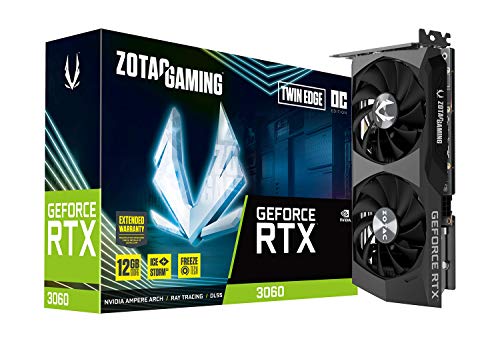
No. Mainstream parts work well. An AMD Ryzen 7 5800X is a fine CPU for Linux gaming; an NVIDIA RTX 3060 12GB works cleanly with the modern NVIDIA Linux driver. The driver story has improved most for NVIDIA users — installation through Ubuntu's, Fedora's, or Arch's packaging is now mostly a one-command process, and the kernel modules build automatically across kernel updates. AMD's open-source Mesa stack remains a strong choice for users who prefer it, and Intel Arc cards work increasingly well through Mesa's ANV driver.
Storage matters more on Linux than people realize because shader compilation caches and translation caches live on disk. A fast SSD like the Samsung 870 EVO SATA SSD keeps these caches snappy; a NVMe drive is even better. Older spinning disks make some Proton title launches feel slower than they actually need to be.
Distribution choice
In 2026, the distinction between distributions matters less than it used to. Ubuntu, Fedora, Arch, and the various gaming-focused derivatives all ship recent kernels, recent Mesa drivers, and recent Proton stacks. The Steam Deck's SteamOS is itself an Arch-based distribution and shares most of its Linux stack with desktop Arch. Differences come down to packaging policy and update cadence rather than fundamental capability.
The two practical considerations are kernel version (newer is generally better for gaming) and Wayland readiness. Most modern distributions default to Wayland on appropriate hardware, and the historical issues with Wayland gaming — VRR support, HDR, gamepad input — have been resolved or are landing in 2026.
Common pitfalls
- Assuming anti-cheat works. Check ProtonDB and the title's publisher statement before buying a multiplayer game on Linux. Some publishers actively block Linux clients.
- Running an old NVIDIA driver. The current Linux driver has resolved most of the historic issues. If you are on a 2022-era driver and seeing stutter, update.
- Stale shader cache. A title that stuttered on first launch may run smoothly after the shader cache fills. Do not judge performance from the first 10 minutes.
- Underspecifying disk space. Proton compatibility tools, DXVK shader caches, and bottled prefixes accumulate. Plan for 100+ GB beyond the game install size.
- Mixing X11 and Wayland sessions on a single account. Stick to one session type to avoid layered config quirks.
- Ignoring kernel version. Some titles' Proton compatibility improves significantly with kernel 6.6 or later. Older Ubuntu LTS releases on stale kernels miss those wins.
When NOT to switch to Linux for gaming
If your gaming library is dominated by titles with kernel-level anti-cheat (Vanguard-protected games, certain FPS multiplayer titles, some competitive shooters), Linux will frustrate you. If you depend on Adobe creative tools, certain professional engineering software, or Windows-only middleware, the dual-boot tax may erase the gain. If you simply like Windows and your hardware runs it well, there is no obligation to switch.
The case to switch is strongest if you play mostly singleplayer or Linux-friendly multiplayer titles, if you appreciate operating-system transparency, if you like running newer drivers and kernels than Windows ships, or if you already use Linux for development and want a unified daily environment.
DXVK and VKD3D-Proton in two paragraphs
DXVK is the open-source library that translates Direct3D 9, 10, and 11 calls to Vulkan. It is one of the two pillars that made Proton viable, and its maturity is the reason most older AAA titles run cleanly on Linux today. The translation overhead is small enough that DXVK sometimes outperforms Windows native D3D in specific titles, simply because Vulkan drivers can be more efficient than older D3D drivers on the same hardware.
VKD3D-Proton handles Direct3D 12 the same way. It is younger than DXVK, more frequently updated, and the place where most ongoing Proton performance improvements happen for modern titles. A few D3D12 features remain harder to translate cleanly (DirectStorage, certain ray-tracing extensions), and that is where the remaining performance gap on a handful of modern titles lives. The trend over 2024-2025-2026 has been steady closing of that gap.
SteamOS, Steam Deck, and what they prove
The Steam Deck has been the biggest single force in Linux gaming over the last five years. It put Proton in front of millions of users, made title compatibility a publisher concern (publishers care about Verified status), and validated investment in Proton, Mesa, and the Linux gaming stack. Many of the smoothness improvements desktop Linux users now enjoy were originally driven by Steam Deck UX requirements.
The desktop benefit of the Steam Deck is indirect but real: Valve's investment funds the work, and the work flows back into the open Linux gaming ecosystem.
Worked example: a 2026 Linux gaming setup
A representative 2026 setup: AMD Ryzen 7 5800X, NVIDIA RTX 3060 12GB, 32 GB DDR4-3600, Samsung 870 EVO SATA SSD as a Steam Library drive plus an NVMe boot drive, Fedora 42 with kernel 6.10 and the latest NVIDIA proprietary driver. Steam configured to enable Proton experimental for compatibility; ProtonDB reviewed for any new title before purchase.
Compatibility outcomes: nearly all owned singleplayer titles work flawlessly, multiplayer titles with publisher-supported anti-cheat (Counter-Strike 2, Dota 2, Apex Legends with allow-listing) work, two specific multiplayer titles with non-allow-listed anti-cheat do not run and are not played on this machine.
Performance outcomes: average framerates within 95-105% of the same titles on a Windows 11 dual-boot partition on the same hardware, with a couple of Vulkan-native titles running a few percent faster on Linux.
Bottom line
Linux gaming in 2026 is genuinely close to Windows on hardware and software fronts. The remaining gap is concentrated in anti-cheat compatibility, not in raw performance, and that gap is a publisher decision more than a Linux decision. For most singleplayer gamers and for many multiplayer ones, a build around an AMD Ryzen 7 5800X, an NVIDIA RTX 3060 12GB, and a Samsung 870 EVO SATA SSD on a current distribution will play the bulk of a Steam library at near-Windows performance with the added benefits of full system transparency, fast kernel updates, and a comfortable place to run development tools alongside games.
Citations and sources
- Phoronix — Linux hardware and gaming coverage
- ProtonDB — Proton title compatibility database
- The Linux Kernel Archives
This piece is editorial synthesis based on publicly available information. No independent first-party benchmarking is reported.