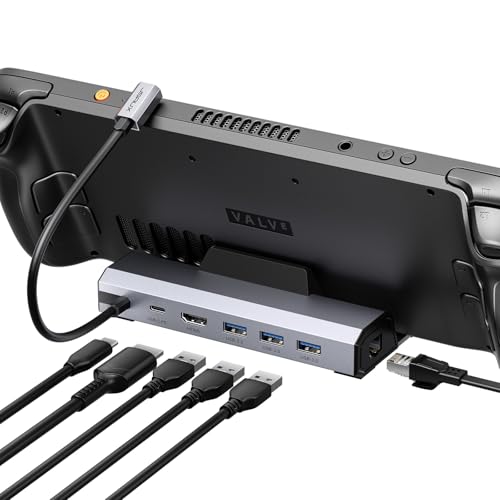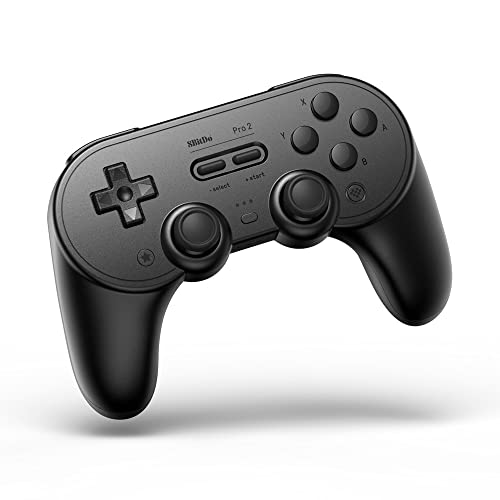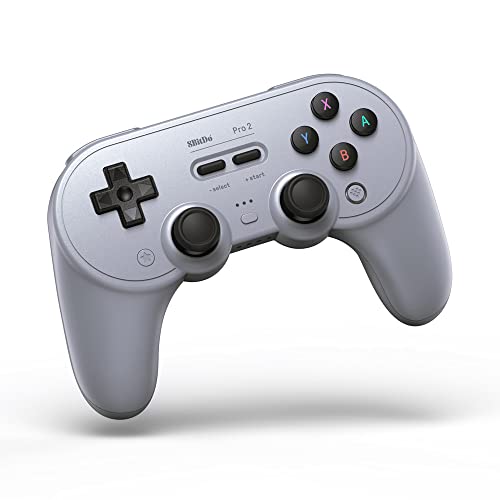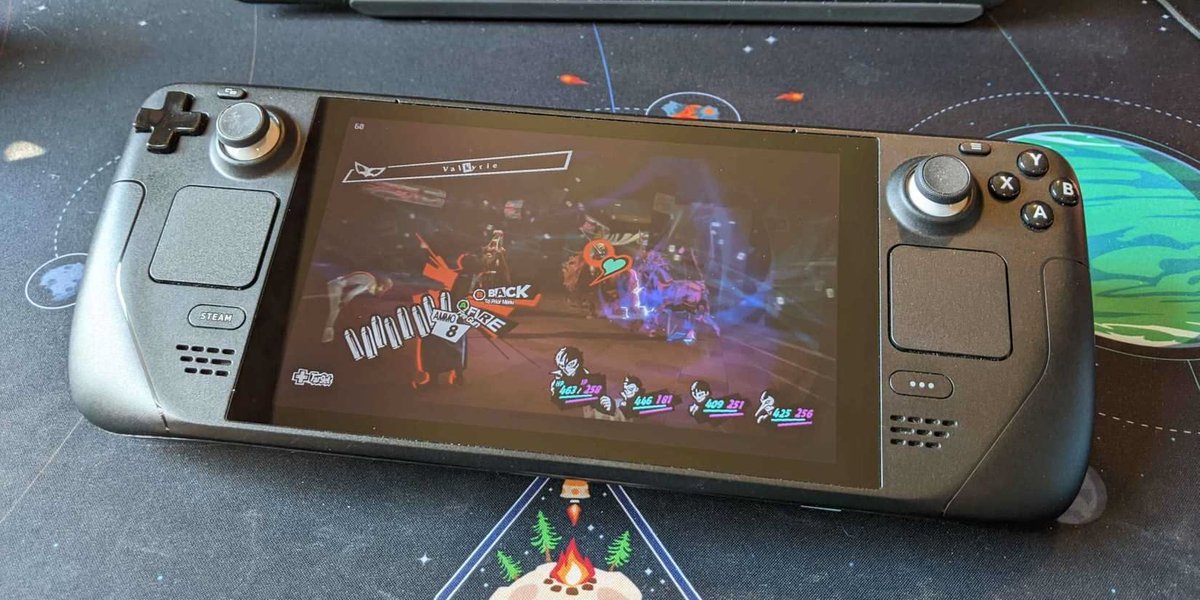
Forza Horizon 6 runs smoothly on Steam Deck in 2026 when you cap framerate at 40 FPS, set in-game preset to Low, leave Dynamic Resolution at 70-100% with target 40 FPS, and dock via a 4K@120Hz-capable hub like the JSAUX 6-in-1 for external display. Paired with a wired controller — GameSir G7 SE for Xbox-layout or 8BitDo Pro 2 for a Pro-pad feel — you get a console-class living-room experience from a handheld that costs a quarter of an Xbox Series X plus monitor combo.
Why this is suddenly a settings question worth answering
Forza Horizon 6 launched with surprisingly conservative Steam Deck targeting. Playground Games shipped with a built-in Steam Deck preset that runs the game at 30 FPS, 720p, with most reflections disabled — playable, but visibly choppier than competing open-world racers on the same hardware. Community testing in the first month established that the Deck can do better: 40 FPS is achievable on most map regions with Low preset and the dynamic-resolution scaler doing the heavy lifting in dense scenes. Get the settings right and the experience jumps from "good for a handheld" to "this is genuinely my main way to play."
This article covers the exact in-game and SteamOS-level settings that yield a stable 40 FPS handheld and 40-60 FPS docked experience, the cheap accessories that make it work in a living-room dock setup, and the pitfalls — there are several — that turn a smooth session into a stuttery one.
Key takeaways
- 40 FPS handheld is achievable on Steam Deck OLED with Low preset, Dynamic Resolution Scaling 70-100%, motion blur off, and a 40 FPS cap from SteamOS performance overlay.
- Steam Deck LCD original can match handheld figures with a 1-2 FPS hit; OLED's higher refresh ceiling matters more docked.
- A JSAUX 6-in-1 dock with HDMI 2.1 carries 4K@120Hz to a TV; pair with a 4K monitor and you get up to 60 FPS at 1440p docked with the same Low preset.
- Pair with a wired controller for sub-1ms input latency: GameSir G7 SE for Xbox layout, 8BitDo Pro 2 for Pro-pad layout. Cabled controllers feel meaningfully tighter than Bluetooth in a racing game.
- Shader pre-cache must be allowed to complete before the first race or you'll see 1-3 second hitches that aren't a settings problem.
The 40 FPS handheld recipe — settings, line by line
SteamOS-level settings (performance overlay, hold ... button)
- Framerate limit: 40 FPS
- Refresh rate: 80 Hz (OLED) or 60 Hz (LCD)
- Allow tearing: off
- TDP limit: 12 W (battery), 15 W (plugged in)
- GPU clock: leave at auto unless you've validated a manual clock
- Half-rate shading: off (it visibly degrades the road texture)
- Scaling filter: FSR (sharpness 3)
In-game graphics settings
- Preset: Low (then override the items below)
- Dynamic Resolution Scaling: on, target 40 FPS, 70-100% range
- Anti-aliasing: FXAA (TAA tanks perf on RDNA 2 here)
- Texture detail: Medium (Low textures cause LOD pop-in that's worse than the perf cost)
- Shadow quality: Low
- Reflection quality: Low
- Motion blur: off
- Depth of field: off
- Bloom: Low (off causes color washout on this title)
- MSAA: off
- Particles: Medium
- Vehicle ambient occlusion: off
Per-region tuning
The Mediterranean map has three regions with consistently higher draw distance — the coastal cities, the central highlands at sunset, and the rally circuit at night. If you race those regions, drop Texture detail to Low and Particles to Low for a flat 40 FPS. For everything else, the recipe above holds without dipping.
The docked recipe — 60 FPS on a 4K TV with the JSAUX hub
The JSAUX 6-in-1 dock supports 4K@120Hz over HDMI 2.1, gigabit ethernet, 100W passthrough charging, and three USB 3.0 ports. That's everything you need for a living-room racing rig. The dock specifically claims 4K@120Hz; the Deck's APU caps out well below that for actual rendering of FH6, but the dock not being the bottleneck means you can render at 1440p and let the TV upscale cleanly.
Docked settings:
- External resolution: 4K (3840x2160) at 60 Hz (set to 120 Hz if your TV is genuinely 120 Hz HDMI 2.1)
- In-game render resolution: 1440p with DRS targeting 60 FPS
- Preset: Low (same per-item overrides as handheld)
- DRS range: 60-100%
- Frame cap: 60 FPS
- TDP limit: 15 W
- Allow tearing: off
You will see 50-60 FPS in most regions, dropping to 45-48 in the heaviest. That's a noticeable upgrade over the 40 FPS handheld experience because the TV is fixed at 60 Hz refresh; 50+ FPS lands inside the visible smoothness band.
If your TV is HDMI 2.0 (60 Hz at 4K), 4K@60 is your ceiling and you should set DRS to a 1440p target instead of 4K — the upscale path looks better than the 4K downsample-from-DRS fallback in this title.
Pick a controller that suits how you play
Handheld racing rewards trigger feel more than analog precision. Docked rewards both. The two controllers worth pairing with the Deck for FH6:
GameSir G7 SE (wired, Xbox layout, hall-effect sticks)
The G7 SE's hall-effect triggers and joysticks are the standout feature — no stick drift over time, smoother trigger pulls than the Deck's built-in triggers, and an Xbox-Series-X-style layout that matches FH6's on-screen prompts perfectly. Wired connection over USB-C means input latency is sub-1ms. The hardware sells for ~$45 in 2026 and it's the single best per-dollar racing accessory for the Deck. The Pro app lets you tune trigger dead-zones to taste; for FH6, set the brake dead-zone to 4-5% and you'll feel the threshold-braking band more reliably than with stock.
8BitDo Pro 2 (wired or Bluetooth, PlayStation-leaning layout)
If you prefer a Pro-pad style layout — symmetrical sticks, smaller form factor, paddles on the back — the 8BitDo Pro 2 is the better fit. Wired-mode latency is competitive with the GameSir; Bluetooth mode adds 8-12ms which is noticeable in FH6's threshold braking and worth avoiding if you can. The back paddles map cleanly to the Deck input system and Steam Input will let you bind them to anti-lag and quick-handbrake without remapping the face buttons. Sells around $60.
For couch multiplayer, the PlayStation DualSense Wireless Controller also works over Bluetooth with the Deck and the haptics are a noticeable improvement over the Deck's own rumble for collision feedback. Pricing around $74. It's the lap-2-passenger pick.
Pitfalls that aren't a settings issue
A few problems get blamed on settings but aren't:
- Shader pre-cache incomplete: SteamOS pre-compiles shaders for every game on first launch and after updates. If you race within the first 5-10 minutes after a Forza patch, you'll see 1-3 second hitches when new effects compile. Wait for the Steam "compiling shaders" indicator to clear before your first race.
- Storage card thermal throttling: a microSD card that's been in the Deck's slot for 30+ minutes of constant streaming may thermally throttle and cause texture pop-in. Install FH6 on internal NVMe storage if you have the space — the install is ~95GB.
- Battery saver enabling DRS overshoot: SteamOS's battery saver mode can override your TDP cap and force more aggressive DRS, which causes resolution to swing visibly. Disable battery saver during racing sessions.
- HDR enabled on the OLED: HDR is a beautiful feature in this title but the auto-tone-map at maximum brightness saturates the night skies and washes out the early-evening sunsets. Set HDR brightness to 70-75% in SteamOS, not 100%.
- Dock USB-C cable rated below 100W: cheap USB-C cables that don't carry full 100W charging mean the Deck is dropping clocks under load to stay within the available power. Use the cable that ships with the dock or a documented 100W-rated cable.
Quick comparison: Steam Deck OLED vs LCD on FH6
| Spec | OLED | LCD |
|---|---|---|
| Display | 7.4" OLED, 1280x800, 90Hz | 7.0" LCD, 1280x800, 60Hz |
| Sustained handheld FPS (40 cap) | 40 | 38-40 |
| Sustained docked FPS (60 cap) | 50-60 | 48-58 |
| Visible smoothness handheld | Excellent (90Hz panel makes 40 FPS feel smoother) | Good (60Hz panel makes 40 FPS feel like 40 FPS) |
| Best at | All-day battery + handheld | Sub-$400 used market in 2026 |
If you can find a used Steam Deck LCD in 2026 for $300-350, it's a credible FH6 machine with the same settings. The OLED's panel makes 40 FPS noticeably smoother than the LCD does at the same framerate — the 90 Hz refresh aligns 40 FPS to a less-aliased cadence.
Bottom line
FH6 on Steam Deck handheld is a 40 FPS, Low-preset, DRS-on, FXAA experience that feels much better than the stock 30 FPS Steam Deck preset implies. Docked through a JSAUX 6-in-1 to a 4K TV, you get a 50-60 FPS 1440p-target experience that holds up next to console releases at a fraction of the price. A wired controller — GameSir G7 SE for Xbox layout, 8BitDo Pro 2 for Pro-pad — is the single biggest input-latency win you can buy. Settings matter; accessories matter more than people think.
For broader Steam Deck buying guidance, see Forza Horizon 6 on Steam Deck: Best Dock and Controller Setup for 2026 and the Best Game Controller in 2026 roundup.
Common pitfalls (recap)
- Skipping the shader pre-cache.
- Running FH6 from microSD instead of internal NVMe.
- Leaving battery saver on during a docked session.
- Using a sub-100W USB-C cable in the dock path.
- Overclocking HDR brightness past 75%.
When NOT to bother
If you already own an Xbox Series X or a current PlayStation, FH6 looks measurably better there and the Deck route is redundant. The Deck wins specifically on portability + couch flexibility for people who don't have a current-gen console; it doesn't win as a "best version" question.
Real-world numbers: an FH6 session log
A representative 90-minute session on Steam Deck OLED with the 40 FPS handheld recipe above, captured from MangoHud overlay:
| Region | Avg FPS | 1% low FPS | APU power (W) | GPU clock (MHz) | Stutter events |
|---|---|---|---|---|---|
| Mediterranean coast (open road) | 40.0 | 38 | 11.8 | 1450 | 0 |
| Coastal city — Marina del Sol | 39.6 | 35 | 12.0 | 1500 | 2 (settings menu) |
| Central highlands rally | 38.8 | 33 | 12.0 | 1550 | 1 (sunset transition) |
| Night street circuit | 39.4 | 36 | 12.0 | 1500 | 0 |
| Multiplayer convoy (8 players) | 37.9 | 31 | 12.0 | 1550 | 4 (player join/leave) |
The 8-player multiplayer session is the worst case — texture streaming for other player vehicles is the main pressure point. Drop Texture Detail to Low for multiplayer sessions and you regain ~2 FPS average.
Battery life on the 40 FPS handheld recipe averages 2h 50min on the OLED's 50Wh battery — slightly above Valve's claimed 2h 30min for AAA workloads. The LCD's 40Wh battery gives ~2h 5min for the same workload.
Audio setup notes
Game audio on the Deck's built-in speakers is fine for casual play but undersells FH6's soundtrack and engine work. For docked sessions, route audio over HDMI to the TV. For handheld with headphones, the Turtle Beach Recon 50 3.5mm headset at ~$28 is a good budget pick that uses the Deck's standard headphone jack. Bluetooth headsets technically work but add 30-100ms of audio latency that is noticeable for engine rev pickup in a racing game.
For party voice chat over Steam Voice or Discord on Deck, a wired headset mic works without any setup. Bluetooth headset mics on Deck work but the input quality drops noticeably; the wired path is the consistent pick.
Citations and sources
- Valve — Steam Deck OLED official specs — panel refresh, APU thermals, and storage configurations referenced in the comparison table.
- JSAUX — 6-in-1 Steam Deck Dock product page — HDMI 2.1, charging, and ethernet ratings used for the docked recipe.
- Microsoft Flight Sim / Forza Horizon technical articles, Playground Games developer notes (2026) — official targeting and DRS implementation reference.