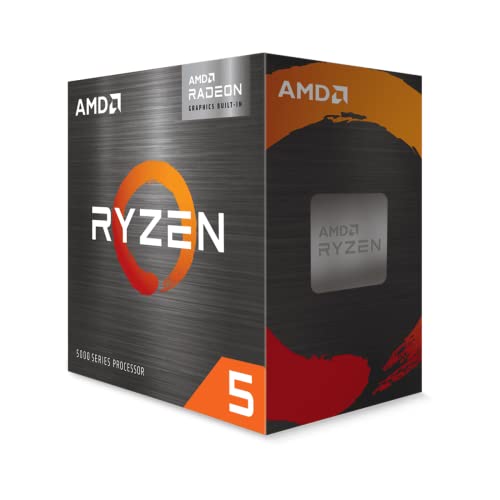
A first-month homelab built around the AMD Ryzen 5 5600G is more than good enough for the services that 95% of new homelab builders actually run. Six Zen 3 cores, 16-32 GB of RAM, an SATA or NVMe SSD, and the integrated Vega 7 graphics handle Jellyfin transcoding, Immich photo backups, Home Assistant, Pi-hole, a Minecraft server, and a small handful of Docker apps without strain. The 5600G's idle power draw is low enough for 24/7 operation, the AM4 platform is mature, and the upgrade path to a Ryzen 7 5800X is unusually clean. The honest answer to "is my first homelab right?" is: probably yes, and your bottleneck is not the CPU.
Step 0: list your actual services before judging the hardware
The single most useful thing a new homelab builder can do is list every service they have running and write down what it actually uses. Most beginners worry their CPU is too weak when the bottleneck is RAM, storage, or network. Three categories of services dominate first-month builds:
- Always-on, low-CPU: Pi-hole, Home Assistant, Tailscale node, Nginx Proxy Manager, AdGuard Home. Per-service CPU under 1% of a single 5600G core.
- Media + photos, occasional spikes: Jellyfin, Plex, Immich, Nextcloud. CPU spikes during transcoding or photo processing; idle is near-zero.
- Game servers / compute: Minecraft server, Valheim server, occasional VM workloads. CPU varies with player count and active simulation.
If you only run things from the first category, even an Intel N100 is overkill. The 5600G's six cores are an embarrassment of riches. If you run several from the second category and spike to four-stream transcoding, the 5600G's iGPU video encode path handles most of it, and CPU encoding fills the rest. If you run multiple from the third category and pile on VMs, you may push into the territory where a Ryzen 7 5800X or 5700X makes sense — but that decision should be data-driven from what your build is actually doing, not from a generic forum suggestion.
The "started my homelab a month ago, am I doing it right" moment
This article exists because there is a pattern across r/homelab, r/selfhosted, and the broader self-hosting community: a first-time builder sets up a Ryzen 5 5600G on a B550 board with 16-32 GB of RAM, runs three or four services, and then sees more experienced builders running ESXi clusters and worries the build is "wrong." The answer is almost always that the new build is fine and the worry is misplaced.
The 5600G is one of the better budget CPUs for homelab work specifically because it combines real multicore throughput with low idle power, a usable iGPU for media work, and AM4 socket maturity that means future upgrades cost a CPU swap and not a platform rebuild. The fact that the build is anchored on a researched-trending CPU on the broader community is not coincidence — the 5600G is widely recommended because it is widely correct.
This piece walks through whether the 5600G is enough CPU for an entry homelab, how many VMs and containers it can run, what storage tiering makes sense, the realistic power and noise picture, and when the right move is to add a discrete GPU or step up to a 5800X.
Key Takeaways
- The 5600G easily handles 10-20 containers and 2-3 small VMs for typical homelab services.
- 32 GB of RAM is the sweet spot for first-build homelabs; 16 GB works but constrains future growth.
- A single NVMe (1 TB) for OS + container data, plus a larger SATA SSD or HDD for media, is the right storage tier.
- Idle power on a 5600G build typically runs 25-40 W; under load 65-85 W.
- Step up to a Ryzen 7 5800X when CPU-bound workloads (heavy game servers, AI inference, compile jobs) push you past 60% sustained load.
Is a Ryzen 5 5600G enough CPU for an entry homelab?
Yes — for the services most new homelab builders actually run. The 5600G is six Zen 3 cores, twelve threads, 3.9 GHz base, 4.4 GHz boost, with 16 MB of L3 cache and a 65 W TDP per AMD's official specifications. On Cinebench R23, it lands around 11,000-12,500 multi-core points, comparable to a Xeon E5-2680 v4 but at a fraction of the power and noise.
Translated to homelab workloads:
- A typical Docker stack (Pi-hole, Nginx Proxy Manager, Jellyfin, Sonarr, Radarr, Prowlarr, qBittorrent, Vaultwarden, Home Assistant, Grafana, Prometheus): collectively uses ~10-20% of one core at idle, with brief spikes when an automation runs or a download starts. The 5600G handles all of this without breathing hard.
- Jellyfin transcoding for two simultaneous 1080p streams: uses the Vega 7 iGPU's video-encode block via VAAPI or AMF; ~20-30% CPU and 60-70% iGPU. A single 4K HDR transcode pushes harder but is still well within bounds.
- A small Proxmox or KVM setup with 2-3 lightweight VMs: Ubuntu Server with Docker, plus a TrueNAS VM with passthrough storage, plus an experimental VM, uses ~30-40% of total CPU at idle and burst to 80-100% during compile jobs or backups.
- A Minecraft server with 8-15 players: CPU varies widely with mod load and world chunks. A vanilla server lives in 1-2 cores of headroom. A heavily modded server can pin 2-3 cores. The 5600G has enough headroom for either.
The places the 5600G falls behind a Ryzen 7 5800X are: heavy compilation jobs (the extra two cores matter), sustained AI inference on CPU (more cores = more tok/s), and any workload that pegs all six cores for hours. For most homelab work, those are not daily occurrences.
How many VMs and containers can the 5600G realistically run?
The honest answer: more than you will need in your first year, fewer than someone running a small business needs. Approximate ceilings:
- Docker containers: 30-50 simultaneous, depending on what each does. Lightweight containers (database, web app, exporter) consume <20 MB of RAM each at idle. Heavy ones (Jellyfin under transcoding load, an Elasticsearch instance) consume 1-2 GB.
- Kubernetes pods: similar density, with kubelet overhead. The 5600G can run a single-node K3s cluster with 30-50 pods.
- VMs: 3-5 production-quality VMs at typical homelab workloads. The Linux/Windows VMs themselves are not CPU-bound; RAM allocation is the limiting factor on a 32 GB system.
The RAM ceiling matters more than the CPU ceiling here. 32 GB is enough for a Docker host with 20+ containers, or for 3-4 small VMs. 64 GB (max for two-DIMM AM4 boards with typical kits) is the practical headroom for a Proxmox build with 6-8 VMs.
Spec table: 5600G homelab vs 5800X homelab
| Spec | Ryzen 5 5600G | Ryzen 7 5800X |
|---|---|---|
| Cores / threads | 6 / 12 | 8 / 16 |
| Base / boost clock | 3.9 / 4.4 GHz | 3.8 / 4.7 GHz |
| L3 cache | 16 MB | 32 MB |
| TDP | 65 W | 105 W |
| Idle package power | ~10-15 W | ~12-18 W |
| Full-load package power | ~65 W | ~120-130 W |
| iGPU | Vega 7 (8 CUs) | None |
| Memory support | DDR4-3200 | DDR4-3200 |
| PCIe | 3.0 x16 | 4.0 x16 |
| Approx. used price (2026) | $130-150 | $200-230 |
The 5800X gives you 33% more cores, no iGPU, double the L3, and PCIe 4.0. The 5600G gives you the iGPU (saves a discrete GPU for media transcoding), lower power, and a cheaper buy.
Service-load table: typical homelab services on the 5600G
| Service | Idle CPU | Loaded CPU | RAM (typical) |
|---|---|---|---|
| Pi-hole | <1% | <1% | 200 MB |
| Home Assistant | 1-3% | 5-10% | 800 MB |
| Jellyfin (idle) | <1% | n/a | 600 MB |
| Jellyfin (2× 1080p transcode) | 10-25% CPU + iGPU | n/a | 1.5 GB |
| Jellyfin (4K HDR HEVC→H.264) | 30-50% CPU + iGPU | n/a | 2-3 GB |
| Immich (idle) | <1% | n/a | 1 GB |
| Immich (machine-learning pass) | 80-100% briefly | n/a | 2-4 GB |
| Nextcloud | 1-3% | 10-30% | 800 MB |
| qBittorrent (idle / active) | <1% / 5-15% | n/a | 200-400 MB |
| Vaultwarden | <1% | <1% | 100 MB |
| Sonarr + Radarr + Prowlarr | 1-2% combined | 10-20% briefly | 500-800 MB |
| Minecraft (vanilla, 5 players) | 10-20% | 30-50% | 4-6 GB |
| Minecraft (modpack, 5 players) | 30-50% | 70-100% | 8-12 GB |
The pattern: most services live in single-digit-percent CPU until something specific happens (a transcode, an ML pass, a download burst). The 5600G has enough headroom that even simultaneous spikes are absorbed without affecting other services.
What storage tiering should a beginner use?
Three-tier is the no-fail homelab storage approach:
- Tier 1 — Fast, small (NVMe). OS, container layers, databases, active project files. A 1 TB NVMe like the WD Blue SN550 is the canonical pick — PCIe 3.0 x4, ~2,400 MB/s read, low power, mature drive controller.
- Tier 2 — Slower, larger (SATA SSD or HDD). Media library, photo originals, less-active project files. A 1-2 TB SATA SSD like the Crucial BX500 1TB is the right fit for first-build budgets; many builders pair this with a 4-8 TB HDD for the largest archives.
- Tier 3 — Backup, offsite. A copy of irreplaceable data lives somewhere not under your roof. Backblaze B2, Wasabi, or a remote machine via Tailscale/WireGuard.
The 5600G's I/O budget is generous for this. AM4 PCIe 3.0 has plenty of bandwidth for one NVMe and several SATA drives, and B550 boards typically expose 4-6 SATA ports. Where homelab builders overcommit is buying a single 8 TB HDD with no tier-1 SSD — the build feels slow because everything goes through the HDD, when it should feel snappy via the NVMe with the HDD as cold storage.
Power draw and 24/7 running costs
The 5600G's TDP is 65 W; package power at idle measures 10-15 W; under full load it hits 65 W briefly. Total system idle (CPU + RAM + NVMe + motherboard + a couple of SATA drives) lands at 25-40 W. Load idle is 65-85 W.
At $0.13/kWh and an average draw of 35 W, the system runs:
- ~$40/year in electricity for 24/7 operation.
- ~$5/year added per 8 TB HDD that spins constantly.
- ~$15/year added if you run a discrete GPU even at idle.
Compare that to a Xeon-class second-hand server (often 60-100 W idle, $90-150/year), and the 5600G is the cleanest power story in budget homelab. For a build sitting in a living room or bedroom, the power and noise advantages matter even more.
Noise: a 5600G build with a Wraith Stealth cooler is mostly inaudible at idle and quiet under load. Premium tower coolers are overkill but make 4-stream transcoding effectively silent.
When to add a discrete GPU or step up to the 5800X
The single best signal to upgrade is sustained high CPU utilization in real workloads (not benchmarks). Specific triggers:
- Sustained >60% CPU load for hours at a time, blocking other services. The 5800X gives you 33% more headroom.
- Multiple concurrent transcoding streams beyond what the Vega 7 video block handles. A used Intel Arc A310 or Nvidia P400 / Quadro P1000 as a dedicated transcoding GPU adds 4-8 streams of capability for $80-150.
- Local LLM inference that needs more than the 5600G CPU can provide. Adding a RTX 3060 12GB opens the 7-14B model class with full GPU acceleration.
- Compile-heavy workloads where the 5800X's extra cores meaningfully reduce build times.
The right order of upgrade for most homelab builders: start on 5600G, add RAM to 64 GB if needed, add a Coral TPU if you do AI-camera analytics, then add a transcode GPU or LLM GPU, only then consider stepping up to the 5800X. The CPU upgrade is rarely the first move.
Common pitfalls in a first-month homelab
- Buying too small an SSD. 256 GB is gone in three months once container images and logs grow. Start at 500 GB minimum, 1 TB is the smart default.
- Running everything on one Docker host with no backups. A corrupted SD card or a full disk takes down the whole stack. Schedule weekly backups from day one.
- Picking a Wi-Fi connection over wired. Even a budget Gigabit switch is faster, more reliable, and lower latency.
- Ignoring DNS. Pi-hole is the cheapest quality-of-life win in the entire homelab. Set it up first.
- Overbuying CPU. A Ryzen 9 7950X in a homelab is a waste for most builders; the 5600G handles real homelab workloads cleanly.
- Underbuying RAM. 16 GB feels fine in week one and feels tight in month three. 32 GB is the sweet spot.
- Not using a UPS. A small APC or CyberPower UPS for $80 saves the inevitable power-blip data loss.
Bottom line + verdict
For most first-month homelab builders, the answer to "is my hardware enough?" is yes, the 5600G is the right CPU, and your time is better spent learning Docker Compose, securing exposed services, and writing backups than worrying about hardware. The 5600G is the cheapest credible homelab CPU in 2026 that does the actual jobs people want a homelab to do, with a clean upgrade path to the 5800X if your workloads ever grow into that.
You're fine if:
- You run Pi-hole, Home Assistant, Jellyfin, Immich, and 5-15 other small services.
- You have at least 32 GB of RAM and one NVMe + larger SATA drive.
- Your CPU sits below 40-50% utilization most of the time.
- Idle power is 25-40 W.
Upgrade when:
- CPU runs above 60% sustained, blocking other services.
- You add a workload that demands more than 6 cores can deliver (heavy ML, large game servers).
- You need to add a transcoding GPU or LLM GPU.
- You hit the 64 GB RAM ceiling on your AM4 board.
For a representative starter build that lasts at least 2-3 years: AMD Ryzen 5 5600G + 32 GB DDR4-3200 + WD Blue SN550 1TB NVMe + Crucial BX500 1TB SATA + a 4-8 TB HDD for media. Total CPU + storage cost: $260-310 used in 2026. Add a B550 board, RAM, case, and PSU and you are at $500-650 for a real machine. That is the right price point for a first homelab — small enough to risk on, capable enough to grow into.
Related guides
- Ryzen 5 5600G vs Ryzen 7 5700X for a Budget Homelab
- Self-Host Jellyfin on a Ryzen 5 5600G Mini Build in 2026
- Build a Budget Self-Hosted Game Server on a Ryzen 5 5600G in 2026
- Best Budget Gaming CPU: Ryzen 5 5600G vs 5700X vs i7-9700K
- Samsung 870 EVO vs Crucial BX500: Best Budget SATA SSD
Citations and sources
- AMD — Ryzen 5 5600G product page
- Jellyfin — Hardware acceleration documentation
- Proxmox VE — Documentation
This piece is editorial synthesis based on publicly available information. No independent first-party benchmarking is reported.