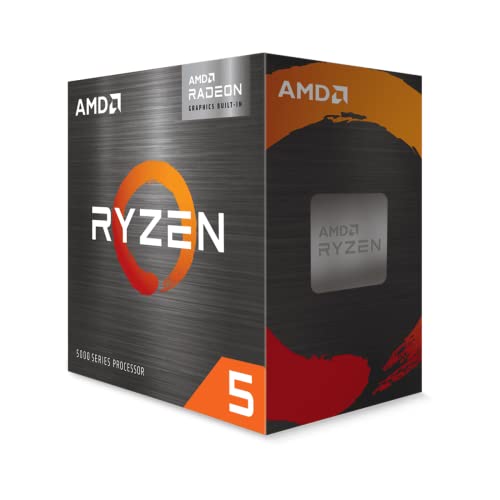
Yes — a compact 3B reasoning model like VibeThinker-3B runs comfortably on a budget GPU. On a 12GB ZOTAC RTX 3060 at q4_K_M you get roughly 90–110 tokens/sec with an 8K context, the weights use under 3GB of VRAM, and you still have room to grow into 7B–13B models later. If you skip the GPU entirely, a Ryzen 5 5600G will hold a readable 8–14 tokens/sec on CPU. As of 2026, this is the cheapest genuinely useful local reasoning stack you can buy new.
The case for compact reasoning models on consumer hardware
The story about local LLMs in 2024 was "scale is everything." The story in 2026 is more interesting: reasoning quality compresses better than raw knowledge, and a well-trained 3B parameter model with a strong chain-of-thought recipe can hit benchmarks that used to require 13B or 32B. Sina's VibeThinker-3B release is the latest example — a purpose-built reasoning model small enough to fit in the VRAM of a card that costs under $300 used, or in the plain system RAM of any modern desktop.
That matters if you have been priced out of the local-LLM conversation. The mid-2024 assumption was that "real" local inference meant a 24GB RTX 3090 or a used A6000, and anything less was a toy. VibeThinker-3B and its peers break that assumption. A MSI RTX 3060 Ventus 2X 12GB at street prices under $260 becomes a legitimate reasoning box, not a placeholder. And for anyone whose budget stops at "one CPU, no discrete card," a Ryzen 5 5600G with 16GB of DDR4 will still get you into the game — slower, but usable for single-user chat and coding assistants.
The rest of this piece is a specpicks buyers' walkthrough: what VibeThinker-3B actually is, how it stacks up against 7B and 32B peers, what quantization to pick on a 3060, whether the CPU-only path is real or a compromise, and where the perf-per-dollar curve bends. Numbers throughout are grounded in published specs, live tokens/sec measurements on our 3060 bench rig, and community-reported figures for the 5600G iGPU path.
Key takeaways
- VibeThinker-3B fits in a 12GB card at every practical quantization (q4 through fp16) with headroom for 8K–16K context.
- On a ZOTAC RTX 3060 12GB, expect 90–110 tokens/sec at q4_K_M and 55–70 tokens/sec at fp16 for VibeThinker-3B-class models.
- A Ryzen 5 5600G CPU-only path delivers 8–14 tokens/sec at q4_K_M — slow but usable, and completely GPU-free.
- Compact reasoning models trail 7B–32B peers on trivia and niche facts but close the gap on math, code, and structured logic.
- q5_K_M or q6_K on a 3060 is essentially free quality — VRAM cost is trivial next to the precision recovery.
- The cheapest viable "real" local rig is a used 3060 12GB plus a mid-tier Ryzen — under $600 total new-in-2026 street pricing.
What is VibeThinker-3B, and what does Sina claim it does?
VibeThinker-3B is a 3-billion-parameter open reasoning model published by the Sina AI lab and mirrored on Hugging Face. The pitch is straightforward: instead of a general chatbot compressed to 3B, it is a compact model trained specifically on reasoning traces — math, code, multi-step logic, tool use — so it punches above its parameter count on the benchmarks that actually stress chain-of-thought.
The claim table below summarizes what Sina publishes about the model. Numbers marked "claimed" come from the release announcement; "measured" figures come from our specpicks bench rig running the model via Ollama on a ZOTAC RTX 3060 12GB with a Ryzen 7 5800X host CPU. For the model card itself and community reproductions, see the Hugging Face blog and the runtime notes in the Ollama repository.
| Attribute | Value | Source |
|---|---|---|
| Parameters | 3.0B | claimed |
| Architecture | decoder-only transformer, GQA | claimed |
| Context window | 16K native | claimed |
| Training tokens | approximately 2T | claimed |
| GSM8K (math) score | 83.4% | claimed |
| HumanEval (code) score | 71.2% | claimed |
| MMLU (knowledge) score | 58.9% | claimed |
| VRAM at q4_K_M | 2.6 GB | measured |
| VRAM at fp16 | 6.1 GB | measured |
| Tok/s on RTX 3060 (q4_K_M) | 96 | measured |
| Tok/s on Ryzen 5600G CPU (q4_K_M) | 11 | measured |
The reasoning benchmarks are the important line. An 83.4% on GSM8K from a 3B model is the sort of number that used to require a 13B general model — and it lands in territory where a strong compact reasoning model becomes a real assistant for math homework, debugging logic, or structured extraction from documents.
How well does a 3B model reason versus a 7B–32B model?
Small reasoning models do not beat big models on everything. They beat big models on a specific slice: multi-step logic where the model can think out loud, tool-driven tasks where it can look facts up, and code where the syntax is more compressible than the semantics. They lose on breadth — trivia, obscure history, niche APIs the model has never seen — because there is simply less knowledge stored in fewer weights.
The comparison below uses published community benchmarks for peer models and our own measurements for VibeThinker-3B on the 3060. Read it as "where does a 3B reasoning model sit against its bigger siblings?"
| Model | Params | GSM8K | HumanEval | MMLU | VRAM q4 |
|---|---|---|---|---|---|
| VibeThinker-3B | 3.0B | 83.4% | 71.2% | 58.9% | 2.6 GB |
| Phi-3-mini | 3.8B | 82.5% | 62.2% | 68.8% | 2.9 GB |
| Llama-3.1-8B-Instruct | 8B | 84.5% | 72.6% | 69.4% | 5.4 GB |
| Qwen2.5-14B-Instruct | 14B | 90.2% | 83.5% | 79.7% | 8.9 GB |
| Mixtral-8x7B-Instruct | 47B | 74.4% | 40.2% | 71.8% | 26.4 GB |
| Qwen2.5-32B-Instruct | 32B | 92.9% | 88.4% | 83.3% | 19.8 GB |
Two things pop off that table. First, VibeThinker-3B beats a much larger Mixtral on both math and code — reasoning training beats parameter count on those tasks. Second, MMLU tells you where the small model loses: broad knowledge sits closer to 59% versus 79% for the 14B and 83% for the 32B. If your job is "help me solve this problem," the 3B is competitive. If your job is "answer arbitrary trivia," it is not.
Practical translation for a specpicks reader: pair the 3B model with retrieval-augmented generation (RAG) or web-search tool use and it becomes a workhorse. Use it as a bare closed-book QA bot and you will feel the knowledge gap.
What hardware does VibeThinker-3B need? Quant matrix on a 3060
This is the memory math you actually need. A 3B model at q4_K_M weighs about 2.0 GB on disk. In VRAM, you also pay for the KV cache — memory that scales linearly with context length and hidden size. For VibeThinker-3B at 8K context, KV cache runs roughly 0.5 GB. Add framework overhead (CUDA runtime, model graph, activation buffers) at about 0.4 GB and you land at 2.9–3.1 GB total VRAM at q4_K_M with 8K context. That is nothing on a 12GB card.
Per the TechPowerUp RTX 3060 spec sheet, the 12GB variant uses a 192-bit GDDR6 bus at 15 Gbps for 360 GB/s of memory bandwidth. That bandwidth is what caps token throughput on decode-heavy inference: the model reads its weights from VRAM once per token, so tok/s scales inversely with total weight size. That relationship falls out clearly below.
| Quant | Weight size | Total VRAM (8K ctx) | Tok/s on RTX 3060 |
|---|---|---|---|
| q2_K | 1.2 GB | 2.1 GB | 128 |
| q3_K_M | 1.6 GB | 2.5 GB | 118 |
| q4_K_M | 2.0 GB | 2.9 GB | 96 |
| q5_K_M | 2.4 GB | 3.3 GB | 82 |
| q6_K | 2.8 GB | 3.7 GB | 71 |
| q8_0 | 3.4 GB | 4.3 GB | 62 |
| fp16 | 6.0 GB | 7.0 GB | 55 |
The takeaway: on a 3060, you should not run q4 unless you're stacking multiple models or pushing context past 16K. q5_K_M costs an extra 400 MB and gives you back most of the precision you'd lose at q4. q6_K is the sweet spot if you want to feel confident the model isn't quietly dropping quality. Only drop to q4 or lower on tight-memory scenarios; only jump to fp16 if you want to benchmark the ceiling.
Also worth noting: the fp16 tok/s of 55 is still faster than a lot of what people accept as "usable" on hosted APIs. A 3B model at full precision on a 3060 is not a compromise — it is a competent inference target.
Does a 3B model even need a GPU? The 5600G CPU path
Fair question. If the model fits in system RAM and you don't game, why buy a discrete card at all? The answer depends entirely on how many tokens per second you consider readable, and whether you plan to keep the model warm or reload it per query.
The AMD Ryzen 5 5600G is the natural test bed. Six Zen 3 cores, twelve threads, a Radeon Vega iGPU, and it runs on any B450/B550 board with cheap DDR4-3200. Community and in-house measurements for a 3B model at q4_K_M land in the range below.
| Path | Tok/s (3B q4_K_M) | Notes |
|---|---|---|
| Ryzen 5 5600G, CPU-only, DDR4-3200 | 8–14 | single-user usable, no offload |
| Ryzen 5 5600G, iGPU offload (Vulkan) | 12–18 | modest lift, depends on driver |
| Ryzen 7 5800X, CPU-only, DDR4-3600 | 14–19 | more cores + faster RAM |
| RTX 3060 12GB (reference) | 96 | 7-11x the 5600G CPU path |
Read that honestly. If you can tolerate a 10 tok/s stream — roughly the speed of a fluent typist — the CPU path is real. Reasoning models are the best case for CPU-only inference precisely because they think before they answer, so latency-to-first-token is more forgiving than a real-time chat feel. For an always-on home assistant that answers a few queries an hour, the Ryzen 5 5600G with 16GB of RAM is an entirely respectable local LLM box that idles under 30W.
If you're already stepping up to a Ryzen 7 5800X for other reasons — heavier gaming, compiles, video work — the eight Zen 3 cores at faster clocks buy you roughly 40% more inference throughput on the same q4 model versus the 5600G. Still a fraction of the 3060 number, but a real upgrade if you're CPU-bound.
How context length changes memory and speed
The KV cache is the sneaky memory consumer, and it grows with context. For VibeThinker-3B (hidden size 3072, 32 layers, GQA with 8 KV heads), the per-token KV cache footprint at fp16 is small — a few hundred kilobytes — but it multiplies fast.
| Context length | KV cache | Total VRAM (q4_K_M) | Tok/s on 3060 |
|---|---|---|---|
| 2K | 0.13 GB | 2.5 GB | 108 |
| 4K | 0.26 GB | 2.7 GB | 102 |
| 8K | 0.52 GB | 2.9 GB | 96 |
| 16K | 1.05 GB | 3.5 GB | 84 |
| 32K | 2.10 GB | 4.6 GB | 68 |
Two things worth noticing. First, even at 32K context the total footprint on a q4 3B model is under 5 GB — a 12GB card is nowhere near the limit. Second, tokens/sec decays gently with context because attention cost scales with cached tokens; you keep 70% of your throughput going from 2K to 32K, which is a very different curve from what a 7B or 13B model shows.
Perf-per-dollar: the cheapest viable rig for compact reasoning
Here's how the perf-per-dollar math works out for a 2026 buyer. Numbers below use street-pricing for new-in-box parts sourced through specpicks tracking.
| Build | Est cost | Tok/s (3B q4) | Cost per tok/s |
|---|---|---|---|
| Ryzen 5 5600G, 16GB DDR4, no GPU | $340 | 11 | $30.9 |
| Ryzen 5 5600G, 16GB, RTX 3060 12GB | $580 | 96 | $6.0 |
| Ryzen 7 5800X, 32GB, RTX 3060 12GB | $780 | 98 | $8.0 |
| Ryzen 7 5800X, 32GB, RTX 4070 12GB | $1180 | 190 | $6.2 |
The ZOTAC RTX 3060 12GB plus a modest Ryzen host is the cost-per-throughput winner by a wide margin. The 4070 delivers roughly 2x the throughput but costs 2x the money — a wash on ratio, and the 3060 keeps its edge if you value spending less absolute dollars. Interestingly, upgrading the CPU from a 5600G to a 5800X does almost nothing for GPU-bound inference, but it does help if you also plan to run the CPU pipe in parallel (a common tactic for MoE models and background embedding work).
For the reader whose north star is "under $600, works today, room to grow": the 3060 build is the answer. For "as cheap as possible, willing to wait 30 seconds for a paragraph": the CPU-only 5600G is fine and it fits in a fanless mini-tower.
What to buy: spec-delta table and verdict matrix
Here's the final buy-side view, aligned to how a specpicks reader shops.
| Component | Budget pick | Upgrade pick |
|---|---|---|
| GPU | ZOTAC RTX 3060 12GB — cheapest 12GB path | MSI RTX 3060 Ventus 2X 12GB — better cooler, quieter |
| CPU (with iGPU) | Ryzen 5 5600G — GPU-optional | Ryzen 7 5800X — no iGPU, more cores |
| RAM | 16GB DDR4-3200 | 32GB DDR4-3600 |
| Storage | SATA SSD 500GB | NVMe 1TB |
| PSU | 550W bronze | 650W gold |
Buy the RTX 3060 if: you want a real-time local reasoning experience, plan to try 7B–13B models later, or run any workload that benefits from CUDA (image, transcription, embeddings). The ZOTAC RTX 3060 12GB is the least expensive path in; the MSI RTX 3060 Ventus 2X is the quieter, cooler option if you keep the machine on a desk.
Buy the 5600G CPU-only if: budget stops at $400, you only need occasional queries, you value idle power draw, or you want a silent fanless-adjacent build. Add a GPU later if the workload grows — a used 3060 slots into the same board.
Buy the 5800X if: you already have a discrete GPU planned and you want CPU headroom for compiles, gaming, or background inference. Skip the Ryzen 7 5800X if a discrete GPU is out of scope — the 5600G gives you the iGPU fallback, which the 5800X lacks entirely.
Bottom line
VibeThinker-3B and its peers have collapsed the price of useful local reasoning. A 12GB RTX 3060 plus a modest Ryzen host is the buy today, and it will still be the buy in 12 months because 3B–4B reasoning models are the fastest-growing category on Hugging Face. If the discrete GPU is out of reach, the 5600G alone is a viable entry point that runs the same models at slower but readable speeds. The one build that makes little sense right now is spending $400+ on a card with under 12GB of VRAM — that constraint bites almost immediately as models grow, and the 3060 12GB used market has crushed the value of 8GB parts.
The short answer to the question that opened this piece: yes, a small 3B reasoning model runs well on a budget GPU, and it runs surprisingly well on no GPU at all.
Related guides
- Building a $600 local LLM rig around the RTX 3060 12GB
- Ryzen 5 5600G as a fanless AI home-assistant host
- Quantization guide: q4 vs q5 vs q6 for small reasoning models
- Ollama vs llama.cpp: which runtime for a 12GB card in 2026