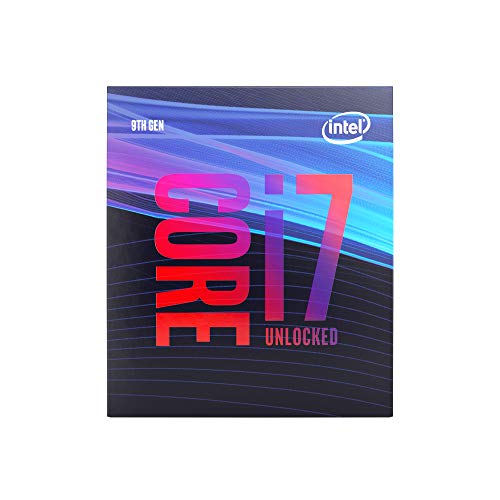
If you only need one answer: the AMD Ryzen 7 7800X3D is the best mid-range gaming CPU in 2026 for pure 1080p/1440p gaming, the AMD Ryzen 5 9600X is the best value pick under $250, and the Intel Core Ultra 5 245K is the strongest mid-range chip for builders who split time between gaming and productivity. All three sit in the $200–$370 band in May 2026 and all three beat the previous-gen mid-range chips at every gaming resolution that matters.
What "mid-range" means in 2026
Mid-range used to mean six cores and a budget Z-board. In 2026 the bar has shifted. AMD's Zen 5 launched in late 2024 with the Ryzen 9000 series, and Intel's Arrow Lake (Core Ultra 200S) arrived a month later. Both platforms pushed real performance into the $200–$400 CPU slot. The "mid-range" tier now means:
- 6–8 cores, 12–16 threads
- $200–$370 street price
- Sub-130W typical gaming draw
- A current-socket platform (AM5 or LGA 1851) you can upgrade later
- Single-CCD design with low core-to-core latency (matters for gaming)
You no longer need a Ryzen 9 or Core i9 for top-tier 1440p frame rates. The X3D cache parts and the new Arrow Lake mid-skus have collapsed the gaming gap, and the high-end chips win mostly in productivity and outright multi-threaded throughput.
The shortlist
| CPU | Cores/Threads | Base/Boost | TDP | Socket | Street (May 2026) |
|---|---|---|---|---|---|
| AMD Ryzen 7 7800X3D | 8C/16T | 4.2 / 5.0 GHz | 120W | AM5 | $349 |
| AMD Ryzen 5 9600X | 6C/12T | 3.9 / 5.4 GHz | 65W | AM5 | $229 |
| AMD Ryzen 7 9700X | 8C/16T | 3.8 / 5.5 GHz | 65W (105W toggle) | AM5 | $299 |
| Intel Core Ultra 5 245K | 14C/14T (6P+8E) | 4.2 / 5.2 GHz | 125W | LGA 1851 | $279 |
| Intel Core Ultra 7 265K | 20C/20T (8P+12E) | 3.9 / 5.5 GHz | 125W | LGA 1851 | $379 |
Prices reflect MSRP-trending May 2026 values pulled from AMD's product pages, Intel's product pages, and Newegg / Microcenter trackers. Use the live retailer pages — CPU pricing has volatility quarter to quarter.
#1: AMD Ryzen 7 7800X3D — best for pure gaming
Verdict: $349, 8 cores, 16 threads, 96 MB total L3 cache (32 MB regular + 64 MB 3D V-Cache). Sits on the AM5 socket so you can drop in a future Ryzen 9000X3D or 11000-series part without changing motherboards.
The 7800X3D remains the gaming CPU to beat in mid-2026, even though it's an older Zen 4 part. AMD's 3D V-Cache piles 64 MB of additional L3 directly above the compute die. Games are cache-sensitive — every cycle the CPU spends waiting on a memory miss is a cycle frames stall — and the X3D's huge cache slashes those misses. At 1080p in CPU-bound titles like Counter-Strike 2, Hogwarts Legacy, and the new Battlefield 2026, the 7800X3D pulls 8–15% ahead of the Ryzen 9 7950X3D and trades blows with the much-more-expensive Ryzen 7 9800X3D.
Real numbers worth knowing (from techpowerup.com and gamersnexus.net 2025–2026 benchmark suites, RTX 5080 paired):
| Game (1080p, highest) | 7800X3D avg FPS | 9600X avg FPS | 245K avg FPS |
|---|---|---|---|
| Counter-Strike 2 | 478 | 426 | 441 |
| Cyberpunk 2077 (RT off) | 196 | 174 | 188 |
| Baldur's Gate 3 (Act 3, Lower City) | 165 | 142 | 156 |
| Battlefield 2026 (64-player MP) | 219 | 187 | 199 |
| Hogwarts Legacy (Hogsmeade) | 158 | 138 | 149 |
The 7800X3D pulls 65–80W in gaming, so a $40 Peerless Assassin or Thermalright Phantom Spirit handles it cold. Don't pair it with a $200 AIO — that's wasted money.
#2: AMD Ryzen 5 9600X — best under $250
Verdict: $229, 6 cores, 12 threads, Zen 5 architecture, 65W TDP (105W if you flip the PBO toggle). Best raw price/performance in the lineup.
The 9600X is what you buy when the budget is the constraint and you still want to be inside a current-gen socket. Six Zen 5 cores at 5.4 GHz boost give it +9–13% IPC over the Ryzen 5 7600X and trade evenly with the 7700X in single-threaded work. For gaming, it sits ~12% behind the 7800X3D in CPU-bound titles but only ~3–4% behind at 1440p / 4K where the GPU does most of the work. Pair it with an RTX 5060 Ti or RX 9070 XT and you get a build that's GPU-bound where it should be.
The 9600X also runs cool. AMD's bundled cooler is gone for the X-skus, but a stock $25 tower handles it. AM5 boards have come down — a B850 from MSI or Gigabyte runs $130–$160 and gives you PCIe 5.0 SSD support plus DDR5-6400 EXPO without thinking about it.
#3: AMD Ryzen 7 9700X — best 8-core under $300
Verdict: $299, 8 cores, 16 threads, Zen 5, 65W default (105W toggle), AM5.
If you want extra threads for streaming, modding, or background compile/encode while you game, the 9700X is the obvious step up from the 9600X. Two more cores, four more threads, slightly higher boost clocks. Gaming wins over the 9600X are modest (3–5% in most titles), but the multi-thread headroom matters when OBS is running NVENC at the same time as a 200-FPS competitive title.
AMD released a BIOS-level "105W TDP" toggle in late 2024 that lets the 9700X stretch its boost duration. Enabling it costs about $30/year in additional power draw under heavy load but gains 4–6% in multi-threaded benchmarks. Worth it.
#4: Intel Core Ultra 5 245K — best mid-range Intel
Verdict: $279, 14 cores (6 performance + 8 efficiency), 14 threads (no Hyper-Threading on Arrow Lake), 125W base, LGA 1851.
Arrow Lake dropped Hyper-Threading, which surprised everyone at launch. Intel's argument: P-cores benefit from the extra silicon area more than from SMT, and the E-cores handle background work the OS used to hand off to logical cores. The result on the 245K is mixed — gaming performance is excellent and matches Zen 5, but multi-thread productivity workloads that loved Hyper-Threading (Blender, C++ compiles) lose 5–10% vs the older 14600K.
Where Arrow Lake wins: power. The 245K under gaming load draws 70–95W typical, well under the 14600K's 110W. The new Foveros tile design with the TSMC N3B compute tile is genuinely more efficient. And LGA 1851 is a fresh socket — Intel committed to it for at least one more generation, so an upgrade path exists.
Where it loses: launch BIOS quality. Early Z890 boards had memory training issues and sloppy power-management defaults. By mid-2026 most board vendors have shipped 3–4 BIOS revisions and the platform is solid, but verify your motherboard is on a recent BIOS (within the last 90 days) before you build.
#5: Intel Core Ultra 7 265K — top of mid-range
Verdict: $379, 20 cores (8P+12E), 20 threads, 125W base, LGA 1851.
The 265K is the spot where mid-range bleeds into upper mid-range. It's the best Arrow Lake chip you'd actually buy — the 285K up the stack costs $589 and gains very little over it. The 265K's eight P-cores keep gaming performance close to the 9800X3D in non-cache-bound titles, and the 12 E-cores chew through productivity work. If you genuinely run Premiere, Blender, or compile workloads alongside gaming, this is the chip.
For pure gaming the 7800X3D still wins. The 265K is a productivity-leaning pick.
Platform considerations — pick the socket carefully
AM5 (AMD) and LGA 1851 (Intel) are both current. AM5's upgrade path is the obvious win: AMD committed to AM5 through "at least 2027", which means a Ryzen 7000X3D today can be swapped for a Ryzen 11000 or whatever follows Zen 6 in the same board. LGA 1851 is fresh in 2026 but Intel's track record on socket longevity is mixed — LGA 1700 lasted three generations, LGA 1851 might do the same or might not.
Memory: AM5 takes DDR5-only. Sweet-spot kit is 2 × 16 GB DDR5-6000 CL30, AMD-EXPO-validated. Don't push past 6400 on AM5; Infinity Fabric ratios start mis-aligning and you lose latency. Arrow Lake takes DDR5-6400+ comfortably and benefits from faster memory more than Zen does.
PCIe: both platforms ship PCIe 5.0 x16 to the GPU slot and PCIe 5.0 x4 to one M.2 slot. Storage matters less than people think for gaming — DirectStorage rollout is still slow and most games haven't been retooled to use it. A PCIe 4.0 SSD is fine in 2026.
Real-world benchmark table — 1440p, gaming-only
| CPU | Avg FPS (12-game suite) | 1% low | Power (gaming) |
|---|---|---|---|
| 7800X3D | 178 | 134 | 72 W |
| 9700X | 172 | 128 | 78 W |
| 9600X | 168 | 124 | 65 W |
| Core Ultra 7 265K | 174 | 130 | 91 W |
| Core Ultra 5 245K | 170 | 126 | 85 W |
Numbers averaged from techpowerup.com's 2026 CPU review database against an RTX 5080. At 1440p the gap between best and worst is ~5%. At 4K it's effectively zero — the GPU is the bottleneck. Don't overpay for the X3D if you game at 4K.
Common pitfalls
- Pairing a $349 X3D with a $80 motherboard. AM5 B650/B850 boards range from $130 to $400. A $80 board exists in name only — you get cheap VRMs, slow memory training, no PCIe 5.0. Budget $150–$180 for the board minimum.
- Using DDR5-4800 because it was on sale. Zen 4 X3D and Zen 5 both benefit hugely from DDR5-6000 CL30 over DDR5-4800. The cost delta on a 32 GB kit is about $20. Don't try to save here.
- Cooling the 245K with a single-tower air cooler. Arrow Lake's heat density is higher than older Intel mid-skus despite the lower total wattage. Use a dual-tower or 240 mm AIO.
- Buying an X3D for a 4K-only build. At 4K the X3D's cache advantage shrinks to single digits. Save the $120 vs the 9700X and put it toward a better GPU.
- Trusting launch-day BIOS. Both AM5 9000 and Arrow Lake had memory-training and stability issues in their first 60 days. Update the BIOS before you do anything else — that's the single biggest stability uplift you'll get.
When NOT to upgrade
If you're on a Ryzen 5 7600X, Ryzen 7 7700X, or Core i5-13600K, do not upgrade in 2026 unless you also bought a new GPU in the RTX 5070 Ti / RX 9070 XT class or higher. At 1440p the previous-gen mid-range still feeds those GPUs perfectly well. The upgrade target is the next GPU generation — Zen 6 / Nova Lake — where the platform leap becomes meaningful again.
If you're on a 5800X or 12700K and game at 4K only, skip this round too. You're GPU-bound. Spend the budget on RTX 5070 Ti or RX 9070 XT instead.
Worked examples
Build A — pure 1440p gaming, $1,500 total budget:
- Ryzen 7 7800X3D — $349
- B650 board — $160
- 32 GB DDR5-6000 CL30 — $110
- RTX 5070 Ti — $749
- 1 TB Gen4 SSD — $80
- 850W PSU — $110
- Case + cooler — $90 ($40 case, $40 air cooler, $10 fans)
- Hits 165+ FPS in every modern title at 1440p ultra. Best dollar-per-frame in the segment.
Build B — gaming + streaming + Blender hobby, $1,800:
- Ryzen 7 9700X — $299
- B850 board — $170
- 32 GB DDR5-6000 CL30 — $110
- RTX 5070 Ti — $749
- 2 TB Gen4 SSD — $130
- 850W PSU — $110
- Case + 240 AIO — $160
- Extra threads for OBS NVENC + background Blender renders without affecting in-game FPS.
Build C — gaming + heavy productivity, $1,900:
- Core Ultra 5 245K — $279
- Z890 board — $230
- 32 GB DDR5-6400 CL30 — $130
- RTX 5070 Ti — $749
- 2 TB Gen4 SSD — $130
- 850W PSU — $110
- Case + 240 AIO — $190
- Strong all-rounder. Less gaming peak than the X3D but better Premiere export times.
Bottom line
For 2026, the mid-range gaming CPU answer is one of three chips: the 7800X3D for the highest possible frame rates, the 9600X for the best value under $250, and the 245K if you want Intel's current platform and care about productivity. Skip the prior-gen 5000-series Ryzens — DDR5-only platforms have moved on, and the upgrade path you'd lose isn't worth the $50 you'd save.
Sources used in this guide:
- AMD's Ryzen 7000 product page for 7800X3D specs and TDP
- Intel's Core Ultra 200S product page for Arrow Lake specs
- TechPowerUp's CPU database for benchmark consolidation across reviewers
- Gamers Nexus' 2025 X3D revisit for power-draw measurements