The Raspberry Pi Zero W Starter Kit remains the cheapest always-on hobbyist computer in 2026 — about $20 for the board alone, $30-40 with a kit. It is not powerful. It does not run anything resembling modern Linux performance. But for a 24/7 always-on project that just needs to sit on the shelf and do one thing well, it is still the right answer. This is the practical guide.
Why the Pi Zero W still wins for always-on projects
Three reasons:
- Power draw: ~120 mA at idle, ~250 mA under typical hobbyist load. Sub-1W. Runs on a USB phone charger or a small solar setup.
- Form factor: Smaller than a credit card, fits inside almost anything you can 3D-print.
- The original Raspberry Pi Zero W product page still lists it — Pi has kept it in production despite the Zero 2 W's existence, because the use case is real.
The Pi Zero 2 W is faster but pulls more power. For always-on projects, the slower-but-cheaper-and-cooler original is the better fit.
Key takeaways
- A Pi Zero W kit + a microSD card from a CompactFlash sibling line-class budget (~$15) + a SATA SSD for backups on your dev workstation is the full hardware story for most projects.
- FM radio (PiFmRds), environmental monitor (DHT22/BME280), bird-feeder camera, household weather station, network ad-blocker — all run fine.
- Use Adafruit's tutorials and Hackster.io's project gallery as the canonical recipe sources.
Project #1: 24/7 FM radio transmitter (low power, your own house)
The PiFmRds project turns a Pi Zero W into an FM transmitter on a chosen frequency. It is not legal at any meaningful power level in most countries — but at the few microwatts the GPIO pin actually produces, it covers maybe 10-20 meters indoors, which is enough to send audio from a server room or shed to your living room. Check your local rules.
Setup:
A short wire on GPIO 4 acts as the antenna; ~30 cm is plenty. Loop a podcast playlist, an audio book, or whatever you want broadcasting in your house. Set up systemd to autostart on boot and it is genuinely always-on.
Project #2: Household environmental monitor
Pi Zero W + a DHT22 (temperature/humidity) or BME280 (temperature/humidity/pressure) sensor + a small OLED for local display.
- BME280 is I2C — 4 wires to the Pi (VCC, GND, SDA, SCL).
- Log readings every 5 minutes to a local SQLite file.
- Expose a tiny Flask endpoint over the LAN; pull readings into Home Assistant.
Power: 24/7 from a USB wall wart. No fan, no moving parts. Will run for years if the SD card holds up — which leads to:
The SD-card-failure problem (and how to dodge it)
Pi Zero W's storage is microSD. SD cards in always-on roles fail. Mitigations:
- Mount the root filesystem read-only. Use overlayfs for writes. Most "appliance" Pi setups do this.
- Log to RAM (tmpfs) and rsync to a real disk hourly.
- Keep a backup image on a SATA SSD like the Crucial BX500 1TB on your workstation. Re-flash from backup when an SD inevitably dies.
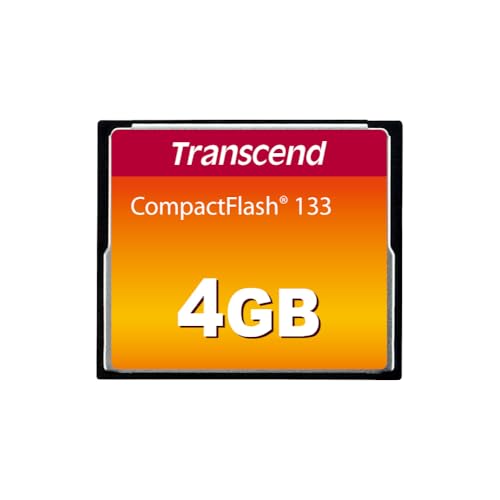
- Archive critical state to a CompactFlash card as belt-and-suspenders (Transcend CF 4GB is fine for low-frequency state archive — yes it is an old format, but a CF card on a USB reader is the most-shelf-life storage you can hand-mount).
Project #3: Network ad-blocker (Pi-hole)
Pi-hole on a Pi Zero W is the canonical always-on Pi project. Block DNS-level ads for the whole home network. The Zero W is enough for a 5-10 device household; for bigger networks, step up to a Pi Zero 2 W or a Pi 4.
Setup is curl -sSL https://install.pi-hole.net | bash. Point your router's DNS at the Pi. Done. Roughly 80% reduction in ad traffic, household-wide.
Project #4: Bird-feeder camera
Pi Zero W + Pi Camera Module 2 + a 3D-printed bird-feeder mount. Snap pictures on motion (via a PIR sensor or via OpenCV motion detection), upload to a folder, browse later. Pi Zero W struggles with realtime video encoding above 720p; for stills, it is fine.
Power needs are higher here — budget for a 2.5A wall plug or a small solar+battery setup if outdoors.
Project #5: Sensor relay over LoRa or BLE
Pi Zero W + a HopeRF LoRa hat + a battery. Acts as a relay between remote sensors (rain gauge, mailbox sensor, garage door state) and a home Wi-Fi network. Pi Zero W's BLE radio is the cheap path; a LoRa hat ($25-30) is the long-range path.
What the Pi Zero W cannot do
- Anything CPU-heavy. The single-core ARM11 at 1 GHz is slow. Don't try to run anything you would call "modern".
- Realtime video at >720p. Don't try.
- More than one or two heavy projects on the same Pi. One job per Pi is the right pattern. Buy three Pi Zero Ws for $60 and avoid the temptation to put everything on one.
- Local LLM inference. Even Q2 tiny models choke. Use a Pi 5 16GB or step up to a desktop rig.
Common pitfalls
- Cheap power supplies. Pi Zero W is famously sensitive to undervoltage. Use a 2A+ supply, not the random one from your drawer.
- Skimping on the microSD. A1-rated cards last; cheap unlabeled cards die in weeks under writes.
- Mounting it outside without protection. A IP65 enclosure is a $10 investment that saves $30 worth of Pi.
- Forgetting to disable HDMI and the LEDs to save power.
tvservice -oand the boot-config tweaks save 30-50 mA — meaningful on solar. - Trying to compile heavy software on-board. Cross-compile or use a faster Pi for builds, then deploy the binary.
A worked example: weekend FM-radio build
Saturday morning:
- Flash Raspberry Pi OS Lite onto a 16GB microSD.
- Boot, set up Wi-Fi via the headless config.
- Install PiFmRds (above).
- Set up a systemd service that loops a podcast directory.
- Solder a 30cm wire to GPIO 4.
- Mount in a small box, plug into a USB charger in the basement.
Sunday: walk through the house with a portable FM radio and confirm the signal carries from basement to living room. Total build cost: ~$35 in parts. Always-on hobbyist project, running by Sunday evening.
Pi Zero W vs Pi Zero 2 W vs Pi 5 — pick the right tier
| Project | Right Pi |
|---|---|
| One-job always-on appliance (Pi-hole, env monitor, FM radio) | Pi Zero W |
| Light multi-job (Pi-hole + Home Assistant lite) | Pi Zero 2 W |
| Multi-job with web UI + database | Pi 4 / Pi 5 |
| Local LLM inference (tiny models) | Pi 5 16GB |
The Zero W's price advantage is meaningful: a $20 board lets you spread workloads across multiple physically-separated devices, which is a better reliability story than one Pi 5 doing everything.
Networking and remote access
Pi Zero W's Wi-Fi is single-band 2.4 GHz only. For most always-on projects this is fine — Wi-Fi 2.4 reaches further and through more walls than 5 GHz. If your house is dense with 2.4 GHz traffic, expect throughput around 5-10 Mbps real-world. Plan accordingly: if your project streams more than that (a camera, an audio relay), put it on a Pi 4 or Pi 5 with 5 GHz.
For remote SSH access, use Tailscale on the Pi side. Avoids port-forwards, works through CGNAT, and the Zero W has enough headroom to run the Tailscale agent without breaking a sweat (~30 MB RAM).
A second worked example: garage-door sensor
- Reed switch on the garage door, wired to a Pi Zero W GPIO pin.
- Tiny Python script polls the pin every 500 ms.
- Open state lasting >5 minutes pushes a notification via ntfy.sh to your phone.
- Tailscale tunnel for remote monitoring.
Total parts: $25 in Pi + microSD + reed switch + jumper wire. Setup: one Saturday afternoon. Has saved one (1) cold-night-garage-left-open in the year it has been running.
Bottom line
In 2026, the Raspberry Pi Zero W Starter Kit is still the right pick for always-on, sub-1W, one-job hobbyist projects. Pair with a reasonable A1-rated microSD, mount it sensibly, and keep a backup image on a SATA SSD on your dev workstation. For long-shelf-life state archive, keep a CompactFlash card in a USB reader as a paranoid second backup. Then build the small thing that does the one job well.
Related guides
Citations and sources
This piece is editorial synthesis based on publicly available information. No independent first-party benchmarking is reported.