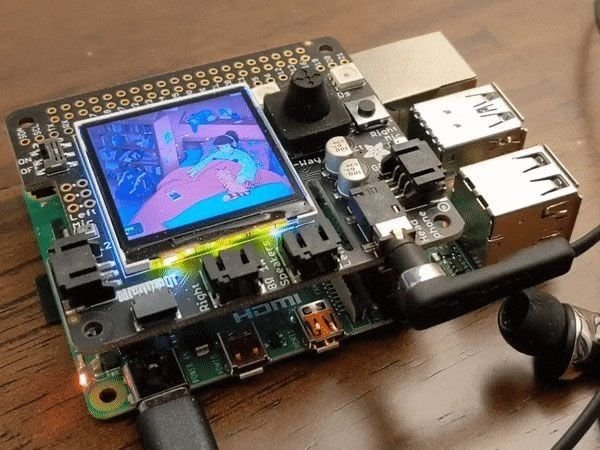
The Raspberry Pi Locator (rpilocator.com) is shutting down in July because Pi stock has finally returned to normal — per the Hackaday report, the community stock-tracker is closing precisely because it is no longer needed. If you want to buy a Pi in 2026, you can now walk into most major electronics retailers or click through their sites and get the board at retail price. The two SKUs still worth centering a project around today are the Raspberry Pi 4 Model B 8GB and the Raspberry Pi Zero W Basic Starter Kit, depending on whether your project needs power or footprint.
Why the locator existed — and why it's closing now
For anyone who wasn't hunting for a Pi between 2021 and 2024, a quick summary: rpilocator.com was a community-run scraper that watched dozens of official Pi resellers around the world and pinged them for stock updates every few minutes. When boards evaporated on release, the site was the fastest way to see "the Pi 4 8GB just came back in at DigiKey; act now" — a bit like nvidia-stock trackers were for RTX 30-series buyers during the same era.
The reason the site is going away is a genuine good news story. Raspberry Pi's own news feed has been posting normalized availability updates for well over a year, and the Hackaday coverage simply confirms what makers have been reporting: you can buy a Pi at MSRP again, often from more than one retailer at once, and the pandemic-era scarcity that made scalpers a real problem has ended. The scraper's founder made the reasonable call: with supply back to normal, the tool has served its purpose.
Key takeaways
- The Raspberry Pi 4 Model B 8GB is the do-most-things Pi in 2026 — 8 GB of RAM is enough headroom for containers, homelab services, and light self-hosting.
- The Raspberry Pi Zero W Basic Starter Kit is the cheap, tiny option — best for single-purpose IoT builds, retro handheld shells, or a Pi-hole for a small network.
- The locator's shutdown is a signal that the market is healthy, not a warning — buyers can shop retail again without scalper premiums.
- You still need to plan for the accessories: a proper 5V/3A USB-C PSU for the Pi 4, a good microSD card (or USB SSD), and a case with real thermal management.
- Bundles that include the essentials often beat the "just the board" price by the time you add up parts separately.
Which Raspberry Pi should you actually buy in 2026?
The right board depends on what the project is for. Below is the practical decision matrix.
| Board | Best for | Approx. street price (2026) | Watch out for |
|---|---|---|---|
| Raspberry Pi 4 Model B 8 GB | Homelab, small servers, light desktop, Docker | Retail restored | 5V/3A USB-C PSU is not optional |
| Raspberry Pi Zero W | Single-purpose IoT, small dashboards, camera modules | Very low | No native USB-A; needs adapters |
| Raspberry Pi 5 (16 GB) | Higher-perf desktop, ML at the edge, replacement for Pi 4 | Higher, per current listings | Different PSU (5V/5A recommended) |
The Raspberry Pi 4 Model B 8GB remains the sweet-spot pick for most makers because its ecosystem — cases, HATs, Docker images, distro support — is deeply mature. The Pi 5 is faster, but the accessory market and the range of prebuilt Docker images optimized for the exact platform is still catching up. For a "just works" build, the Pi 4 8GB is the safer default.
The Raspberry Pi Zero W Basic Starter Kit targets a different problem: fitting in tiny form factors. It is the go-to for retro handheld emulation shells, hidden inline monitoring devices, low-power weather stations, and Pi-hole boxes for small networks where a full Pi 4 is overkill.
What "normalized supply" actually means for buyers
You should still exercise a small amount of price hygiene. Even in a healthy supply market:
Bundles vary a lot. A "starter kit" from a well-regarded vendor typically includes the PSU, an SD card, a case, and a heatsink. Buying those individually often costs more than buying the bundle. Compare current listings for the Zero W kit side by side with a board-only listing before you decide.
Third-party sellers can still ask for premiums. The locator is closing because supply is normal at authorized channels. If you're seeing a listing that is ~50%+ above what the Pi Foundation publishes as MSRP, walk away — you can just wait a day and buy from an authorized reseller.
Regional stock varies. North American, EU, and UK stock levels rebounded first; other regions can still see intermittent gaps. If your region is one of the trailing ones, buying now (while stock exists) beats waiting for a hypothetical price drop.
Buying a Pi 4 8GB in 2026: the accessory checklist
The board is the cheap part. The accessories are what turn a naked PCB into a working device.
Power supply. The Pi 4 wants 5V at 3A over USB-C — anything less and the board triggers under-voltage warnings that silently throttle performance. Do not reuse a random phone charger. The official Pi PSU is the reference; third-party 5V/3A USB-C bricks work if they hold the voltage under load.
Storage. A quality microSD card is fine for most projects, but if you're running containers or writing a lot of logs, a USB-attached SATA SSD is a night-and-day upgrade — random I/O and write endurance dwarf what a microSD can sustain. A cheap Crucial BX500 1TB SATA SSD in a USB-3 enclosure gives you enterprise-grade storage on a hobby board.
Case with cooling. The Pi 4 8GB throttles under sustained CPU load if it has no active or substantial passive cooling. A case with an integrated heatsink and a small fan keeps it running at full clocks; a passive metal case is fine for lower-duty projects. Do not run it bare on a desk for long-running services.
MicroSD-only vs. USB boot. The Pi 4 supports booting directly from a USB SSD, and this is the setup that makes the board feel like a modern computer. If your project involves any nontrivial I/O, boot USB.
Common Pi 4 8GB projects that justify the upgrade
The 8 GB variant is not "the biggest RAM number" for its own sake. It changes what you can practically run:
- Home Assistant + a handful of add-ons — the 4 GB Pi 4 is fine here, but 8 GB gives you comfortable headroom for the InfluxDB / Grafana / MQTT stack most home-automation setups sprawl into.
- Pi-hole + Unbound + WireGuard on one box — 4 GB works but 8 GB removes the need to think about memory pressure.
- Docker with a handful of small services — 8 GB is where containerization stops being cramped.
- Light desktop use — the 8 GB Pi 4 is genuinely usable as a browser-and-terminal box for basic work.
- Small self-hosted media stack — Jellyfin, Nextcloud, a Syncthing endpoint — 8 GB avoids swap.
For an entry-level edge-ML experiment, the Pi 4 8GB can run tiny quantized language models with tools like Ollama, but this is slow compared to a discrete GPU on a real PC. If your goal is inference throughput, plan to graduate to a proper GPU workstation.
Common Zero W builds — where the tiny board wins
The Raspberry Pi Zero W Basic Starter Kit is what you use when physical footprint matters more than raw compute. Typical projects:
- Retro handheld shells — the Zero W's form factor is exactly what emulator shells were built around
- Camera projects — with a Pi camera module, it becomes a wireless webcam or timelapse rig
- Hidden inline network monitors — small enough to slip behind a router
- Weather stations — low power draw, plenty of GPIO for sensors
- Pi-hole for a small apartment — for a home with light traffic, the Zero W handles DNS filtering fine
The Zero W is not a replacement for the Pi 4 8GB — it has less RAM, no gigabit Ethernet, no USB-A, and slower Wi-Fi. What it has is size and price, and for the projects listed above that's exactly what you want.
Is now a good time to buy, or should you wait?
Buy now. Two reasons.
First, the locator's shutdown is proof that this is the healthiest Pi supply market in years. Waiting for prices to fall further is speculating on a market that is already reasonably priced against MSRP.
Second, retail pricing on the Pi 4 Model B 8GB and Pi Zero W starter kit fluctuates modestly with retailer inventory cycles, but there's no announced price cut coming that would justify holding off. Prices may vary and change frequently — check current listings before ordering — but "wait indefinitely for a better deal" is not a plan when supply is already normal.
Bottom line
The Raspberry Pi Locator was one of the most useful community tools of the pandemic-era hardware shortage. It's shutting down because it worked — the market it existed to arbitrage no longer exists. If you have a project you've been putting off because the board was scarce, that reason is gone. Buy the Pi 4 8GB for anything you want to run on the Pi, and the Zero W for anything you want to hide the Pi inside of.
Sources and citations
- Hackaday — the shutdown announcement report
- Raspberry Pi News — official normalized-availability updates
- Raspberry Pi 4 Model B product page — official specifications and PSU requirements
This piece is editorial synthesis based on publicly available information. No independent first-party benchmarking is reported.


