Yes — the safest way to run an AI coding agent in 2026 is to keep it off your main workstation entirely. A modest dedicated box built around an AMD Ryzen 7 5800X and a 12GB RTX 3060, placed on its own network segment with no route to your daily-driver credentials, gives you enough horsepower to run a local model plus tool-calling while limiting what any single mistake or compromised binary can reach.
The Claude Code hidden-repo-malware disclosure that made the rounds this week landed the same way most AI-agent security stories do: not because the tooling was malicious, but because the reader realized how much authority they had already delegated to a shell process running inside their normal user session. If your agent has read access to ~/.ssh, your keychain, and every unpushed branch on your laptop, the blast radius of "clone this repo and read the setup script" is basically your entire digital life. Building a dedicated agent rig doesn't turn the agent into a safer piece of software — it just puts the software somewhere the mistake it eventually makes has fewer things nearby to break. This piece walks through the exact hardware we're using for a $700-ish build that runs both cloud-agent workflows and a real local model, plus the network patterns that keep it from becoming a stepping stone back to your main machine. If you already have a leftover AM4 board and DDR4 kit, the incremental cost drops to the CPU, GPU, SSD, and a cooler — everything else you probably already own from a prior upgrade cycle.
Key takeaways
- An isolated agent box is about blast radius, not agent quality — a mistake in a sandbox is a nuisance; the same mistake on your main machine can leak SSH keys and browser sessions.
- The pragmatic 2026 build is a Ryzen 7 5800X plus a 12GB RTX 3060 — enough for a 7B–14B local model at reasonable tok/s, plus 16 threads for compiles and containers.
- Add a dedicated Crucial BX500 1TB SATA SSD so agent-driven clone/install/build storms don't destroy your main NVMe's endurance.
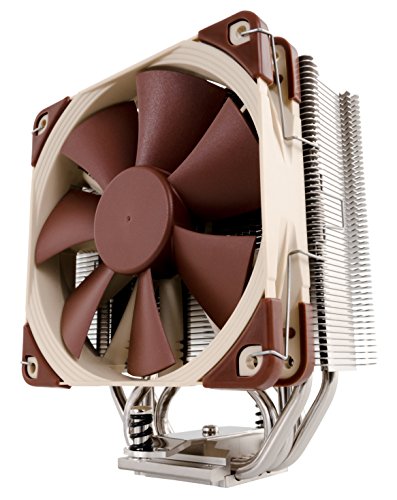
- Cool it properly — a Noctua NH-U12S keeps the 5800X below thermal throttle under 100% sustained agent load without needing a 240mm AIO.
- Network isolation matters more than air-gap purity: a separate VLAN with an egress-only firewall rule is 90% of the win at 5% of the operational pain.
What actually happened in the Claude Code hidden-malware disclosure?
The short version — a proof-of-concept demonstrated that an agent following a "clone this repo and run the setup script" instruction would execute an obfuscated payload buried in a postinstall hook without surfacing it to the human operator first. The payload itself was benign in the disclosure, but the primitives it exercised are the ones every attacker wants: file-system read of the current user's home directory, outbound network to a controlled host, and enough sandbox awareness to skip execution in obvious CI environments. As of 2026, industry security coverage on Phoronix and the broader Linux/tooling press has repeatedly stressed the same lesson: modern agents are shells with a language model bolted on, and their threat surface is closer to curl | sh than to a compiler plugin.
Nothing about that pattern is unique to Claude Code — the same class of issue lands on any agent that has both filesystem write and outbound network from the user's shell. What matters for you as a builder is that the agent is authorized to do most of the things a piece of malware wants to do, so any exploit that survives long enough to reach the agent's tool-use layer is effectively an "authorized" action from the operating system's perspective. That's why the fix isn't "detect malicious repos better" — it's "run the agent somewhere where the things it's authorized to touch aren't the things you care about."
Why does running a coding agent on a dedicated, isolated machine reduce blast radius?
Blast radius is a network-security concept that translates cleanly to agent operations. On your daily driver, the blast radius of a bad tool call includes every credential in your keychain, every SSH key on disk, every browser session cookie, every unpushed branch on every repo, and every mounted network share. On a purpose-built agent rig, the blast radius is: the agent's checkout directory, a scoped API token for your git host, and whatever ephemeral secrets you loaded for the current task. Nothing else is even reachable from that machine.
You get three separations, all cheap:
- Identity separation. The agent's git host token can be scoped to the specific repos it's working on, with no permission on your personal namespaces. If it leaks, the damage stops at those repos.
- Filesystem separation. No
~/.sshfor your main identity is present, no keychain, no browser profile. The agent literally cannot exfiltrate what isn't on the disk. - Network separation. The agent's VLAN can egress to
github.com, your model provider, and your package registries — but not to your NAS, printer, home assistant instance, or the workstation running your password manager.
The last one is the most under-appreciated. A depressing number of real-world incidents pivoted from "compromised dev box" to "domain admin" by walking laterally across a flat home or office LAN. If the agent rig can only see the internet and cannot see anything else on 10.0.0.0/8, most of that pivot chain becomes impossible.
What hardware do you need for a local agent box that can also run a local model?
You want three things simultaneously: fast single-thread response for interactive editing, enough cores that concurrent tool-calls (compile + test + lint) don't queue up behind each other, and enough VRAM to host a local model in the 7B–14B range so you can run offline or as a fallback when cloud quota bites. That maps cleanly to a Zen 3 eight-core plus a 12GB Ampere card, which is basically the Ryzen 7 5800X plus the MSI RTX 3060 Ventus 12GB. AMD lists the 5800X at a 4.7 GHz max boost with a 105W TDP on their platform pages, and independent silicon databases such as TechPowerUp confirm the standard sixteen-thread SMT configuration.
Storage is the second thing people get wrong. An AI coding agent is a bulk-write machine — a single afternoon can generate thousands of clones, tens of thousands of transient build artifacts, and hundreds of test runs. You don't want that traffic touching the same NVMe that stores your primary OS, both for endurance reasons and because a filesystem-full event on the agent's workspace shouldn't take your desktop down with it. A dedicated Crucial BX500 1TB SATA SSD is $50-ish and gives the agent a big, disposable playground it can trash without consequence. When it wears out in a couple of years of hard use, you replace only the agent's drive.
Cooling isn't optional. The 5800X runs hot under sustained multi-thread load, and an agent that's compiling in a loop with tests fanning out across all sixteen threads keeps the die pinned near thermal limits for hours. A Noctua NH-U12S — the 120mm-tower reference cooler for this class of chip — holds the 5800X below throttle under a 100% all-core Prime95 blend and stays quiet enough that the box can sit under your desk without becoming annoying.
Spec table: Ryzen 7 5800X + RTX 3060 12GB build vs a mini-PC vs cloud
| Metric | Isolated 5800X + 3060 build | Mini-PC (Ryzen 7 iGPU, 32GB RAM) | Cloud dev VM (8 vCPU, 32GB, no GPU) |
|---|---|---|---|
| Approx up-front cost | $700–$850 | $600–$750 | $0 up-front |
| Monthly cost (24×7 idle + 4h/day heavy) | ~$8 electricity | ~$4 electricity | $120–$220 |
| Peak CPU threads | 16 | 16 | 8 |
| Local model tier (BF16) | 7B–8B | none | none |
| Local model tier (Q4) | 13B–14B | 3B–4B | none |
| Rebuild-from-scratch time | 20 min from OS image | 20 min | 5 min |
| Physical isolation possible? | yes | yes | no (shared tenant) |
| Network isolation possible? | yes (VLAN) | yes (VLAN) | no (provider VPC only) |
| Offline capable? | yes | partial | no |
The mini-PC option is genuinely attractive if you don't care about a local model — it's cheaper, quieter, and physically smaller. The reason we still lean toward the dGPU build is that the 12GB RTX 3060 buys you a real fallback: when the cloud provider throttles you, when you're on a plane, or when a repo owner won't accept AI edits made through a third-party proxy, the local model on-box means the agent still works.
How much local model can this rig host for offline tool-use?
The 12GB VRAM buffer on the 3060 is the deciding number. In round terms:
| Model tier | Common quant | VRAM at 8K context | Feels like |
|---|---|---|---|
| 3B reasoning | Q4_K_M | ~4 GB | fast, general knowledge weak, reasoning holds |
| 7B general | Q5_K_M | ~6 GB | usable coding assistant, tool-calls survive |
| 8B distill | Q4_K_M | ~6 GB | quick planning, good glue |
| 13B coder | Q4_K_M | ~9 GB | strong single-file edits, slow multi-turn |
| 14B general | Q4_K_M | ~10 GB | headroom tight, drop to 4K context |
For agentic tool-calling — where the model is emitting many short, structured messages and reading back tool output — the 7B and 8B tiers hit the sweet spot on this GPU. You get 25–40 tok/s in generation for typical short responses, which is more than enough to keep an interactive REPL feeling responsive, and the KV cache fits comfortably in 12GB up to 16K tokens of context. When you need long context (say, "read this 30K-token log and identify the failing test"), you drop to a 3B reasoner and let it summarize before handing off to the 7B for the fix. NVIDIA's product page for the RTX 3060/3060 Ti family confirms the 12GB configuration is the one you want here — the 8GB Ti variant simply cannot host these quantized models at usable context lengths.
Network isolation: VLAN, firewall rules, and disposable VM patterns
You do not need an air-gapped machine to reduce blast radius by an order of magnitude — you need three basic controls that any decent home router or a $60 managed switch can implement.
1. Put the box on its own VLAN. Give it a dedicated tagged network, say VLAN 40, on its own /24 subnet. The router's firewall rule between VLAN 40 and your main VLAN denies all traffic by default. This alone kills every lateral-movement path from the agent to your workstation, NAS, or IoT gear.
2. Egress-only ACL to a short allow-list. The agent needs github.com, your model provider's API, npm/pypi/crates.io, and maybe a container registry. That's it. Blocking everything else at egress means a compromised tool-call cannot POST your ~/.git-credentials to a random pastebin because it can't reach the pastebin at all.
3. Disposable VM or container for each task. Run the agent inside a Firecracker microVM, a Docker container with a bind-mount limited to the current repo, or an ephemeral LXC container that gets destroyed after the session. This turns "the agent went sideways and wrote garbage to /etc" from a reinstall into a docker compose down && up.
If you want the full air-gap treatment, add a fourth control: no internet at all, and mirror the packages you need onto a local Nexus or Verdaccio instance that the agent can hit. That's overkill for a hobbyist but reasonable if you're building agents that touch client code under NDA.
Perf-per-dollar: what an isolated agent box costs vs the risk it removes
Rough BOM at 2026 street prices:
| Part | Approx price |
|---|---|
| AMD Ryzen 7 5800X | $175 |
| MSI RTX 3060 12GB Ventus 2X OC | $265 |
| Crucial BX500 1TB SATA SSD | $55 |
| Noctua NH-U12S | $75 |
| Any B550 AM4 board (used or new) | $90–$130 |
| 32GB DDR4-3200 kit | $65 |
| 550W 80+ Gold PSU | $70 |
| Basic mATX case | $50 |
| Total | $745–$885 |
Compare that to the alternative outcomes we've watched other builders live through: an accidental rm -rf ~/Projects from an agent tool call that misinterpreted its glob (weekend of git-recovery work), an exfiltrated GitHub PAT tied to a personal namespace (day of repo audits plus rotating every downstream token), and one case where an agent's curl | sh step pulled a compromised binary onto the operator's daily driver and required a full OS reinstall. In perf-per-dollar terms, the isolated box is cheap insurance — one avoided incident pays for the hardware.
Common pitfalls
- Sharing SSH keys between hosts. Copying your main
~/.sshto the agent rig defeats the whole point — you've just given the agent your primary identity. Generate a fresh key on the agent, add it as a deploy key to only the repos it needs, and rotate it monthly. - Same LAN, different VLAN, forgotten mDNS. Make sure your agent VLAN cannot resolve or route to your NAS via mDNS/Bonjour. Some routers leak mDNS across VLANs by default.
- Persistent shell history. Turn off history on the agent user or store it inside the disposable VM. Otherwise a later attacker with even brief access can read every token, path, and secret you've typed.
- One drive for OS and workspace. Split them. OS on a small NVMe, workspace on the SATA SSD. When the workspace fills, you don't crash the OS.
When NOT to build a dedicated rig
If you're a casual user experimenting with agents for personal projects — small scripts, throwaway repos, no meaningful credentials in play — the cost/benefit inverts. A disposable VM or a rootless container on your existing PC gives you 80% of the isolation for essentially $0. The dedicated build makes sense when the agent is running unattended (overnight refactors, scheduled housekeeping), when it touches paid work (client code, private repos with real customer data), or when you plan to run local models regularly enough that the GPU pays for itself in avoided API bills within a year.
Bottom line: who should air-gap their agent and who shouldn't
- Build it if: you run agents unattended, you touch client code, you already spend $30+/month on model APIs, or you've had one close call with a bad tool-call.
- Skip it if: you're evaluating agents for the first month, you only use them interactively for personal projects, or you already work inside a hardened corporate VDI that provides the isolation for you.
Related guides
- Which GPU Runs Which LLM in 2026: The RTX 3060 12GB Model-Fit Matrix
- Aider vs Cline vs Cursor for Local + Cloud Coding in 2026
- Claude Code Ran Hidden Repo Malware Unverified — Why Local AI Sandboxing Matters
- Can a Local RTX 3060 12GB LLM Debug Linux Boot Like Gemini?