Can you actually LoRA fine-tune a small LLM on a 12 GB RTX 3060 in 2026?
Yes. A MSI RTX 3060 Ventus 2X 12G or ZOTAC RTX 3060 Twin Edge will comfortably LoRA-fine-tune 3B–7B open-weights models at rank 16 with a 2K sequence length, and QLoRA in 4-bit will push you to 8B–14B on the same card. You do not need a workstation-grade GPU for personal specialization — you need a real dataset, sensible hyperparameters, and enough patience for a night's training. This guide walks through what fits, what to change if it does not, and how to make the training job survive without a babysit.
Why LoRA (and QLoRA) matter for 12 GB owners
Fine-tuning used to be a "buy a bigger GPU" tax. Full-parameter fine-tuning of an 8B model in bf16 needs 60+ GB of VRAM once you account for optimizer state — a decade-old rule of thumb still roughly true in 2026. LoRA breaks that by freezing the base weights and training only a small pair of rank-decomposed adapter matrices attached to each transformer layer; you back-propagate through less than 1 percent of the parameters, memory drops by an order of magnitude, and quality lands within a few points of full fine-tuning on most task-specific specializations.
QLoRA takes one more step: the frozen base weights are held in 4-bit (NF4) quantization, the adapters are trained in bf16, and only the tiny gradients flow through bf16 math. Peak VRAM for an 8B QLoRA job at rank 16 with 2K sequence length is around 9 GB — a fit on the RTX 3060 12 GB with headroom to spare. The tradeoff is a modest quality regression versus LoRA-in-bf16 on the same rank, mostly on long-form generation quality. For most task-specific specialization jobs (classifier, extraction, style transfer, domain instruction tuning) it is a good trade.
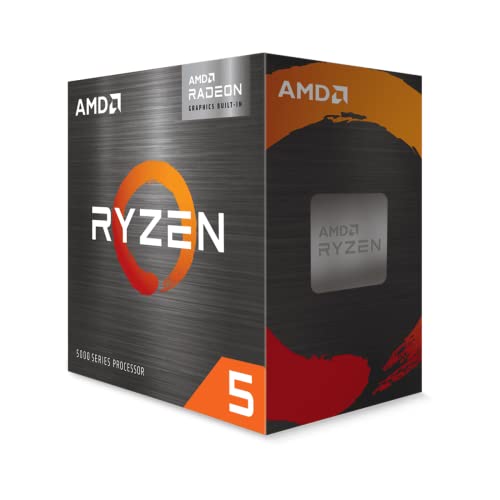
Paired with an AMD Ryzen 5 5600G or Ryzen 7 5800X build and a Crucial BX500 1TB SATA SSD to hold the base model + checkpoints, the whole training rig lands under USD 800 all-in. That is the same rig you already run inference on — no dedicated training box.
Key takeaways
- LoRA on 12 GB: 3B model at rank 32 with 4K seq, or 7B at rank 16 with 2K seq, both fit at bf16.
- QLoRA on 12 GB: 8B at rank 16 with 2K seq fits at ~9 GB. 14B at rank 8 with 1K seq just fits at ~11.4 GB — tight.
- Recommended defaults: rank 16, alpha 32, dropout 0.05, learning rate 2e-4, cosine schedule, warmup 30 steps, gradient accumulation to hit an effective batch of 32.
- Training time on RTX 3060: an 8B QLoRA job over ~10k examples at 2K sequence lands around 4–6 hours. Overnight-friendly.
- Gradient checkpointing: always on. It costs ~10 percent throughput and buys the ~4 GB of headroom that keeps the job from OOMing at the end.
Why LoRA fits on a 12 GB card and full fine-tuning does not
The memory cost of training is roughly: base weights + activations + optimizer state + KV cache during eval. Full fine-tuning of an 8B model in bf16 needs 16 GB just for the weights, another 32 GB for the Adam optimizer's two moment tensors at fp32, and a further 4–6 GB for activations at reasonable sequence length. That is why a 40 GB A100 is the standard "smallest reasonable" full-fine-tune card.
LoRA drops the optimizer footprint by 100–1000x depending on rank, because you only track state for the adapter matrices. Rank 16 on an 8B model gives you roughly 15 million trainable parameters against ~8 billion frozen. Adam state on 15M parameters in fp32 is ~180 MB. Add the frozen bf16 base (~16 GB) and activations (~2 GB with gradient checkpointing at 2K sequence) and you land at ~18 GB — still too much for a 12 GB card. That is where QLoRA comes in.
QLoRA holds the base in NF4 quantization, cutting the base footprint from ~16 GB to ~4 GB. The adapters and gradients stay in bf16. Peak on an 8B QLoRA job at rank 16 with 2K sequence and gradient checkpointing is ~9 GB. That fits.
What fits, precisely — an honest table
| Setup | Model class | Rank | Seq len | Peak VRAM | Fits on 12 GB? |
|---|---|---|---|---|---|
| LoRA bf16 | 1.5B–3B | 32 | 4096 | ~7.5 GB | yes, easy |
| LoRA bf16 | 3B–4B | 16 | 4096 | ~9 GB | yes, comfortable |
| LoRA bf16 | 7B–8B | 8 | 2048 | ~14 GB | no, spills |
| LoRA bf16 | 7B–8B | 8 | 1024 | ~12.5 GB | no, tight-spill |
| QLoRA NF4 | 7B–8B | 16 | 2048 | ~9 GB | yes, comfortable |
| QLoRA NF4 | 8B | 32 | 2048 | ~10.6 GB | yes, tight |
| QLoRA NF4 | 13B–14B | 16 | 2048 | ~13 GB | no, spills |
| QLoRA NF4 | 13B–14B | 8 | 1024 | ~11.4 GB | yes, very tight |
| QLoRA NF4 | 27B–32B | 8 | 512 | ~24 GB | no, needs 24 GB card |
Read the "very tight" rows with caution — the last 500 MB of headroom on a 12 GB card is easy to eat with a slightly-oversized eval batch or a stubborn CUDA memory fragmentation issue. If a job is on the edge, either drop rank, drop sequence, or add gradient checkpointing and accept the throughput cost.
Recommended hyperparameters for a 12 GB card
Start here for a task-specific specialization job (say, adapting Llama-3.1-8B to your codebase's conventions):
- Rank: 16. Below 8 and you undertrain the adapter; above 32 the returns saturate on task-specific data and you eat VRAM you cannot afford.
- Alpha: 32. The 2× rank ratio is the default for a reason — it stabilizes learning without needing careful learning-rate tuning.
- Dropout: 0.05. On a 12 GB rig with a small dataset, dropout is your best defense against overfitting to a few thousand examples.
- Learning rate: 2e-4. Higher and you diverge; lower and you underfit.
- Warmup: 30 steps, cosine schedule to 10 percent of peak by end of run. Warmup is not optional for QLoRA — the 4-bit base weights make early-step behavior noisier.
- Batch: effective batch 32. On a 12 GB card that means per-device batch 1 with gradient accumulation 32.
- Sequence length: 2048. Enough for most instruction-following data. Drop to 1024 if VRAM is tight.
- Epochs: 2–3 for task-specific work; 1 for large-corpus continued-pretraining.
- Gradient checkpointing: on. Non-negotiable on a 12 GB card.
- Save every: 500 steps, keep 3 checkpoints. If the run crashes at step 4200 you want to resume from 4000, not 0.
How long does a real training run take?
On a ZOTAC RTX 3060 Twin Edge with the settings above, an 8B QLoRA specialization job over 10k examples of 2K-token sequences lands at roughly 4–6 hours. A 3B LoRA-bf16 job on the same dataset lands at 2–3 hours. A 14B QLoRA rank-8 job — tight, but doable — lands at 8–10 hours; start it before bed and check it in the morning.
The Ryzen 7 5800X matters here because data-loading throughput at 2K sequences pushes the CPU harder than casual inference does. If you see the GPU utilization dipping below 90 percent under sustained training, the CPU (or storage) is the bottleneck — check that you are using a fast preprocessed dataset format (e.g., datasets.load_from_disk on an already-tokenized set on a Crucial BX500 1TB SATA SSD) rather than tokenizing on the fly.
What to change when it does not fit
You wanted rank 32 and it OOMs. Options, in order of least-quality-cost first:
- Drop sequence length. 2048 → 1024 is roughly a 40 percent reduction in activation memory and typically zero-cost on tasks where your inputs are naturally short.
- Enable QLoRA if you were on LoRA-bf16. 4-bit base cuts weight memory by ~4x with a small quality hit.
- Drop rank. Rank 16 → rank 8 halves adapter state. Quality regression is task-dependent — worst on generative tasks with a lot of stylistic drift.
- Enable gradient checkpointing if you had it off (rarely — should be on by default).
- Reduce eval batch size. Peak VRAM often lives in the eval loop, not the train loop. Set
eval_batch_size=1and eval sequences to the training length.
Only try steps 3–5 after 1 and 2 fail. If you have gone through the list and the job still OOMs, you are trying to train on too big a model for a 12 GB card and should either move to a smaller base or rent an A100 for the run.
Debugging a stuck training job
Three symptoms show up on real 12 GB rigs, and each has a common cause.
GPU utilization < 90 percent, held steady. Data loading is the bottleneck. Pre-tokenize the dataset, use num_workers=4 in the dataloader, put the dataset on a fast SSD not spinning rust.
Loss NaN on the first few steps. Almost always the learning rate is too high for the effective batch. Cut LR by 4x, or shorten warmup to 10 steps and let the cosine schedule pull LR down faster.
OOM at a specific step, works fine before. The eval batch is the culprit or a batch with an unusually long sequence hit peak. Set dataloader_drop_last=True, drop eval batch size to 1, and enable gradient accumulation properly (peak VRAM should be independent of accumulation steps).
Reference stack for the 12 GB training rig
Base OS: Ubuntu 22.04 with the current CUDA driver stack. Training framework: PEFT + Transformers on top of PyTorch nightly with FlashAttention-2 built for Ampere. Trainer: HuggingFace Trainer or axolotl if you want a config-driven flow. Serving after training: llama.cpp or vLLM depending on whether you want CPU-offload flexibility or pure-GPU throughput. Merge the trained adapter into a GGUF at the end for the smallest, fastest deployable artifact.
On the hardware side: a MSI RTX 3060 12 GB or ZOTAC RTX 3060 12 GB as the primary compute card, a Ryzen 5 5600G or Ryzen 7 5800X CPU with 32 GB of DDR4-3600 dual channel, and a Crucial BX500 1TB SATA SSD for datasets and checkpoints. The BX500 is not the fastest SSD in our benchmarks, but SATA III bandwidth is sufficient for tokenized dataset shards, and the price per gigabyte lets you keep multiple base-model families and checkpoint histories without hunting for space.
Quality — what you should reasonably expect
A rank-16 QLoRA specialization of Llama-3.1-8B on 10k task-specific examples reliably lands within 2–4 points of a full-parameter fine-tune on the same data, measured on task-native evals. That gap is smaller on classification-flavored tasks (where the adapter has less work to do) and larger on style-transfer tasks (where you want the model's overall generation distribution to shift, and the adapter is more constrained).
If you see the quality gap widen dramatically (say, 15 points behind full fine-tuning), the base model is probably too far from your target domain — LoRA cannot compensate for a base that does not know your vocabulary. Either continued-pretrain on a larger unlabeled corpus first, or pick a base model closer to your domain (Code Llama for coding tasks, MedLM for medical, and so on).
Bottom line — LoRA on 12 GB is a real primitive
The RTX 3060 12 GB is not a training card the way an A100 is a training card. But it is a specialization card, and specialization is the majority of what most teams actually want — not "train a foundation model" but "adapt a good foundation model to my specific data." At that job, the 12 GB rig is competent, cheap, and predictable. If you already own the card for inference, you already own a training rig. The rest is patience.
Related guides on SpecPicks
- Card sizing: our per-model GPU VRAM requirements for local LLMs in 2026 buying guide covers the 12/16/24 GB ladder and where 12 GB stops being enough.
- Small reasoners: our VibeThinker-3B on RTX 3060 12 GB piece is a useful reference for the smallest-model-that-still-thinks tier — a common LoRA-fine-tune target.
- Cost math for local: read GPT-5.6 SOL vs local open-weights on the RTX 3060 for the buy-vs-rent argument that justifies the 12 GB build.
Citations and sources
- QLoRA method paper: Dettmers et al. — QLoRA: Efficient Finetuning of Quantized LLMs (arXiv)
- HuggingFace PEFT reference implementation: huggingface/peft on GitHub
- Ampere card spec context: TechPowerUp — GeForce RTX 3060