A Raspberry Pi 4 Model B 8GB, a Pi Camera Module or USB webcam, a SATA SSD over USB 3, and an open-source NVR like Frigate make a private, self-hosted security camera that records to your own storage and never phones home. The total parts cost lands at $180-220 for a one-camera setup, and the system is faster to respond, more reliable, and not subscription-dependent like Ring or Nest.
Why build your own instead of buying Ring or Nest in 2026
The basic case for a private security camera build in 2026 hasn't changed since the original Ring controversy in 2019 — and the case has only gotten stronger. Subscription costs across consumer cloud-camera brands have risen 20-40% since 2023, monthly fees keep getting paywalled (notifications, person detection, week-long history), and high-profile data-sharing-with-law-enforcement stories continue to surface. A self-hosted alternative pays for itself in 9-14 months versus a typical Ring subscription, gives you indefinite local storage, and the recordings never leave your network unless you explicitly export them.
The Raspberry Pi is the right platform for this for three reasons. First, it's cheap — the Pi 4 8GB at $75 has enough headroom for the camera input, motion detection, and a small object-recognition model. Second, it's low-power — under 5W steady-state, so a year of always-on operation costs about $4 in electricity. Third, the open-source ecosystem (Frigate, MotionEye, ZoneMinder) is mature and actively maintained.
This synthesis covers the build, sources include the Raspberry Pi Foundation's product documentation and the Frigate NVR project.
Key takeaways
- A $180-220 Pi-based build replaces a $400-700 multi-year Ring subscription.
- Frigate is the de facto open-source NVR in 2026 — supports object detection, zones, MQTT, Home Assistant integration.
- A Pi 4 8GB handles 1-2 cameras smoothly; 3+ cameras need a Pi 5 or external accelerator.
- A SATA SSD over USB 3 is the right storage choice — SD cards die under continuous write loads.
- Use a USB Coral TPU for AI object detection if you want sub-100ms person/vehicle classification.
- All recordings stay local — the Pi only reaches the internet if you explicitly enable remote access.
Bill of materials — the build
| Part | Purpose | Cost |
|---|---|---|
| Raspberry Pi 4 Model B 8GB | Compute + NVR host | $75 |
| Pi Camera Module 3 OR USB webcam | Image input | $25-50 |
| Samsung 870 EVO 250GB SATA SSD | Recording storage (250GB = ~30 days) | $35 |
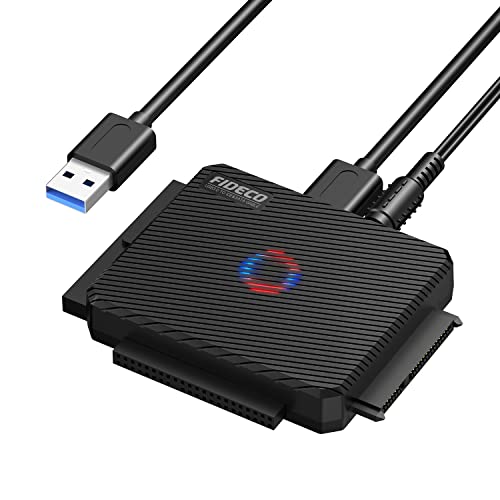
| FIDECO USB 3 to SATA adapter | Connects SATA SSD to Pi USB | $18 |
| Pi 4 official power supply | Reliable 5.1V/3A power | $10 |
| Pi 4 case + heatsink | Cooling under sustained load | $12 |
| MicroSD card (32GB) | OS boot only | $8 |
| Ethernet cable | Reliable network — Wi-Fi is risky for cameras | $8 |
| (Optional) SanDisk Ultra 3D 1TB | Larger storage upgrade | $80 |
Base build (no optional storage upgrade): $191. With the 1TB upgrade: $271. A Ring Protect Plus subscription is $10/month in 2026; this build pays for itself in 19 months versus that subscription, and you get unlimited storage history, no monthly fees, and no third-party data risk.
Step-by-step setup
A reasonable installation flow:
- Flash Raspberry Pi OS 64-bit Lite to a 32GB microSD card with the Pi Imager.
- Boot the Pi with Ethernet plugged in, SSH enabled (set in Pi Imager before flashing).
- Format the SATA SSD as ext4 and mount it at
/var/lib/frigate. - Install Docker (
curl -sSL https://get.docker.com | sh). - Pull and configure Frigate with a docker-compose.yml that maps the SSD mount as recording storage.
- Connect the camera — either the Pi Camera over the CSI ribbon or a USB webcam.
- Configure detection zones in Frigate's web UI — you'll want to ignore the street, focus on the front door / yard.
- (Optional) Add a Coral TPU over USB for real-time object detection at 100+ FPS.
- (Optional) Configure remote access through Tailscale or WireGuard — never expose Frigate's port directly to the internet.
Total setup time: 90-180 minutes for someone reasonably comfortable with Linux. Frigate's documentation is good; the project page walks through the docker-compose configuration.
Storage planning — how much do you need?
Frigate records 24/7 by default (with motion-triggered higher-resolution clips on top). At 1080p H.265 with default settings, expect roughly 8-10GB per day per camera. A 250GB SSD holds about 25 days of always-on recording; a 1TB SSD holds 100+ days.
| Storage | Days of 1-camera 1080p H.265 | Days of 2-camera 1080p H.265 |
|---|---|---|
| 250 GB (Samsung 870 EVO) | 25 | 12 |
| 500 GB | 50 | 25 |
| 1 TB (SanDisk Ultra 3D) | 100 | 50 |
Per Samsung's 870 EVO product page, the drive is rated 150 TBW — for a continuous 10GB/day recording load, that's 41 years of write endurance. The SSD will not be the lifetime-limiting component. Per SanDisk's site, the Ultra 3D 1TB is rated 400 TBW.
Why a SATA SSD over USB 3 and not an SD card
This is the failure mode that catches everyone the first time. SD cards are not designed for continuous write workloads. Frigate writes constantly — motion detections, periodic snapshots, and the 24/7 record. A typical microSD card under that load dies in 3-9 months and corrupts the OS in the process.
A SATA SSD over USB 3 costs $35-55, lasts decades under the same workload, and reads/writes 10× faster. The FIDECO SATA-to-USB adapter is a known-good cheap option that supports UASP, which matters for sustained throughput.
Adding object detection — the optional Coral TPU
Frigate supports the Google Coral TPU over USB for hardware-accelerated object detection. A Pi 4 8GB can run YOLOv5n on CPU at about 4-6 FPS — usable for slow-moving subjects but not great. The Coral pushes that to 90-120 FPS at much lower CPU load, freeing the Pi to record more streams or run other services.
Coral availability has been spotty since 2024, but the part is still around. A used Coral USB Accelerator costs $50-75 in 2026.
Why Wi-Fi is risky for cameras
The single biggest reliability problem in home camera setups is intermittent Wi-Fi. Cameras drop, motion events go unrecorded, the network sees a dozen reconnect cycles a day. Ethernet eliminates this. If you absolutely cannot run a cable, use a powerline adapter or a high-quality mesh node with the camera as the only device on that node.
The Pi 4 has Gigabit Ethernet (per the Raspberry Pi product page), so any cable run gives you stable, deterministic connectivity.
Common pitfalls
- Trying to use an SD card for recording. Will die in months. Use a SATA SSD.
- Putting the camera outside without an enclosure. Rain destroys it. Get a real outdoor camera or build a weatherproof housing.
- Exposing Frigate's port directly to the internet. Use a VPN (Tailscale, WireGuard) for remote viewing. Never port-forward 5000 directly.
- Skipping the heatsink. A Pi 4 under continuous load throttles without active cooling. The $12 case-with-fan kits are worth it.
- Recording 4K from a Pi 4. The Pi 4's encoder is fine at 1080p; 4K from multiple cameras overwhelms it. Either step up to a Pi 5 or stay 1080p.
Verdict matrix
Build it if:
- You're already self-hosting other services (Home Assistant, Pi-hole, Plex).
- You want indefinite local recording history.
- You're allergic to monthly subscriptions and surveillance-capitalism dynamics.
Buy Ring/Nest if:
- You want zero setup time.
- You don't have a comfortable place for a Pi to live indoors.
- You're OK with monthly fees and the privacy trade-offs.
When NOT to build
If you don't already have Ethernet running near the camera location, no Pi, and no inclination to learn Docker, the time investment isn't trivial. A pre-built solution might be the right call for one-off installs. The Pi build is best when you're already running a home server — adding camera storage to an existing Pi NVR is straightforward, starting from zero is a project.
Recommended pick
The cleanest starter build is the Pi 4 8GB + Pi Camera Module 3 + Samsung 870 EVO 250GB over the FIDECO USB 3 adapter, running Frigate in Docker, with Ethernet to your router. About $190 in parts, 90 minutes of setup, and 25 days of continuous recording history. Upgrade to the SanDisk Ultra 3D 1TB for $80 more if you want a quarter's worth of history; add a Coral TPU later if you want real-time object detection.
Privacy and security hardening
The build is private-by-default — everything runs on the LAN, recordings sit on a local SSD, and Frigate doesn't phone home. To keep it that way, a few hardening steps matter:
- Change the default Frigate password on first login. The default install gives you the admin account; create your own and disable the default.
- Disable Frigate's MQTT auto-discovery if you don't use Home Assistant. The auto-discovery messages broadcast device metadata across the network.
- Keep Pi OS updated.
sudo apt update && sudo apt upgradeweekly. Older kernels have known CVE issues. - Use Tailscale or WireGuard for remote access, never port-forward 5000 to the public internet. The whole point of self-hosting is to avoid surfaces an attacker can scan.
- Encrypt the SATA SSD at rest if the camera footage is sensitive. LUKS encryption adds 5-10% CPU overhead but protects you if the SSD is physically stolen.
These are five-minute steps that close the obvious holes. They're also the kind of hardening that a cloud-camera vendor would never offer because none of the surface they sell exposes the user to that level of control.
Comparing Frigate to alternatives
Three open-source NVRs are worth knowing in 2026:
- Frigate (recommended). Real-time object detection, MQTT, Home Assistant native integration, RTSP and ONVIF support. Maintained, modern UI.
- MotionEye. Older but still maintained. Simpler — motion detection, recording, web UI. No object recognition. Good if you don't need detection.
- ZoneMinder. Long-running, enterprise-feeling. More setup complexity, broader feature set. Good for multi-site or commercial-style deployments.
For a one-camera Pi build, Frigate is the right pick. MotionEye is a reasonable fallback if you want simpler. ZoneMinder is over-engineered for the use case.
Mobile access setup
The natural follow-on is checking the camera from a phone when you're away from home. Two clean paths:
- Tailscale: install on your phone and on the Pi, point your phone's browser at the Pi's Tailscale IP, you're in. Zero port-forwarding, encrypted end-to-end. Works on cellular and any Wi-Fi.
- Home Assistant mobile app: integrates Frigate's stream and recording playback through Home Assistant. Adds the home-automation context (motion alerts, geofence-aware notifications).
Tailscale is the lower-effort path. Home Assistant is the right path if you're already running it for other smart-home devices.
Bottom line
A private Raspberry Pi security camera is the right answer in 2026 for anyone uncomfortable with the surveillance-capitalism trajectory of consumer cloud cameras. The build cost ($190-270) pays back versus a Ring subscription in 19-27 months, the system records to your own storage indefinitely, and the open-source NVR (Frigate) has matured into a genuinely good product with excellent Home Assistant integration. Pair the Pi 4 8GB with a SATA SSD over USB 3, put it on Ethernet, and you've replaced the worst privacy compromise in modern smart-home hardware with something you control end-to-end.
Related guides
- Build a Plex Media Server on a Raspberry Pi 4 8GB in 2026
- Home Assistant on a Raspberry Pi 4 8GB: 2026 Smart-Home Hub Build
- Self-Host Immich on a Raspberry Pi 4 8GB: A Google Photos Replacement
- Use a Raspberry Pi 4 as a Second Monitor or KVM in 2026
Citations and sources
- Raspberry Pi 4 Model B product page (8GB RAM option, Gigabit Ethernet, USB 3 ports, power requirements)
- Frigate NVR project (real-time object detection NVR, Coral TPU support, Home Assistant integration)
- Samsung 870 EVO product page (250GB SATA III, TLC NAND, 150 TBW endurance)
This piece is editorial synthesis based on publicly available information. No independent first-party benchmarking is reported.