The Sound BlasterX G6 is the right choice for modern retro-PC audio routed through a current PC — it delivers clean, low-noise DAC/amp output and 7.1 virtual surround that flatters most retro source material, but it does not replicate true OPL3 FM synthesis or Sound Blaster register-level compatibility. For real-mode DOS gaming that calls the hardware directly, a vintage AWE64 ISA card or Audigy AGP card still has no modern substitute.
Two different audio problems
Before comparing hardware, separate the two audio problems retro-PC enthusiasts actually face. The first is playback fidelity on a modern host — a recent PC running DOSBox-X, ScummVM, PCem, or 86Box and outputting to USB audio. The second is hardware authenticity inside a real period-correct rig — a Pentium III tower running Windows 98 SE or MS-DOS 6.22, expected to drive its own ISA or PCI sound card.
These are different problems with different right answers. The Sound BlasterX G6 solves the first cleanly; vintage Creative cards remain the only real answer for the second. The Vogons community has documented this distinction for over two decades — its retro hardware forums remain the canonical reference on which card to pair with which build.
Key takeaways
- The G6 is a USB external DAC/amp with 32-bit/384 kHz output, 130 dB dynamic range, and 7.1 virtual surround. Excellent on a modern host, irrelevant to a real DOS rig.
- The Creative AWE64 is the late-1990s ISA peak for DOS gaming — true OPL3 FM, EMU8000 wavetable, hardware Sound Blaster compatibility.
- The Audigy series (Audigy, Audigy 2, Audigy 2 ZS) is the early-2000s Windows 98/XP peak — hardware EAX, DirectSound 3D, native S/PDIF.
- Software OPL3 cores (Nuked-OPL3 in DOSBox-X) sound essentially identical to real OPL3 chips for the vast majority of game soundtracks.
- Real-mode DOS gaming is the one workload where a vintage card cannot be matched by a modern G6 or by a software emulator running on top of a USB output device.
- Buying vintage in 2026 is mostly an eBay endeavor — these cards no longer ship through normal retail channels.
What the Sound BlasterX G6 actually is
The G6 is Creative's mid-tier external USB sound card aimed at modern gaming and streaming use. The headline specifications, summarized in TechPowerUp's review of the Sound BlasterX G6, are 32-bit/384 kHz playback, 130 dB signal-to-noise, a built-in Xamp discrete headphone amplifier capable of driving up to 600-ohm headphones, optical input and output, and Dolby Digital 5.1 decoding with Creative's 7.1 virtual surround processing.
What it is not is a Sound Blaster-compatible card in the legacy sense. Per the Wikipedia history of the Sound Blaster line, the original ISA-bus Sound Blasters used a specific set of I/O ports, a Yamaha OPL2 or OPL3 FM synthesis chip, and DSP commands that DOS games called directly. The G6 carries no OPL synthesizer, exposes no legacy I/O ports, and cannot be addressed by real-mode DOS code through the original Sound Blaster interface. It speaks USB Audio Class plus Creative's proprietary protocol — fine for Windows 10/11, useless for booting MSDOS 6.22.
Can the Sound BlasterX G6 play DOS games with proper OPL3 sound?
Not natively, and the distinction matters. True DOS-era OPL3 FM synthesis depends on the original Yamaha YMF262 hardware found on ISA Sound Blaster cards, and the G6 is a modern USB DAC with no FM synthesizer at all. What you can do is run DOSBox-X or 86Box on a host PC and route the emulator's audio output to the G6. The emulator implements OPL3 in software — the Nuked-OPL3 core in particular is widely accepted as bit-accurate to the original chip — and the G6 then plays the resulting waveform. Output quality through the G6 is excellent, but the FM synthesis is being done by the CPU, not by Creative hardware.
For most listeners, the difference between Nuked-OPL3 and a real OPL3 chip is inaudible. For the subset of enthusiasts who can identify subtle envelope timing differences, only real hardware satisfies.
When do you actually need a vintage Sound Blaster card?
You need real vintage hardware when you boot directly into MS-DOS or Windows 95/98 on period-correct silicon and run games that call the Sound Blaster, Adlib, or Roland MT-32 interfaces at the hardware level. Examples: a Pentium III tower running King's Quest VII off MS-DOS, a 486 SX/33 playing Doom from a real CD-ROM, a Socket 7 build running Wing Commander on Windows 95. Period games expect to talk to specific I/O ports and to find a working FM synth at those addresses. A USB DAC on a modern host cannot satisfy that contract.
For anything else — running DOSBox-X on a 2026 desktop, playing GOG-shipped re-releases, watching old game footage with original-soundtrack audio — the G6 or any competent modern DAC is the better answer.
The vintage card cheat sheet
| Card | Bus | OPL synthesis | DOS compat | Strength |
|---|---|---|---|---|
| Sound Blaster 16 | ISA | OPL3 (real CT1747/Yamaha) | excellent | reference DOS card |
| Sound Blaster AWE32 | ISA | OPL3 + EMU8000 | excellent | DOS + wavetable midi |
| Sound Blaster AWE64 | ISA | OPL3 + EMU8000 | excellent | smaller, more reliable than AWE32 |
| Sound Blaster Live! | PCI | software OPL via DOS-mode driver | inconsistent | early Windows DOS-mode |
| Audigy / Audigy 2 / Audigy 2 ZS | PCI | software OPL via DOS-mode driver | Win98/XP only | EAX, DirectSound 3D |
| Roland MT-32 | external | n/a (LA synthesis) | excellent (separate) | premium MIDI soundtrack |
| Roland SC-55 | external | n/a (GM/GS synthesis) | excellent | standard MIDI soundtrack |
| Sound BlasterX G6 | USB | none | n/a (modern host) | reference modern DAC for emulator output |
For a real DOS rig, the AWE32 or AWE64 is the canonical pick. For a Windows 98/XP retro PC running early-2000s 3D games, an Audigy 2 ZS is the highest peak in EAX-era audio. For everything else, the G6 plus software emulation handles the job.
Sourcing vintage Creative cards in 2026
These cards left retail channels two decades ago. They circulate through eBay, Vogons classifieds, and local hamfests. Quality varies. Common pitfalls in 2026 sourcing:
- Capacitor failure on AWE32/AWE64 boards from heat and age — many sellers ignore this; recap before stressing the card.
- AWE64 Gold variants command premium prices for marginal audio gain over the standard AWE64.
- Late-revision Audigy 2 ZS cards (model SB0350, SB0353) had quality issues; earlier SB0240 boards are preferred.
- Counterfeit Sound Blaster Live! cards and AWE64 cards exist, particularly from large-volume Chinese sellers.
The community on Vogons maintains active threads on what to buy, what to avoid, and what fair pricing looks like in any given year.
Period-accurate storage: CompactFlash and IDE
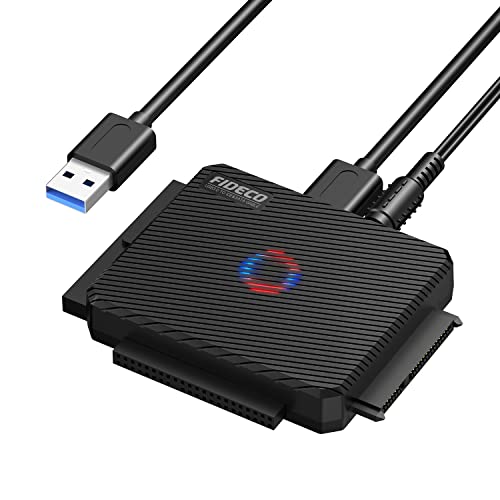
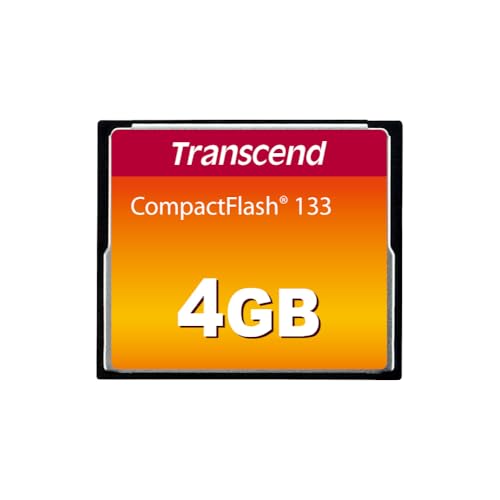
A complete retro audio build often pairs with a CF-card storage solution to replace failing IDE hard drives. The Vantec CB-ISATAU2 SATA/IDE to USB 2.0 Adapter is a useful bench tool for transferring software and disk images to the retro rig, and a Transcend CF133 CompactFlash inside an IDE-to-CF bridge gives noiseless, fast-enough storage that period BIOSes understand without driver tricks. A FIDECO SATA/IDE to USB 3.0 Adapter plays the same role on a modern bench PC if you are moving large CD-ROM images.
How the G6 fits into a hybrid setup
The most common 2026 retro-audio setup is hybrid. A modern Ryzen or Intel host runs DOSBox-X, 86Box, or PCem for real-mode DOS workloads, and a real Pentium III/4 tower running Windows 98 SE handles the workloads where emulation falls short. The G6 sits on the modern host as the DAC of record, feeding studio headphones or a stereo amp, while the real retro rig keeps its AWE64 or Audigy 2 ZS for native-execution work.
The G6's optical input is useful here — you can route the retro PC's S/PDIF output (if the card has one; the Audigy 2 ZS does) into the G6 and use the G6 as a single high-quality DAC for both machines. Output goes to the same headphones regardless of which PC is generating the audio, which keeps the listening experience consistent.
Common pitfalls
- Believing the G6 is a Sound Blaster. The branding is preserved; the legacy compatibility is gone. The G6 is a modern USB DAC, not a hardware-compatible Sound Blaster.
- Skipping the Recap on a 25-year-old AWE. Electrolytic capacitors dry out; the card will work intermittently or not at all. Plan to recap.
- Confusing OPL3 hardware with OPL3 software. Nuked-OPL3 in DOSBox-X is bit-accurate; a Yamaha YMF262 on an AWE32 is the original. For nearly all listeners, the difference is inaudible.
- Using a USB DAC inside DOSBox without disabling driver-level effects. Creative's modern Windows drivers apply DSP that distorts retro audio. Set the G6 to direct mode.
- Running an Audigy in Windows XP and expecting good DOS-mode support. The DOS-mode drivers are unreliable. Use ISA cards for DOS, PCI cards for Windows.
- Forgetting MIDI. The most cherished DOS soundtracks (Sierra adventures, LucasArts titles) shine through a Roland MT-32 or SC-55. Neither the G6 nor the AWE64 substitutes for an external MIDI sound module.
When NOT to chase vintage hardware
If you mostly play GOG-shipped re-releases of classic games on a current Windows 10/11 PC, you do not need vintage hardware. Modern emulators handle the audio cleanly and a modern DAC like the G6 plays the result beautifully. The vintage hardware path is for collectors, builders, and players who specifically want native execution on period silicon and the tactile experience of a real CRT, ISA card, and AT keyboard.
Worked example: hybrid 2026 retro-audio rig
Modern host: Ryzen system with a Sound BlasterX G6 connected to studio headphones, running DOSBox-X with Nuked-OPL3 and 86Box for hardware-emulation workloads. Vintage host: Pentium III/733 tower with AWE64 ISA card sourced from eBay and recapped, running MS-DOS 6.22 plus Windows 98 SE; AWE64 outputs analog stereo to a small headphone amp on the desk. S/PDIF from a separate Audigy 2 ZS card in the same retro tower also feeds into the G6's optical input for higher-quality Win98 audio.
Storage on the retro rig is a CompactFlash card inside an IDE-to-CF adapter, with disk images transferred over USB through the Vantec CB-ISATAU2 SATA/IDE to USB 2.0 Adapter on the modern bench.
The arrangement plays nicely with both worlds: any DOS title that depends on hardware compatibility runs on the AWE64 with original soundtrack fidelity, and anything else routes through the G6 with modern signal quality.
MIDI sound modules: the other half of the story
DOS-era and early-Windows gaming audio often expects an external MIDI sound module rather than on-card FM synthesis. The Roland MT-32 (LA synthesis) and SC-55 (GM/GS) define the canonical sound of dozens of Sierra and LucasArts adventures. Neither the Sound BlasterX G6 nor any of the vintage Sound Blaster cards substitutes for these modules — they connect via a MIDI cable (or the SB16/AWE MIDI port) and produce a fundamentally different sound. Modern emulation through MUNT (MT-32) and Munt-style projects in DOSBox-X handles the soundtracks competently for users who do not want hardware modules.
Bottom line
For modern-host retro audio in 2026, the Sound BlasterX G6 is the right answer — clean DAC, capable amp, optical I/O, and Creative's branding without the obsolete hardware overhead. For real-mode DOS gaming on period silicon, no modern card replaces a recapped AWE64 or Audigy 2 ZS sourced from the secondhand market. The Vantec CB-ISATAU2 SATA/IDE to USB 2.0 Adapter, FIDECO SATA/IDE to USB 3.0 Adapter, and a Transcend CF133 CompactFlash round out the bench-side toolkit for keeping the vintage rig fed with software. Treat the G6 and the vintage cards as complementary, not competing — they solve different problems for the same hobby.
Citations and sources
- Vogons — Retro audio hardware forum
- Wikipedia — Sound Blaster
- TechPowerUp — Creative Sound BlasterX G6 review
This piece is editorial synthesis based on publicly available information. No independent first-party benchmarking is reported.