Short answer: Samsung Display has announced what it describes as the world's first 360Hz 4K QD-OLED gaming panel with dual-mode support — meaning the panel can switch between a full-resolution 4K profile and a higher-refresh-rate profile at reduced resolution from the same hardware. Retail monitors built around the panel are expected later in 2026 at premium pricing; for buyers who need a Samsung gaming display today, the current Samsung Odyssey G5 remains the affordable choice.
The high-refresh 4K bracket has been the slowest-moving piece of the gaming monitor market for two years. Manufacturers have struggled to deliver 4K above 144 Hz on panels that hit both the bandwidth requirements and the response-time targets that competitive gamers expect. OLED tech opened the door — sub-millisecond response times and high refresh — but driving 4K resolution at OLED-class refresh rates needed both new panel architectures and new display interfaces. Samsung Display's announcement is the first credible signal that 360 Hz at native 4K is moving from R&D demos into the supply chain that brand partners — Samsung itself, Dell/Alienware, ASUS, MSI — turn into shipping product. This article walks what the announcement actually claims, what it does not claim, who should care, and what to buy in the meantime.
What happened
Samsung Display — the panel-making arm of Samsung, distinct from Samsung Electronics' consumer monitor business — announced a new QD-OLED panel that combines a native 4K resolution with refresh rates reaching 360 Hz, supported through a dual-mode pixel-driving scheme. The technical core is the addition of a higher-frequency driving circuit on top of Samsung's existing QD-OLED stack, plus an updated TCON (timing controller) that exposes two operating modes to the host: a 4K-at-base-refresh profile and a sub-4K-at-360Hz profile.
The "dual-mode" framing is important. Most current 4K/240Hz panels achieve their headline number by running the entire panel at a single fixed mode and asking the connected GPU to compress the signal with Display Stream Compression. Samsung's approach lets the panel itself switch between two operating modes on demand — a configuration coming from the OS or the game — so an FPS player can run at 1080p or 1440p at 360 Hz, and a cinematic-game player can run at the native 4K at the panel's lower refresh ceiling. The same hardware does both without separate displays.
Sources covering the announcement — including Tom's Hardware and Samsung's own press channel — describe it as the first panel in this exact class, not the first 360 Hz panel period and not the first 4K QD-OLED. The combination is new.
Why it matters for gamers shopping monitors today
For most current buyers the practical impact is small in the near term. Three reasons.
First, panel announcements precede retail product by quarters. A Samsung Display panel revealed mid-2026 typically appears in shipping brand monitors in late 2026 or early 2027. Validation, firmware, regional certification, and stocking levels all add lead time.
Second, first-wave pricing on a panel like this lands deep into premium territory. The recent QD-OLED 4K/240Hz monitors launched at $1,200–$1,700; a 4K/360Hz QD-OLED with dual-mode is likely to launch above that. Buyers expecting a $500 monitor in this class will be waiting many cycles.
Third, the GPU side of the equation is not solved. Sustaining 4K at 360 fps in a demanding modern game is a flagship-GPU workload. An RTX 5090 or future 6090-class card with DLSS 4 frame generation can reach those rates; a current 4070 will not. For 1440p at 360 Hz the math is more attainable but still requires a high-tier GPU. Dual-mode partly addresses this by letting the same panel run a comfortable 4K/120 mode when the GPU cannot feed the high-refresh profile, but the underlying issue stands.
What the announcement does signal is direction. The 4K/120 era was 2020–2023. The 4K/240 era was 2023–2025. The 4K/360 era starts now. By 2027 the high-refresh-4K bracket will be the new "premium gaming" tier, and 4K/240 monitors will be the value pick the way 4K/144 became the value pick after 4K/240 launched.
The technical building blocks
Three things had to converge for this panel class to exist.
QD-OLED material maturity. Samsung Display introduced QD-OLED in 2022 with the original Alienware AW3423DW and Samsung Odyssey G8 panels. Burn-in mitigation, sustained brightness, and color volume have all improved across each successive generation. The 2026 QD-OLED stack delivers higher peak luminance and longer mitigated lifespan than the first-gen panels — a precondition for selling a 4K/360 monitor that will run hard for years.
DisplayPort 2.1 bandwidth. 4K at 240 Hz uncompressed requires roughly 50 Gbps; 4K at 360 Hz pushes past 70 Gbps. HDMI 2.1's 48 Gbps cannot carry this signal without DSC, so the panel must support DisplayPort 2.1 UHBR20 (80 Gbps) for fully uncompressed 4K/360 output. Driver and GPU support for DisplayPort 2.1 has been the bottleneck for the past two years; NVIDIA's RTX 50-series and AMD's RDNA 4 generation finally widely shipped it.
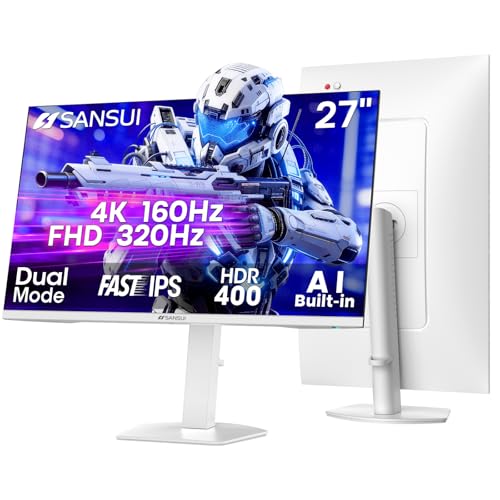
TCON dual-mode support. The actual switching circuit that flips the panel between a 4K low-refresh mode and a sub-4K high-refresh mode is the newest piece. Earlier "dual mode" monitors (like the SANSUI and KOORUI 4K panels in our PS5 monitor guide) achieved this in firmware on top of fixed-rate panels; the Samsung announcement implies a true panel-side dual-mode that does not rely on host-side downscaling.
How it compares to current panels
A rough spec comparison to four current and future picks, drawn from announced specifications and shipping product:
| Panel | Resolution / Refresh | Peak HDR | Tech | Approx price |
|---|---|---|---|---|
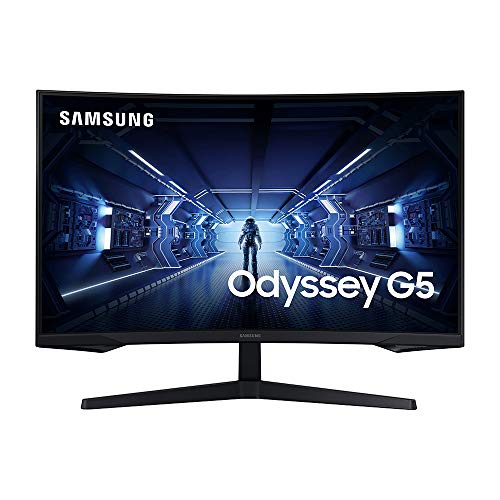
| Samsung 32" Odyssey G5 (current) | 1440p / 165 Hz | 350 nits | VA | ~$279 |
| KOORUI 27" 4K Mini-LED | 4K / 160 Hz (dual) | 1,000 nits | IPS + Mini-LED | ~$500 |
| Current QD-OLED 4K/240 monitors | 4K / 240 Hz | 1,000+ nits | QD-OLED | $1,200–$1,700 |
| Samsung 360Hz 4K QD-OLED (announced) | 4K / 360 Hz (dual) | likely 1,000+ nits | QD-OLED dual-mode | TBD, premium |
The current Odyssey G5 sits at the value end of Samsung's gaming-monitor lineup. The KOORUI Mini-LED is the best-value entry into 4K-with-real-HDR territory. The current QD-OLED 4K/240 monitors are premium products that the new panel will eventually replace as the high-refresh-4K ceiling moves up.
What to buy today
Three honest recommendations for buyers who do not want to wait.
If your budget is $300 and you want a Samsung-brand gaming monitor, the Samsung Odyssey G5 32" is the right pick. 1440p at 165 Hz, VA panel with deep blacks, FreeSync support, comfortable curve for a 32" screen. It will not give you 4K and it will not give you 360 Hz, but it delivers a perfectly usable gaming experience for less than 20% of what a first-wave 360Hz 4K QD-OLED is likely to cost.
If you want real 4K HDR today and your budget reaches $500, the KOORUI 27" 4K QD-Mini LED delivers DisplayHDR 1000, dual-mode 4K/160 or 1080p/320, and HDMI 2.1 — covering the use cases most buyers actually care about, including PS5 4K/120 over HDMI.
If you want native 4K at 120Hz on a tight budget, the SANSUI 27" 4K dual-mode at ~$280 is the most affordable correctly-spec'd 4K panel in the market.
A high-refresh 1440p panel like the ASUS TUF 27" 2K at ~$279 remains a sound choice if you favor refresh rate over native 4K resolution.
The GPU requirement, in numbers
Driving 4K at 360 Hz in a modern game is not a generic-flagship task — it is a very specific computational ceiling. A rough sense of where current and future GPUs land on this:
| GPU | 4K/120 (cinematic title) | 4K/240 (esports title) | 4K/360 (esports + DLSS) |
|---|---|---|---|
| NVIDIA RTX 4070 (current mid) | Yes with DLSS Quality | Mostly with DLSS Performance | No |
| NVIDIA RTX 4080 Super (current high) | Yes native | Yes with DLSS Quality | Possible with DLSS + FG |
| NVIDIA RTX 5090 (flagship) | Yes native | Yes native | Yes with DLSS + FG |
| AMD Radeon RX 9070 XT (mid) | Yes with FSR | Mostly with FSR Performance | No |
| AMD Radeon RX 9080 XT (high) | Yes native | Yes with FSR | Borderline with FSR + FG |
Two takeaways. First, native 4K/360 without upscaling is essentially a no-go in 2026 — even the RTX 5090 needs DLSS frame generation to sustain it in demanding titles. Second, the lower-refresh profile of the new Samsung panel becomes the actual default mode for any GPU below the absolute top tier, and the 360 Hz mode is something you switch into for esports and competitive titles where rendering is lighter.
This is the strongest argument for dual-mode on a panel like this: the high-refresh profile becomes a use-case mode rather than the default operating mode. Without dual-mode the buyer pays for capability they cannot use most of the time.
Burn-in and longevity considerations
QD-OLED panels have made real strides on burn-in mitigation since the 2022 first generation. Samsung's recent panels include pixel-refresh routines, screen-saver triggers, and luminance-distribution algorithms that even out long-term wear. Manufacturers offering QD-OLED gaming monitors in 2026 commonly bundle a three-year burn-in warranty.
That said, gaming desktops with static UI elements — minimaps, hotbars, status text — remain the hardest workload on any OLED. A pure cinematic-content panel might never accumulate visible burn-in across five years; a desktop running Discord and a HUD-rich shooter daily will accumulate it faster. The dual-mode design helps somewhat — the 4K profile is what cinematic content uses, and reduced-refresh modes can run lower per-pixel luminance — but burn-in remains a real lifecycle factor that LCD-based Mini-LED panels like the KOORUI 27" 4K Mini-LED sidestep entirely.
For a player who treats a monitor as a multi-year investment and uses it heavily for productivity work between game sessions, Mini-LED still has a legitimate longevity advantage even when QD-OLED has the visual edge on motion clarity and contrast.
What this means for the rest of 2026 and 2027
Three near-term effects of the announcement.
First, current 4K/240Hz QD-OLED prices should soften over the next two quarters as the new panel approaches retail. Buyers who have been waiting for 4K/240 QD-OLEDs to drop below $1,000 may finally see it.
Second, brand partners (Samsung, Dell/Alienware, ASUS, MSI) will compete on TCON tuning and bundled features rather than raw panel specs in the first wave. Expect differentiation on calibration, port selection, KVM support, and warranty rather than on what the underlying Samsung panel can do.
Third, the dual-mode concept will spread downmarket. By 2027 expect Mini-LED LCD panels in the $400–$600 range to offer similar dual-mode 4K-at-base and 1080p-at-high-refresh profiles, copying the marketing playbook even when the underlying panel tech is more conservative.
Connectivity and port considerations
A panel rated for 4K/360 needs the right inputs to actually deliver that signal. Three port specifications matter on any monitor built around this panel.
- DisplayPort 2.1 UHBR20 is the only widely-deployed display interface with enough uncompressed bandwidth for 4K/360 without DSC. Buyers should confirm the monitor exposes DP 2.1 UHBR20 specifically (not just DP 2.1, which has lower-bandwidth tiers).
- HDMI 2.1 with DSC can carry 4K/240 and likely 4K/360 with Display Stream Compression, but DSC adds latency and is technically lossy. For PC use DP 2.1 is the better path; HDMI 2.1 is the right choice for console use.
- USB-C with DP Alt Mode appears on many premium monitors and is convenient for laptop users, but bandwidth limits and Power Delivery negotiation can constrain refresh rate on high-resolution panels.
A first-generation 360Hz 4K QD-OLED monitor that ships without DP 2.1 UHBR20 is essentially advertising a refresh rate it cannot deliver. Check the spec sheet carefully; the panel announcement is one thing, the monitor's port loadout is another.
Bottom line
Samsung's 360Hz 4K QD-OLED is genuinely interesting hardware and a clear signal of where the premium gaming monitor segment is heading. For buyers shopping in 2026, it is almost certainly not the monitor to wait for: pricing will be high, supply will be limited, and the GPU side of the equation will not catch up immediately for native 4K/360 workloads. The Samsung Odyssey G5 and KOORUI 27" 4K Mini-LED cover most current gaming needs at a fraction of what the new panel will cost. Treat the announcement as a forecast of the 2027 premium tier rather than as a reason to delay your 2026 purchase.