Short answer: Not the flagship. As of mid-2026, the headline Kimi releases from Moonshot AI are large mixture-of-experts (MoE) models whose total parameter count dwarfs a 12GB GPU's memory budget, even at aggressive quantization. What a 12GB card like the GeForce RTX 3060 can run is the smaller open-weight cousins and distillations Moonshot and the broader open ecosystem publish on Hugging Face — typically 7B to 14B dense models at q4_K_M — plus selective offload of slightly larger checkpoints. That is the honest version of "running a Kimi-class model locally" on a 12GB card in 2026.
Moonshot AI Targets $30B: Can You Run a Kimi-Class Open Model on a 12GB GPU?
Valuation hype, VRAM math, and the realistic local shortlist for 3060 owners
Moonshot AI is chasing a $30B valuation on its Kimi line. Here is the honest VRAM math for running a Kimi-class open model locally on a 12GB RTX 3060.

The news beat: a six-fold valuation jump that puts open weights in the spotlight
Moonshot AI is one of the so-called "AI tigers" of the Chinese frontier-model wave, and in mid-2026 it became the loudest member of that cohort. Per reporting circulating in the AI press, Moonshot is targeting a roughly $30 billion valuation, more than six times its late-2025 figure. The driver is the Kimi model family — a series of long-context chat and reasoning models that have gained traction both as a hosted API and as a public benchmark target. When a private AI lab re-rates that hard in a few months, two things tend to follow: a wave of model releases (often including open-weight variants positioned as goodwill and recruiting tools), and a spike in search interest from builders asking the most practical question on the internet — "can I run this on the card I already own?"
For SpecPicks readers, that card is very often a 12GB NVIDIA Ampere board. The RTX 3060 12GB is the single most common GPU in the current Steam Hardware Survey's local-LLM-capable bracket, it is plentiful on the secondary market, and it has more VRAM than the much faster but stingier RTX 4060 8GB. So the practical question is not "can I run Moonshot's flagship" — it is "which Kimi-class open weight, at which quant, with which context window, actually fits and stays usable on 12GB." That is what the rest of this synthesis answers, with the math, the citations, and the gotchas in plain view.
Key takeaways
- Moonshot AI's reported valuation push to roughly $30 billion is news, but it does not change the VRAM physics: flagship Kimi-class MoE models do not fit on a 12GB GPU, period.
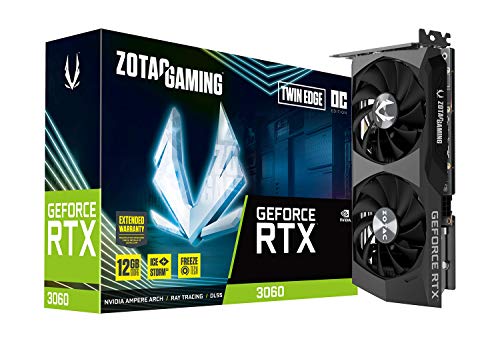
- A 12GB card like the MSI GeForce RTX 3060 Ventus 2X 12G or the ZOTAC Gaming GeForce RTX 3060 Twin Edge is best paired with 7B-14B dense open-weight models at q4_K_M or q5_K_M.
- Mixture-of-experts saves compute, not memory — every expert weight still has to live in VRAM (or be offloaded with a latency penalty), so a 100B-parameter MoE remains out of reach even if only 12B are active per token.
- The honest local strategy in 2026 is hybrid: small open models on the 3060 for routine work, hosted API for the genuinely flagship-grade tasks.
- Cost crossover from API to local on a $300 GPU and stock electricity is typically 5-15 million prompt-input tokens per month, depending on which hosted tier you replace.
What is Moonshot AI and why does the $30B valuation matter for local builders?
Moonshot AI is a Beijing-based frontier lab founded in 2023, best known for the Kimi assistant. Its early claim to fame was a very long context window — early Kimi chat could ingest hundreds of pages of text in a single prompt, an unusual feat in the pre-2024 model landscape. By 2026, Kimi has expanded into a family: a general chat model, a reasoning-focused variant, and (per public posts on Moonshot's Hugging Face organization) several smaller open-weight releases aimed at researchers and developers.
The valuation news matters for two reasons that translate directly into local-AI planning:
- Open-weight goodwill releases. Frontier labs in fundraising mode almost always cultivate the open-source community. Even when the flagship stays closed, smaller open siblings tend to land on Hugging Face — and those are the ones a 12GB card can actually load.
- Benchmark pressure. A six-fold valuation jump is a public claim that needs to be defended against DeepSeek, Alibaba's Qwen team, Meta's Llama line, and Western labs. That competitive pressure tends to produce better open weights faster, because the open ecosystem is the cheapest distribution channel for benchmark wins.
Neither dynamic changes the physics of VRAM. They just change how often a builder needs to re-check the local shortlist.
Which open-weight Kimi-class models can a 12GB card actually load?
Let's be specific about what "Kimi-class" means in the open-weight conversation circa 2026. It does not mean "the exact closed weights powering kimi.ai" — those are not public. It means "models in the same architectural and capability neighborhood": long-context, instruction-tuned, often Chinese-bilingual, often MoE at the top end, with strong reasoning behavior. The realistic open shortlist for a 12GB card is dominated by dense models around 7B-14B parameters from the broader ecosystem, plus a few sparse MoE designs whose active-parameter count happens to be small.
The practical 12GB-fits list, per public model cards and community quantizations on Hugging Face, looks like this:
- Qwen3-7B / Qwen3-14B — dense, long-context, strong Chinese+English. The 7B fits comfortably at q4_K_M; the 14B is tight but workable at q4_K_M with reduced context.
- DeepSeek V3-lite / DeepSeek-R1 distilled 7B-14B — distilled reasoning models that punch above their weight class on math and code.
- Llama 3.1 8B / Llama 3.2 11B — the Western baseline; fits cleanly at q4_K_M with full 8K+ context.
- Mistral 7B v0.3 / Mixtral 8x7B (with offload) — Mixtral does not fit in 12GB at any usable quant without aggressive CPU offload, which kills throughput. The dense 7B is the realistic pick.
- Phi-4 14B — Microsoft's dense reasoning model, q4_K_M lands around 8.5GB and leaves room for context.
- Moonshot's own open siblings — the smaller checkpoints published on the moonshotai Hugging Face org, in the 7B-13B dense range, follow the same VRAM rules as any other model of that size.
None of these is the Kimi flagship. All of them are in the same capability neighborhood that Moonshot's own open releases target, which is the practical definition of "Kimi-class" for a 12GB owner.
How does VRAM gate large MoE vs dense models on the 3060?
This is the single most-misunderstood point in local-LLM planning, so it gets its own section. A mixture-of-experts model has a total parameter count and an active parameter count. A 100B-parameter MoE with 8 experts and top-2 routing might activate only ~25B parameters per token — that is what people mean when they say MoE is "compute-efficient." The compute efficiency is real. The memory efficiency is not.
During inference, every expert weight has to be addressable in fast memory. If a router can pick any of 8 experts at any layer, all 8 experts must be resident in VRAM (or paged in from system RAM, which devastates throughput because PCIe 4.0 x16 bandwidth is roughly 32 GB/s versus the 3060's ~360 GB/s of GDDR6 bandwidth per TechPowerUp's specs page). So the VRAM budget for an MoE model is set by its total parameter count, not its active count.
The arithmetic for a 12GB card is unforgiving. A 100B-total MoE at q4_K_M is roughly 100B × 0.5 bytes = ~50GB. A 70B dense model at q4_K_M is ~35GB. Neither comes close to fitting on a 3060 12GB. Even with the heaviest offloading, you would be moving the bulk of the model from system memory every few tokens, dropping throughput from the 30-50 tokens/second a 3060 manages on 7B-class models down to 1-3 tokens/second — useful for batch jobs, useless for chat.
The practical ceiling for a 12GB card running a transformer-style LLM at usable speed in 2026 is therefore roughly:
- ~13-14B parameters at q4_K_M with constrained context (4-8K)
- ~7-9B parameters at q4_K_M or q5_K_M with full context (16-32K)
- ~30B+ models only via aggressive CPU offload, with a 5-10x throughput penalty
That ceiling is what defines the realistic Kimi-class shortlist above.
What quant level keeps a usable context on 12GB?
Quantization is the dial that converts raw model size into actual VRAM occupancy. Public community quantizations (the GGUF format popularized by llama.cpp) ship in standardized levels. The widely-used naming:
- fp16 — full precision; ~2 bytes per parameter. Reference quality, double the VRAM of q4.
- q8_0 — ~1 byte per parameter. Near-lossless for most tasks.
- q5_K_M — ~0.625 bytes per parameter. Sweet spot for quality on 12GB cards.
- q4_K_M — ~0.5 bytes per parameter. The de-facto default for 12GB local LLM use; mild quality drop, big VRAM win.
- q3_K_M / q2_K — ~0.375 / ~0.25 bytes per parameter. Significant quality degradation; only worth it if nothing else fits.
For a 12GB card, the rule of thumb that holds up across public benchmarks: subtract ~1.5GB for KV cache, context, and CUDA overhead, leaving ~10.5GB for weights. Divide by the quant byte-per-param figure to get the maximum model size:
- q4_K_M: ~21B parameters maximum on paper, ~14B in practice with usable context
- q5_K_M: ~17B parameters maximum, ~12B in practice
- q8_0: ~10.5B parameters maximum, ~8B in practice
- fp16: ~5.25B parameters maximum, ~3B in practice
That is the math that turns "can I run it" into a yes/no answer.
Spec table: model size vs VRAM vs feasible quant on RTX 3060 12GB
| Model | Params | Best 12GB quant | Approx VRAM (weights) | Usable context | Local feasibility |
|---|---|---|---|---|---|
| Mistral 7B v0.3 | 7B | q5_K_M | 4.8 GB | 32K | Comfortable |
| Llama 3.1 8B | 8B | q5_K_M | 5.6 GB | 16-32K | Comfortable |
| Qwen3-7B | 7B | q5_K_M | 4.8 GB | 32K | Comfortable |
| Llama 3.2 11B | 11B | q4_K_M | 6.5 GB | 16K | Comfortable |
| Phi-4 14B | 14B | q4_K_M | 8.5 GB | 8K | Tight but workable |
| Qwen3-14B | 14B | q4_K_M | 8.5 GB | 8K | Tight but workable |
| DeepSeek-R1-Distill 14B | 14B | q4_K_M | 8.5 GB | 4-8K | Tight, reasoning-quality bonus |
| Mixtral 8x7B | 47B total | q3_K_M + offload | ~22 GB | n/a | Not viable as pure GPU |
| DeepSeek V3 (full) | 671B MoE | n/a | ~340 GB | n/a | Impossible on 12GB |
| Kimi flagship MoE class | 100B+ MoE | n/a | 50 GB+ | n/a | Impossible on 12GB |
Usable context assumes ~1.5GB reserved for KV cache and runtime overhead. Values cited above are derived from publicly available GGUF quantization sizes on Hugging Face and from the llama.cpp project's own VRAM estimation guidance in its README.
Quantization matrix for the candidate models
For the four dense models that actually run well on a 12GB card, here is the trade-off across quant levels. Numbers are approximate weight-only sizes drawn from public GGUF releases; KV cache and runtime overhead are additive.
| Quant | Llama 3.1 8B | Qwen3-7B | Phi-4 14B | Qwen3-14B |
|---|---|---|---|---|
| fp16 | 16.0 GB | 14.0 GB | 28.0 GB | 28.0 GB |
| q8_0 | 8.5 GB | 7.4 GB | 14.9 GB | 14.9 GB |
| q5_K_M | 5.6 GB | 4.8 GB | 9.9 GB | 9.9 GB |
| q4_K_M | 4.6 GB | 4.0 GB | 8.5 GB | 8.5 GB |
| q3_K_M | 3.7 GB | 3.2 GB | 6.7 GB | 6.7 GB |
| q2_K | 3.0 GB | 2.6 GB | 5.4 GB | 5.4 GB |
The practical guidance from the community: stay at q5_K_M when you can afford the VRAM (quality is noticeably better), drop to q4_K_M when context matters more than the last 5% of perplexity, and only go below q4 when you have no other choice. Quality cliffs below q3 are real and well-documented in the llama.cpp issue tracker.
Local vs API cost math for Kimi-class workloads
This is the question that decides whether a 12GB card is the right answer at all. The crossover between hosted API calls and a local GPU depends on three numbers: GPU acquisition cost, electricity, and your monthly token volume.
A used MSI GeForce RTX 3060 Ventus 2X 12G currently lists around the $300-350 mark on the secondary market in 2026, with Amazon's first-party-fulfilled inventory carrying a premium. The ZOTAC Gaming GeForce RTX 3060 Twin Edge sits in the same price bracket. Pair that with an AMD Ryzen 5 5600G (a six-core APU that doubles as a fallback graphics path if the 3060 ever dies) and a fast NVMe like the Western Digital 1TB WD Blue SN550 for model storage — model files run 5-25GB each, and you will collect a few — and you have a complete local AI rig for roughly $600-700.
The RTX 3060 draws ~170W under sustained inference per NVIDIA's official spec, translating to roughly $0.025 per hour at the US national-average residential rate of ~$0.15/kWh. At 40 tokens/second on a 7B model, that is ~144,000 tokens per hour, or about $0.17 per million tokens in pure electricity.
Hosted API pricing for hosted Kimi-class flagship inference varies, but the typical 2026 range for a frontier-tier model is $1-3 per million input tokens and $2-10 per million output tokens. Even the cheapest tier is ~10x the marginal cost of local inference on the 3060. Amortizing the $300 GPU over its useful life (assume 3 years of light use), local becomes cheaper than even budget-tier hosted inference at roughly 5 million tokens per month. For a heavy user — a developer running a coding assistant or a writer feeding a model long documents — that crossover is reached in days, not months.
The caveat: this math only holds if a 7B-14B local model is good enough for the task. If the work genuinely requires Kimi's flagship reasoning, no amount of local hardware on a 12GB budget changes the answer.
Verdict matrix: self-host if… / use the API if…
Self-host on a 12GB 3060 if:
- Your workload is dominated by code completion, structured extraction, summarization, or routine chat — tasks where Llama 3.1 8B, Qwen3-14B, or Phi-4 14B are demonstrably competitive on public leaderboards.
- Privacy matters (legal documents, customer data, internal company text). Local inference never leaves the box.
- You bill more than ~$30/month in API fees today. That is roughly where the 3060 pays for itself in under a year.
- Latency matters and you can tolerate the throughput of a 12GB card. First-token latency on a 3060 with a 7B model is ~150ms; flagship API endpoints typically run 400-1500ms.
- You want to run agents in the background continuously without metering anxiety.
Use the hosted API if:
- You need flagship reasoning quality — math olympiad problems, long-form synthesis across hundreds of pages, hard agentic planning.
- Your usage is bursty and low-total — a few hundred queries a month. The GPU never pays for itself.
- You want to evaluate multiple frontier models without buying multiple GPUs.
- You lack a quiet, power-stable spot for a desktop tower.
The hybrid path — a 3060 for the 95% of routine work plus pay-as-you-go API for the hard 5% — is what most serious local-AI builders settle into by their second month. It is not a compromise; it is the optimum for a 12GB budget in 2026.
Bottom line
Moonshot AI chasing a $30 billion valuation is news worth tracking because it signals that the open-weight ecosystem will keep producing better small models, faster. It is not news that changes the VRAM math on your existing 3060. A 12GB card cannot load a 100B-parameter MoE no matter how aggressively you quantize, and it cannot do so in 2027 or 2028 either — the only paths forward for flagship-class local inference are more VRAM (24GB cards and up) or a fundamentally smaller architecture.
What a 12GB 3060 can do, today, is run the same dense 7B-14B models that Moonshot, DeepSeek, Qwen, Meta, Microsoft, and Mistral all publish as open weights. Those models are good enough for the majority of practical AI work, they fit at q4_K_M or q5_K_M with usable context, and they cost roughly $0.17 per million tokens in electricity once the GPU is amortized. That is the realistic local-Kimi story.
Related guides
- Which LLMs Fit on an RTX 3060 12GB
- Best Budget AI Rig 2026: The Sub-$700 Local LLM Build
- RTX 3060 vs RTX 4060 for Local LLMs
- Ryzen 5 5600G Mini PC Build for AI
- See the canonical RTX 3060 benchmark page for FPS and AI throughput numbers across current workloads.
Citations and sources
- Moonshot AI official site
- Moonshot AI on Hugging Face
- NVIDIA GeForce RTX 3060 product page
- TechPowerUp GeForce RTX 3060 specifications
- llama.cpp GitHub repository
- DeepSeek AI
- Alibaba Qwen on Hugging Face
- Meta Llama official page
This piece is editorial synthesis based on publicly available information. No independent first-party benchmarking is reported.
Small-model (7–9B) reference throughput
These figures are for 7–9B models, not the 30–35B models this article covers. The table holds model size fixed so the cards can be compared with each other; for the size in the title, use the article's own figures.
Median generation throughput at 7–9B models (Llama 3.1 8B, Qwen 3 8B), Q4 quantization, from community-reported runs SpecPicks tracks. Each row pools runs from different sources, runtimes and models in that class, so the rows are not a matched head-to-head; where the article compares cards on the same rig, its own figures are the like-for-like result. Street price is the second-lowest listing priced within the last 24 hours at 0.5–2× launch MSRP, so no single listing sets it, and a street figure well above MSRP says so in its cell; where too few listings pass that check the cell shows a dash and the launch MSRP, which is not comparable with the street figures. Rows marked for comparison are not the cards this article is about — they are included so the throughput column has something to be read against.
| GPU | VRAM | Llama-3-8B class, Q4 | Street price | Sources |
|---|---|---|---|---|
| NVIDIA GeForce RTX 3060 12 GB | 12 GB | 55 tok/s23 runs · 9 sources | —too few current listings for a street figure · launch MSRP was $329 | SpecPicks median of 23 runs; sources: TYO Lab blog, Hardware Corner, llama.cpp GitHub (CUDA performanc…, Ajit Singh / Hardware-Corner +5 more |
| GeForce RTX 4070 SUPERfor comparison | 12 GB | 57.8 tok/s12 runs · 6 sources | $966street, all listings · 1.6× the $599 launch MSRP | SpecPicks median of 12 runs; sources: Hardware Corner, llmrun.dev, LocalScore (Mozilla Builders), llama.cpp GitHub Discussions +2 more |
| Arc B580for comparison | 12 GB | 41 tok/s11 runs · 9 sources | —too few current listings for a street figure · launch MSRP was $249 | SpecPicks median of 11 runs; sources: Compute Market, llama.cpp GitHub Discussions, dev.to, InsiderLLM +5 more |
Products mentioned in this article
Amazon & eBay listings, plus full specs and alternatives on each product page.



As an Amazon Associate, SpecPicks earns from qualifying purchases; we also earn on qualifying eBay purchases via the eBay Partner Network. Prices shown were last tracked at crawl time and may vary — check the listing for the current price.
Watch a review
NO GPU NEEDED Gaming PC! The Ryzen 5600G Is Amazing! — ETA PRIME on YouTube
Frequently asked questions
Why is Moonshot AI's valuation suddenly newsworthy?
Per recent coverage, Moonshot AI is targeting a roughly $30 billion valuation, more than six times its late-2025 figure, on the strength of its Kimi model line. Rapid valuation jumps signal heavy investor confidence and usually precede a wave of model releases and open-weight interest worth tracking.
Are Kimi-class models small enough for a 12GB GPU?
It depends entirely on the specific release and whether it is a compact dense model or a large mixture-of-experts. Smaller open dense models in the 7-14B range fit a 3060 at q4; flagship MoE models with tens of billions of active parameters do not, and need far more VRAM.
Does a mixture-of-experts model help VRAM on a 12GB card?
Not directly — MoE reduces compute per token, not the memory needed to hold the weights resident. You still must fit the full parameter set in VRAM or offload, so a large MoE model can be fast yet still impossible to load fully on a 3060 12GB.
When does self-hosting beat just calling the API?
Self-hosting wins on privacy, offline use, and high sustained volume where per-token API charges add up. The API wins when you need the full flagship model's quality, occasional access, or zero hardware outlay. Map your monthly token volume against hardware cost before committing to local.
What is the realistic local path if the flagship won't fit?
Run a smaller distilled or open sibling model locally for routine work, and reserve the hosted flagship for hard tasks. This hybrid keeps most queries free and private on the 3060 while still giving you frontier quality on demand, which is the practical pattern for 12GB owners.
Related reading
- Qwen3-Coder-Next 80B-A3B on a 12GB RTX 3060: Per-Quant VRAM, RAM and tok/s
- RX 9060 XT 16GB vs RTX 3060 12GB for Local LLMs: 4GB More VRAM, Which Wins?
- RTX 3060 12GB vs Ryzen 7 5800X for Qwen3 14B Local Inference (2026)
- RTX 3060 12GB vs RTX 4060 Ti 16GB for Gemma 3 12B (2026)
- Gemma 3 12B: RTX 3060 12GB vs Ryzen 7 5800X CPU Offload (2026)
- Dual RTX 3060 12GB vs RTX 3090 24GB for Qwen2.5 32B (2026)


