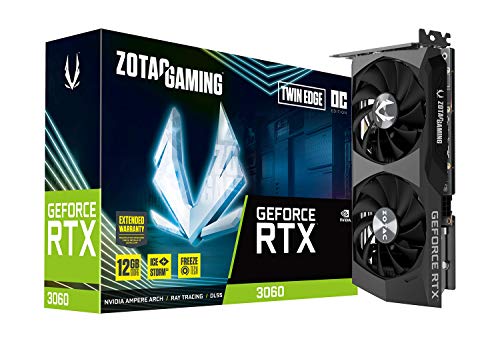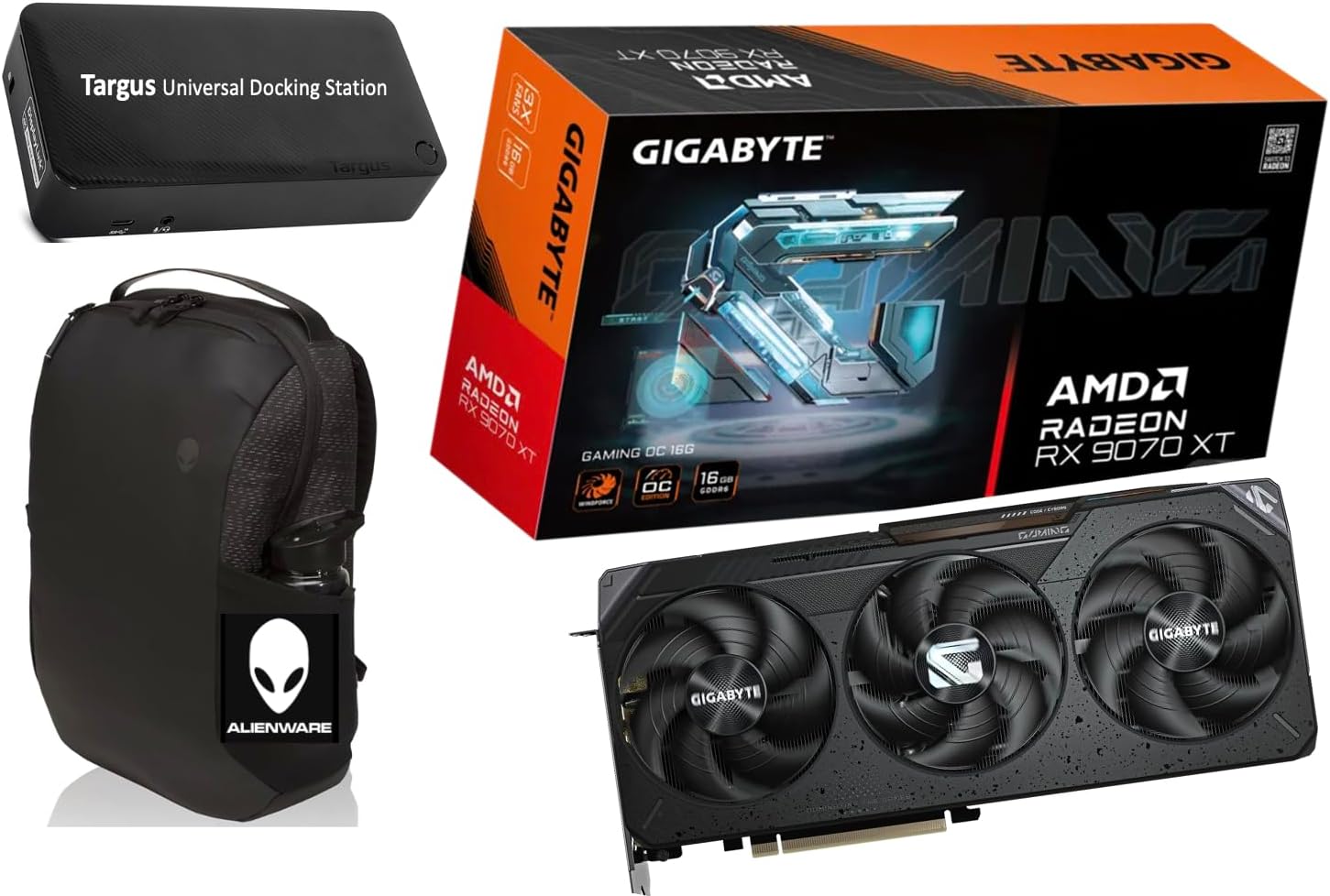
The RX 9070 XT is the better local-LLM card if you can live with ROCm setup friction and want 16GB of VRAM to host larger models or longer contexts. The RTX 3060 12GB is the better card if you want a plug-and-play CUDA stack, the lowest possible entry price, and you primarily run 8B-class models. At the $629 Amazon lightning-deal price for the 9070 XT versus ~$300 for the 3060 12GB, the 3060 still wins on perf-per-dollar for 8B; the 9070 XT wins decisively for any model that needs more than 12GB of frame buffer.
Editorial intro: the $629 lightning deal and the CUDA-vs-ROCm question
Tom's Hardware recently flagged the AMD Radeon RX 9070 XT hitting an all-time-low $629 in an Amazon lightning sale, well below its $749-$799 launch street price and uncomfortably close to a used RTX 3090 24GB. That price drop forces a comparison that did not really exist two years ago: AMD versus NVIDIA at the budget-AI tier, with ROCm now mature enough on llama.cpp and vLLM that the software gap is no longer disqualifying for many users.
For most of 2023 and 2024 the AMD-vs-NVIDIA conversation for local AI ended the moment someone uttered the word "ROCm." Driver headaches, missing kernels, and brittle wheel installs sent everyone back to CUDA. That has materially changed in 2026: llama.cpp ships first-class ROCm support, vLLM supports a useful subset of AMD cards, and PyTorch's ROCm wheels install with one command on supported distros. The 9070 XT, as a current-generation RDNA 4 card, is on the supported list from day one.
The question now is no longer "does AMD work for local AI?" — it is "does AMD work well enough for the specific workloads you run, and is the 16GB of VRAM worth the higher up-front cost and the higher power draw versus a $300 RTX 3060 12GB?" This guide walks through that decision: where the 9070 XT's 16GB unlocks model classes the 3060 cannot host, where its memory bandwidth and compute help vs hurt, and where the 3060's 12GB and lower TDP still win on dollars and watts.
If you already know you want CUDA's no-questions-asked compatibility, stop reading and buy the 3060. The rest of this is for the buyers who actually have the choice.
Key takeaways
- The 4GB VRAM gap matters most for 13B-30B models and for long-context use of 8B models; below those workloads the 3060 holds its own.
- The 9070 XT is ~2-3× faster in raw compute but only ~30-50% faster in real-world generation throughput on 8B q4, because memory bandwidth ratios shrink the gap.
- ROCm setup is meaningfully harder than CUDA but no longer disqualifying; expect an evening of distro-specific dance versus minutes for an NVIDIA install.
- Power and heat tip toward the 3060: ~170W vs ~300W+ for the 9070 XT, with implications for case airflow and PSU sizing.
- At $629 vs ~$300 the 3060 wins on perf-per-dollar for 8B workloads and the 9070 XT wins for 14B-class and above.
- Both pull double duty as gaming cards — the 9070 XT is a current-gen 1440p/4K gaming GPU; the 3060 12GB is a budget 1080p card.
What does the RX 9070 XT's 16GB buy you over the 3060's 12GB?
The headline number is 4GB, but the practical impact lands on three specific workloads.
Larger dense models. A 14B model at q5_K_M wants roughly 9-10GB of weights plus KV cache and overhead. That fits comfortably on a 16GB card with multi-K context; on a 12GB card you are forced down to q4_K_M and a tighter context budget. A 27B class model (Gemma 2 27B, Mistral 27B derivatives) at q3_K_M fits cleanly on 16GB with 4-8K context and does not fit at usable speed on 12GB.
Longer contexts on 8B models. Llama 3.1 8B at q4_K_M with 64K context (fp16 KV cache) eats about 4.6GB of weights plus ~1.3GB of KV cache plus overhead — fits both cards, but starts to crowd the 3060. Push the same model to 128K context and the 9070 XT has clear headroom while the 3060 needs q8 KV cache quantization to stay comfortable.
Larger batch sizes and concurrent users. If you want to serve two or three users at once or batch-process documents, the 16GB card scales further before you hit the VRAM wall.
If your day-to-day is an 8B model with 4K-16K context for a single interactive user — which is the median local-AI workload in 2026 — the 16GB advantage is largely paper. If you actively run 14B-class or longer contexts, it is real.
How mature is ROCm for inference in 2026 versus CUDA?
ROCm 6.x is the watershed. llama.cpp's HIP/ROCm backend is now first-class — the same cmake -DGGML_HIP=ON build dance you do once produces a working stack that runs the same GGUF files as CUDA. vLLM supports the RDNA 4 and CDNA architectures with a useful subset of features, including paged attention. PyTorch ROCm wheels install via pip install torch --index-url ... and just work on Ubuntu LTS releases.
Where you still hit friction on AMD:
- Distro support is narrower. Ubuntu LTS and a couple of others are first-class; Arch, Fedora, and bleeding-edge kernels are a hike.
- Some bleeding-edge model formats (FP8, certain MoE quantizations) ship CUDA-first and get ROCm support weeks or months later.
- Tool chains assume CUDA. A lot of community READMEs say
CUDA_VISIBLE_DEVICES; you learn the ROCm equivalents and move on. - Multi-GPU setups are more brittle on ROCm — for a single-card system this does not matter; for future expansion it might.
CUDA's experience on the 3060 is "install the driver, install Ollama, the card shows up." ROCm's experience on the 9070 XT is "install a supported distro, install the kernel module, install ROCm, install the runtime, build llama.cpp from source with HIP, the card shows up." Both end up at the same place; the path is longer for AMD.
AMD's official RX 9070 XT product page lists ROCm support, and TechPowerUp's specs page covers the full architectural breakdown.
Quantization matrix: which models newly fit in 16GB that 12GB cannot hold
This table maps quant level to model fit at typical context windows. Green-zone fits comfortably with room for KV cache and overhead; yellow-zone fits but is tight; red-zone needs offload or smaller quant.
| Model size | Quant | RTX 3060 12GB | RX 9070 XT 16GB |
|---|---|---|---|
| 7-8B | q4_K_M | comfortable, 32K context | comfortable, 64K+ context |
| 7-8B | q5_K_M | comfortable, 16K | comfortable, 32K |
| 7-8B | q8_0 | tight, 4-8K | comfortable, 16K+ |
| 13-14B | q4_K_M | tight, 4-8K | comfortable, 16K |
| 13-14B | q5_K_M | won't fit cleanly | comfortable, 4-8K |
| 27B | q3_K_M | requires offload | tight, 4K |
| 27B | q4_K_M | offload only | won't fit cleanly |
| 70B | any | offload only | offload only |
The story the table tells: if you live at 8B q4_K_M, both cards are fine and the 3060 is the better value. If you want to push to 13-14B at higher quant, or run 27B-class at all locally, the 9070 XT is the only one of the two that does it cleanly.
Benchmark table: tok/s on Llama 3.x 8B / Qwen 14B / Gemma 27B-class
Numbers below are ranges from community benchmarks across llama.cpp and vLLM at q4_K_M, batch 1, 4K context, after warmup. Real numbers vary with model build, llama.cpp version, and OS; treat as bands, not single-point promises.
| Model | RTX 3060 12GB (CUDA) | RX 9070 XT 16GB (ROCm) |
|---|---|---|
| Llama 3.1 8B q4_K_M | 35-45 tok/s | 55-75 tok/s |
| Qwen2.5 7B q4_K_M | 38-48 tok/s | 60-80 tok/s |
| Mistral 7B q4_K_M | 36-46 tok/s | 55-75 tok/s |
| Qwen2.5 14B q4_K_M | 18-25 tok/s | 28-40 tok/s |
| Llama 13B derivatives q4 | 18-25 tok/s | 28-40 tok/s |
| Gemma 2 27B q3_K_M | offload, 4-7 tok/s | 14-20 tok/s |
The 9070 XT is roughly 1.5-2× faster than the 3060 at every model size that both cards can host without offload. That looks like a big margin until you compare it to price: the deal-price 9070 XT costs roughly 2.1× as much as a $300 3060. The two scale together at the budget-AI tier.
Prefill vs generation: how memory bandwidth shapes each phase
Prefill is compute-bound. The RX 9070 XT brings far more raw FLOPs to the table — roughly 3× the 3060's tensor throughput — and it shows in prefill speeds, particularly for long prompts. Expect roughly 2-3× faster first-token latency on the 9070 XT for prompts longer than 4K tokens.
Generation is memory-bandwidth bound. The 9070 XT's 256-bit, ~640 GB/s memory bus is roughly 1.8× the 3060's ~360 GB/s, which sets the upper bound on the generation speed-up you can expect for a given model and quant. The benchmark numbers above broadly match this expectation.
For workloads dominated by long prompts (RAG, code review, document QA), the 9070 XT's compute advantage matters more than it looks on paper. For workloads dominated by generation length (story writing, long-form responses), the bandwidth gap is the more relevant number.
5-column spec-delta table
| Spec | RTX 3060 12GB | RX 9070 XT 16GB |
|---|---|---|
| VRAM | 12 GB GDDR6 | 16 GB GDDR6 |
| Bus width | 192-bit | 256-bit |
| Memory bandwidth | ~360 GB/s | ~640 GB/s |
| TDP / TGP | ~170 W | ~300 W+ |
| Street price (2026) | ~$300 | $629 deal / ~$749 typical |
Perf-per-dollar + perf-per-watt at $629 vs $300
At deal pricing the 9070 XT delivers roughly 1.5-2× the throughput at 2.1× the cost. Perf-per-dollar favors the 3060 by roughly 10-20% in 8B-class workloads — until you hit a model that does not fit in 12GB, at which point perf-per-dollar comparison breaks down because the 3060 cannot run it at usable speed.
Perf-per-watt strongly favors the 3060. ~35 tok/s at 170W ≈ 5.1 tok/s/W. ~65 tok/s at 300W ≈ 4.6 tok/s/W. Close, but the 3060 noses ahead. Pair the 9070 XT with electricity at $0.20/kWh and 8 hours/day of inference and you are paying ~$15/month in power versus ~$8/month for the 3060.
For always-on home-server inference where the card is hot for hours a day, the 3060's efficiency is real money over a year. For evening-and-weekend personal use, neither matters.
Verdict matrix
Get the RX 9070 XT if:
- You run 13B-class or larger models, or push 8B models past 32K context
- You are comfortable on Ubuntu LTS or another ROCm-supported distro
- You also want a current-gen 1440p/4K gaming card from the same purchase
- The $629 deal price holds and the perf-per-dollar gap narrows further
- You plan to keep the card for 3-4 years and want headroom for next-gen 14B-class models
Get the RTX 3060 12GB if:
- You primarily run 7-8B models at q4-q5 with 4K-16K context
- You want the lowest possible entry price and the fastest path from box to running
- You value plug-and-play CUDA across the broadest software ecosystem
- You care about power and heat for an always-on home server
- You are buying mainly for inference and not for high-fidelity gaming
Recommended pick
For most local-AI hobbyists in 2026 — single user, 8B-14B models, interactive chat and small batch jobs — the RTX 3060 12GB remains the smarter purchase. It is twice as cheap, uses half the power, and the CUDA stack saves a Saturday afternoon you would otherwise spend dancing with ROCm packages. The 4GB VRAM gap does not matter at your model size.
For builders who want a card that pulls double duty as a strong gaming GPU and a real local-AI workstation up to 14B-class models, the RX 9070 XT at $629 is the more compelling buy. The 16GB ceiling is the real unlock, and the gaming side of the equation makes the higher price easier to justify. Wait for the deal to come back if it has lapsed; the 9070 XT at $749 narrows the value gap meaningfully.
Related guides
- Cut AI API Bills: Run Local LLMs on an RTX 3060 12GB 2026
- Best Budget Local AI LLM Workstation Parts 2026
- Best Budget GPU for CNN Computer Vision Inference: RTX 3060 12GB
Citations and sources
- AMD — Radeon RX 9070 XT official product page — manufacturer specs and ROCm support claims.
- TechPowerUp — Radeon RX 9070 XT GPU database — bandwidth, bus width, architectural details.
- Tom's Hardware — AMD Radeon RX 9070 XT review — independent benchmarks and pricing context.
— Mike Perry · Last verified 2026-05-30