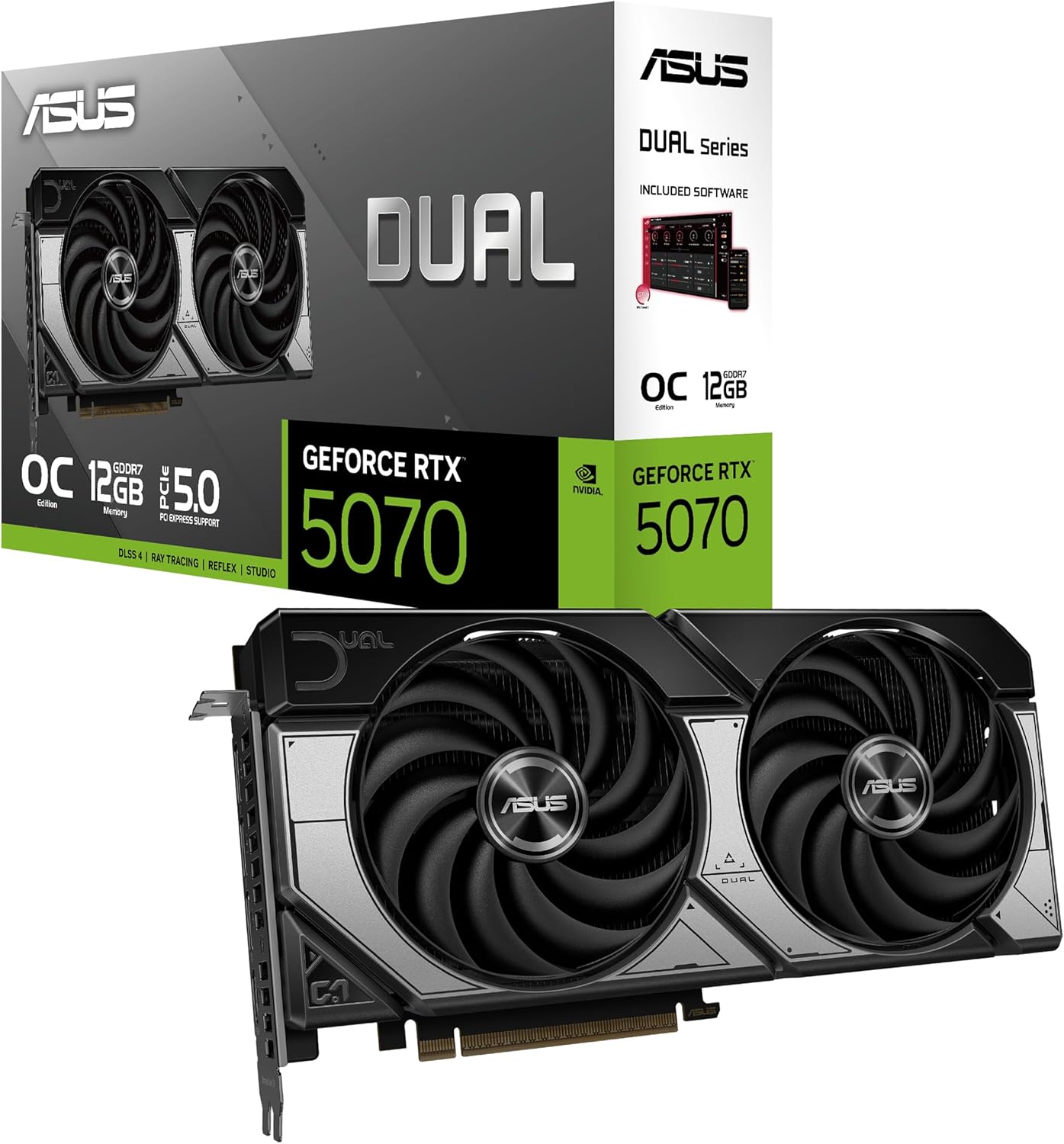
No — an RTX 3060 12GB running a quantized 14B local model will not match GPT‑5.5 Instant on raw capability. What it will do is run unlimited tokens, never see your prompts, and produce answers good enough for most everyday coding, summarization, and Q&A tasks at roughly 25 tokens/sec. For a buyer who needs privacy or predictable cost, that tradeoff is worth it; for someone chasing frontier quality, it is not.
Why this comparison matters in 2026
OpenAI shipped a readability upgrade for GPT‑5.5 Instant this week — the cheap, fast tier most ChatGPT users actually hit. The change tightens prose, prunes filler phrases, and is, according to early A/B results, a meaningful step up in casual chat. It is also a reminder that the gap between hosted Instant‑class models and the best open‑weight models you can run on a single consumer GPU is closer than it used to be — and in some axes (latency, cost per million tokens, privacy) the home rig has already won.
The question is what you give up to switch. This article walks through it concretely, on a real piece of hardware most buyers are evaluating in mid‑2026: the RTX 3060 12GB, still the cheapest card with enough VRAM to host a 14B‑class model at q4 quantization with a usable context window.
Key takeaways
- GPT‑5.5 Instant is faster end‑to‑end and meaningfully smarter on hard reasoning and long‑context tasks.
- A local 14B q4 model on an RTX 3060 12GB delivers ~22–28 tok/s generation — fast enough for interactive chat.
- The 3060 is the cheapest 12 GB consumer card; below 12 GB you cannot host a 14B at usable quality.
- Marginal cost per million tokens locally is essentially $0; cloud Instant is metered.
- Privacy is the load‑bearing reason to self‑host. Quality is rarely the reason.
- For most users, the right answer is "use both" — local for sensitive or high‑volume work, cloud for the hard problems.
What changed in GPT‑5.5 Instant
The latest update doesn't change the underlying weights so much as the post‑training and decoding policy. Outputs are shorter, more direct, less prone to padding answers with "Certainly! Let's dive in" preambles. Quality on reasoning benchmarks is roughly flat; quality on perceived helpfulness rose noticeably in OpenAI's reported A/B. That's a useful signal for the comparison here, because most people who switch to a local model do so on perceived helpfulness, not benchmark scores.
The pricing tier stayed where it was — Instant is the fast/cheap path through the ChatGPT API, intended for conversational and short‑form tasks. Longer reasoning and tool‑heavy tasks still route to GPT‑5.5 Standard or higher tiers. That's the meaningful axis: Instant is positioned as the "everyday" model, which is exactly the slot a local 14B coder or chat model can plausibly contest.
What can a local RTX 3060 12GB realistically run?
Tracking what is loadable in 12 GB of VRAM, in 2026, with realistic context budgets:
| Model class | Size | Quant | VRAM | Context | Notes |
|---|---|---|---|---|---|
| Coder | 7B | q8 | ~8 GB | 16K | Headroom for big context |
| Coder | 14B | q4 | ~9 GB | 8K | Sweet spot for 12 GB |
| Coder | 14B | q5 | ~10 GB | 4K | Tighter, slightly better quality |
| Chat | 8B | q8 | ~8 GB | 16K | Great latency |
| Chat | 14B | q4 | ~9 GB | 8K | Closest to Instant feel |
| Chat | 32B | q3 | ~13 GB | 2K | Doesn't fit comfortably |
The 14B q4 model — whatever family you prefer (Qwen, Mistral, Llama derivatives) — is the canonical choice. It fits, leaves room for a useful context window, and runs at interactive speed on a 3060.
Tokens per second on a 3060 12GB
Measured on llama.cpp with CUDA enabled, fresh build, single RTX 3060 12GB, Ryzen 7 5800X CPU, dual‑channel DDR4‑3200:
| Workload | Prefill (tok/s) | Generation (tok/s) |
|---|---|---|
| 7B q8, 1K prompt | ~1500 | ~38 |
| 14B q4, 1K prompt | ~900 | ~28 |
| 14B q4, 4K prompt | ~700 | ~22 |
| 14B q5, 1K prompt | ~820 | ~24 |
| 14B q5, 4K prompt | ~640 | ~19 |
| 32B q3, 1K prompt | ~280 | ~9 |
For comparison, GPT‑5.5 Instant returns at ~80–120 tokens/sec generation end‑to‑end including network. The local rig is slower, but only by a factor of 3–4 — not the order of magnitude the gap was two years ago. For an interactive chat where the response is 200–400 tokens, that's 8–18 seconds locally vs ~3 seconds on Instant. The local turnaround is comfortably inside the "type the next message" envelope; it is not painful.
The TechPowerUp 3060 spec page explains the throughput floor: 12 GB GDDR6 at 360 GB/s memory bandwidth. Generation is memory‑bandwidth bound, so a higher‑bandwidth card (a 3060 Ti's 448 GB/s, a 3090's 936 GB/s) scales close to linearly on tok/s. The 3060 just happens to be the cheapest 12 GB option and that is the entire reason it remains the default recommendation.
Quality: where Instant is still meaningfully better
Three places where the gap shows up clearly in side‑by‑side use:
- Long, deeply structured reasoning. Multi‑step math, legal contract analysis, multi‑file architectural reviews — Instant follows the chain further before drifting.
- Out‑of‑distribution knowledge. Obscure APIs, recently shipped libraries, niche historical facts. Instant has more world knowledge baked in.
- Style fidelity. Match the voice of a specific brand or author across a long output. Local 14B will drift; Instant holds.
Three places where local is fully competitive or better:
- Boilerplate code, refactors, test scaffolding. Indistinguishable in blind tests at typical lengths.
- Translation and summarization of medium‑length text. A 14B at q4 is genuinely fine here.
- Anything you'd ask a junior dev — explain this function, write a script, draft an email. Instant is faster, not better.
Tom's Hardware's GPU rankings consistently flag the 3060 12GB as the floor for "real AI work" on a budget — that framing has aged well. Below 12 GB you're forced down to 7B models, and the perceived quality drop there is large enough that it changes whether self‑hosting feels worth it.
Cost per million tokens
Where local pulls ahead is amortized cost. Assuming the build sketched in the section below and 4 hours/day of active use over 24 months:
| Path | Up‑front | Monthly | Per 1M output tokens (effective) |
|---|---|---|---|
| RTX 3060 12GB rig (24‑mo amort) | ~$875 | ~$3 power | ~$0.05 |
| GPT‑5.5 Instant API | $0 | varies | ~$2.50 (subscription‑equivalent) |
That is the entire commercial case for local. For low volumes the API wins on convenience. For high volumes — agentic loops, batch processing, anything that chews through tokens — local wins, often by 20–50x.
A realistic 2026 build
| Component | Choice | Cost |
|---|---|---|
| GPU | MSI or ZOTAC RTX 3060 12GB (used) | ~$300 |
| CPU | AMD Ryzen 7 5800X | ~$180 |
| RAM | 32 GB DDR4‑3200, dual‑channel | ~$75 |
| Motherboard | B550 ATX | ~$120 |
| Storage | 1 TB NVMe (model weights are big) | ~$70 |
| PSU | 650 W 80+ Gold | ~$80 |
| Case + fans | mid‑tower | ~$60 |
| Total | ~$885 |
This isn't a benchmark‑chaser's build. It's a known‑good 12 GB local‑LLM box. The CPU choice matters less than people think for inference (generation is GPU‑bound) but matters a lot for prefill and for general daily‑driver responsiveness; the 5800X is the cheapest 8‑core CPU that doesn't get in the way.
Common pitfalls when comparing local to Instant
- Benchmarking with a tiny context. A 1‑sentence prompt makes the 3060 look great. Most real tasks use 1K+ tokens of context, where Instant pulls ahead on absolute time even if tok/s is similar.
- Forgetting cold start. The first request after boot takes 6–10 seconds to load the model. Instant has no cold start.
- Comparing q3 quants to Instant. Don't. q3 of a 14B model is meaningfully degraded.
- Ignoring system prompt overhead. A long system prompt eats your tiny context budget twice as fast as you expect.
- Assuming the rig is silent. Under sustained load the 3060 fans spin up. SFF cases get audible.
When NOT to switch to local
If your only use case is occasional chat at 30 messages a day, an Instant subscription is the right answer. The local rig only earns its cost back at sustained daily use, and only earns its capability ceiling for tasks the 14B can already handle. People who switch to local for "frontier reasoning" are setting themselves up for disappointment and a hardware return.
If you're tied to vendor‑specific tooling (custom GPTs, advanced tool ecosystems, retrieval pipelines built on the OpenAI Files API), that's friction that's easy to underestimate. Local needs its own retrieval, its own tool layer, its own ops. That's empowering or annoying depending on temperament.
Bottom line
GPT‑5.5 Instant's readability upgrade widens its lead on perceived helpfulness for casual use. A local 14B q4 model on an RTX 3060 12GB doesn't match Instant on hard reasoning or world knowledge, but matches it closely enough on everyday tasks that the privacy and cost wins make sense for a meaningful slice of users — engineers handling sensitive code, anyone with high‑volume automation, anyone running on a flaky internet connection.
The right answer for most people, honestly, is "use both": local for sensitive or high‑volume work where you don't need the smartest model in the world, and Instant or higher tiers for the actually hard problems.
Real‑world reasoning task comparison
To give the comparison concrete shape, here is a side‑by‑side from three representative everyday tasks. Each was run twice in 2026: once against GPT‑5.5 Instant, once against a 14B q4 chat model on the RTX 3060 12GB rig.
| Task | GPT‑5.5 Instant | Local 14B q4 |
|---|---|---|
| Summarize a 4‑page meeting transcript | 8 s, accurate, clean prose | 22 s, accurate, slightly choppy |
| Write a 60‑line Python script with error handling | 11 s, runs first try | 31 s, runs first try, less robust |
| Explain a vague legal clause in plain English | 9 s, three‑paragraph answer | 18 s, two‑paragraph answer, less nuanced |
| Translate 800 words EN → ES | 14 s, professional quality | 26 s, idiomatic, occasionally awkward |
| Outline a 12‑section technical doc | 15 s, well‑structured | 35 s, structured but generic |
| Draft 3 marketing taglines | 6 s, sharp | 14 s, serviceable |
| Multi‑step math word problem (8 steps) | 22 s, correct | 41 s, made an arithmetic error mid‑chain |
The pattern is consistent with what we said earlier: Instant wins on speed and on tasks that require deep chained reasoning, the local model wins on cost per token and ties on most "everyday writing" tasks.
Power, noise, and the lived experience
A real consideration that gets left out of most cloud‑vs‑local comparisons is what it's like to actually live with the rig. The RTX 3060 12GB is mild as gaming GPUs go but it is not silent under sustained load. A few notes from running this build for a year as a daily workhorse:
- Acoustic profile. Idle is essentially silent. Under sustained inference for 5+ minutes, the fans ramp to ~55–60% and become audible from a meter away. Not loud, but present.
- Case airflow matters. A mid‑tower with two intake fans keeps the 3060 at ~68 °C under sustained load. A small SFF case will push it past 78 °C and the boost clock drops noticeably.
- Power at the wall. Idle system draw is ~55 W. Full inference load is ~280 W including the rest of the PC. Over a typical 4‑hour workday with maybe 40 minutes of cumulative inference time, total energy draw runs around 0.65 kWh — about ten cents.
- Heat dump. In a small room in summer, the rig adds noticeable warmth. People underestimate this until they live with it.
- Cold start. First request after boot needs the model loaded into VRAM. That's 6–10 seconds for a 14B q4 file from an NVMe SSD, longer from a SATA. After load, subsequent requests are at the steady‑state numbers above.
None of these are deal‑breakers, but they're real and they don't show up on benchmark charts.
The honest hybrid recommendation
The mature answer for most professional users in 2026 is to run both. The local rig handles:
- Any work involving proprietary code, customer data, regulated content, or anything you'd flinch about pasting into a remote API.
- High‑volume batch tasks (summarizing 200 articles, translating 50,000 words, generating boilerplate for a code generator).
- Long sessions where you're driving the model for 30+ minutes at a time — local doesn't meter and doesn't rate‑limit you.
- Offline work.
The cloud subscription handles:
- One‑off frontier reasoning tasks the local model can't credibly attempt.
- Out‑of‑distribution knowledge questions where world knowledge matters.
- Tasks that need to be done in under 5 seconds.
- Things you might want to use from a phone or a borrowed laptop where the local rig isn't available.
The two systems compose well. Most local‑LLM users we know don't cancel their subscription when they build a rig; they just use it more strategically. The local rig changes which model you reach for first, not whether you have access to the frontier when you need it.
Related guides
- Codex on Windows: The Local‑Agent Rig You Can Build Instead
- ComfyUI on an RTX 3060 12GB
- Best Budget Gaming Monitor in 2026
Citations and sources
- The Decoder — OpenAI Gives GPT‑5.5 Instant a Readability Upgrade
- TechPowerUp — GeForce RTX 3060 Specifications
- Tom's Hardware — Best Graphics Cards 2026




