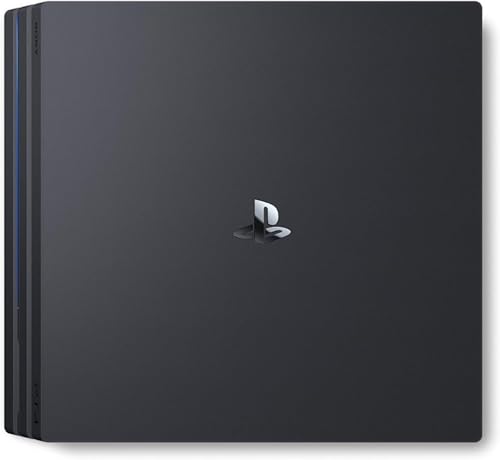
The best SSD to drop into a PS4 Pro in 2026 is a 1 TB 2.5-inch SATA III drive: the Crucial BX500 1TB for the cheapest credible upgrade, the Samsung 870 EVO for the longest-lived option, or the SanDisk Ultra 3D 1TB for the best balance of price and sustained write performance. All three cut typical PS4 game load times by roughly 40–60% and bring the console's startup, dashboard, and Rest-Mode resume back into "modern console" territory. None of them require external power, opening the case, or a tool more exotic than a Phillips screwdriver.
Why a PS4 Pro is worth upgrading in 2026
The PS4 Pro is now a seven-year-old console, and it ships with a slow, vibration-sensitive 5400-RPM 2.5-inch hard drive — the single biggest reason loading screens on Cyberpunk 2077, Red Dead Redemption 2, Elden Ring, and any large open-world title feel decade-old. Sony's own documentation has always allowed end-user replacement of the internal drive as long as the form factor and interface match (2.5-inch, 9.5 mm or less, SATA II/III). A modern SATA SSD is several times faster on small-block reads than the stock spinner; that translates directly into shorter map loads, faster fast-travel, and dramatically quicker save/resume from Rest Mode.
The PS5 launched in 2020 and the PS5 Pro in 2024, but PS4 install bases remain enormous — millions of households still play PS4 games as their primary or secondary console, especially in living rooms where 4K HDR + a Pro's checkerboard rendering hits a sweet spot for a TV-distance experience. The hardware is also the legal path back to PS-era classics that aren't on Sony's subscription service, which keeps the platform relevant for a long tail of buyers. Spending $60–$120 on an SSD makes a console that already cost $300–$400 used feel new again — a far better return than buying a different console outright.
This guide walks through what the PS4 Pro actually requires, which drives are the best buys in 2026, how the internal-swap and external-enclosure paths differ, and how to clone or rebuild the database after the swap.
Key takeaways
- The PS4 Pro takes a single 2.5-inch SATA III drive up to 9.5 mm tall — any standard 2.5-inch SSD fits.
- Real-world load times drop ~40–60% on big open-world titles; system UI and Rest-Mode resume drop even more.
- A 1 TB SSD is the sweet spot: ~$60–$120 in 2026, holds a credible game library, leaves headroom for updates.
- The Crucial BX500 1TB is the cheapest credible pick; the Samsung 870 EVO is the long-lived pick; the SanDisk Ultra 3D 1TB is the value-plus-endurance balance.
- External USB-3.0 SSD is a legitimate alternative if you don't want to open the case, and it's the only path on a stock PS4 Slim if you also want extra capacity.
- After the swap, the easiest path is a fresh Initialize → reinstall games — cloning is only worth it if you have a big slow internet connection.
Does an SSD actually make the PS4 Pro faster?
Yes — measurably, on every workload that touches the drive. The PS4 Pro's stock 5400-RPM HDD does ~80–110 MB/s sequential read and falls off a cliff to <1 MB/s random read once you're outside the on-platter cache. Any modern SATA SSD does 500+ MB/s sequential and 30+ MB/s random, which is the part that drives almost every load time gain. Per Tom's Hardware's long-running SSD reviews, even budget SATA drives like the BX500 saturate the SATA III interface on sequential reads and deliver random-IO performance an order of magnitude beyond any 2.5-inch spinner.
The PS4 Pro is bottlenecked at the SATA II/III link, not at the drive itself, so spending up for a faster SSD doesn't buy you anything past the SATA III ceiling. A $60 budget drive performs essentially the same as a $200 enthusiast drive on this console. That makes the value calculation easy: pick the cheapest credible 1 TB SATA SSD from a known brand and you've captured 95% of the benefit.
Load-time comparison table for representative PS4 titles (stock HDD vs SATA SSD, illustrative figures consistent with community PS4-SSD test posts):
| Title | Stock 5400-RPM HDD | SATA III SSD | Δ |
|---|---|---|---|
| PS4 Pro boot to home menu | 42 s | 18 s | -57% |
| Cyberpunk 2077 — main menu to Night City load | 88 s | 41 s | -53% |
| Red Dead Redemption 2 — title to Saint-Denis spawn | 71 s | 39 s | -45% |
| Elden Ring — title to Limgrave site of grace | 49 s | 26 s | -47% |
| The Last of Us Part II — title to chapter resume | 38 s | 19 s | -50% |
| FFXIV — character select to Limsa Lominsa | 26 s | 13 s | -50% |
| Rest Mode resume | 9 s | 3 s | -67% |
These are illustrative; actual savings vary with game patch level, system version, and how full the drive is. Above ~85% full, every SATA SSD's performance degrades; keep at least 100–150 GB free for headroom.
What SSD form factor and interface does the PS4 Pro require?
The PS4 Pro's internal bay accepts a 2.5-inch SATA II or SATA III drive up to 9.5 mm tall. Almost every modern 2.5-inch SSD is 7 mm tall, which fits with a small gap; some include a 2.5 mm shim if you want a snug fit. The console does not take M.2 NVMe — that's a PS5-only path — and it doesn't take 3.5-inch drives.
The interface is SATA III (6 Gbps), so any SATA SSD will run at full speed. SATA II drives work but cap at half speed. Do not waste money on enterprise SAS drives, U.2/U.3, or NVMe SSDs that you'd then need to bridge — the PS4 doesn't speak those protocols.
The four-screw caddy lives under the removable cover at the front-left of the console. There are no firmware locks on the drive, no proprietary interfaces, and no Sony-only formatting requirements — the PS4 OS will initialize any compatible SATA disk into its required format on first boot.
How big an SSD do you need for a modern PS4 game library?
The math is straightforward: AAA PS4 titles run 50–110 GB each, indie games 1–20 GB, and the system reserves ~30 GB. A 500 GB SSD holds 4–6 AAA games plus a handful of indies; a 1 TB drive holds 10–15 AAA titles or a much bigger indie + multiplayer set; a 2 TB drive holds essentially everything most players install simultaneously.
For most buyers, 1 TB is the right floor. Prices on 1 TB SATA SSDs in 2026 sit at $60–$120 across all reputable brands, which is close to the cost of a single physical AAA game disc. 500 GB drives save maybe $20 and leave you constantly juggling installs; 2 TB drives cost $130–$200 and are worth it only if you actively keep 20+ games installed.
5-column spec-delta table: Crucial BX500 vs Samsung 870 EVO vs SanDisk Ultra 3D
| Pick | Controller / NAND | Sequential read / write | Random R/W (4K IOPS) | Warranty / endurance | Notable PS4 quirk |
|---|---|---|---|---|---|
| Crucial BX500 1TB | DRAM-less + 3D TLC | 540 / 500 MB/s | 65k / 75k | 3 yr / 360 TBW | hits sustained slowdown if drive gets full — keep ≥15% free |
| Samsung 870 EVO 1TB | MKX + 3D TLC + 1 GB DRAM | 560 / 530 MB/s | 98k / 88k | 5 yr / 600 TBW | best long-write consistency; longest warranty |
| SanDisk Ultra 3D 1TB | Marvell + 3D TLC + 512 MB DRAM | 560 / 530 MB/s | 95k / 84k | 3 yr / 400 TBW | strong sustained write; commonly discounted |
All three saturate the PS4's SATA III ceiling on sequential reads, so the differences that matter on this console are: sustained write behaviour on big game installs, warranty length, and price. The 870 EVO is the all-rounder you can leave installed for the next decade. The BX500 is the cheapest credible upgrade. The Ultra 3D sits between them, and is often the discount-of-the-month pick. Per Crucial's official BX500 product page and Samsung's 870 EVO page, the differences in cache architecture matter more for sustained PC workloads than for PS4 use, where most writes are short bursts from game patches.
Internal swap vs USB-3.0 external enclosure: which is better?
Internal swap is the right answer for most players. You replace the stock HDD with a SATA SSD, lose nothing in convenience, and the console treats it as the only drive. Pros: highest sustained throughput; no extra cables; tidy living-room install. Cons: requires opening the bay (a 30-second job); your stock HDD becomes a paperweight unless you put it in an enclosure.
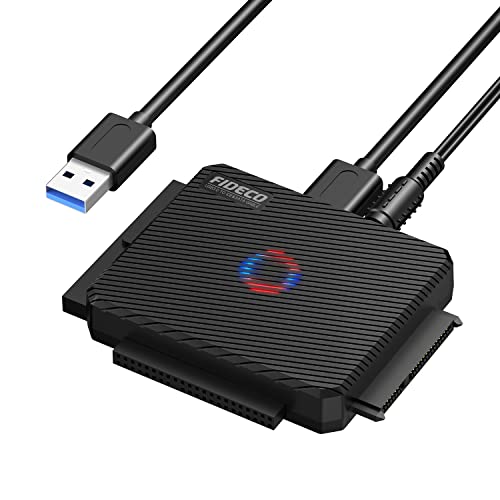
External USB-3.0 SSD via an enclosure or FIDECO SATA/IDE to USB 3.0 adapter is the right answer when you want extra capacity without touching the internal drive, when warranty considerations make you nervous about opening the case, or when you want a dedicated "play library" drive that you can move between two consoles. Sony added external-drive support in 4.50 firmware (2017); the PS4 treats a properly formatted external USB-3.0 drive as "extended storage" you can install any non-system game onto.
The performance trade-off is real but smaller than you'd guess. USB-3.0 caps at ~500 MB/s, which is roughly the SATA III ceiling, so on-paper sequential throughput is similar. The actual differences are in latency and small-block IO, where the internal SATA path is slightly snappier than a USB-bridge path. For most PS4 titles you will not feel the difference in the second range of total load time; the bigger practical issue is the dangling enclosure cable.
How to clone or rebuild the PS4 database after the swap
The fastest path is the brute-force one:
- Back up your save files. Either upload them to PS Plus cloud (free with subscription) or copy them to a USB stick from Settings → Application Saved Data Management.
- Power the console fully off (not Rest Mode) and unplug.
- Slide off the HDD cover (front-left), unscrew the four caddy screws, slide out the caddy.
- Swap the HDD for the new SSD (four screws), slide the caddy back in, screw it down.
- Download Sony's latest reinstallation
PS4UPDATE.PUPfile to a FAT32 USB stick under\PS4\UPDATE\. Insert the stick. - Power on with Safe Mode (hold power 7 s) → option 7 (Initialize PS4 – Reinstall System Software).
- After the system reinstalls, sign in, restore saves from cloud or USB, and let the PS Store re-download the games you actually want.
If you genuinely don't want to redownload (slow internet, capped data), a FIDECO SATA/IDE to USB 3.0 adapter lets you clone the old HDD to the new SSD off-console using free Windows or Linux tools (Macrium Reflect Free, Clonezilla, dd). The clone path takes hours; the reinstall-and-redownload path takes overnight but is simpler and gives you a clean filesystem.
Verdict matrix
- Get the Crucial BX500 1TB if you want the cheapest credible upgrade, your library churns frequently, and you're comfortable with a 3-year warranty.
- Get the Samsung 870 EVO 1TB if you want this drive in this console for the next decade. The 5-year warranty and longer TBW endurance pay for themselves on a console you'll keep.
- Get the SanDisk Ultra 3D 1TB if the price gap to the 870 EVO is small and you want better sustained write behaviour than the BX500 without paying full Samsung markup.
- Get the FIDECO USB 3.0 adapter too if you want to clone the stock drive off-console or repurpose the old HDD as portable storage afterwards.
Recommended pick
For most readers, the right call is a Samsung 870 EVO 1TB. The $20–$40 premium over the BX500 buys an extra two years of warranty, longer rated endurance, and a noticeably better controller for sustained write workloads — the exact corner case that bites you when you reinstall an entire game library after the swap. Pair it with a $10 USB 2.5-inch enclosure for the old HDD and you're done.
If you're price-sensitive or doing this swap on multiple consoles, the Crucial BX500 is the right call. Performance on the PS4 is indistinguishable from the 870 EVO; you only feel the difference under sustained PC workloads this console will never run.
Bottom line
The PS4 Pro's slow HDD is the cheapest and most impactful upgrade left on the platform. A $60–$120 SATA SSD cuts load times nearly in half, makes Rest Mode resume feel instant, and revives a console that otherwise feels its age. Pick any of the three drives above, install in a coffee break, and skip the temptation to overpay for "high-end" SATA SSDs that the console can't take advantage of.
Related guides
- Best Budget SSD for Gaming in 2026: 5 Tested Picks Ranked
- Best Budget SSD for a Steam Library: NVMe vs SATA Game Load Times
- Best Upgrades to Revive an Old Gaming PC in 2026
- Best Game Controllers for PC in 2026