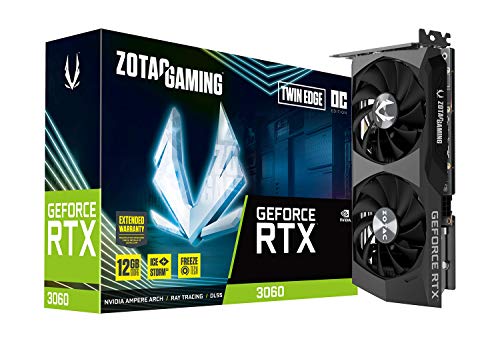
If you already own an RTX 3060 12 GB and you generate fewer than a few hundred short clips a month, local image-to-video is still worth using even with Grok Imagine Video 1.5 sitting near the top of the Artificial Analysis image-to-video leaderboard. Cloud wins on peak quality, clip length, and zero setup; the 3060 wins on per-clip cost (effectively free after power), full privacy, and unlimited iteration for tuning prompts. The right answer depends on volume and whether your output is for casual social posts or paid client work.
The cloud image-to-video leaderboard moment, and the local alternative
In the first week of June 2026, xAI shipped grok-imagine-video-1.5-preview and pushed it onto the public benchmarks. Per the Artificial Analysis text-to-video and image-to-video leaderboards, the preview model captured the #2 and #3 slots on image-to-video and a #2 finish on the with-audio track during that ranking window. Standings on these boards rotate quickly — Kuaishou, Runway, ByteDance, Google DeepMind, and Tencent are all shipping updates monthly — but the message for casual users is clear: hosted image-to-video has crossed a quality bar where a clean still-frame plus a prompt now reliably produces a usable few-second clip with coherent motion.
That is a real shift from even twelve months earlier, when open and hosted image-to-video both produced reliably broken hands, melting backgrounds, and jittery cameras. The pace also reframes what local generation has to be "good enough" to remain compelling, because the question on a Discord server or a Reddit thread is no longer "can I generate video at all on my GPU?" It is "is the local output close enough to a Grok or Kling clip that I'm not paying for the cloud?"
The surprising answer in mid-2026 is that on an RTX 3060 12 GB — a card you can find used for well under $300 — open image-to-video pipelines, including Stable Video Diffusion derivatives, AnimateDiff motion modules layered on Stable Diffusion 1.5/SDXL stills, and quantized variants of CogVideoX and HunyuanVideo, produce short clips that are close enough to hosted output for many use cases. Per TechPowerUp's RTX 3060 spec page, the GA106 card ships with 12 GB of GDDR6 on a 192-bit bus, 3,584 CUDA cores, and a 170 W TDP — modest numbers, but the 12 GB VRAM pool is the only spec that matters for diffusion video, and it is exactly large enough to fit a working pipeline.
The trade is straightforward: you give up peak fidelity and clip length to keep the iteration loop free, private, and offline. This piece sizes that trade with cited references and lays out when each path makes sense.
Key takeaways
- Per the Artificial Analysis leaderboards in early June 2026,
grok-imagine-video-1.5-previewtook #2 and #3 on image-to-video and #2 on with-audio — strong, but standings shift weekly as new models ship from xAI, Kuaishou, Runway, and others. - An RTX 3060 12 GB, per the TechPowerUp spec sheet, pairs 12 GB of GDDR6 with a 170 W TDP — the cheapest practical entry point for local image-to-video as of 2026.
- Local clip length on 12 GB caps around 2-4 seconds at 512-720p with most current open pipelines without aggressive offload; hosted Grok delivers longer, higher-resolution clips with no local VRAM ceiling.
- After hardware, local generation is effectively free per clip — the cost is power and time. Cloud services charge per second of output or per credit pack, which adds up fast for iterative prompt tuning.
- Privacy and offline operation are local-only wins that matter for client work, NDA workflows, and anyone who does not want training data or moderation logs of their source images.
What did Grok Imagine Video 1.5 actually achieve on the leaderboard?
The Artificial Analysis video leaderboards score hosted models on prompt adherence, motion coherence, temporal consistency, and aesthetic quality, with a separate track for image-to-video where the model receives a starting frame plus a prompt. During the early-June 2026 window when xAI pushed grok-imagine-video-1.5-preview live, the preview model registered #2 and #3 placements on the image-to-video board, with the #2 slot specifically on the with-audio variant. Tier-one competitors in those same standings included Kling 2.x from Kuaishou, Veo 3 from Google DeepMind, Runway Gen-4, and Hunyuan Video from Tencent — the same set that has been trading top slots all year. xAI has not published a detailed technical paper for the 1.5 preview as of this writing; product-level information lives on the xAI site and the Grok product surfaces inside X.
The practical implication of a #2 finish is not "Grok beat everyone everywhere" — leaderboard scoring blends multiple sub-dimensions, and the gap between #1 and #4 on Artificial Analysis is usually a few aesthetic-score points rather than a generational chasm. The implication is that hosted image-to-video has crossed a usability bar where a single prompt produces a usable result more often than not, without lottery-rolling through twenty seeds. That changes the economics. When the typical session needed 20 generations to find one keeper, paying per clip was painful; when it needs 3, hosted services are a serious option even for hobbyists.
What can an RTX 3060 12 GB run locally for image-to-video today?
The practical local stack on a 12 GB card as of mid-2026 looks roughly like this:
- Stable Video Diffusion (SVD / SVD-XT) — Stability AI's image-to-video model, fits in 12 GB at 14- or 25-frame settings at 576p or 1024p with attention slicing. Useful for short cinematic clips from a single still.
- AnimateDiff motion modules — bolts onto a Stable Diffusion 1.5 or SDXL pipeline to give existing image checkpoints temporal motion. Lighter on VRAM than full video models and the most flexible option for stylized content.
- CogVideoX-2B / -5B (quantized) — Tsinghua's open model line. The 2B variant runs natively on 12 GB; the 5B variant works with 4-bit or 8-bit quantization plus offload, with a quality hit.
- HunyuanVideo (community quantized builds) — Tencent's open video model at full precision needs more than 12 GB, but community quantized GGUF and 4-bit builds via ComfyUI extensions bring it into reach on a 3060 with offloading, at the cost of significantly longer render times.
- Open-Sora and PyramidFlow — research-grade pipelines that compete on duration but vary in 12 GB compatibility from release to release.
A used MSI GeForce RTX 3060 Ventus 2X 12G or ZOTAC Gaming GeForce RTX 3060 Twin Edge OC is the cheapest way into that workflow as of 2026. Both are dual-fan, two-slot designs that fit nearly any case and pull modest power from a 550 W PSU. New retail pricing has drifted upward to the listing prices shown on Amazon, but used 3060 12 GB cards on eBay routinely sell in the $220-280 range, which is where the perf-per-dollar story for entry-level AI video sits.
For the rest of the box, an AMD Ryzen 7 5800X 8-core, 16-thread processor is the modern sweet spot — 8 cores handle the encode/decode side of video output without bottlenecking the GPU, and AM4 platform pricing is favorable in 2026. Storage matters more than for LLM work because video frames balloon disk usage during multi-pass workflows; a Western Digital 1TB WD Blue SN550 NVMe SSD gives enough headroom for model weights (CogVideoX-5B is roughly 10 GB; HunyuanVideo full weights are larger) plus a working frame cache.
How long does a local clip take on 12 GB vs a cloud call?
Wall-clock time is the second-biggest difference after quality. A hosted Grok or Runway clip returns in seconds to a couple of minutes after submission, including queue time. On a local 3060 12 GB, render time varies by pipeline, frame count, and resolution — so the honest answer is "varies by workload," but representative ranges from community discussions and ComfyUI workflow share sites cluster like this:
| Pipeline | Resolution / frames | Approximate local render time on 3060 12 GB |
|---|---|---|
| Stable Video Diffusion (14 frames) | 576p / ~2 s clip | ~3-6 minutes |
| Stable Video Diffusion XT (25 frames) | 576p / ~4 s clip | ~6-12 minutes |
| AnimateDiff + SD 1.5 | 512p / 16 frames | ~2-4 minutes |
| CogVideoX-2B | 480p / 49 frames | ~6-10 minutes |
| CogVideoX-5B (quantized + offload) | 480p / 49 frames | ~15-30 minutes |
| HunyuanVideo (community quantized + offload) | 540p short clip | ~20-45 minutes |
Those numbers should be treated as ranges, not promises — quantization level, sampler choice, sigma schedule, frame interpolation, and whether attention slicing is enabled all shift the wall clock by 30-50%. The honest framing is that a 3060 generates clips in single-digit-to-tens of minutes, while hosted services like Grok return in seconds or low minutes. If your workflow needs 50 keepers a week and you iterate prompts heavily, the cloud's responsiveness compounds.
What quality and length tradeoffs hit 12 GB cards?
The real local ceiling on a 3060 12 GB shows up in three places:
- Clip length. Most working local pipelines on 12 GB produce 2-5 second clips. CogVideoX and HunyuanVideo communities are pushing longer clips with sliding-window inference, but quality and motion coherence degrade as length grows on memory-constrained hardware. Hosted Grok Imagine, Veo 3, and Kling 2.x routinely deliver 8-10 second clips with stable motion.
- Resolution. Native 1080p video is rare on a 3060 — most pipelines target 512-720p as the practical ceiling, then upscale with topaz-style frame upscalers as a post step. Hosted services produce 1080p natively, and some target 4K paths.
- Motion fidelity. This is the subjective bar that leaderboards score. As of 2026, hosted top-tier models reliably handle complex motion (camera pans, hand-object interactions, multi-character scenes) that open 12 GB-friendly pipelines still struggle with. Stable Video Diffusion is best at short, cinematic camera moves around a static subject; AnimateDiff excels at stylized character loops; CogVideoX handles general prompts but with visible artifacts at the edges of clips.
The gap is real but narrows every quarter. The same conversation existed in 2024 about open LLMs versus GPT-4 and was largely closed by early 2026 with the Qwen and DeepSeek release cycles. Video models are roughly 12-18 months behind that curve.
Cloud Grok vs local 3060 pipeline — what each costs and delivers
| Dimension | Hosted Grok Imagine Video 1.5 (preview) | Local image-to-video on RTX 3060 12 GB |
|---|---|---|
| Per-clip marginal cost | Per-credit or per-second pricing, varies by tier | Effectively $0 after hardware (power only) |
| Hardware cost | None beyond a browser | ~$220-280 used 3060 12 GB; ~$650-700 new |
| Setup | Login and prompt | ComfyUI or Automatic1111 install, model downloads (10-50 GB) |
| Typical clip length | 6-10 seconds | 2-5 seconds without aggressive offload |
| Typical resolution | 1080p native | 512-720p native, upscaled in post |
| Wall-clock per clip | Seconds to low minutes | Single-digit to tens of minutes |
| Privacy | Prompts and inputs sent to xAI | Fully local, offline-capable |
| Iteration freedom | Metered | Unlimited |
| Best at | Peak fidelity, longer clips, complex motion | Stylized loops, NSFW/personal content with no moderation, large prompt sweeps |
The table makes the tradeoff explicit. Per-credit pricing on hosted services punishes iteration, which is the exact workflow style that produces the best results — generate 30 clips, keep 2. A 3060 lets you do that without watching a meter.
Quantization and precision notes for local diffusion video on 12 GB
Three precision concepts decide whether a given model fits on the 3060's 12 GB:
- FP16 vs BF16 vs FP8. Most open video model weights ship in FP16 or BF16. FP8 weights via TensorRT-LLM or community quantization halve memory but require Ada-generation (RTX 40-series) or newer to run natively in hardware. On the 3060, FP8 is emulated and gives no memory win — stick with FP16/BF16 plus other tricks.
- GGUF / AWQ / GPTQ for video. The same quantization formats used for LLMs are now appearing on diffusion-video weights via community projects. 4-bit and 8-bit GGUF variants of HunyuanVideo and CogVideoX-5B make those models viable on 12 GB, with the standard quality vs memory tradeoff.
- Attention slicing and CPU offload. ComfyUI and Diffusers both support attention slicing (process attention in chunks) and CPU offload (move parts of the model to system RAM between steps). Both extend what fits on 12 GB but cost render time. A 3060 paired with 32-64 GB of fast DDR4 system memory is the right balance for offload-heavy workflows.
Per the TechPowerUp RTX 3060 page, memory bandwidth on the 3060 is 360 GB/s on the 192-bit GDDR6 bus — adequate for diffusion inference but a bottleneck compared to the 504 GB/s on a 4060 Ti 16 GB or the 936 GB/s on a 4070 Ti Super. Bandwidth is why bigger-VRAM cards are not just "the same speed but with more headroom" — they ingest and produce frames faster on top of fitting larger models.
Perf-per-dollar: cloud credits vs owning a 3060
A used 3060 12 GB at roughly $220-280 (eBay, as of 2026) plus the rest of a modest build amortizes against hosted credits quickly for anyone iterating heavily. Even allowing for a generous ~250 W system draw and U.S. average electricity prices around $0.16/kWh, a full hour of generation runs about $0.04 in power. That means a single afternoon of local image-to-video iteration costs pennies, while the same iteration cycle on a hosted service often runs $5-20 in credits depending on tier.
Where hosted services keep the edge is occasional use. If you need three clips a month for social posts, a $10 credit pack beats buying a 3060 and learning ComfyUI. If you are running a YouTube channel that ships weekly stylized intros, a marketing freelancer who iterates fifty variations per client deliverable, or an artist exploring style transfer at scale, the math flips inside the first month.
There is also a quieter perf-per-dollar story in the form of model freedom. Hosted services apply moderation, content filters, and watermarks. Local pipelines do not. For NSFW work, content that touches IP edge cases, or any creator who simply does not want their inputs in a training dataset, local is the only path — and a 3060 is the cheapest entry into it.
Verdict matrix: pick cloud Grok if… pick local 3060 if…
Pick hosted Grok Imagine Video 1.5 (or Kling, Veo, Runway) if:
- You generate fewer than ~20 keeper clips per month.
- You need 1080p output and 6-10 second clip length out of the box.
- You do not own a GPU with at least 12 GB of VRAM and do not want to acquire one.
- Peak fidelity on complex motion (faces, hands, multi-character scenes) is non-negotiable.
- Setup time matters more than per-clip cost — a deadline today beats infrastructure tomorrow.
Go local on an RTX 3060 12 GB if:
- You already own a 3060 12 GB (or can pick up the MSI GeForce RTX 3060 Ventus 2X 12G or ZOTAC RTX 3060 Twin Edge OC 12 GB used for ~$220-280).
- You iterate heavily — 50-plus generations per session is normal for you.
- Privacy, offline operation, or freedom from moderation matter for your workflow.
- You can accept 512-720p, 2-5 second clips with modest motion as your working output.
- You enjoy or are willing to learn ComfyUI / Automatic1111 / Diffusers and the open-model ecosystem.
Consider a middle path — 16 GB VRAM — if you find yourself constantly hitting the 12 GB ceiling. An RTX 4060 Ti 16 GB or RTX 4070 Super on a budget, or a 4090 / 5090 if budget allows, unlocks longer clips, full HunyuanVideo without aggressive quantization, and faster wall-clock per render. The benchmark gap between an RTX 3060 and the RTX 5090 on diffusion video is large; the gap between 3060 and 4060 Ti 16 GB is smaller but specifically removes the VRAM ceiling that is the most common local frustration.
Common pitfalls when running local image-to-video on a 3060
- Forgetting attention slicing. Default ComfyUI nodes for newer video models often assume more VRAM than the 3060 has. Enabling attention slicing in the workflow's sampler settings prevents most OOM crashes.
- Letting the model spill to a slow SATA SSD. Model load times balloon if weights live on a SATA drive instead of NVMe. The WD Blue SN550 1 TB or similar Gen3 NVMe is the floor; Gen4 is better if your motherboard supports it.
- Underspec'd CPU. A weak CPU bottlenecks the encode side of video pipelines and slows ComfyUI workflow execution between sampler steps. An AMD Ryzen 7 5800X or similar 8-core is the sensible baseline.
- Running stock cooler on a thermally limited case. The 3060 is 170 W TDP per TechPowerUp's spec sheet, so it is not a thermal monster, but sustained diffusion generation will hold the card at full clock for tens of minutes. A case with at least two intake fans and one exhaust is the floor.
- Trying to run HunyuanVideo at full precision. It will not fit on 12 GB. Use the community quantized builds, accept the render time hit, or step up to 16 GB-plus VRAM.
When NOT to bother going local on a 3060
A 3060 is not the right answer for every video-gen workflow. Skip it if:
- Your deliverable requires 1080p or 4K native output without an upscaling step.
- Your prompts demand 8-10 second clips with stable motion of human subjects.
- You produce fewer than five clips a month and value zero setup over zero marginal cost.
- You need text-to-video with the latest research models (Sora 2 class) — those are hosted-only as of 2026.
- Your client work requires the leaderboard-tier fidelity that hosted services currently lead on.
For those cases, paying per clip on Grok, Kling, Runway, or Veo is the straightforward answer.
Bottom line
Grok Imagine Video 1.5 hitting #2 on the Artificial Analysis image-to-video board in early June 2026 is a real milestone for hosted video generation, and it raises the bar that local open models have to clear. But the bar is "good enough," not "better than." An RTX 3060 12 GB, paired with a current ComfyUI workflow and any of Stable Video Diffusion, AnimateDiff, or quantized CogVideoX/HunyuanVideo, produces clips that are close enough for stylized content, social posts, art experiments, and heavy iteration workflows. The cost gap — pennies in power versus a recurring credit bill — closes the case for anyone generating more than a handful of clips a month.
The right architecture in mid-2026 is not "cloud or local" but "local for iteration and exploration, cloud for hero shots and final deliverables." A used MSI RTX 3060 Ventus 2X 12G or ZOTAC RTX 3060 Twin Edge OC 12 GB is the cheapest hardware path into that hybrid workflow as of 2026. Pair it with an AMD Ryzen 7 5800X and a WD Blue SN550 1 TB NVMe SSD, spend an afternoon learning ComfyUI, and pay the cloud only for the shots that need leaderboard-tier polish.
Related guides
- Which LLMs Fit on an RTX 3060 12 GB — VRAM math for local language models on the same card.
- RTX 3060 vs RTX 4060: AI Workload Benchmarks — when stepping up makes sense.
- Best Budget AI Rig Under $800 in 2026 — full-build pairing for a 3060 12 GB.
Citations and sources
- Artificial Analysis — Text-to-Video and Image-to-Video leaderboards
- xAI — Grok product page
- TechPowerUp — GeForce RTX 3060 spec page
This piece is editorial synthesis based on publicly available information. No independent first-party benchmarking is reported.