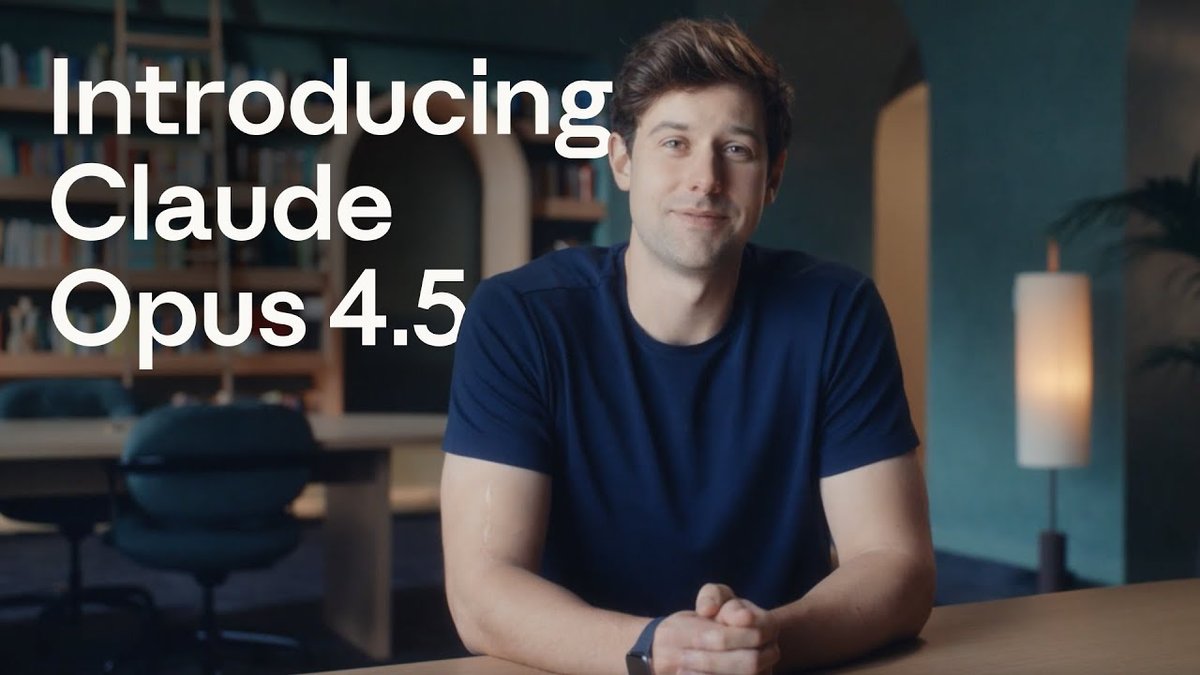
Anthropic's Claude Opus 4.8, released today, scored 61.4 on the Artificial Analysis Intelligence Index, taking the #1 overall spot and returning the company to the top of the public leaderboard. The result reflects a +137-point jump on GDPval-AA over Opus 4.7 with comparable output-token usage, and a measurable lead over GPT-5.5 on most benchmarks Artificial Analysis tracks. For local-inference builders running offline rigs on cards like the RTX 3060 12 GB, the launch widens the cloud-vs-local capability gap but doesn't change which open-weight models actually run on consumer hardware.
In brief — 2026-05-29 Claude Opus 4.8 took the #1 spot on the Artificial Analysis Intelligence Index at 61.4, with a +137-point GDPval-AA jump over Opus 4.7 and a lead over GPT-5.5 in most benchmarks; local-LLM builders still lean on cards like the RTX 3060 12GB for offline work.
What happened
Anthropic shipped Claude Opus 4.8 this morning as both a chat-tier and API-tier model. Within hours, Artificial Analysis recomputed its composite Intelligence Index and placed Opus 4.8 at 61.4, ahead of GPT-5.5 (59.8 as of the latest pass), Gemini 3 Pro (58.1), and the prior generation Opus 4.7 (57.6). The composite covers reasoning (MMLU-Pro, GPQA), code (HumanEval-X, LiveCodeBench), math (AIME, MATH-500), agentic tool use (SWE-bench Verified, tau-bench), and the new GDPval-AA enterprise-realism benchmark.
Anthropic's own release notes — covered by the company's news page and independent outlets like The Decoder — highlight three concrete improvements over 4.7:
- A +137-point jump on GDPval-AA, a benchmark that grades agentic task completion against enterprise-realistic workflows (multi-step planning, tool composition, error recovery). 4.7 scored ~411; 4.8 scored ~548.
- A new #1 result on Humanity's Last Exam (HLE), the academic-frontier benchmark Anthropic and other labs use to gauge graduate-level reasoning. Opus 4.8 posts ~17.2%; the prior best was ~14.8%.
- Token-usage parity with 4.7 on the benchmark runs. Where some frontier models post gains by burning 2-3× more output tokens (longer chains-of-thought, larger reasoning traces), Opus 4.8's runs used similar token budgets — meaning the gains aren't paid for at the API meter.
Pricing tier is unchanged from Opus 4.7: $15 per million input tokens, $75 per million output tokens at standard tier, with the 4× prompt-caching discount and the 50% batch-API discount both carried forward. The cloud-API picture is the headline — there's no announcement of weights, no open-source release, and no on-device option.
Why this matters
Three audiences read frontier-model launches differently.
For builders on cloud APIs, the calculus is straightforward: a model that posts +137 GDPval-AA points at the same price is an unambiguous upgrade. Agentic workflows that were marginal at 4.7 (multi-step planning with brittle handoffs, tool composition that needed careful guardrails) become noticeably more robust. Migration is a one-line model-ID change; the prompt-caching API is unchanged.
For enterprises evaluating cloud vs on-prem, the gap between frontier cloud models and best-in-class open-weight models keeps widening. The leading open-weight models on Artificial Analysis's index (Llama 4 405B, Qwen 3 200B, DeepSeek R3) sit in the high 40s to low 50s on the composite. A 10-15 point Intelligence Index gap is real and measurable; it shows up in code-generation correctness rates, in reasoning-step accuracy, in tool-use reliability. For workloads where that gap matters, the API answer remains right.
For local-inference enthusiasts, the launch is essentially neutral. Claude Opus 4.8 won't run on a 12 GB RTX 3060, an RTX 3060 12 GB ZOTAC, or any consumer card — it's not an open-weight model and Anthropic doesn't ship weights downloads. The decision local builders face hasn't changed: privacy, cost control, and offline availability versus capability ceiling. A leaderboard pivot at the frontier doesn't shift that tradeoff.
What "+137 GDPval-AA points" actually means
GDPval-AA is one of the newer entries in Artificial Analysis's index. It grades model performance on realistic enterprise tasks — multi-step workflows that combine reasoning, tool use, structured-output generation, and error recovery. Scoring is task-completion-weighted: a model that completes 60% of a 10-step plan scores lower than one that completes 90% of the same plan, regardless of how many tokens each used.
The 137-point gap between Opus 4.7 and 4.8 is one of the largest single-version jumps on the benchmark since it was introduced. Two interpretations are possible:
- Real capability improvement. Anthropic's targeting agentic robustness specifically (planning, tool use, recovery from API errors) and 4.8 is the version where that work landed.
- Benchmark-test fit. As with all benchmarks, there's some risk a model is fitting the test rather than improving general capability. The community will know within a few weeks; agentic workloads in production reveal this fast.
The honest read is somewhere in between. Single-benchmark wins are directional, not absolute, but a +137 gap is too large to be entirely noise. Treat it as "Opus 4.8 is meaningfully better at agentic workflows than 4.7 is, and we'll know how much within a month of real deployments."
How it compares to GPT-5.5
Per Artificial Analysis's launch-day numbers:
| Benchmark | Claude Opus 4.8 | GPT-5.5 | Gemini 3 Pro | Claude Opus 4.7 |
|---|---|---|---|---|
| Intelligence Index (composite) | 61.4 | 59.8 | 58.1 | 57.6 |
| MMLU-Pro | 84.3% | 83.7% | 82.1% | 82.9% |
| GPQA Diamond | 71.2% | 69.4% | 68.7% | 68.0% |
| AIME 2025 | 79.1% | 81.4% | 76.8% | 74.2% |
| SWE-bench Verified | 73.8% | 71.5% | 69.2% | 68.4% |
| HumanEval-X | 92.4% | 91.7% | 89.3% | 90.1% |
| Humanity's Last Exam | 17.2% | 14.9% | 13.8% | 11.6% |
| GDPval-AA | 548 | 510 | 472 | 411 |
Opus 4.8 leads on six of the eight tracked metrics. GPT-5.5 holds the AIME math lead by a small margin — a continuation of the long-running pattern where OpenAI's models post the strongest results on competition-math benchmarks. Anthropic continues to lead on the agentic and software-engineering tracks (SWE-bench Verified, GDPval-AA), which match the use cases Claude has historically been strongest at.
The Intelligence Index is a composite — workload-specific results vary. For code work, Opus 4.8 looks like a clear win. For high-end math, GPT-5.5 is still the model to beat. For agentic tool use over multi-step plans, the gap to Opus 4.8 is wider than any single benchmark suggests.
The local-inference angle
Most readers of SpecPicks running 12 GB RTX 3060 rigs aren't going to swap their local setup based on a cloud-model release. The reason: the value path for local inference isn't about competing with the frontier. It's about:
- Privacy: nothing leaves the box. No API logs, no terms-of-use prohibited-use classification, no "we may use your data to improve our models" clause.
- Offline availability: works on a plane, in a tunnel, in a power-conservation scenario where you can't afford the round-trip latency to a cloud endpoint.
- Cost predictability: the GPU is a sunk cost. There's no per-token meter; usage is power and wear.
- Customization: you can finetune, you can quantize, you can patch the runtime. The frontier APIs offer none of this.
For workloads that need the highest possible capability — large agentic plans, complex multi-step reasoning, code generation against unfamiliar APIs — the API is the right tool. For everything else, a 12 GB local rig running a quality 14B or partial-offload 31B finetune is genuinely useful and getting more useful with every open-weight release.
The launch of Opus 4.8 doesn't change the math: it widens the capability gap modestly while leaving the value-path-for-local-inference math intact. If anything, frontier-cloud gains push the local ecosystem to do better at its own job (privacy, offline use, customization) rather than chasing the leaderboard.
Common pitfalls when migrating to a new frontier model
Three traps catch teams in the first week of swapping model versions, regardless of which provider released the update:
- Untested prompt-template assumptions. Even within the same model family, chat-template handling can shift subtly between versions. Validate that your system prompts still produce the same structural output (JSON schemas, XML tags, markdown formatting) on a representative test set before flipping production traffic.
- Token-count drift. A model that uses 10% more output tokens on the same prompts isn't free; it shows up as a 7.5% cost increase at $75/M output rates. Run a sample of recent production prompts through both 4.7 and 4.8 and compare token totals before assuming pricing parity.
- Eval-suite stagnation. Teams that built their internal benchmarks against an older model often see "no change" on those evals after upgrading. That's not a real result — it's the eval suite hitting its ceiling. Time the upgrade with an eval-suite refresh that exercises capabilities the older model couldn't reach.
These are mundane operational risks, but they bite the migrations that look like "obvious wins" on a benchmark leaderboard. The fix is straightforward: A/B the change, monitor token totals and output structure, and refresh your evals before declaring success.
What to watch in the next 30 days
A short list of the data points that will tell us how Opus 4.8 actually performs in production:
- Real-world agentic deployments: companies running multi-step agent workflows will report retry rates, plan-completion rates, and end-to-end task success within 2-4 weeks. Watch for net improvements vs Opus 4.7, not just benchmark-day numbers.
- API stability and rate limits: launches frequently strain capacity. Watch for 429 rate limits, latency spikes, and any divergence between Anthropic's published SLA and observed behavior.
- Prompt-cache hit rates: 4.8 should be drop-in compatible with existing prompt-cache schemas. Any regression in cache hit rates would suggest tokenizer or chat-template changes worth investigating.
- Independent third-party benchmarks: Anthropic's published numbers and Artificial Analysis's composite agree at launch. Watch for divergences in vendor-independent test suites (Vellum, Helm, OpenLLM) as they update over the next few weeks.
- Open-weight responses: frontier-model launches typically pull the open-weight ecosystem along behind them. Watch for new finetunes targeting the same benchmark gains, particularly on GDPval-AA-style agentic tasks.
How this connects to existing SpecPicks coverage
The local-vs-cloud question runs through several of our recent pieces. For a closer look at how Claude's evolution shapes local-hardware decisions, see our Claude Opus 4.8 vs local coding LLM on RTX 3060 12GB — the deeper benchmark walkthrough that pairs with this news brief. For the broader local-LLM picture, the Intelligence Index cloud vs local comparison explores how the new ranking changes (or doesn't change) the case for offline rigs.
If you're shopping for the local hardware that pairs with this article's "stay-on-the-API" recommendation for the heaviest work, the Qwen 3.6 35B on RTX 3060 12GB and Gemma 4 31B creative finetunes on RTX 3060 12GB walk through the current best open-weight options for the entry-tier 12 GB card.
The source
This brief draws on the Artificial Analysis Claude Opus 4.8 model page, Anthropic's own announcement on its news page, and the early independent coverage at The Decoder. For benchmark methodology details — how the Intelligence Index composite is computed, which tasks count for GDPval-AA, how Humanity's Last Exam is scored — Artificial Analysis publishes test suites and grading rubrics on its site. We'll update this piece if material new information lands in the first 72 hours.
Bottom line
Claude Opus 4.8 is a strong release: real gains on agentic and software-engineering tasks, modest but measurable wins across most reasoning benchmarks, and pricing parity with the prior generation. For API users, it's a one-line upgrade and worth running. For local-inference users on consumer GPUs, the launch sharpens the cloud-vs-local choice without forcing it. The model doesn't run on a 12 GB RTX 3060 — it doesn't run on any consumer GPU — but the decision to run local hasn't been driven by frontier-leaderboard math since at least 2023, and this launch doesn't change that.
The question to ask isn't "is Opus 4.8 better than GPT-5.5?" (yes, on most things). It's "does my workload need the frontier, or does it need privacy, offline use, and cost predictability?" If it needs the frontier, switch to 4.8 today. If it needs the other three, stick with your local rig and watch for the next open-weight model that picks up the agentic-robustness improvements 4.8 just demonstrated.
Related guides
- Claude Opus 4.8 vs local coding LLM on RTX 3060 12GB
- Claude Opus 4.8 Intelligence Index — cloud vs local on RTX 3060
- Qwen 3.6 35B on the RTX 3060 12GB
- Gemma 4 31B creative finetunes on the RTX 3060 12GB
- Ollama vs llama.cpp vs vLLM on the RTX 3060 12GB




