A 1998-2004 retro PC build is a fundamentally different problem in 2026 than it was a decade ago. The original parts are aging out — IDE drives are failing, ISA sound cards are scarce, motherboard caps need replacing. The fix isn't always going deeper into period-correct hardware; it's pairing the working vintage core (the CPU, the chipset, the case, the GPU you actually want to use) with a small set of modern components that solve the failure-prone bits. Five parts cover most of the gap: a USB DAC for sound, CompactFlash for the boot drive, and a small fleet of SATA/IDE-to-USB adapters for imaging drives on your modern PC.
The headline pick is the Creative Sound BlasterX G6, a USB DAC/amp that handles modern Windows, picks up DOS via emulation layers like SBemu, and lasts longer than any vintage ISA card you'll find. Below it: the cheapest reliable solid-state boot media for Win98-era boards, and the three best adapters for drive imaging work.
| Pick | Best for | Key spec | Price range | Verdict |
|---|---|---|---|---|
| Sound BlasterX G6 | Best Overall | 32-bit/384 kHz USB DAC, 130 dB SNR | $170-$190 | The only sound card you'll buy this decade |
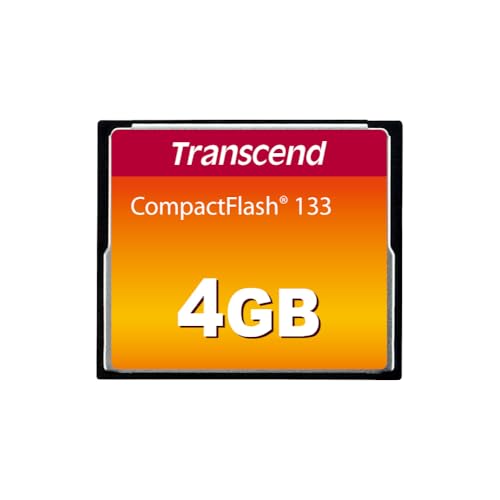
| Transcend CF133 | Best Value | 4 GB CompactFlash, ATA-mode native | $30-$40 | Silent, solid-state Win98 boot |
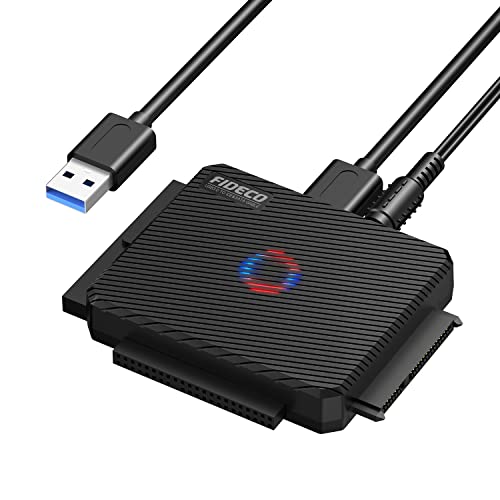
| FIDECO SATA/IDE to USB 3.0 | Best for Drive Imaging | 2.5"/3.5" IDE + SATA, USB 3.0 | $20-$28 | Cleanest 3.0 adapter for occasional use |
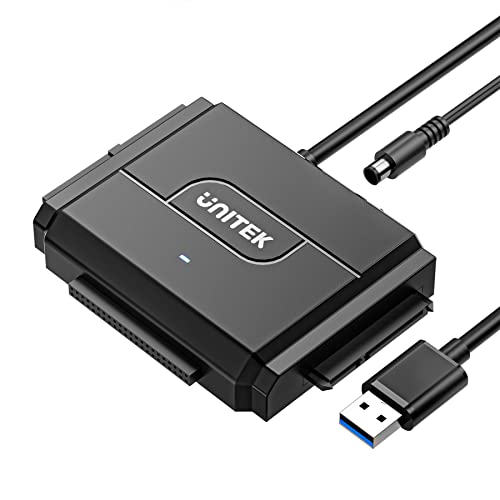
| Unitek SATA/IDE to USB 3.0 | Best Performance | 12 V passthrough for 3.5" drives | $30-$38 | The heavy-use imaging adapter |
| Vantec CB-ISATAU2 | Budget Pick | USB 2.0, all interfaces, cheap | $20-$28 | The "in the toolbox" backup adapter |
A note on buying retro: The "modern accessory" parts in this guide are still in production and ship on Amazon. The vintage cores around them — Pentium III boards, Voodoo3 cards, Sound Blaster Live!s, ATI Radeon 9000-series cards — live almost entirely on eBay and forum classifieds. SpecPicks routes vintage hardware through the eBay channel for that reason; see our retro upgrade catalog for the period-correct parts that pair with this kit.
🏆 Best Overall: Creative Sound BlasterX G6
Spec chips: USB DAC/amp · 32-bit / 384 kHz · 130 dB DNR · 3.5 mm + optical · Headphone amp (up to 600 Ω)
Pros: Driver support spans Win98 SE through modern Windows 11 · DOS audio via SBemu (SoftMPU + Sound Blaster emulation) · Dedicated headphone amp drives high-impedance cans · Optical output for vintage AV receivers · Built like a tank
Cons: Not true ISA Sound Blaster — DOS real-mode purity isn't possible · Some games' SB16 IRQ routing requires SBemu wrapper · USB power can flicker if your retro case's front-panel USB is unreliable
The G6's role in a retro PC kit is to replace the unobtainium ISA sound card. A working Sound Blaster 16 or AWE32 with all caps healthy is now $80-$150 on eBay if you're lucky, and they're failing in the field faster than the supply can grow. The G6 from Creative ships into a USB-A port on any 1998+ board with USB support, runs drivers all the way back to Win98 SE, and produces audibly cleaner output than any consumer sound card from the period.
For DOS real-mode games — the ones that probe directly for an SB16's IRQ and DMA — you need SBemu or VDMSound running on top of a DOS shell that exposes the G6 as an audio device. It works, but it's a wrapper, not the silicon. For pure DOS purity you still want a period sound card; for everything else, the G6 is dramatically more reliable and sounds better than vintage hardware ever did. Most retro builders run a hybrid: a CT4810/CT4820 SB Live! for DOS legitimacy, the G6 for Win98/2000/XP work and headphones.
Check current price on Amazon · Price varies — check listing before buying · See full details
💰 Best Value: Transcend CF133 CompactFlash Card
Spec chips: 4 GB · ATA-mode native · Up to 30 MB/s sequential read · Compact Flash Type I · Industrial-grade controller
Pros: Speaks IDE/ATA natively, no protocol translation · Silent, solid-state operation · No moving parts to fail in five years · Trivially imaged on any CF-equipped PC · 4 GB is the safe Win98 size for FDISK compatibility
Cons: Needs an IDE-to-CF adapter ($5-$10 separately) · 4 GB is small for an XP build · Some older BIOSes have quirks with CF reporting as removable media
CompactFlash is the cleanest answer to the "what do I do when my Quantum Fireball or IBM Deathstar IDE drive finally dies" problem. CF Type I speaks the ATA protocol natively; with a passive IDE adapter (~$8 on Amazon for any of a dozen brands) it behaves as a fixed disk to the BIOS. There's no protocol translation, no drivers to install, no firmware mismatch. The Transcend CF133 in particular has a long track record in industrial-control applications — these cards are built for environments where reliability matters more than peak speed.
The 4 GB capacity is deliberate. Larger CF cards (16 GB+) start hitting BIOS limits on older boards, and Windows 98's FDISK doesn't handle partitions above ~32 GB cleanly. A 4 GB CF gives you a comfortable Win98 install, a few games, and zero partition-sizing headaches. For an XP build, step up to an 8-16 GB card; for a Win2000 build, 4-8 GB is the sweet spot.
The "fixed disk vs removable media" quirk catches some people: older Award/Phoenix BIOSes treat CF as removable by default, which prevents Windows installation. Most modern CF cards (including the CF133) are factory-configured for fixed-disk mode, but verify with the seller before buying.
Check current price on Amazon · Price varies — check listing before buying · See full details
🎯 Best for Drive Imaging: FIDECO SATA/IDE to USB 3.0
Spec chips: USB 3.0 host · 2.5" + 3.5" IDE (40-pin) · SATA I/II/III · 12 V/2 A external PSU included · LED activity indicators
Pros: Clean USB 3.0 throughput (~80-130 MB/s sustained on a healthy drive) · Includes both 2.5" and 3.5" power connectors · Compact form factor · No extra software — just a USB mass-storage device
Cons: Plastic build feels less robust than the Unitek · 40-pin IDE connector is the only ribbon length you get · Some Y2K-era IDE drives don't enumerate cleanly until you cycle power
The FIDECO is the adapter to reach for when you're imaging period drives for a build. Pull the Quantum Bigfoot out of an old tower, ribbon it to the FIDECO, plug the FIDECO's 12 V power brick into the wall, attach USB 3.0 to your modern PC, and the drive shows up as a USB mass-storage device. Image it with dd, ddrescue (for failing drives), or your tool of choice. Restore the image to your CF card or your new IDE drive with the same workflow in reverse.
The clean USB 3.0 throughput matters for two reasons. First, imaging a 40 GB IDE drive at USB 2.0 speeds (~40 MB/s) takes the better part of an hour; at USB 3.0 speeds it's 10-15 minutes. Second, ddrescue on a failing drive does many short reads with retries, and the lower-overhead USB 3.0 transport handles those small transactions more gracefully than USB 2.0's polling-based model.
Drive enumeration on power-up: some IDE drives from the 2000-2004 era have spin-up timing that the FIDECO's bridge doesn't wait for. If the drive isn't detected on first power-on, cycle the 12 V power, count to five, and try again. This is universal across IDE-to-USB adapters, not specific to FIDECO.
Check current price on Amazon · Price varies — check listing before buying · See full details
⚡ Best Performance: Unitek SATA/IDE to USB 3.0
Spec chips: USB 3.0 (5 Gbps) · 2.5"/3.5" IDE + SATA · 12 V passthrough · UASP supported · One-touch backup button
Pros: UASP support tightens throughput on healthy SATA SSDs · Sturdier housing than the FIDECO · Power-button on the body for safe drive cycling · Detects more legacy drives without resets
Cons: More expensive than the FIDECO · Power brick is the same generic 12 V/2 A — no upgrade there · One-touch backup button needs Windows-only software to use
The Unitek is what you upgrade to when you're imaging drives often enough that the FIDECO starts feeling rough. UASP (USB Attached SCSI Protocol) gives the bridge command-queuing — the same trick NCQ does on a SATA host — which closes most of the throughput gap between a native SATA port and a USB adapter when you're imaging SSDs. For spinning IDE drives the UASP advantage shrinks (the drive is the bottleneck), but the Unitek's enumeration logic is better at handling marginal drives than the FIDECO's.
The power switch on the body is a small thing that matters when you're imaging a dozen drives in a session: you can cycle a stuck drive without unplugging the brick. The one-touch backup button is a gimmick — the Windows-only software it triggers is dated and unreliable. Ignore it.
For a builder who's restoring multiple retro PCs, this is the better of the two USB 3.0 adapters. For someone imaging one drive every few months, the FIDECO is fine and saves $10.
Check current price on Amazon · Price varies — check listing before buying · See full details
🧪 Budget Pick: Vantec CB-ISATAU2 USB 2.0 Adapter
Spec chips: USB 2.0 (480 Mbps) · 2.5"/3.5" IDE + SATA · 12 V passthrough · Power switch · LED status
Pros: Cheapest reliable adapter on the market · Vantec's QC has held up over a decade of these · Backwards-compatible with any USB port from 2001 onward · Power switch on the body
Cons: USB 2.0 caps imaging at ~40 MB/s · Slower for any large-drive workflow · No UASP
USB 2.0 is fast enough for the role this adapter plays in a toolbox: the "I just need to grab one file off this old drive" use case. At 40 MB/s sustained, imaging a 20 GB IDE drive takes about ten minutes — fine for occasional work, painful if you do it weekly. The Vantec's value isn't speed; it's reliability and ubiquity. Every retro builder I know has one in a drawer, has had it for years, and uses it as the backup when the USB 3.0 adapter is busy or refuses to enumerate a particularly stubborn drive.
The 12 V passthrough handles 3.5" drives without issue, the power switch keeps the workflow clean, and the Vantec name has a longer-than-average track record on this kind of hardware. For someone building their first retro PC, this is the adapter to start with; you'll graduate to USB 3.0 when you start imaging often enough to care.
Check current price on Amazon · Price varies — check listing before buying · See full details
What to look for in retro PC sound and storage gear
Reliability beats period-correctness
The first rule of running a retro PC in 2026 is that your goals — playing games, exploring old software, building a stable machine — beat any particular vintage-purity standard. A modern USB DAC that always works is more useful than a finicky ISA card you have to recap every two years. Solid-state CF media that boots silently is more useful than a screaming Quantum Fireball that might die mid-Quake-session. Period correctness is fun; reliability is what lets you actually use the build.
Match your storage to your BIOS
Retro BIOSes have hard limits you'll hit if you don't plan around them. The most common: the 137 GB barrier on pre-2003 Award BIOSes (28-bit LBA), the 32 GB FAT32 partition limit on Win98 FDISK, the 8 GB barrier on early Pentium-class boards without LBA support. CompactFlash sized at 4-8 GB sits comfortably under all of these. Don't reach for a 32 GB CF "because storage is cheap" — you'll spend a week fighting partition tables.
Sound: ISA for DOS purity, USB for everything else
The honest split: a real ISA Sound Blaster (SB16, AWE32, or AWE64) for DOS games that probe for the exact IRQ and DMA channels. Anything else — Windows 98 games, Windows 2000/XP work, music playback, recording — goes through a USB DAC like the G6. Most retro builders run both: the ISA card for DOS, the USB DAC for everything Windows-side. The G6 alone covers ~70% of typical retro PC use.
Drive-imaging adapters earn their place
If you're maintaining a retro PC for the long term, you'll image drives regularly: backups, swapping CF for IDE, restoring known-good configurations after experiments. A USB 3.0 adapter saves real time over USB 2.0 once you're past three or four images per month. Below that, the Vantec USB 2.0 unit is fine.
Modern accessories ship on Amazon; vintage cores ship on eBay
The five parts in this guide are all current products with active Amazon stock. The vintage hardware they pair with — Voodoo cards, PIII boards, period sound cards, IDE optical drives, beige cases — lives on eBay, where used inventory is healthy and prices have stabilized. Plan your purchases accordingly.
Don't underestimate caps
Half the "my retro PC doesn't post" threads on Vogons trace back to leaking electrolytic capacitors on the motherboard or PSU. Before you spend $80 on a CF card and $190 on a USB DAC, budget $20-$40 for a recap kit and a soldering session — or send the board to a service that does this work. New parts won't save a board with capacitor plague.
Sources
- Creative Sound BlasterX G6 product page
- Transcend CF133 CompactFlash product page
- AnandTech storage coverage and SSD/drive testing methodology
Related guides
- Best IDE CompactFlash USB adapter for retro PC builds 2026
- Sound Blaster G6 on Windows XP for a retro build
- Win98 SE with 1 GB RAM and the VCache fix
- Best retro storage adapter for Win98 / DOS
— Mike Perry