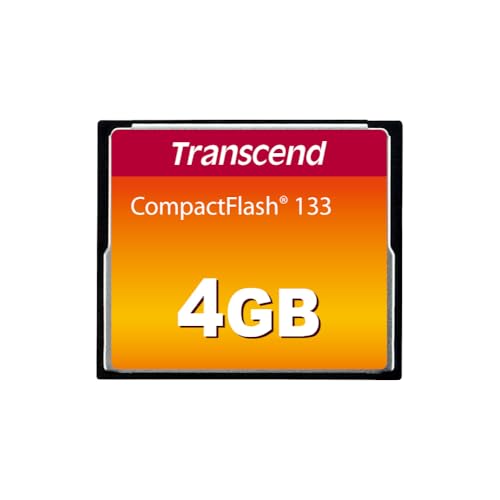
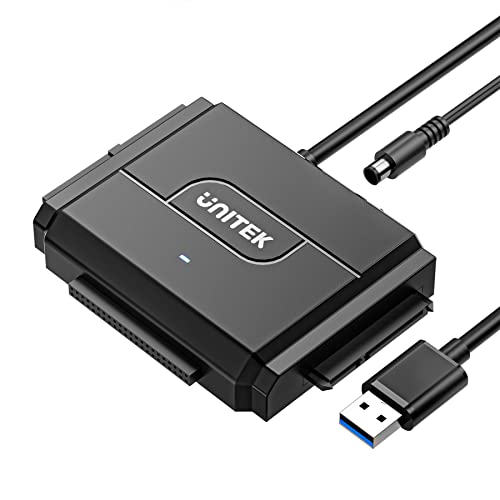
Yes — the GeForce 4 Ti 4200 is one of the best GPUs you can build a period-correct 2002 Windows XP rig around in 2026. It hit the value sweet spot in its own time and it still does today: fast enough to run every notable Direct3D 8 and OpenGL title of the era at high settings, plentiful on the used market, and cheap compared to a Ti 4600 or Radeon 9700 Pro. Pair it with a solid-state boot medium like a Transcend CF133 CompactFlash card and a Unitek SATA/IDE-to-USB adapter for image work, and you have a reliable retro rig that boots faster than the original.
Why the Ti 4200 is the sweet spot for a 2002 build
If you built a gaming PC in the summer of 2002, you were shopping for a graphics card in the middle of one of the most competitive years the PC industry has ever seen. The GeForce 4 Ti launched in February, splitting into the Ti 4200 at the affordable end, the Ti 4400 in the middle, and the Ti 4600 at the top. The card that stuck in enthusiast memory wasn't the Ti 4600 — it was the Ti 4200. It delivered 80-90% of the Ti 4600's real-world gaming performance for meaningfully less money, and it undercut ATI's Radeon 8500 while matching or beating it in most titles.
Twenty-plus years later, the same logic drives the retro-build shopping calculus. Ti 4200 cards are more common than Ti 4600s on the used market, they cost less, and the small performance gap doesn't matter when the goal is running games designed for their era. If your budget target is a $50-100 GPU inside a $300-500 total build, the Ti 4200 is where you land. This synthesis draws on the TechPowerUp GeForce 4 Ti 4200 specs page, AnandTech's contemporaneous review of the GeForce 4 lineup, and the retro-PC community's collective wisdom preserved on sites like vintage3d.org to lay out the case for a Ti 4200 build in 2026.
Key takeaways
- The Ti 4200 is the value pick of the GeForce 4 Ti generation — 80-90% of the Ti 4600 performance at a fraction of the cost, then and now.
- Pair it with a Pentium III-S 1.4 GHz, Pentium 4 Northwood 2.4-3.0 GHz, or Athlon XP 2400+ for a period-correct build.
- Use a CompactFlash card via a passive CF-to-IDE adapter as your boot drive to eliminate mechanical failure and cut boot time to seconds.
- Install a late-vintage ForceWare driver on Windows XP (Windows 98 SE for pure DOS/Glide work).
- Inspect for bulging capacitors before trusting a 20+ year old card long-term.
Why was the GeForce 4 Ti 4200 the value king of 2002?
The GeForce 4 Ti architecture (NV25) shipped as three SKUs sharing the same die: Ti 4200, Ti 4400, and Ti 4600. The core was clocked lower on the Ti 4200 (250 MHz for the 64 MB variant, 250-275 MHz for the 128 MB variant) and the memory ran slower (500 MHz effective on 128 MB models, 444 MHz on some 64 MB variants), but the four vertex shaders, four pixel pipelines, and the full NV25 feature set — hardware transform and lighting, DirectX 8.1 shaders, multisample antialiasing — were identical to the Ti 4600. That's the key insight: you got the same feature stack as the flagship, just clocked lower.
At retail launch, the Ti 4200 landed at roughly $199 while the Ti 4600 was $399. In benchmarks of the day, the Ti 4200 was 10-20% behind the Ti 4600 across most titles at 1024×768 and 1280×1024. That's the exact profile enthusiast reviewers of the era called "the value king": most of the flagship, half the price, and enough headroom to comfortably play everything shipping that year.
The same architecture-shared-with-flagship logic is why the card is still a compelling retro pick. When you buy a used Ti 4200 today, you're buying the same NV25 you'd get in a Ti 4600 — just a couple of hundred MHz slower.
5-column spec-delta table
| Card | Core / Mem Clock (typical) | VRAM | Memory Bus | Era Launch Price |
|---|---|---|---|---|
| GeForce 4 Ti 4200 64 MB | 250 / 500 MHz | 64 MB DDR | 128-bit | ~$199 |
| GeForce 4 Ti 4200 128 MB | 250 / 444 MHz | 128 MB DDR | 128-bit | ~$219 |
| GeForce 4 Ti 4200-8X | 250 / 514 MHz | 128 MB DDR | 128-bit AGP 8× | ~$179 |
| GeForce 4 Ti 4400 | 275 / 550 MHz | 128 MB DDR | 128-bit | ~$299 |
| GeForce 4 Ti 4600 | 300 / 650 MHz | 128 MB DDR | 128-bit | ~$399 |
| Radeon 8500 128 MB | 275 / 550 MHz | 128 MB DDR | 128-bit | ~$249 |
| GeForce 3 Ti 500 | 240 / 500 MHz | 64 MB DDR | 128-bit | ~$349 |
The Ti 4200-8X variant (an AGP 8× refresh released later in 2002) is worth calling out. It runs slightly higher memory clocks than the original Ti 4200 and drops in at a lower price than the launch Ti 4200 did, so it's often the best used-market target if you can find one.
What CPU and platform pair correctly with a Ti 4200?
Two credible platform paths for a 2002 build:
Intel Pentium 4 Northwood + i845 or i865 chipset. The Pentium 4 Northwood 2.4-3.0 GHz was the mainstream CPU shipped alongside the Ti 4200. Pair with an Intel i845PE, i850, or the newer i865PE chipset motherboard, DDR-333 or DDR-400 memory, and an AGP 4× or 8× slot for the Ti 4200. The i865PE is arguably the best 2002-era chipset — dual-channel DDR support, AGP 8×, and USB 2.0 built in.
AMD Athlon XP + nForce2. The Athlon XP 2400+ through 3200+ was the enthusiast alternative. Pair with an nForce2 Ultra 400 motherboard for dual-channel DDR-400, AGP 8×, and integrated audio/networking. The nForce2 platform was the enthusiast's choice through 2002-2003 for a reason — chipset-level features matched Intel while Athlon XP CPUs cost less.
Pentium III S 1.4 GHz Tualatin is worth naming for a slightly-earlier-era build. Pair with a VIA Apollo Pro 133T or Intel i815 chipset board with an AGP 4× slot. It's a slower CPU than the P4, but the Ti 4200 is rarely CPU-bound in 2002-era titles at 1024×768, so the Tualatin path produces a quieter, cooler build that runs everything Windows 98 SE and early XP throw at it.
Any of these three paths works. The Ti 4200 is not fussy about its host system.
How do you boot a period build reliably in 2026?
The single most common failure point on a retro build is the original mechanical hard drive. Twenty-year-old IDE drives spin up loud, spin down under load, and eventually stop. The clean modern fix is CompactFlash-to-IDE.
Wiring it up:
- Get a Transcend CF133 CompactFlash card — 8 GB, 16 GB, or 32 GB depending on what you plan to install. Windows XP + a period game library fits comfortably in 32 GB.
- Get a passive 40-pin CF-to-IDE adapter (a $5-10 part). Passive means it presents the CF card as an IDE device with no driver.
- Plug the CF card into the adapter, plug the adapter into the primary IDE cable, and jumper as master.
- Boot your XP installation media and install as if the CF card were a small mechanical drive.
The result is a silent, instantly-booting drive with no moving parts. Windows XP fits in 3 GB, drivers and games fit in the rest, and there's no worry about a 25-year-old spindle motor giving out.
For imaging the CF card from a modern system (initial cloning, backups), use a Unitek SATA/IDE-to-USB 3.0 adapter. Plug the CF card in via a USB card reader if you have one; the SATA/IDE adapter is the fallback for imaging period-correct IDE drives you may want to preserve. If you're recycling a real IDE hard drive into the build as a data-only secondary, the Unitek adapter is also how you'll copy files from a modern PC.
For gaming reference content — SNES ROMs, PS1 ISOs, general emulation — many builders pair the retro rig with the Nintendo SNES Classic Edition sitting alongside it, so the XP box handles PC-era titles while the SNES Classic covers console-era work. It's not required, but it's a common pairing on a retro-gaming desk.
Which drivers and API path for the Ti 4200?
On Windows XP, install a late-vintage ForceWare driver — specifically the 45.23-71.89 range. These drivers still support the GeForce 4 Ti family, still expose DirectX 8 and 9 code paths cleanly, and match the OS's own DX runtime.
- Direct3D 8.1 is the native API of the Ti 4200 era. Every 2002-era title uses it.
- Direct3D 9 works on the Ti 4200 (the card supports the DX8.1 feature level, and DX9 titles fall back cleanly for their DX8 code path).
- OpenGL works well; the Ti 4200 was strong in OpenGL and Quake III derivatives.
- Glide is not supported (Glide is 3dfx). If you need Glide, you need a Voodoo card.
Avoid ForceWare 175.xx and later — they dropped Ti 4 support and produce artifacts if forced.
Install method: use the Plug and Play driver install wizard within Windows XP rather than running a modern-style .exe installer. Modern installer paths sometimes don't register the driver's control panel correctly on legacy hardware.
Benchmark expectations
Ballpark numbers from period AnandTech, TechPowerUp, and retro-community measurements at 1024×768 in 2002-era titles on a healthy Pentium 4 2.8 GHz + Ti 4200-8X 128 MB:
| Title | Ti 4200 128 MB | Ti 4600 |
|---|---|---|
| 3DMark 2001 SE | ~10,500-12,000 | ~12,500-14,500 |
| Quake III Arena timedemo (1024×768) | ~200-230 FPS | ~230-260 FPS |
| Unreal Tournament 2003 | 60-80 FPS avg | 70-90 FPS avg |
| Return to Castle Wolfenstein | 90-110 FPS | 110-130 FPS |
| Serious Sam: Second Encounter | 60-75 FPS | 70-85 FPS |
| Morrowind | 40-55 FPS | 45-60 FPS |
Every one of those is a comfortable, playable frame rate in the settings that would have been considered "high" at the time. The Ti 4200 is not the bottleneck in these workloads.
Gotchas: AGP aperture, PSU rails, and 20+ year old capacitors
- AGP aperture setting. BIOS defaults on some boards set AGP aperture to 64 MB. Bump it to at least 128 MB for a 128 MB card to prevent stutter in high-VRAM titles.
- Motherboard AGP voltage. Ti 4200s expect 1.5 V AGP. Older boards may only support 3.3 V AGP (AGP 2×). This will damage the card. Verify your board is AGP 4× or 8×.
- PSU rails. The Ti 4200 draws all its power through AGP — no external connector — but the board itself expects a stable 12 V rail. Modern PSUs with weak 5 V rails (uncommon but not unheard of) can misbehave on 2002-era boards that draw heavily from 5 V. If you're using a modern ATX PSU, look for a unit with a reasonable 5 V and 3.3 V rating.
- Capacitor age. Twenty-plus-year-old aluminum electrolytic capacitors on the Ti 4200 PCB dry out. Look for bulging tops, brown residue at the base, or any smell of vinegar. Cards with visibly failed caps should be recapped before extended use.
- Original PC coolers. The stock heatsink and fan on 2002-era Ti 4200s often has a decades-old dried thermal-paste bond. Repaste when the card arrives.
Verdict matrix: build around a Ti 4200 or step up?
| Situation | Build around Ti 4200 | Step up |
|---|---|---|
| Budget-focused period-correct XP build | yes | — |
| Ti 4600 or Radeon 9700 Pro at similar used price | — | step to Ti 4600 or 9700 Pro |
| Playing exclusively pre-2001 titles | — | GeForce 3 Ti or Voodoo 5 |
| 1600×1200 gaming target | — | Radeon 9700 Pro |
| Direct3D 9 shader-heavy titles | — | Radeon 9700 Pro / 9500 Pro |
| Pure Direct3D 8.1 / OpenGL library | yes | — |
| Silent, low-power build | yes | — |
Common pitfalls when building a Ti 4200 rig in 2026
- Buying an AGP 2× board. Older motherboards pre-Pentium 4 sometimes only support AGP 2×. The Ti 4200 needs AGP 4× or 8×.
- Buying a Ti 4200 without confirming it's the 128 MB variant. 64 MB cards are worse for later 2002-2003 titles that push texture size.
- Skipping the capacitor inspection. A bulging cap that doesn't fail immediately can fail six months into the build.
- Using the wrong driver. ForceWare 175.xx dropped Ti 4 support. Stay in the 45-71 range.
- Trying to run Direct3D 9 shader-heavy titles. The Ti 4200 nominally supports DX9, but shader-heavy DX9 titles run better on a DX9-native architecture like the Radeon 9700.
- Forgetting the sound stack. Period-correct audio (Sound Blaster Live!, Audigy 2 ZS) matters as much as the GPU for authenticity.
When NOT to build around a Ti 4200
If your target library is late-2003 or later — Half-Life 2, Doom 3, Far Cry — the Ti 4200 struggles. Move to a Radeon 9700 Pro or GeForce FX 5900 Ultra for that era instead. If you want a pure 3dfx build, get a Voodoo. If you want to play Direct3D 8 titles at 1600×1200, the Ti 4200's fill rate isn't enough — step up. And if you're building for maximum out-of-the-box compatibility rather than period authenticity, a slightly newer card gives you more slack.
Bottom line
The GeForce 4 Ti 4200 remains the best-value GPU for a 2002-vintage Windows XP retro build in 2026, exactly as it was in 2002. Pair it with a Pentium 4 Northwood or Athlon XP motherboard, boot from a Transcend CF133 CompactFlash card via a passive CF-to-IDE adapter, keep a Unitek SATA/IDE-to-USB 3.0 adapter around for image work, and install a late-vintage ForceWare driver. You'll play every important title of the era at high settings, boot in seconds, and spend less than you would on a Ti 4600.
Related guides
- Best CPU Coolers for AMD Ryzen 5000 (AM4) in 2026
- Best GPU for 1440p Local Image Generation in 2026
- Self-Host NextCloud on a Raspberry Pi 4 8GB
Citations and sources
- TechPowerUp — GeForce 4 Ti 4200 specs
- AnandTech — original GeForce 4 review
- Vintage3D — retro GPU reference
This piece is editorial synthesis based on publicly available information. No independent first-party benchmarking is reported.