The 30-second answer
Cloning a vintage 1990s IDE drive to a 4GB CompactFlash card preserves the data on solid-state media that won't suffer mechanical failure, modernizes the storage so the retro PC runs silent, and costs about $50 in parts. The recommended workflow: pull the drive, image it through a SATA/IDE-to-USB 3.0 adapter using ddrescue, then write the image to the CF card with a CF-to-IDE adapter on the target end. Use a generic USB 3.0 IDE adapter or the older USB 2.0 Vantec CB-ISATAU2 — both work, USB 3.0 is faster.
Why vintage IDE drives need a backup plan now
Mechanical hard drives from the late 1990s and early 2000s are 25-plus years old in 2026, well past every mean-time-between-failure number their manufacturers ever published. The failure modes are unforgiving: a seized bearing turns the platter into an inaccessible disc of magnetic data; a dead read/write head can score the platter on the next power-on; magnetic decay over decades degrades the analog signal until error correction can't recover the bits. Each of these takes the data with it, and recovery from a physically failed drive runs $500-2500 at a professional lab if it's possible at all.
The retro-PC community has converged on a single answer to this: clone every IDE drive you care about to solid-state media while it's still readable, and keep the original on a shelf as a backup. CompactFlash is the cleanest target because it presents the IDE/ATA interface natively — per the CompactFlash Association specifications, the CF protocol is electrically and logically a subset of IDE, which is why the conversion only requires a passive pin-mapping adapter. No drivers, no BIOS patches, no host configuration changes. The CF card looks like a regular IDE drive to anything that asks.
The upside compounds. A CF-backed retro PC runs silent, draws milliwatts at idle, boots faster, and has solid-state reliability characteristics that will outlast its owners. The original drive sits in a static bag on a shelf, intact for the rare case where the original media itself is the historical artifact.
Key Takeaways
- Vintage IDE drives are at end-of-life — clone them while they still read, not after they fail.
- CompactFlash is the right target because it presents the IDE/ATA interface natively.
- Pull the drive and image it through a USB-IDE adapter on a modern PC — don't rely on the original host.
- Use
ddrescue, notdd— failing drives need the non-sequential read and skip-and-retry behavior. - Keep CF capacity below 8GB for retro-PC compatibility with period BIOSes; larger drives work for pure archive use.
The parts list
The conversion needs four small pieces of hardware. Each is cheap and widely available.
CompactFlash card — 4GB or 8GB industrial grade
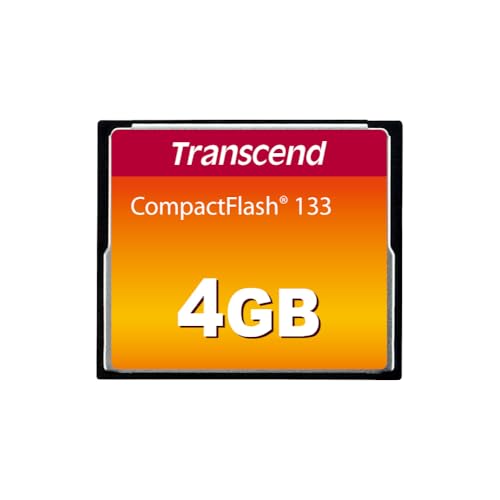
The Transcend CF133 4GB CompactFlash is the canonical choice. Transcend's industrial-grade CF line uses SLC NAND in the smaller capacities, which delivers far better write endurance and data retention than the consumer-photography MLC/TLC cards. Speed is rated at 30MB/s sequential read — slower than modern SD cards but identical to or faster than the IDE bus in the era's hosts.
Capacity selection matters because of BIOS limitations:
- Pre-1998 BIOS: typically caps at LBA28-limited 8GB total, often with 504MB or 2.1GB sub-limits.
- 1998-2002 BIOS: most clear the LBA28 limit and address up to 137GB.
- Post-2002 BIOS: clear LBA48 with no practical drive-size limit for the era.
For a clone of a period drive that was originally 1GB-6GB, a 4GB or 8GB card is the right pick. For larger archives, larger cards work but you may need a BIOS update or an LBA aware boot manager.
USB-IDE adapter — for imaging the source drive on a modern PC
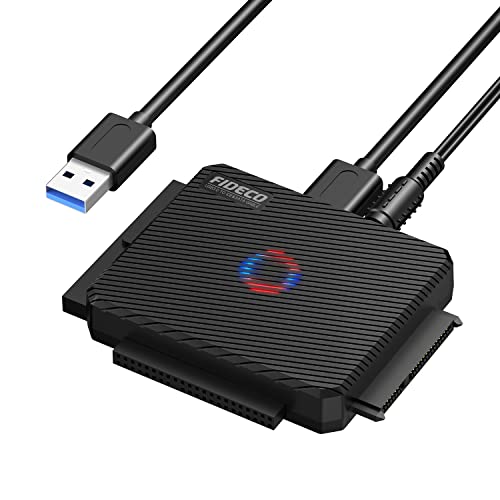
Two options work cleanly. The FIDECO SATA/IDE to USB 3.0 adapter is the standard modern pick: USB 3.0 to either 2.5-inch IDE, 3.5-inch IDE, or SATA, with a separate 12V/5V power brick for the 3.5-inch IDE drives that draw more current. Speed is gated by the IDE drive itself — typically 20-40MB/s sequential on period hardware — but well above what the IDE bus would have delivered in the original host.
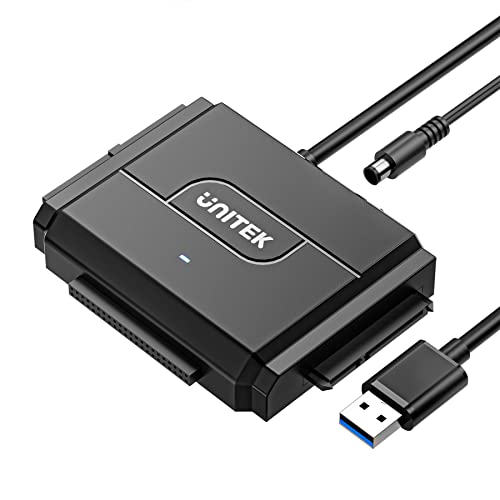
The Unitek USB 3.0 SATA/IDE adapter is the same concept with slightly different cabling. Either works.
For users who prefer the USB 2.0 generation of adapters (slower but more widely compatible with older host laptops), the Vantec CB-ISATAU2 is the long-time community favorite. USB 2.0 caps practical throughput at ~30MB/s, which is still above what most period IDE drives deliver, so the bottleneck is the source drive either way.
CF-to-IDE adapter — for installing the CF card in the target system
Generic passive CF-to-IDE adapters sell on the major marketplaces for $5-15. They come in two physical forms: 40-pin (for 3.5-inch IDE bays in desktops) and 44-pin (for 2.5-inch IDE in laptops and embedded systems). Pick the one that matches the target host's connector.
No active electronics live in these adapters — they are pin-mapping passthroughs. Quality variation comes down to PCB workmanship and connector retention, neither of which is a meaningful issue for any of the widely-sold options.
A modern host PC for the imaging step
Linux is the right host for this job. The ddrescue and dd tools are mature, free, and produce reliable images. Windows can do the job with paid recovery tools (the free options are universally worse), but the Linux toolchain is what the community standardizes on. A live USB of Ubuntu or Fedora works for users who don't have a dedicated Linux box.
The imaging workflow — ddrescue, not dd
Pull the drive from the original PC. Connect it to the modern host through the USB-IDE adapter. The drive should enumerate as /dev/sdX (Linux) or as a removable drive (Windows). Verify it shows up at all — a drive that won't enumerate is already worse off than one that does.
The ddrescue tool from the GNU project is the right imaging tool. Per the ddrescue documentation (and the broader Wikipedia article on Parallel ATA for the protocol details), ddrescue is purpose-built for failing media: it reads the source in multiple passes, skipping over bad sectors on the first pass and coming back to them later with increasingly aggressive retry logic. The map file produced as a side effect documents exactly which sectors failed, which is invaluable if you want to know whether the image is complete or which files might be damaged.
The basic invocation is:
The -d flag uses direct disk access (bypassing the kernel's IO scheduler, important for failing media). The -r3 flag retries failed sectors up to three times on subsequent passes. The map file records progress so the process is resumable — important when imaging a slow or failing drive can take 6-24 hours.
For a healthy drive, plain dd works:
But "healthy" is a low-confidence statement for a 25-year-old mechanical drive. Default to ddrescue unless you have specific reason to skip it.
Writing the image to CompactFlash
Once you have a clean image, write it to the CF card the same way you'd flash a Linux distro to a USB drive. Insert the CF card into a USB CF reader on the host (or into a CF-to-IDE adapter connected through the same USB-IDE adapter):
Where /dev/sdY is the CF card. The bs=1M block size is the practical sweet spot — smaller blocks are slower, larger blocks don't help on the CF bus.
When this finishes, the CF card holds an exact byte-for-byte image of the original drive. Move it to the retro PC's CF-to-IDE adapter and boot. The host should detect it identically to the original drive, with the original partition table, file system, OS installation, and data intact.
Common gotchas
- Geometry mismatch: Some period BIOSes auto-detect drive geometry differently than the original drive reported. If the system fails to boot after the swap, enter BIOS setup and force the same CHS / LBA values the original drive used. The image is fine; the BIOS just needs a hint.
- DriveID quirks: A few period applications and copy-protection schemes read the drive's model name and serial number from the ATA IDENTIFY DEVICE response. CF cards return their own ID, which can trip up these specific applications. Rare, but worth knowing.
- Capacity addressing: If the BIOS only addresses 504MB or 8GB and the CF card is larger, you'll see a smaller drive than the card claims. This is a BIOS limitation, not a CF issue. Either use a smaller CF card, update the BIOS (if updates exist), or use a boot manager with LBA support.
- Power delivery for 3.5-inch IDE: The 3.5-inch drives need 12V power that the USB-IDE adapter's brick provides. Don't try to skip the brick — the drive simply won't spin up.
Why not just use a vintage SD-to-IDE adapter or a Disk-on-Module?
Several alternative storage options exist for retro PCs:
- SD-to-IDE adapters: Similar concept to CF-to-IDE but using SD cards. SD-to-IDE adapters add a CPLD to translate the SPI protocol of SD to IDE, which adds cost and a possible failure point. CF-to-IDE is electrically simpler.
- DOM (Disk-on-Module): Industrial-grade modules that plug directly into the IDE port. Cleanest physically but expensive and capacity-limited.
- SCSI2SD / BlueSCSI: For SCSI-era systems, not IDE. Different category.
- Modern SATA SSD with IDE-to-SATA bridge: Possible but adds complications. The bridge adds latency and can introduce compatibility issues with specific period drivers.
CF remains the simplest answer for the IDE generation. The conversion is purely passive, the storage media is well-characterized, and the parts are cheap.
What this does not solve
Cloning the drive preserves the data but does not preserve the original physical artifact. If the historical artifact matters — a specific drive shipped in a specific system as part of its provenance — the original drive should be archived intact and the CF clone used as the working copy. The retro-collector community generally treats the CF as the daily-driver and the original as the museum piece.
This also does not address the rest of the system's aging components. Capacitors on the motherboard, the power supply, the floppy drive — all are also at end-of-life. The CF conversion buys storage immortality; the rest of the restoration work is its own project.
Bottom line
For 1990s and early-2000s IDE drives, the right preservation move in 2026 is to image them with ddrescue through a USB-IDE adapter and clone the image to a CompactFlash card. Total parts cost is under $60. The original drive goes on a shelf as a backup; the retro PC gets silent, durable solid-state storage that will outlast the rest of the system. The community has converged on this workflow for good reason — it is the cleanest answer the retro-storage problem has produced, and the parts are all still in production.
A pragmatic file-system note
Many vintage IDE drives were formatted with FAT16 (DOS) or FAT32 (Windows 9x), neither of which Linux has trouble reading. NTFS partitions from the late-NT era are also fine on a modern Linux host with the standard kernel driver. The drive image you produce with ddrescue is a byte-for-byte capture, so the file system on the original drive is preserved exactly in the image — no conversion needed.
For pure data archival (not booting), an alternative to writing the image to a CF card is to mount the image as a loopback device on Linux and copy the files out individually:
The offset value matches the start of the first partition (the 63 LBA convention typical for DOS-era drives). Read the partition table with fdisk -l vintage_drive.img if your image was made from a non-standard drive.
This loopback approach preserves the original drive image as the authoritative archive while giving you direct file access for anything you want to retrieve into a modern workflow.
Citations and sources
- Wikipedia — Parallel ATA reference
- GNU ddrescue — official documentation
- CompactFlash Association — specifications
This piece is editorial synthesis based on publicly available information. No independent first-party benchmarking is reported.