A Raspberry Pi 4 Model B 8GB is the right hardware for a small-to-mid Home Assistant install in 2026 — but only if you boot from a SATA SSD over USB 3.0, not from a microSD card. Per Home Assistant's installation documentation and the Raspberry Pi Foundation's Pi 4 product page, the Pi 4 8GB handles dozens of devices and integrations comfortably; the bottleneck that breaks most homelabs is SD-card wear, not CPU or RAM. SSD boot fixes that.
Why this build is still relevant in 2026
The Raspberry Pi 5 ships, and it is faster. So why are we still talking about the Pi 4 8GB for Home Assistant?
Two reasons. First, used and lightly used Pi 4 8GB boards are now in the $50-75 range, which is meaningfully under a Pi 5 8GB at $80+ and Pi 5 16GB at $120+. Second, Home Assistant is not CPU-bound — the per-second integration polling load on a typical install (40-150 devices) keeps a Pi 4's CPU under 15%. The Pi 5 buys you headroom you will not use.
The Pi 4 build has one real failure mode: SD-card wear from Home Assistant's recorder database. The recorder writes constantly. Cheap microSD cards die in 6-18 months under that workload. The fix is a SATA SSD over USB 3.0, which costs $50-70 and turns the Pi 4 into a five-year platform.
Key takeaways
- The Pi 4 8GB is still the cheapest comfortable Home Assistant host in 2026 used/refurbished.
- Never boot Home Assistant from a microSD card long-term. Recorder DB writes destroy them.
- A SATA SSD in a USB 3.0 enclosure is the right primary boot device — fast, durable, cheap.
- Bookworm OS + 64-bit Home Assistant OS is the supported install path.
- Plan for 4-8 GB of RAM usage at steady state; the 8 GB variant gives clean headroom.
What Home Assistant actually does to storage
Home Assistant's recorder component logs every state change for every entity it tracks. A typical 50-device install (lights, switches, sensors, climate, motion, presence) generates 50,000-200,000 database writes per day. That is not a peak — it is the steady-state floor.
Modern Class 10 microSD cards rate well in the lab. Under continuous small random writes, they die early. The community has documented years of stories: install Home Assistant on a microSD, three to twelve months later, it stops booting. The card itself is fine for reads; the write-endurance cells are exhausted.
A SATA SSD has 100-1000× the write endurance of a microSD card. The same workload that kills a microSD in months will run on a Crucial BX500 1TB for the rest of the Pi 4's life. That is the entire reason we recommend the SSD path.
The build: parts list
- SBC: Raspberry Pi 4 Computer Model B 8GB. The 8 GB variant is the only one we recommend; the 4 GB version works for small installs but leaves no headroom for add-ons.
- Primary storage: Crucial BX500 1TB SATA SSD. Overkill on capacity but the price/durability ratio is unbeatable. A 240-480 GB drive is also fine.
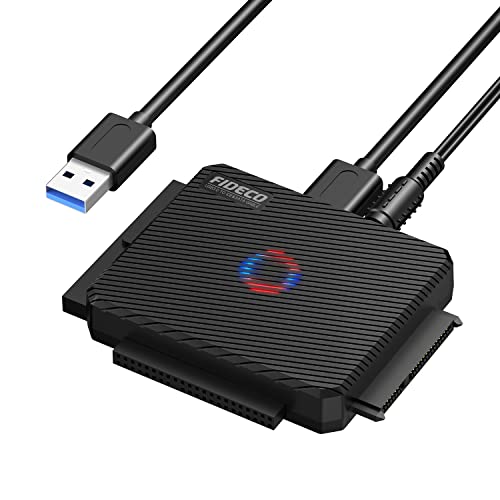
- USB 3.0 enclosure or adapter: A FIDECO SATA/IDE to USB 3.0 Adapter works for testing; for permanent use, a 2.5-inch USB 3.0 enclosure with the SSD inside is cleaner.
- Power supply: Official Pi 4 5V/3A USB-C PSU. Do not skimp — undervolt warnings cause real instability.
- Case with active cooling: Argon ONE M.2 cases are popular; any case with a fan works.
- microSD: 16 GB Class 10 for the initial boot-loader only, not for the OS.
Total: $130-180 for parts you do not already have.
Spec table: where the Pi 4 8GB lands in 2026
| Spec | Pi 4 8GB | Pi 5 8GB | Pi 5 16GB |
|---|---|---|---|
| CPU | BCM2711 quad Cortex-A72 @ 1.5-1.8 GHz | BCM2712 quad Cortex-A76 @ 2.4 GHz | same as Pi 5 8GB |
| RAM | 8 GB LPDDR4 | 8 GB LPDDR4X | 16 GB LPDDR4X |
| Storage interface | USB 3.0 + microSD | PCIe 2 x1 + USB 3.0 + microSD | same as Pi 5 8GB |
| 2026 used/new price | ~$50-85 | ~$80-100 | ~$110-130 |
| Home Assistant comfort | excellent for 50-200 devices | overkill for typical installs | overkill for 99% of installs |
The Pi 5 is faster on every axis. For Home Assistant, it does not need to be. The Pi 4 8GB on SSD is the right answer for a homelab build that wants to spend its budget on devices, not on the controller.
Why SSD beats microSD even for occasional users
People sometimes argue that a low-traffic install (10-20 devices) can live on a microSD card. The math says otherwise:
- A typical 10-device install still generates 5,000-20,000 daily database writes.
- Class 10 microSD endurance is on the order of 1,000-10,000 program/erase cycles per cell.
- Cards die quietly. The data on them is fine until the boot-essential blocks fail and the OS will not start.
A $40 SSD eliminates the failure mode entirely. There is no install size where microSD is the better long-term answer.
Installation walkthrough
- Flash Raspberry Pi OS Lite 64-bit (Bookworm) to the SSD using Raspberry Pi Imager. Set hostname, SSH, and Wi-Fi during imaging.
- Flash the same image to a microSD as a fallback boot.
- Connect the SSD via USB 3.0 enclosure to a blue USB 3.0 port on the Pi 4.
- Update the EEPROM to the latest stable bootloader using
sudo rpi-eeprom-update -a. This enables USB boot as a priority. - Set USB-boot priority with
sudo raspi-config→ Advanced Options → Boot Order → USB Boot. - Remove the microSD card. The Pi 4 should boot from the SSD on reset.
- Install Home Assistant Supervised or Docker. Per the Home Assistant docs, the Docker install is the simplest path on Pi 4.
- Set up the recorder retention in
configuration.yaml— 14 days of full retention is a sane default; the SSD can absorb more if you want. - Mount the boot partition with
noatimeto reduce SSD writes further. - Schedule an OS snapshot to a network share or USB stick weekly.
The process takes 60-90 minutes including the OS flash time.
What Home Assistant performance looks like on this build
In day-to-day use with 60-100 devices and 15-25 integrations active:
- CPU usage sits at 5-12% steady state, with spikes to 30-40% on automation runs.
- RAM usage sits at 3-5 GB steady state; the 8 GB total leaves comfortable headroom for add-ons.
- Disk I/O is the dominant resource — SSD writes hit hundreds of KB/s continuously.
- UI responsiveness is immediate on local network; remote-access latency is dominated by your router and ISP, not the Pi.
For the buyer wondering if "Pi 4 still works" — yes, for Home Assistant, it works comfortably.
Common pitfalls
- Underpowered USB PSU. The Pi 4 plus an SSD on the USB bus exceeds the spec of cheap chargers. Use the official 5V/3A USB-C supply.
- USB 2.0 port on the enclosure side. Some cheap SATA-to-USB adapters use a USB 3.0 plug but expose a USB 2.0 chipset internally. Test with a known-good drive first.
- Forgetting to update the EEPROM. Older bootloaders do not support USB boot. The
rpi-eeprom-updatestep is mandatory. - Mixing the recorder DB engine. SQLite is the default and is fine. Moving to MariaDB for performance on a Pi 4 8GB is unnecessary unless you have very high integration counts.
- Skipping backups. SSDs fail too. Network snapshot weekly is the cheap insurance.
What if you already have a Pi 5?
Use it. There is no reason to downgrade. The same SSD-boot pattern applies — Pi 5 supports PCIe 2 x1 via the M.2 HAT, which is even better than USB 3.0 for a Home Assistant build. The Pi 4 8GB recommendation is for buyers building fresh, not for buyers replacing.
When NOT to use a Pi 4 for Home Assistant
- You run 500+ devices or extensive media transcoding alongside Home Assistant.
- You want a single host for Home Assistant plus a Plex/Jellyfin server.
- Your install uses ML-heavy add-ons (face recognition, voice processing on-device).
For any of those, an Intel N100 mini PC at $130-180 used is a better fit. Home Assistant runs fine on x86; the Pi recommendation is for buyers who specifically want the Pi ecosystem and price tier.
Add-ons worth running on a Pi 4 8GB
Home Assistant's add-on ecosystem is where the Pi 4 8GB earns its keep over the 4 GB variant. Reasonable adds-ons for a Pi 4 8GB host:
- Mosquitto MQTT broker. Sub-100 MB RAM; essential for ESPHome and Zigbee2MQTT.
- Zigbee2MQTT. Adds 200-400 MB depending on device count.
- Node-RED. Adds 200-300 MB; pays for itself the first complex automation.
- AdGuard Home or Pi-hole. Adds 100-300 MB; bonus DNS-level ad blocking.
- HACS (Home Assistant Community Store). Minimal RAM overhead; opens the door to community integrations.
Avoid on a Pi 4:
- Frigate NVR with hardware-accelerated detection. The Pi 4's video engine is too weak for real-time AI camera analysis. Run Frigate on a dedicated mini PC.
- Whisper voice processing. Local voice transcription is workable on Pi 5 with a hat; on Pi 4 it is too slow for the experience to feel good.
- Multiple media servers. Stick to one; the Pi 4 is not a transcoding host.
What good migration paths look like
When you outgrow the Pi 4 8GB, the two clean upgrade paths:
- To a Pi 5 16GB. Drop the SSD into the Pi 5's M.2 HAT for PCIe boot. Migration is a snapshot-restore.
- To an Intel N100 mini PC. Buy a refurb N100 box at $130-180, install Home Assistant OS, snapshot-restore. The N100 gives you headroom for Frigate, transcoding, and local voice in the same box.
Either path keeps the SSD-boot pattern; do not migrate to a system that boots from microSD.
Bottom line
A used Raspberry Pi 4 8GB plus a Crucial BX500 1TB SSD in a USB 3.0 enclosure is the right Home Assistant host for buyers in 2026 with modest device counts and a tight budget. The SSD boot is the difference between a platform that lasts six months and one that lasts five years. Spend the extra $40 on the SSD before you spend $50 on a faster Pi.
Network and Zigbee/Z-Wave radios
Home Assistant on a Pi 4 8GB usually pairs with one or two USB radios for device communication. The reasonable choices:
- Sonoff ZBDongle-E (Zigbee 3.0). Inexpensive, well-supported in Zigbee2MQTT.
- HUSBZB-1. Combo Zigbee + Z-Wave, slightly older but covers both protocols in one stick.
- Aeotec Z-Stick. Premium Z-Wave option.
Plug them into the Pi 4's USB 2.0 ports — not the blue USB 3.0 ports, which can radio-interfere with Zigbee in the 2.4 GHz band. Use a short USB extension cable to physically separate the radio from the Pi if your install sits in a metal enclosure.
For Wi-Fi devices, prefer Ethernet for the Pi itself — Wi-Fi latency adds up across many small integrations. The Pi 4's gigabit Ethernet handles a busy install easily.
Backup and disaster recovery
Two backup tracks worth running:
- Home Assistant native snapshots to a NAS or Samba share, automated nightly.
- Full SSD image snapshots monthly to an external drive, using a tool like
ddor Clonezilla.
If the SSD fails (rare but possible), the monthly image restores the entire OS in 10-20 minutes. If a bad configuration breaks an automation, the nightly Home Assistant snapshot rolls back the specific change. The two tracks cover different failure modes; both are cheap insurance.
Related guides
- Best Storage for a Raspberry Pi Homelab: SATA SSD over USB vs microSD
- Best Raspberry Pi Alternative in 2026: Honest Picks and the Real Tradeoffs
- Raspberry Pi AI HAT+ (26 TOPS): What It Actually Runs in 2026
Citations and sources
- Home Assistant — Installation documentation
- Raspberry Pi Foundation — Raspberry Pi 4 Model B product page
- Raspberry Pi — Boot-from-USB documentation
This piece is editorial synthesis based on publicly available information. No independent first-party benchmarking is reported.